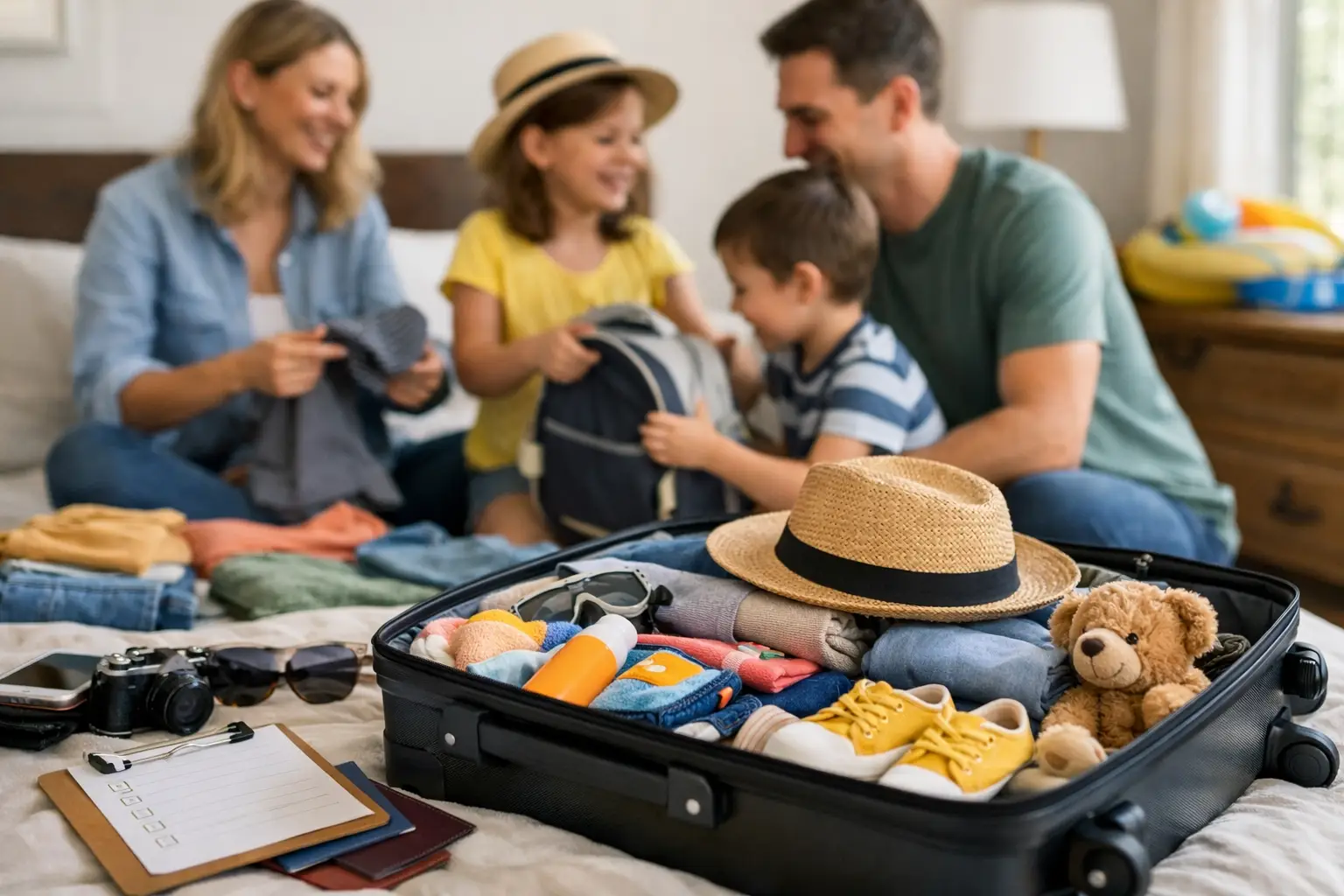
The fastest way to make a family vacation feel stressful is to start it at the airport with a missing charger, no change of clothes, and a child asking for a snack during boarding. Family flights are rarely ruined by one big mistake. More often, they get complicated by five small things nobody packed.
That is why a smart packing plan matters more than packing more. When you are flying with kids, every item needs a job. The goal is not to bring everything. The goal is to bring the right things in the right bag, so the trip starts smoothly and stays manageable when plans shift.
A packing checklist for family flights starts with the carry-on
Parents often focus on the destination wardrobe first, but the most important bag is the one that stays with you on the plane. Delays happen. Spills happen. Tired kids happen. If your checked suitcase disappears for a day, your carry-on should still get your family through the first 24 hours without panic.
Start with documents and essentials that are hard to replace. That usually means IDs, passports if needed, boarding details, health insurance cards, medications, and any paperwork tied to your trip. Keep them together in one easy-to-reach pouch instead of scattering them across backpacks and tote bags.
Then think in terms of comfort and problem-solving. Pack one change of clothes for each young child, and at least an extra shirt for adults if you are traveling with babies or toddlers. Add wipes, tissues, diapers or pull-ups if needed, and a small bag for trash or soiled clothing. These are not glamorous items, but they are the reason a rough travel moment stays a small inconvenience instead of becoming a full meltdown.
Snacks matter more than many parents expect. Flights get delayed, airport food lines get long, and kids are rarely patient when they are hungry. Choose snacks that travel well, are not too messy, and feel familiar. This is not the moment to test a new protein bar your child may reject at gate B12.
What to pack in checked luggage for a family trip
Once the carry-on is covered, your checked bags can handle the bulkier items. Clothing should match your actual itinerary, not your vacation fantasy. If your family has one beach day and six casual sightseeing days, pack for that reality. Overpacking usually starts when every person gets a full set of what-if outfits.
A practical approach is to pack versatile clothes that can mix and match. Neutral basics make this easier, especially for younger kids who may need outfit changes. Shoes take up more room than almost anything else, so keep it tight. Most trips only need a travel pair, a comfortable walking pair, and one trip-specific option like sandals or dress shoes.
Toiletries should be streamlined too. Families often save space by sharing basics like toothpaste, sunscreen, shampoo, and lotion instead of packing duplicates for every person. The exception is anything that must be child-specific because of skin sensitivity, allergies, or routine. That is one of those it-depends situations where convenience should never override what works for your child.
If you are checking a bag for the whole family, use packing cubes or zip pouches to separate each person’s items. This keeps the suitcase from turning into a daily scavenger hunt in your hotel room. It also makes repacking for the return flight much easier.
The family flight packing checklist for kids by age
Children do not all need the same flight setup, and packing goes much better when you stop treating all kids as one category.
For babies, think about feeding, diapering, sleep, and temperature changes. Formula, bottles, bibs, burp cloths, pacifiers, and a familiar blanket or comfort item often matter more than extra outfits. If your baby is sensitive to noise or overstimulation, baby-safe headphones or a favorite calming toy can be worth the space.
For toddlers, movement and distraction are the real priorities. Pack a few small activities rather than one big exciting item they may lose interest in after ten minutes. Stickers, reusable activity books, crayons, or a downloaded show can carry you through more of the flight than a bulky toy. Also bring one comfort item they already love. Airports are busy and unfamiliar, and routines get thrown off fast.
For school-age kids, a little ownership helps. Let them carry a small backpack with approved snacks, headphones, a tablet or books, and one sweatshirt. They feel more in control, and you are not digging through every bag for every request. Just make sure the backpack is actually manageable for them and not loaded with things you will end up carrying.
For teens, chargers are usually as important as clothes. Double-check devices, cords, portable battery packs if allowed, and downloaded entertainment. Teens may not need as much hands-on help during the flight, but they still need clear expectations about what goes in the carry-on and what cannot be easily replaced.
What families forget most often
The most commonly forgotten items are not usually dramatic. They are the simple things that save time and stress during transitions.
Phone chargers and device cords top the list. Families often remember the tablet and forget the cable. The same goes for headphones. Pack them together in one tech pouch so you are not searching every pocket before takeoff.
Medication is another big one. Keep daily prescriptions, pain relievers, motion sickness remedies, and child-safe fever medicine in your carry-on, not checked luggage. If someone in your family relies on a medication, that item is not optional and should be packed first.
Parents also forget how cold planes can feel, especially to tired kids. A light hoodie, socks, or soft blanket can make a huge difference. It does not need to be bulky. It just needs to be available when the cabin temperature drops and your child decides they are done being flexible.
How to avoid overpacking without underpreparing
This is where many families struggle. Nobody wants to be the parent who forgot pajamas or diapers, but bringing too much creates its own stress. Heavy bags, disorganized suitcases, and too many carry-ons can make every airport handoff harder.
The best way to avoid overpacking is to count needs by day and activity. If you are gone for five days, pack five base outfits per child, then add one backup set for younger kids or one laundry plan for longer trips. Adults can usually pack even lighter, especially if outfits can repeat with different shoes or layers.
Another helpful rule is to pack for the most likely scenario, not every possible one. Yes, your child might suddenly need three extra outfits in one day. But if that is not typical, packing six emergency sets is probably not the answer. Balance comes from knowing your family honestly, not from following somebody else’s social media packing list.
If you want less stress, pack earlier than you think you need to. A rushed packing job leads to duplicates, forgotten essentials, and last-minute purchases at airport prices. Even laying everything out the night before helps you see what is missing and what is unnecessary.
A smarter system for packing personal items
The easiest family travel days usually come from a simple system. Give every bag a purpose.
One bag should handle documents, wallets, medications, and valuables. One should be the in-flight family support bag with snacks, wipes, entertainment, and comfort items. If older kids carry their own backpacks, keep their bags focused on personal comfort and entertainment, not critical shared items.
That way, if one child wanders off with their backpack to the bathroom with another adult, you still have the passports and medicine where you need them. It sounds basic, but this kind of bag planning is what keeps airport logistics from getting messy.
If your trip includes connections, early departures, or a long travel day, this system matters even more. The more moving parts in the itinerary, the less you want to rely on memory.
When it helps to get expert support
Family travel gets more complicated when you are juggling multiple kids, a group itinerary, special requests, or a big occasion attached to the trip. Packing is only one part of that puzzle. Flights, transfer timing, seating, accommodations, and destination logistics all affect how smoothly your day goes.
That is why planning-first support can make such a difference. At K&S The Travel Crusaders, we believe families travel with confidence when the details are handled early, not when they are solved in a rush at the airport. A good packing checklist for family flights works best when it is part of a well-organized trip from the start.
A well-packed family is not the one carrying the most. It is the one that can handle a delay, a spill, a hungry child, or a gate change without the whole trip going sideways. Pack for comfort, pack for reality, and give yourself the kind of travel day that feels manageable from takeoff forward.