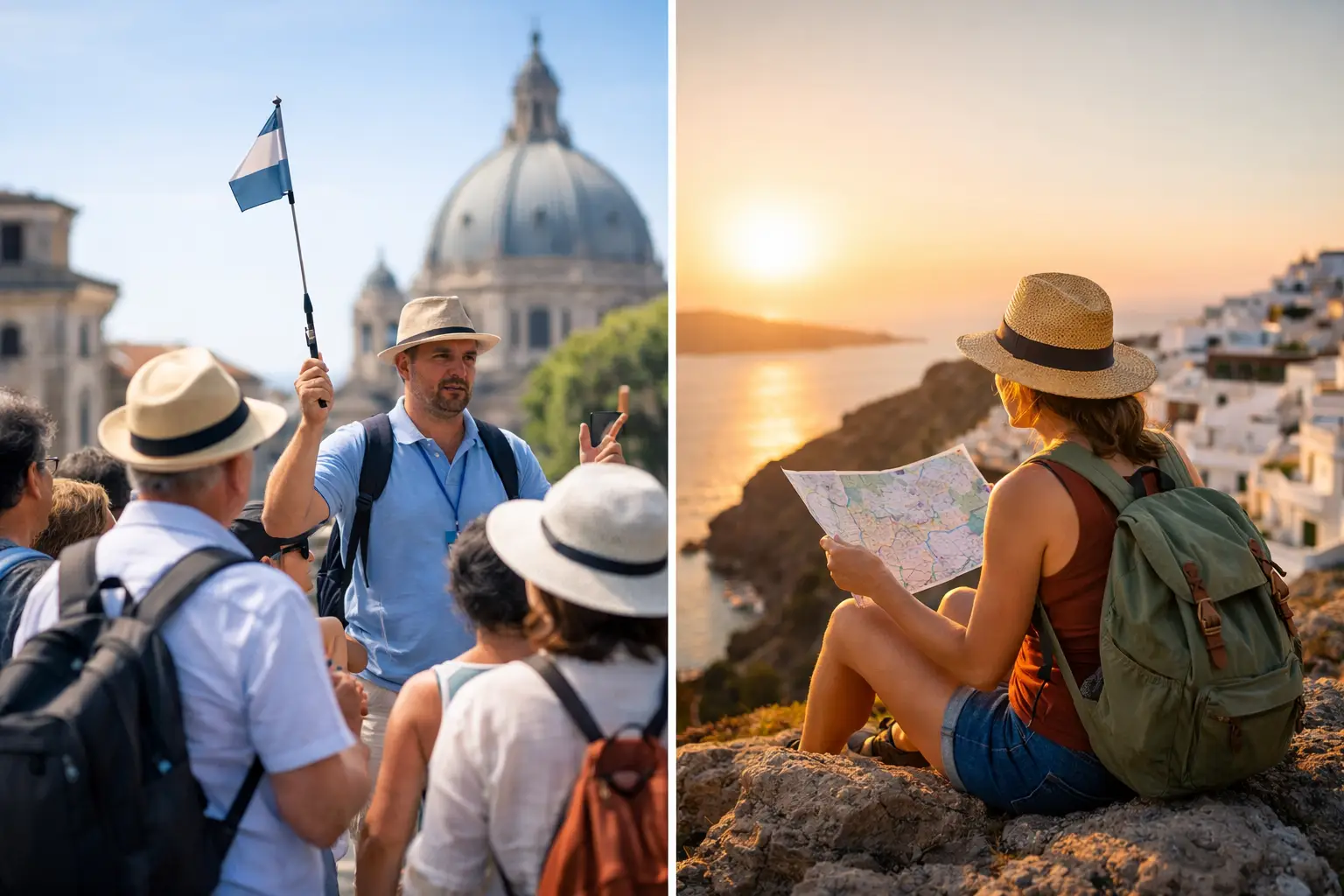
You do not want to figure out airport transfers, hotel check-ins, activity timing, and meal stops while your kids are melting down in a new city – or while you are trying to make a honeymoon feel romantic instead of stressful. That is why the guided tour vs independent travel question matters more than people think. It is not really about which option sounds more adventurous. It is about choosing the travel style that gives you the right mix of freedom, structure, and peace of mind for the trip you are actually taking.
Some travelers hear “guided tour” and picture a rushed bus schedule with a flag-waving guide. Others hear “independent travel” and imagine total freedom, hidden gems, and brag-worthy spontaneity. Both images can be true, but both are incomplete. The best choice depends on your destination, your travel experience, your group size, your budget, and how much planning work you want to carry yourself.
Guided tour vs independent travel: what is the real difference?
A guided tour gives you a built-in structure. Transportation, key activities, timing, and often some meals are arranged in advance. In many cases, you also get a guide who adds local context, keeps the trip moving, and helps solve problems if plans change.
Independent travel puts you in control of the itinerary. You choose the flights, hotels, transfers, restaurants, and daily pace. That can be exciting and deeply personal, especially if you enjoy research and want flexibility hour by hour.
Neither option is automatically better. The real question is this: do you want to spend your time making decisions, or do you want more of those decisions made well for you?
When a guided tour makes more sense
Guided tours shine when logistics are the biggest source of stress. If your trip includes multiple cities, language barriers, train connections, border crossings, or a large group with different needs, having a structured plan can save time and reduce mistakes.
This is especially true for school travel and corporate trips. When you are responsible for students, staff, or attendees, travel is no longer just about personal preference. It becomes about accountability, timing, safety, and keeping everyone on the same page. A guided format makes that easier because expectations are clear and the moving parts are coordinated from the start.
Families also benefit more than they sometimes expect. Parents often imagine independent travel will feel more relaxed, but the opposite can happen if every day requires fresh decisions. When transportation is already arranged and major sightseeing is scheduled, you get more energy back for the moments that matter – enjoying the destination, not managing it.
For first-time international travelers, guided tours can also build confidence. You still get new experiences, but you are not left solving every challenge alone. That reassurance matters when you are traveling far from home or visiting a place with unfamiliar systems.
When independent travel is the better fit
Independent travel works beautifully when flexibility is the point. If you want to sleep in, linger over dinner, skip a museum because the weather is perfect, or spend half a day in a neighborhood café, independent planning gives you room to do that.
It is often a strong fit for couples, especially on honeymoons or romantic getaways, because privacy and pace matter. You may not want your best memory to be a group schedule. You may want it to be a late breakfast on a balcony, a private excursion, or an extra night in the place you unexpectedly love.
Experienced travelers also tend to do well independently because they know what to expect. They understand connection times, local transit, travel insurance, entry requirements, and the reality that not every plan goes perfectly. That experience lowers the risk that freedom turns into frustration.
Independent travel can also give you tighter control over priorities. If food is your focus, you can build the whole trip around restaurants and markets. If relaxation is the goal, you can avoid overpacked itineraries and keep your schedule intentionally light.
Guided tour vs independent travel for different trip types
For honeymoons, the answer often lands in the middle. Many couples want the ease of professional planning without the group-tour feel. A customized independent itinerary with private transfers, selected excursions, and built-in support can deliver the romance of flexibility with the reassurance of expert coordination.
For family vacations, the right choice depends on the ages of the kids and how much moving around is involved. One resort stay with a few planned outings can work well independently. A multi-stop trip through Europe with younger children is a different story. In that case, more structure usually means less stress.
For school groups, guided travel is usually the smarter choice. Educational trips have too many timing, safety, and communication layers to leave things loose. Organized transportation, clear schedules, and experienced support are not extras – they are part of making the trip successful.
For corporate travel, reliability usually beats spontaneity. Meetings, room blocks, airport timing, and group arrivals need coordination. A more guided approach keeps business goals front and center and helps avoid the small issues that can throw off an entire agenda.
Budget is not as simple as it looks
People often assume independent travel is always cheaper. Sometimes it is. If you are a very confident planner, traveling in the off-season, and willing to compare every hotel, transfer, and activity yourself, you may save money.
But independent travel also makes it easier to underestimate total cost. Extra taxi rides, bad timing, booking mistakes, last-minute activity prices, baggage fees, and meals in tourist zones can add up fast. Freedom can be expensive when it is not planned carefully.
Guided tours may look more expensive upfront because more is bundled into one price. But that visibility can be helpful. You know more of your costs before you leave, and you reduce the chance of surprise expenses caused by poor coordination.
The better question is not “Which one is cheaper?” It is “Which one gives me the best value for the kind of trip I want?” A honeymoon and a student trip should not be evaluated the same way.
The hidden factor: mental load
This is the part travelers forget until they are in the middle of the trip.
Independent travel asks you to be the planner, navigator, troubleshooter, and backup plan. That is fine if you enjoy it. It is exhausting if you do not. Even simple decisions, repeated all day, can wear you down.
Guided travel lowers that mental load. You are not constantly checking directions, confirming times, or wondering whether you chose the best option. That does not just save time. It changes how the trip feels.
For busy couples, parents, school organizers, and corporate admins, that relief has real value. Many people do not need more travel freedom. They need fewer travel headaches.
A middle path often works best
The guided tour vs independent travel debate can make it sound like you have to choose one extreme or the other. You do not.
Some of the best trips combine both. You might book an independent beach stay and add a guided cultural tour for one day. You might do a guided multi-city itinerary for a school group and leave one afternoon open for free exploration. You might have a honeymoon built around private transportation and curated excursions while keeping your evenings unscheduled.
This is where thoughtful trip design makes a difference. A good travel plan is not about forcing you into a package. It is about matching the structure to the traveler.
That is why many travelers work with an advisor even when they do not want a traditional tour. A planning-first approach helps you keep the parts you want to control while getting expert help on the parts most likely to go wrong. At K&S The Travel Crusaders, that balance is often where the best trips happen – practical support behind the scenes, memorable experiences out front.
How to choose with confidence
If you are deciding between the two, start by being honest about your real travel style, not your idealized one. Do you enjoy planning, or do you just like the idea of being someone who enjoys planning? Are you okay solving problems on the fly, or would that eat into your trip? Is your group simple to manage, or do you have kids, students, coworkers, or multiple generations depending on you?
Then think about what would make this trip feel successful. More freedom? More ease? Better coordination? Less stress? Faster booking? The right answer usually becomes clearer when you stop thinking about labels and start thinking about outcomes.
A great trip is not the one that sounds most impressive online. It is the one that fits your people, your budget, and your energy. Choose the version that lets you be present when you get there – because that is where the real vacation begins.