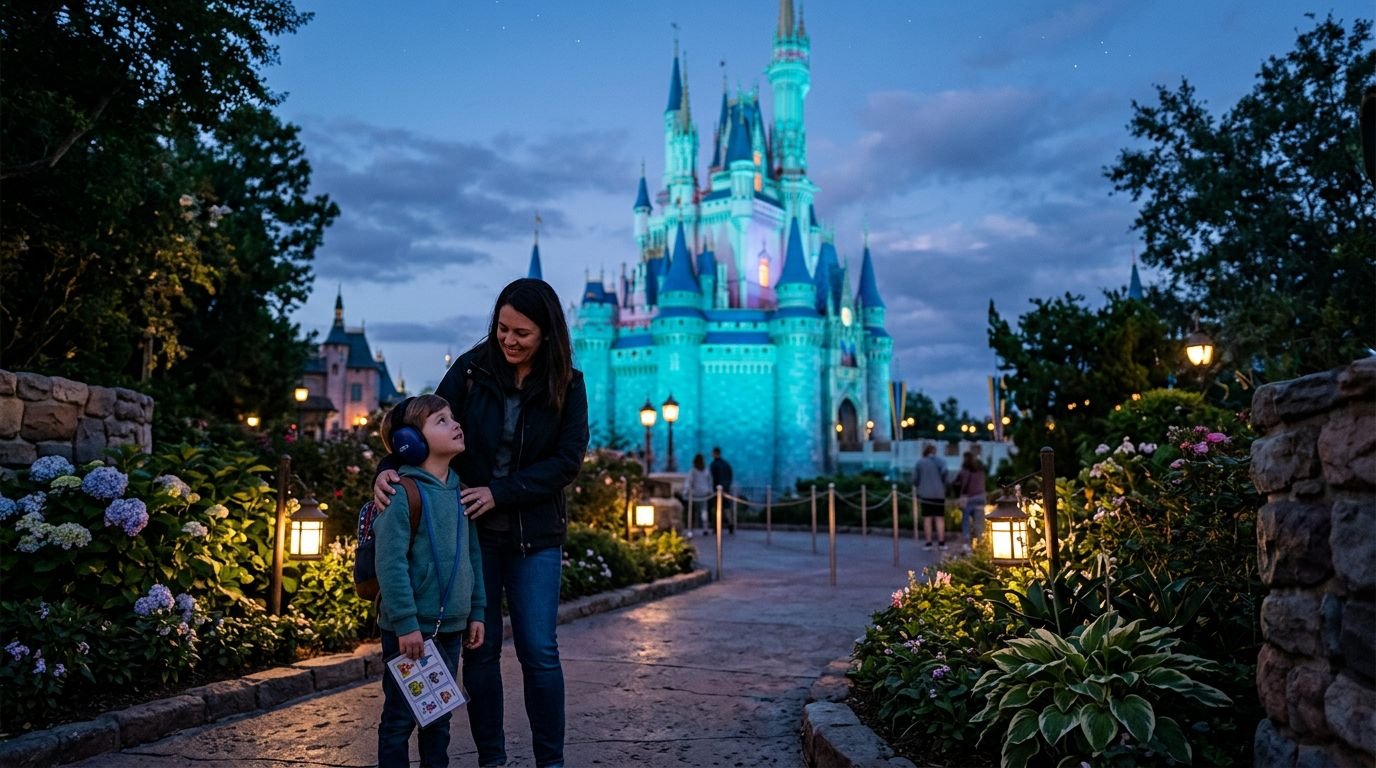
A Disney vacation can be full of happy memories, but it can also bring noise, crowds, long lines, and plans that change without warning. For families planning Disney World with autism in mind, a little extra preparation can make a huge difference.
Your child does not need to experience Disney the same way as every other guest. The goal is not to fit everything into one day. The goal is to create a trip that feels safe, comfortable, and fun for your family.
Start with a simple plan, then leave room to change it. Engaging in thorough Disney vacation planning is the foundation for a successful experience that meets your family’s unique needs.
Key Takeaways
- The Disney Disability Access Service (DAS) may assist guests who are unable to tolerate a traditional attraction queue due to a developmental disability, including autism.
- A slower park day with built-in breaks is often more enjoyable than trying to experience every attraction.
- Sensory tools, familiar foods, visual schedules, and a calm exit plan can prevent small stressors from escalating into a difficult day.
- Choose attractions based on your child’s sensory needs, rather than focusing solely on height requirements or park popularity.
- A written plan can help your family feel prepared before leaving home.
- Every autistic child has unique needs, and your overall Disney World strategy should remain flexible to accommodate their comfort.
Start With Your Family’s Real Needs
There is no single Disney World autism plan that works for every child or adult. While many neurodivergent guests enjoy the magic of the parks, the experience must be tailored to the individual, whether you are planning for a sensory-sensitive child or an adult with autism who requires a more relaxed pace. Some guests love fast rides, character greetings, fireworks, and busy restaurants. Others need quiet spaces, familiar routines, and plenty of time away from crowds.
Think about the parts of a typical day that are hardest at home or during other trips. Is waiting difficult? Does your child struggle with loud sounds, unexpected changes, heat, touch, or unfamiliar food due to sensory processing disorder? Does a long day create fatigue that shows up as anxiety, tears, or shutdowns?
Write down what helps. That list is more useful than trying to copy another family’s vacation.
You may already know that noise-canceling headphones help at school. Maybe a favorite stuffed animal, tablet, chewy necklace, sunglasses, or snack provides comfort. Bring those items. Disney World is not the place to test whether your child can go without a support tool.
It also helps to talk about the trip in small pieces. Show photos of the hotel, pool, buses, monorail, and park entrances. Watch ride videos with the sound low at first. Explain that there will be security, bag checks, long walks, and waiting.
A visual countdown can make the trip feel more predictable. Mark travel day, hotel check-in, each park day, and the day you go home. Many children do better when they can see what comes next.
If your child uses a communication device, make sure it is charged and loaded with useful phrases. Add simple requests such as “I need a break,” “too loud,” “I am hungry,” and “I want to leave.” A small card in a backpack can help, too.
A successful Disney day is not measured by ride count. It is measured by how your family felt while you were there.
Understanding Disney’s DAS Pass for Autism
Disney’s Disability Access Service (DAS) is an accommodation for guests who cannot tolerate a traditional attraction queue due to a developmental disability such as autism. It is not a front of line pass. Instead, it allows an eligible guest to wait virtually for attractions, receiving a return time based on the current standby wait so they can wait in a more comfortable environment.
That difference matters. If an attraction has a 50 minute standby wait, your family may receive a return time for about 50 minutes later. During that time, you can sit in a calmer area, use the restroom, eat a snack, visit another nearby attraction with a shorter wait, or take a sensory break.
Disney decides eligibility on a case by case basis. Focus on the functional challenge, not only the diagnosis. Explain what happens when your child waits in a close, crowded line. Be honest and clear about your needs. For example, you might explain that your child may panic in a confined queue, cannot handle people standing close behind them, or may leave the line suddenly when overwhelmed. If you have specific questions about these processes once you arrive at the parks, you can always visit Guest Relations for further assistance.
Disney’s current process can change, so check the latest DAS details before your trip. Eligible guests may be able to complete a video interview before arrival, usually within Disney’s stated pre-arrival registration window. Have the registered guest available for the conversation and keep your travel party information ready.
Once approved, DAS return times are managed through the My Disney Experience app. You can usually hold one active DAS return time at a time. After you redeem it, you can select another eligible attraction.
Disney may also offer DAS Advance Planning selections before your visit. These are limited return windows for certain attractions and are subject to availability. Do not build your whole day around them. Think of them as helpful starting points.
DAS does not cover every part of the vacation. You may still wait for transportation, food, security, restrooms, and character experiences. That is why sensory planning still matters.
lightning lane passes are separate from DAS. Disney’s lightning lane options and policies can change, and they may be useful for some families. Still, you do not have to purchase every add-on. A simple schedule with DAS, breaks, and a few favorite attractions can be enough.
For extra support, the Disney World With Autism guide on Amazon includes practical planning ideas for DAS, sensory preparation, and park days with autistic children.
Build a Sensory Plan Before You Pack
A sensory kit does not need to be expensive or complicated. It simply needs to include the items your child already uses and trusts. Keep everything in one dedicated backpack so you can reach for it easily during a busy moment.
Consider packing:
- Noise-canceling headphones or ear defenders for fireworks, parades, ride queues, and crowded indoor spaces.
- Sunglasses or a hat for protection against the bright Florida sun and visual stimulation.
- A Sunflower Lanyard to help Cast Members easily identify that someone in your party has hidden disabilities.
- Fidget items, a comfort object, or a favorite small toy.
- Familiar snacks, refillable water bottles, and electrolyte packets if your child struggles with heat.
- Wet wipes, spare clothing, cooling towels, and a small portable fan.
- A charging bank for phones, tablets, communication devices, and noise-canceling headphones.
Test the backpack before the trip. Walk around your neighborhood, visit a busy store, or spend time at a local attraction. Notice which items your child reaches for first, as these are the items that should stay at the top of the bag.
Make a simple sensory exit plan for each park day. Pick one meeting location near the entrance in case your group gets separated. Choose a calmer place where your child can reset. Tell everyone in the travel party what to do if your child needs to leave an attraction queue or restaurant right away.
Disney parks have First Aid locations, Baby Care Centers, restrooms, and quieter walkways. These areas are not always silent, but they can offer a necessary break from the busiest paths. Cast Members can also help point you toward a nearby place to regroup.
Do not wait for a full meltdown before taking a break. Watch for early signs such as covering ears, becoming unusually quiet, pacing, repeating questions, refusing food, or becoming upset over a small change. Managing sensory overload and preventing overstimulation is the primary goal of taking these proactive, 15-minute resets, which can truly save the rest of your day.
Choose a Disney Park Strategy That Leaves Room to Breathe
Trying to rope-drop every park, stay until fireworks, and fill every hour is exhausting for many families. It can be especially difficult when you are visiting Disney World with an autistic child.
Choose one or two must-do experiences for the morning. Everything else is extra. If your child wakes up tired, needs more pool time, or wants to repeat a favorite ride, you can adjust without feeling like the day is ruined. If you need expert help navigating these logistics, an authorized Disney vacation planner can help you identify lower crowd levels to better manage your schedule.
Magic Kingdom has the most classic Disney experiences, but it also has heavy crowds, parades, music, and a lot of visual stimulation. Start in one land instead of crossing the park all morning. Fantasyland is often a good first stop for families with younger children, while Tomorrowland may be a better fit for guests who enjoy space themes and faster rides.
EPCOT has wide walkways and plenty of room around the World Showcase, which can make it feel less crowded in some areas. If you are looking to avoid crowds, the spaciousness of this park makes it an ideal choice for a slower afternoon away from the busier entrance area.
Disney’s Hollywood Studios has popular attractions and can feel intense early in the day. Walt Disney Presents is often a calmer indoor stop when your group needs air conditioning and a seated break. Keep in mind that some shows and rides include sudden sounds, darkness, smoke effects, and loud music.
Animal Kingdom offers shaded paths, animal trails, and a slower pace in some sections. Maharajah Jungle Trek and Gorilla Falls Exploration Trail can be good breaks for families who enjoy animals and walking. Animal Kingdom also closes earlier than some parks, which may work well for children who do not do well with late nights.
A midday hotel break is one of the best tools you can use. Leave before your child reaches the point of overload. Swim, rest, eat a familiar lunch, change clothes, or spend quiet time in the room. You can return later if everyone feels ready. For families staying at Disney resorts, utilizing non-park days for total relaxation is a fantastic way to recharge between busy park visits.
A hotel break is part of the plan, not a failed park day.
Pick Attractions With Sensory Needs in Mind
Height requirements tell you whether a child can ride, but they do not tell you whether the experience will feel comfortable for an autistic child with specific sensory challenges. Read attraction descriptions, watch ride-through videos, and consider the full sensory experience.
Some rides are gentle but still dark, noisy, or full of unexpected motion. Others move quickly but have less visual chaos. Your child’s personal preferences matter most.
For guests who prefer calmer experiences, options may include the Walt Disney World Railroad, PeopleMover, Living with the Land, or animal trails at Animal Kingdom. These are not guaranteed to be quiet, but they often have less intensity than major thrill rides.
Attractions with loud sounds, darkness, drops, sudden movement, or frightening scenes may need more preparation. The Haunted Mansion in Magic Kingdom has spooky images and a dark ride system. Pirates of the Caribbean has cannon fire, darkness, and a small drop. Mickey and Minnie’s Runaway Railway uses quick scene changes and strong visual effects. Star Wars attractions can be loud and busy.
Fireworks are another big decision. Some children love them, while others find them painful. You do not have to stand in the middle of Main Street, U.S.A. to enjoy the evening.
Try watching from farther away, leaving before the show begins, or skipping fireworks altogether. Resort pools, a favorite dinner, and an early bedtime can be a much better ending for your family.
Parades can also create crowd pressure because people begin saving spots early. If waiting for a parade is difficult, watch from a less crowded viewing area, catch only part of it, or walk through another area of the park while it is happening.
For high-demand experiences, keep in mind that you may need to join a virtual queue in addition to utilizing your DAS pass. Regardless of the wait method, give your child choices when possible. Asking “Do you want to ride the train or get a snack?” is easier than asking “What do you want to do now?” Small choices help children feel more in control when the environment is large and unfamiliar.
Make Food, Transportation, and Hotel Time Easier
Food can become a major stress point when everyone is hot, hungry, and overstimulated. Disney offers many dining options, but you do not need every meal to be a themed experience.
Bring familiar snacks and plan meals before hunger hits. Using mobile ordering at Disney World restaurants can reduce time spent standing in a food court line. When available, choose an off-peak meal time. A quick-service lunch at 11:00 a.m. is often easier than a crowded noon rush.
If your child has allergies or a special diet, let Disney know in advance and speak with a Cast Member when ordering. Do not assume a familiar-looking food is prepared the same way as it is at home.
Transportation deserves the same planning attention as attractions. Buses, monorails, boats, Skyliner gondolas, and parking trams can all involve waiting, close spaces, noise, and sudden changes. Explain these steps before travel day.
Some children love the monorail and Skyliner. Others find movement or enclosed spaces difficult. Build extra time into every transfer so you are not rushing.
Your hotel choice can make a real difference. Disney resorts offer a wide variety of environments, and special needs travelers should choose one that fits their specific sensory profile. A resort close to a park may make midday breaks easier. A quieter room location away from the pool, lobby, elevator, or bus stop may help your child sleep better. Request needs early, but remember that requests are not guaranteed.
Keep the first night simple. Unpack comfort items, visit the pool if that helps, eat an easy dinner, and get rest. You do not need to begin the vacation with a packed park evening.
Use a Flexible Daily Routine
Children often feel safer when the day has a familiar pattern. Disney days can still have structure, even when plans change.
A simple routine might look like this:
- Eat breakfast and review the day’s visual plan.
- Arrive early for one or two favorite attractions.
- Take a snack and sensory break before the busiest part of the day.
- Use DAS or return times for high-priority attractions.
- Leave for lunch, pool time, or rest at the hotel.
- Return only if your family has the energy and interest.
Keep the schedule visible. A paper list, phone note, or laminated visual card can work well for your Disney World autism planning needs. Cross off activities as you complete them. If something changes, show your child what is replacing it.
Use clear language. Instead of saying, “We will see what happens,” try, “First, we ride the train. Then, we have a snack. After that, we decide if we want one more ride.”
Prepare for disappointment before it happens. A ride may close, weather may delay outdoor plans, or a favorite character may not be available. To help your autistic child adjust, bring a backup choice for each must-do item. “If Big Thunder Mountain is closed, we can ride Pirates or take the train.” This gives your child a next step instead of an abrupt no.
A printable plan can make these moments easier. If you need additional help, an authorized Disney vacation planner can often provide a customized printable schedule to keep you organized. Alternatively, the Disney World autism planning guide on Etsy offers a PDF resource for families who want help organizing DAS details, sensory supports, and flexible park plans.
Let Your Child’s Comfort Lead the Day
There may be moments when you need to leave a line, skip a reservation, or head back to the hotel early, and that is perfectly okay. Because an autistic child may experience sensory overload or sudden overstimulation without much warning, it is important to recognize when it is time to take a break. Disney World is large, busy, and full of sensory input, and your family does not need to push through distress to make the trip feel worthwhile.
Celebrate the wins that matter to your child. Maybe they tried a new ride. Maybe they asked for a break before becoming overwhelmed. Maybe they enjoyed one character greeting, a pool afternoon, or a favorite snack.
Those moments count.
Talk with your child before the trip, listen during the trip, and adjust as needed. A plan gives you direction, while flexibility gives your family room to enjoy the day.
Frequently Asked Questions
How do I know if my child qualifies for the Disability Access Service (DAS)?
DAS is intended for guests who, due to a developmental disability like autism, cannot tolerate waiting in a traditional attraction queue for an extended period. During your registration, focus on the specific functional challenges your child faces in crowds rather than just the diagnosis. Be prepared to explain what happens when your child is in a confined space for a long duration.
Can I use my sensory tools during the rides and in the parks?
Yes, you are encouraged to bring and use any sensory tools that provide comfort or support to your child. Items like noise-canceling headphones, fidgets, and communication devices are welcome in most areas, including queues and during attraction experiences. Always ensure these items are easily accessible in a designated sensory backpack for quick use when needed.
What should I do if my child has a meltdown at the parks?
First, remember that your child’s well-being is the top priority, and taking a break is a success, not a failure. Quickly move to a quieter location, such as a Baby Care Center, a First Aid station, or an outdoor area away from the main thoroughfares to allow for a reset. Having a pre-planned exit strategy and a designated meeting point will help your family feel calm and prepared when emotions run high.
Is it possible to avoid the busiest times at Disney World?
While Disney World is rarely empty, you can manage the environment by utilizing early mornings for your must-do activities and retreating to your resort during the peak mid-day heat and crowds. Opting for less popular attractions, dining during off-peak hours, and choosing parks that naturally offer more space can also help minimize overstimulation throughout your stay.
A Disney World Trip That Fits Your Family
The most meaningful Disney vacations are not always the busiest ones. With DAS preparation, sensory supports, familiar routines, and realistic expectations, your family can create a trip that feels more comfortable and more enjoyable.
Traveling to Disney World with autism can require extra planning, but proactive Disney vacation planning allows for more spontaneous moments of joy without the need to schedule every single minute. Focus on your child’s needs, protect time for breaks, and let comfort guide the daily itinerary.
A calm day with a few happy memories is always enough.
Comments
One response to “Disney World Autism Guide: DAS, Sensory Prep, Park Plans”
[…] your family came to make during your theme park vacation. For a complete planning resource, see our Disney World Autism Guide covering DAS registration, sensory prep, and park […]