
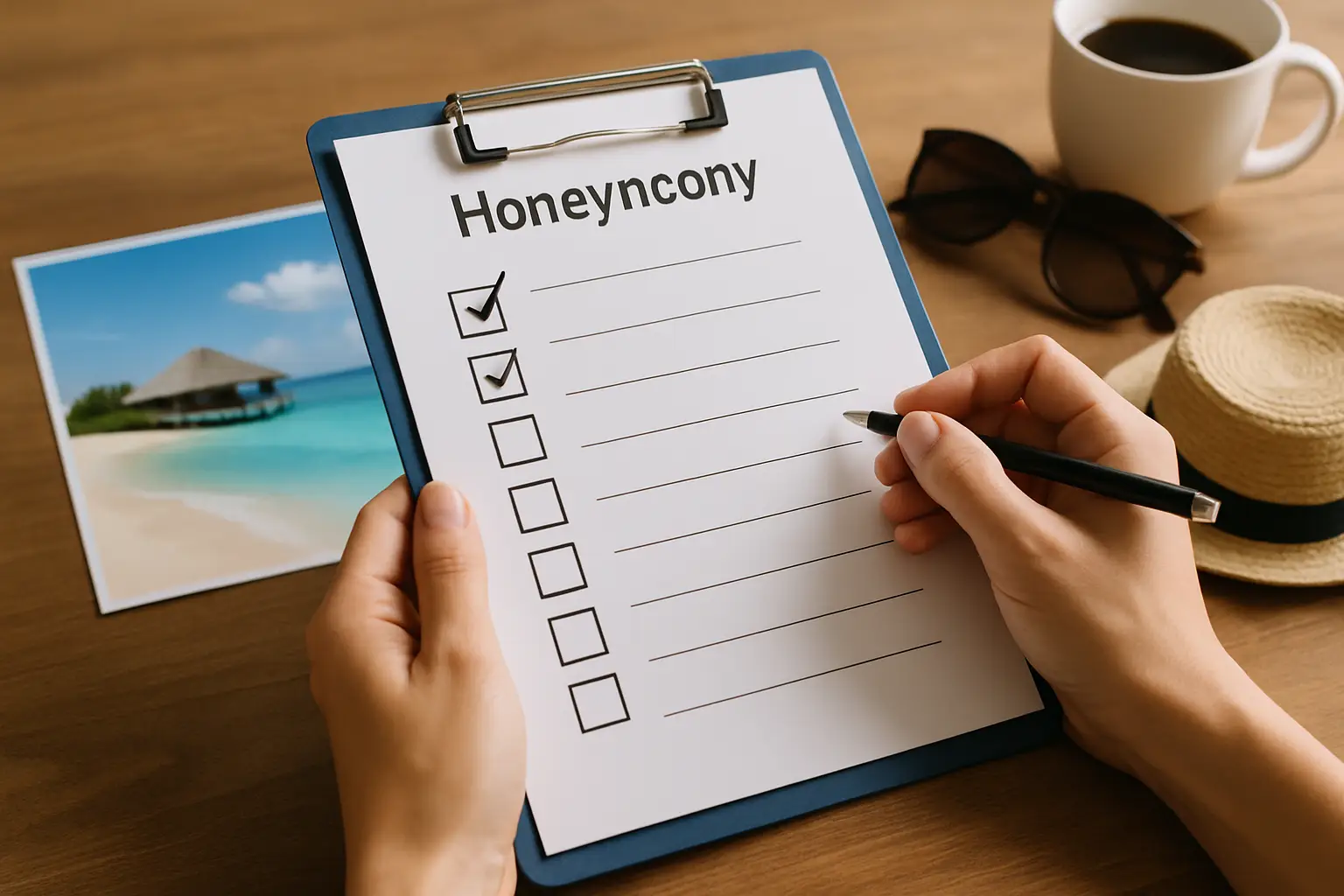
You are three tabs deep comparing resorts, the wedding to-do list is still yelling at you, and every “all-inclusive” deal looks identical – until you read the fine print. Your honeymoon should feel like exhale mode, not a second full-time job.
This all inclusive honeymoon planning checklist is built for real couples with real schedules. It focuses on the decisions that make or break an all-inclusive trip: what “included” actually means, how to choose the right vibe, and how to avoid budget surprises that show up after you land.
All inclusive honeymoon planning checklist: start with the non-negotiables
Before you pick a destination, get aligned on what you want your days to feel like. All-inclusive resorts can be wildly different, even if they’re on the same beach.
Start with four quick decisions: your ideal trip pace (do you want nonstop activities or maximum quiet), the vibe (party-forward, romantic and calm, or social but not rowdy), the “must-have” experiences (spa time, snorkeling, golf, off-resort excursions, nightlife), and your true budget range.
That last one matters because all-inclusive pricing isn’t always apples-to-apples. One resort may look higher but includes airport transfers, premium liquor, and better dining, while another looks cheaper but charges for reservations, top-shelf drinks, and every activity beyond the pool.
Set your budget the smart way (so “all-inclusive” stays true)
Couples usually price the room and flights, then get surprised by everything around it. Instead, build a honeymoon budget with a little structure.
Your baseline is resort + flights. Then add the “almost always” costs: travel protection, tips, transportation to and from the airport (if not included), one special experience (a private dinner, a couples massage, a catamaran cruise), and spending money for anything outside the resort.
It also depends on your travel style. If you’re the type to leave the resort every day, an all-inclusive can still be a great home base, but you’ll want a more flexible budget for excursions and local meals. If you’re planning to stay put and enjoy the property, it can be worth paying more for a resort with strong restaurants and included activities so you’re not nickel-and-dimed.
Choose the right destination by season, not just by photos
A beach is a beach until weather and travel time get involved. When you’re planning a honeymoon, season matters as much as scenery.
Caribbean and Mexico are favorites for good reason: flight options are plentiful from the US, and you can find resorts at almost every price point. But the best destination for you depends on your travel month, your tolerance for heat and humidity, and whether you’re okay with a chance of rain.
If you’re traveling during hurricane season, that doesn’t mean “don’t go.” It means choose a destination with a track record you’re comfortable with, book travel protection you actually understand, and avoid stacking your trip on the very last day you can take off work. A small buffer day at the end can save you a lot of stress if flights get disrupted.
Pick a resort like a pro: what to check before you book
Here’s where most honeymoon planning goes sideways: couples fall in love with the marketing, then realize the resort doesn’t match their priorities.
Start with the basics: adults-only or family-friendly, size of the resort (boutique and quiet vs. large with lots going on), and room category. For honeymoons, room type is not a tiny detail. Ocean view, swim-out, or a private plunge pool can change the entire vibe, but you want to confirm what you’re actually getting, not what the name implies.
Next, look closely at dining. How many restaurants are included? Do you need reservations? Are there dress codes? If you’re foodies, a resort with limited dinner options can start to feel repetitive by night three.
Then check the beach and pool situation. Some beaches are gorgeous but not swimmable due to seaweed or currents at certain times of year. Some resorts have stunning pools but limited shade. If you picture yourselves reading with a drink under a cabana, confirm what’s available and whether it costs extra.
Finally, check what “included” really covers. Are airport transfers included? Are non-motorized water sports included? Is room service 24/7 or limited hours? Are mini-bars restocked daily? Knowing this upfront keeps your budget honest and your expectations happy.
Lock in the logistics: passports, flights, and airport transfers
All-inclusive honeymoons feel effortless when the travel days are smooth.
First, confirm your passports. If you’re renewing, start early and double-check that the name on your reservation matches your passport exactly. If you’re changing your name after the wedding, decide whether you’re traveling under your current name or waiting until after the trip to handle updates.
For flights, think about the trade-off between price and pain. A cheaper flight with two connections can steal a full day of honeymoon time. If you can swing it, prioritize fewer stops and arrival times that don’t require sprinting through an airport or landing at midnight.
Airport transfers are another common surprise. Some resorts include them, some offer them as an add-on, and some require you to arrange your own. Confirm the plan before you travel so you’re not negotiating transportation in a crowded arrivals area.
Travel protection: get the coverage that matches your risk
Protection isn’t just about illness. It’s also about weather delays, flight cancellations, and the unexpected curveballs that happen when you’re coordinating time off after a wedding.
Read what your policy actually covers, including trip interruption, medical coverage, and evacuation. It’s worth matching your coverage to your total trip cost and your season. If you’re booking during higher-risk weather months, protection becomes less of a “maybe” and more of a practical move.
Honeymoon upgrades that actually feel like a honeymoon
If there’s ever a time to add a little extra, it’s this trip. But not every upgrade gives the same payoff.
A better room category is often the most noticeable upgrade because you enjoy it every day. Private transfers can be a close second, especially after a long travel day. A couples massage can be amazing, but consider doing it early in the trip – it sets the tone and helps you settle in.
If you’re celebrating, ask about honeymoon perks. Some resorts offer sparkling wine, a small welcome gift, or priority dining. Just know that many perks require advance notes on your reservation, and some require proof like a marriage certificate.
Build a flexible itinerary so you don’t overplan your own relaxation
The best all-inclusive honeymoons have a loose rhythm: a plan for one key thing per day, plus plenty of room for naps, pool time, and spontaneous choices.
Pick a few anchors – maybe one excursion, one spa day, one romantic dinner, and one “do nothing” day where you let the resort schedule you. If you’re the kind of couple that gets decision fatigue, pre-select two or three restaurants you want to prioritize and book any reservations as soon as your resort allows.
It depends on the resort, but popular dining times and cabanas can disappear fast during peak seasons. If those details matter to you, plan them early and let everything else be optional.
Packing for an all-inclusive: what people forget
Packing is where planning gets real. You don’t need to overdo it, but you do want to avoid the classic “we forgot that” moments.
Bring at least one nice dinner outfit each if your resort has dress codes. Pack reef-safe sunscreen, after-sun care, and a simple mini first-aid kit. If you’re doing excursions, water shoes can be a game-changer, and a waterproof phone pouch is useful even if you never leave the resort.
Don’t forget practical travel items: a portable charger, a copy of your travel documents (digital and one printed), and any medications in your carry-on. If you’re checking a bag, keep one swimsuit and one change of clothes accessible so a delayed suitcase doesn’t delay your vacation mood.
Money, tipping, and surprise charges: handle it before you arrive
Many all-inclusive resorts still expect tipping, and some destinations are more tip-driven than others. Decide how you want to handle it so you’re not scrambling for cash.
A simple approach is to bring small bills for bell staff, bartenders, housekeeping, and drivers, and keep them separate so you’re not constantly making change. Also ask what’s included versus extra: premium wine lists, special restaurants, cabanas, motorized sports, photo packages, and late checkout fees are common add-ons.
The point isn’t to avoid every extra. It’s to choose your splurges on purpose so you don’t come home with a bill you didn’t expect.
Communication and safety: the low-effort prep that pays off
Before you leave, share your itinerary with a trusted person, confirm your phone plan (international day pass vs. Wi-Fi only), and download offline maps if you’ll be exploring.
If you’re taking excursions, book through reputable operators and confirm what’s included: transportation, equipment, and any entrance fees. If something feels unclear, ask. Confident travelers aren’t the ones who “already know.” They’re the ones who get details in writing.
When you want it handled: planning support that reduces stress
If you’d rather spend your energy on the fun parts – choosing the destination, picturing the resort, planning one unforgettable experience – having a pro manage the moving pieces can make the whole process feel lighter. That’s exactly what we do at [K&S The Travel Crusaders](https://kandsthetravelcrusaders.com): match your honeymoon style and budget to the right all-inclusive, confirm what’s truly included, and make sure the logistics are clean from flights to transfers to travel protection.
Your honeymoon is not a test you have to pass. Make a few smart decisions early, keep your plan flexible, and give yourselves permission to enjoy the easiest part of wedding season – the part where all you have to do is show up and love being together.
