
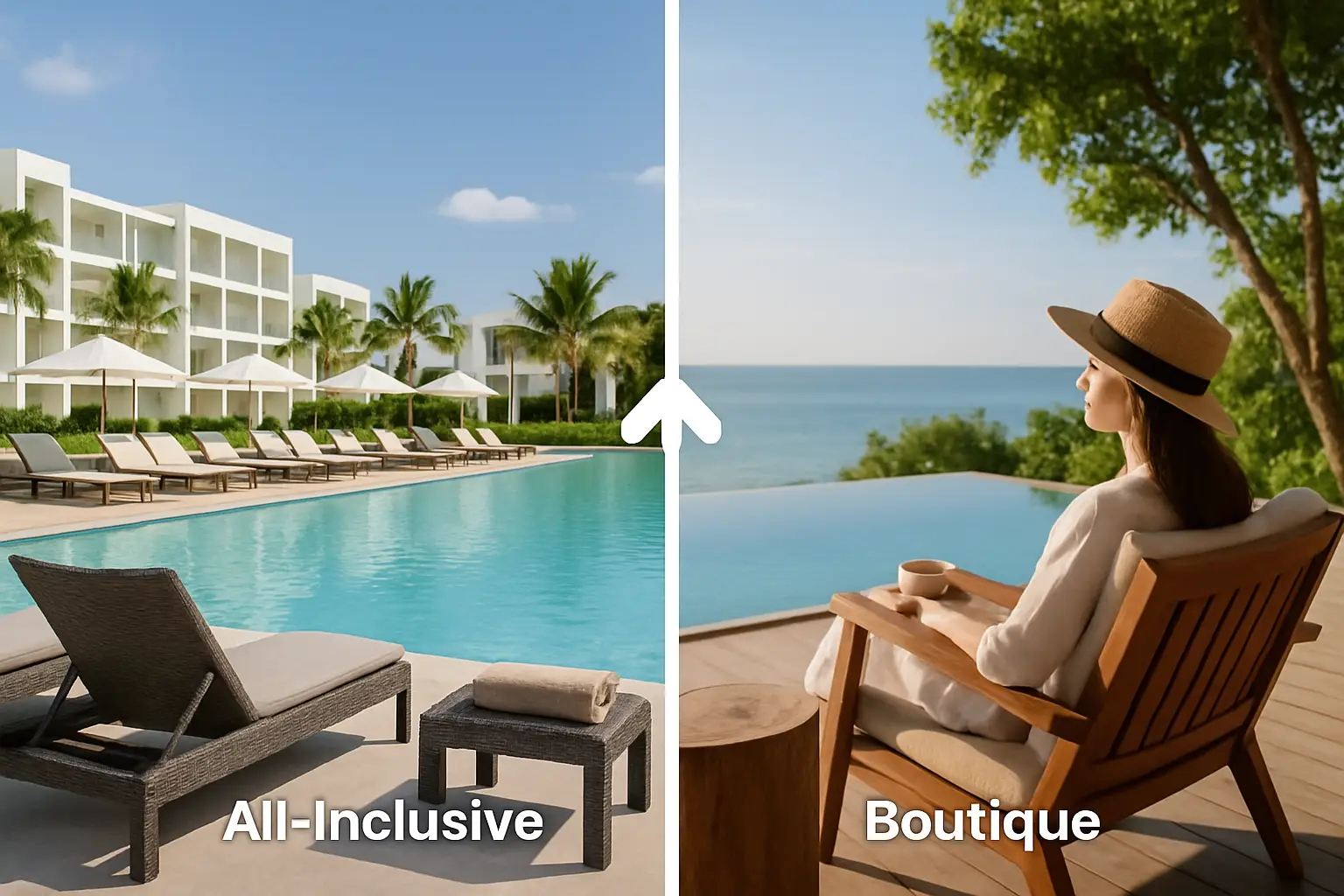
You can feel it in the first five minutes after you arrive.
At an all-inclusive, you are handed a wristband, someone points you toward lunch, and the question becomes: pool first or beach first? At a boutique resort, you are usually greeted by name, offered a welcome drink you did not know you wanted, and suddenly you are asking different questions: which hidden cove is best at sunset, and what is the chef doing with tonight’s local catch?
Neither is “better.” The right choice depends on what kind of trip you are trying to pull off, how much you want to think once you land, and how many moving pieces you are coordinating. Here is the real-world breakdown we use when helping clients decide between an all inclusive vs boutique resort for honeymoons, family vacations, group travel, and even corporate retreats.
The real difference: predictability vs personality
All-inclusive resorts are built to reduce friction. Meals, drinks, entertainment, and often non-motorized water sports are packaged into one upfront price. The experience is designed so you can relax without constantly reaching for your wallet or doing mental math.
Boutique resorts are built around individuality. They are typically smaller, more design-forward, and more connected to the local feel of a destination. Some include breakfast, some offer meal plans, and some are purely room-only. The trade-off is that you gain character and flexibility, but you also take on a little more decision-making.
If your top priority is “I do not want to plan a thing once we arrive,” all-inclusive is your friend. If your top priority is “I want this to feel special and specific, not like every other trip,” boutique often wins.
All inclusive vs boutique resort costs: what you pay, and when
Most travelers compare nightly rates and stop there. That is where budgets get surprised.
With an all-inclusive, you are paying for convenience and predictability. The trip often feels more expensive up front, but once you are on property, your daily spend can be close to zero if you are not upgrading experiences or leaving the resort often. This is why all-inclusives are popular for families and groups: you can set expectations early and keep things under control.
With a boutique resort, the nightly rate can look lower, but you will likely spend more in “trip spending” – meals, drinks, beach clubs, transportation, and excursions. For many couples, that is a feature, not a bug. You can splurge on one unforgettable tasting menu, keep lunch casual, and choose experiences that fit your mood rather than the resort schedule.
A helpful rule of thumb: if you know you want cocktails by the pool, multiple courses at dinner, and a low-planning vacation rhythm, an all-inclusive often pencils out. If you want to explore restaurants, chase sunsets around the island, and mix luxury with local gems, boutique can be the smarter value.
Food and drinks: abundance vs intention
All-inclusive dining has come a long way, especially at higher-end properties where you will find strong culinary programs, fresh ingredients, and memorable specialty restaurants. You can still run into the common pattern: lots of options, some hits, some “good enough,” and reservations that matter more than people expect.
Boutique resorts tend to be more intentional. Fewer venues, but more creativity. You might have one standout restaurant that guests genuinely rave about, plus a bar that feels like a local secret. The flip side is simple: fewer choices if you get picky or if you are traveling with kids who want familiar favorites.
For dietary needs, both can work, but the best outcomes come from planning ahead. All-inclusives can accommodate allergies well because they are built for volume and process. Boutiques can be excellent too, but you want confirmation in writing and a plan for nearby dining backups.
Rooms, service, and the overall vibe
All-inclusives tend to be larger, busier, and more social. There is usually energy around the pool, activities posted daily, and a steady stream of entertainment. That can be perfect if you like being in the mix or if you want built-in things to do without leaving the property.
Boutique resorts are typically quieter and more curated. You feel the design details, the staff remembers your preferences quickly, and the experience can feel more romantic or more “escaped.” If you are the type who wants a peaceful morning coffee with a view, boutique often nails it.
There is also a vibe reality check that matters: some all-inclusives lean party, others lean relaxation. Some boutique resorts are serene, others are trendy and lively at night. The resort type does not guarantee the vibe – the specific property does. That is one reason travelers who “hate all-inclusives” sometimes end up loving the right one, and boutique fans sometimes feel bored at the wrong boutique.
Location and exploring: staying put vs getting out
If your dream is to post up on one beautiful stretch of beach and let vacation happen to you, an all-inclusive makes it easy. You can do your excursions, sure, but you do not have to.
If your dream is to explore – local neighborhoods, hidden beaches, food markets, small tours – boutique resorts tend to support that style better. They are often located closer to towns or in places where you can actually feel the destination beyond the gate.
A smart middle path is pairing the resort type with the purpose of your trip. For example, couples sometimes do a boutique resort for the first half of a honeymoon to explore, then move to an all-inclusive for the last few days to fully unplug.
Who each option fits best (without stereotypes)
Honeymoons and romantic getaways
All-inclusive is amazing for couples who want ease, spa time, and a predictable budget. It is also a great choice if you are coming off wedding planning and your brain is done making decisions.
Boutique is ideal for couples who want a more intimate feel, more authentic dining, and a sense of discovery. If “unique” matters more than “unlimited,” boutique tends to deliver.
If you are planning a destination wedding with guests and want a simple experience for everyone, all-inclusive can reduce friction. If you want a smaller wedding weekend that feels like a curated getaway, boutique may feel more aligned.
Family vacations and multi-generational trips
All-inclusives shine here because everyone can eat, drink, and snack on their own schedule. Parents get fewer surprise costs, and kids have built-in activities. For multi-generational travel, having a central hub with predictable logistics keeps the trip calm.
Boutique resorts can work beautifully for families who want a quieter environment and are comfortable planning meals and activities. They are especially good for older kids and teens who would rather explore than do scheduled resort games.
School groups and corporate retreats
All-inclusives are often the cleanest solution for groups: one property, one bill structure, easier meal planning, and fewer transportation needs. That simplicity matters when you are coordinating chaperones, meeting times, budgets, or a tight retreat agenda.
Boutique resorts can be fantastic for executive retreats where privacy, design, and elevated service matter, but you will want a more detailed itinerary and clearer transportation planning. The smaller scale can be a plus, but it also means less room for last-minute changes.
The planning questions that decide it fast
If you are stuck, answer these honestly.
First: Do you want to leave the resort most days? If yes, boutique often makes more sense. If no, all-inclusive is the easiest win.
Second: How important is a controlled budget? If you want strong predictability, all-inclusive helps. If you prefer flexibility and do not mind paying as you go, boutique can feel freer.
Third: What is your tolerance for coordination? If you are traveling with kids, a large family group, students, or coworkers, the “built-in structure” of an all-inclusive can save the trip.
Fourth: What is your definition of luxury? For some, luxury is unlimited access and options. For others, luxury is quiet, design, and service that feels personal.
Common regrets, and how to avoid them
All-inclusive regret usually looks like this: travelers book a great price, then realize the property is huge, the beach is not swimmable, or the vibe is more party than peaceful. The fix is choosing the right tier and matching the resort personality to your trip goals, not just the deal.
Boutique regret usually looks like this: travelers love the photos, then get surprised by how quickly meals, taxis, and add-ons add up, or they realize there is limited nightlife and fewer on-site activities. The fix is building a realistic daily spending plan and confirming what is included before you commit.
This is where having someone sanity-check the details can save real money and stress. If you want help comparing properties, mapping total trip costs, and aligning the resort choice with your schedule, K&S The Travel Crusaders can plan and book the whole trip end-to-end so you can travel with confidence.
A simple way to choose without overthinking
Picture your ideal day on this trip.
If that day is mostly “stay on property, switch between beach, pool, and dinner, repeat,” you will probably be happiest at an all-inclusive.
If that day is “breakfast with a view, explore for a few hours, come back for a quiet swim, then head out for an incredible local dinner,” boutique is calling your name.
And if you are still torn, you do not have to force a single answer. Some of the best trips blend both styles, especially for honeymoons or longer family vacations.
Book the stay that supports the way you actually travel, not the way you think you should. Your vacation should feel like relief the moment you arrive, and the right resort choice is the fastest way to get there.
