
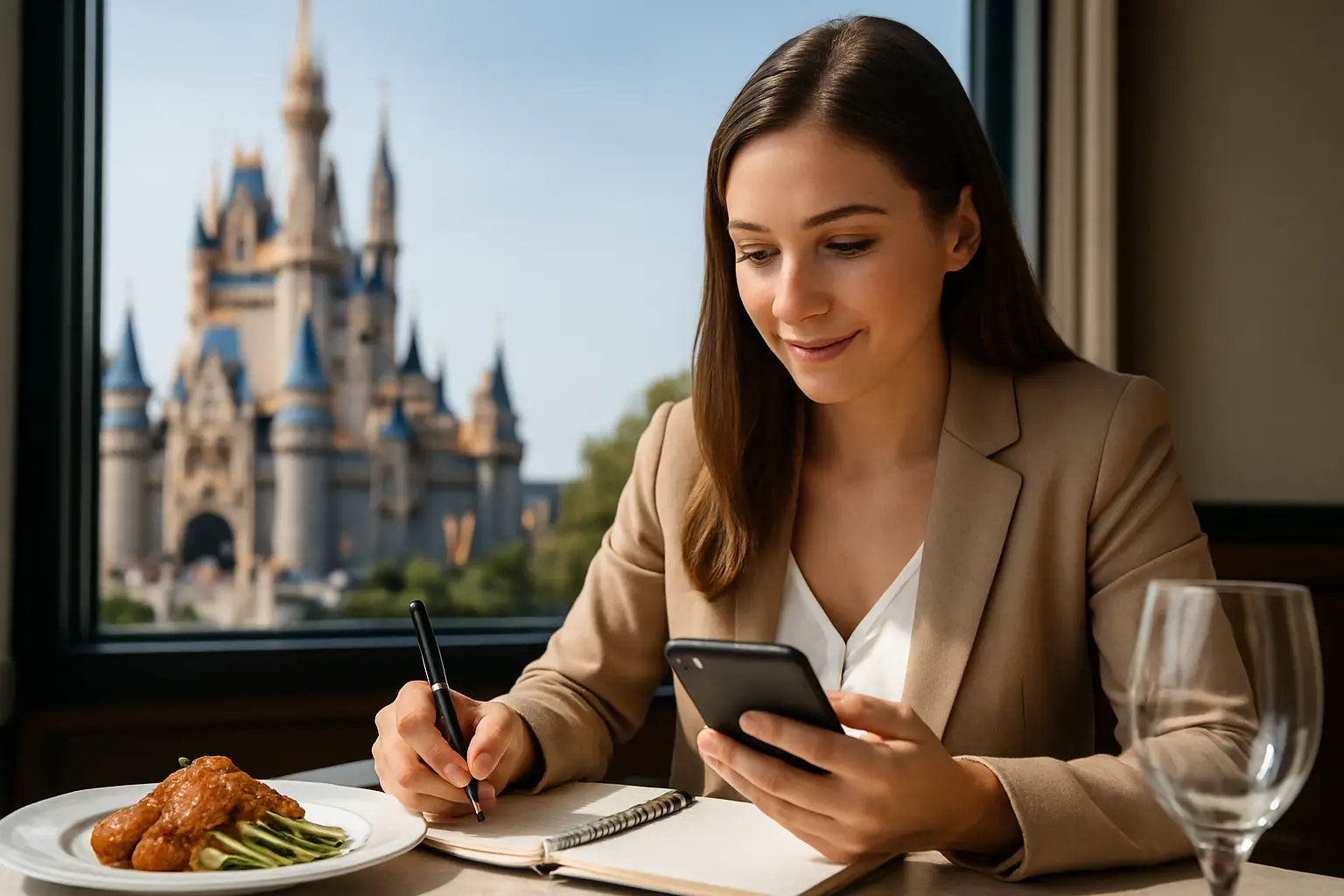
You can tell how your Disney day is going by 11:12 a.m. If everyone is hungry, mobile ordering is backed up, and you are standing in the sun debating where to eat, the rest of the day starts to feel like damage control. The fix is not overplanning every minute. It is having a Disney dining reservation strategy that protects your energy, your budget, and the experiences you actually care about.
Dining is one of the easiest places to waste precious park time. It is also one of the easiest places to create small “anchor moments” that keep a honeymoon feeling romantic, a family trip feeling calm, and a group trip staying on schedule. Let’s walk through a planning-first approach that works whether you are chasing character meals, trying to snag a hard-to-get table, or simply hoping to eat well without building your entire trip around reservations.
Start with your “why,” not a restaurant list
A lot of people begin by scrolling restaurant names and grabbing whatever looks cute. That is how you end up with a 4:05 p.m. reservation on the opposite side of the park from your lightning lane return time, plus a cranky toddler who needed lunch two hours ago.
Instead, decide what dining needs to do for your trip. For couples, dining is often about atmosphere and pacing – a calm table in the middle of a busy day, or a signature meal that feels like a date. For families, it is about predictable breaks, kid-friendly options, and not melting down in lines. For school groups and corporate retreats, it is about throughput and timing – feeding a lot of people quickly with minimal friction.
Once you know the job dining needs to do, you can choose fewer reservations that matter more. Most trips do best with one “must-do” meal per day at most, and the rest handled by mobile order, quick service, or flexible plans.
Understand the real trade-off: flexibility vs certainty
A reservation gives you certainty. It also locks you to a time and place, which can be a problem when weather changes, a ride goes down, or your group moves slower than expected.
If you are traveling with little kids, you often want earlier meal times than you think. If you are traveling with teens, your day may naturally run later. If you are traveling with a large party, you need more certainty because “we’ll just find something” rarely works for ten people.
Here is the practical way to balance it: book reservations for the meals where uncertainty would cost you the most. That might be a single character breakfast that makes your child’s whole trip, or a romantic dinner where you want a guaranteed table. Then keep the rest of your meals intentionally flexible so your day can breathe.
Your Disney dining reservation strategy by trip type
There is no universal best plan. The right strategy changes based on who is traveling and what “a great day” looks like.
Honeymoons and romantic trips
Couples usually enjoy Disney more when dining is used as a reset button, not a race. A late lunch in a quieter setting can feel more valuable than another attraction when crowds are high.
Plan for one signature or highly themed meal every other day, especially if you are also paying for special events, photos, or upgrades. Use the other days for lounges, shareable quick service, and spontaneous snacks. You get the romance without turning your trip into a reservation spreadsheet.
Families with kids
Families do best with one reliable sit-down meal per day, typically lunch. Midday is when heat and overstimulation catch up with kids, and a table inside can rescue the afternoon.
Character dining can be worth it, but treat it like an experience, not just a meal. If it replaces standing in multiple character lines, it often makes sense. If your kids do not care about characters, the price and time commitment may not pay off.
School groups and corporate travel
Groups need consistency. Split meals between quick service that can handle volume and pre-arranged reservations that keep everyone on schedule.
If you are organizing students, consider earlier meal windows and straightforward menus to keep service moving. For corporate groups, a structured dinner can double as a team moment, but you still want a location that supports conversation and does not require everyone to sprint across property to make it on time.
Build your “anchor times” first
Before you book anything, sketch your daily rhythm. Not every detail, just the anchors.
Most people feel best with three anchors: a realistic breakfast plan, a midday break, and a dinner plan that matches their stamina. Morning people may want a lighter breakfast and a solid early dinner. Night owls might do better with a bigger brunch and a later meal.
When you book a dining reservation, you are really booking a chunk of time. A table-service meal can easily take 60 to 90 minutes once you include walking there, checking in, and settling. That is not bad – it is just true. The more accurately you treat that time as “scheduled,” the less it will disrupt the fun.
Put location strategy to work
This is where dining planning becomes a power move.
Try to book meals in the land, park, or resort area where you already plan to be. If you are hopping, align reservations with your hop timing. If you are staying at a resort with easy access to certain parks, consider a resort meal on a lighter park day.
For example, if your afternoon tends to drift toward low energy, plan a meal near the front of the park so you can exit afterward without crossing the entire map. If you know your group needs an afternoon break at the hotel, book lunch near the park exit or at a nearby resort so the transition feels effortless.
Use “priority tiers” so you do not overbook
The fastest way to create stress is treating every restaurant as equally important. Give your dining wish list a simple tier system.
Pick one to three top priorities for the whole trip. These are the reservations you will actively chase. Everything else is optional and should only be booked if it supports your schedule.
This keeps you from stacking reservations you later cancel, and it protects your plans from becoming too rigid. It also helps you spend with intention. Some table-service meals are truly memorable. Others are fine, but not worth sacrificing ride time and flexibility.
Timing tactics that actually help
A few timing choices tend to improve the whole trip.
First, consider eating earlier than the main rush. Earlier lunches and earlier dinners often mean shorter waits, calmer rooms, and an easier time getting a table.
Second, if you are aiming for photos and atmosphere, book when lighting and crowds work in your favor. A slightly off-peak time can feel more relaxed, which is the whole point of a sit-down meal.
Third, be honest about your group’s pace. A party with grandparents, strollers, or a big group chat decision-making process needs more buffer time than two adults moving quickly.
What to do when you did not get the reservation
This happens, even with great planning. The key is not spiraling.
Start by deciding if the restaurant is truly essential or if the experience can be replaced. Often, the same cuisine or vibe exists elsewhere. If the goal is character time, there may be another character meal that fits your schedule better. If the goal is a romantic night, a great lounge and a shared dessert can deliver the same feeling.
Also, structure your day so you are not depending on one hard reservation to make the whole trip feel successful. When dining is one piece of a balanced itinerary, a miss is disappointing, not devastating.
Budget reality: dining can be your quiet trip killer
Disney dining adds up quickly, especially for families and groups. A strategy is not only about getting reservations. It is about deciding where your money changes the experience.
If you are on a tighter budget, focus table-service spending on the meals that give you more than food: characters, a special setting, or a needed midday reset. Use quick service for simple fueling. If you are splurging, do it intentionally and space out higher-cost meals so you do not feel boxed into “expensive everything” for the whole trip.
For couples, one elevated meal plus a few snack-and-lounge moments often feels more romantic than multiple pricey dinners that leave you tired.
When it makes sense to get planning help
If you are coordinating a multi-generational trip, a school group, or a wedding party where timing matters, dining becomes logistics. That is where a planning-first travel advisor can save hours and prevent the common mistakes: booking meals too far apart, choosing locations that do not match park plans, or underestimating transit time.
If you want support building an itinerary that blends dining with park strategy, resort days, budgets, and group schedules, K&S The Travel Crusaders can handle the details so you can focus on the fun parts.
A simple way to pressure-test your plan
Before your reservations are final, read each day out loud like a timeline. If you hear yourself saying, “Then we’ll just hurry,” too many times, something needs to move.
A good Disney dining reservation strategy should feel like guardrails, not handcuffs. You should be able to get hungry, change your mind, or linger in a magical spot without worrying that your next reservation will punish you.
Give yourself permission to plan less, but plan smarter. The best trips are the ones where the meals show up exactly when you need them, and the rest of the day stays open for whatever magic happens next.
