
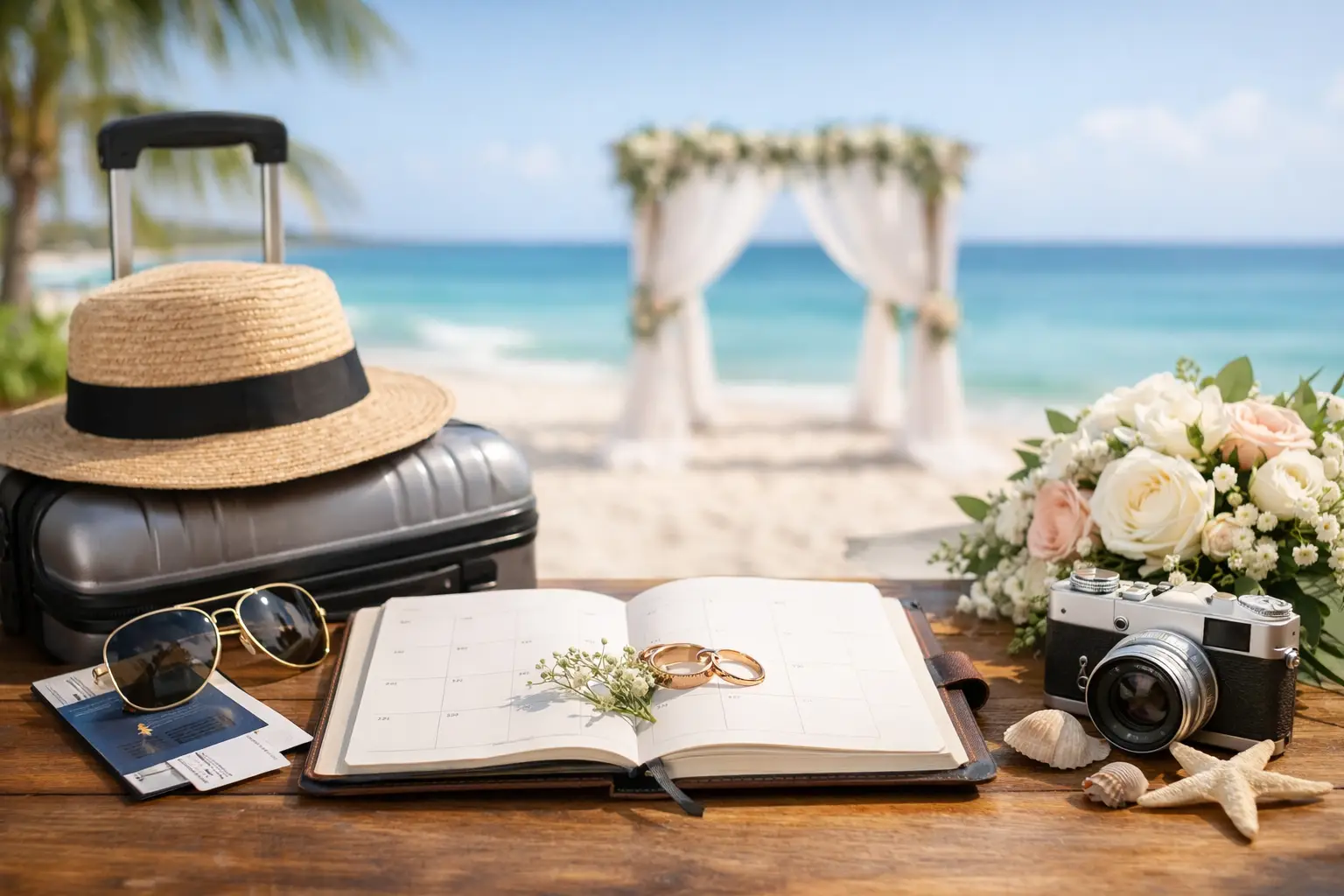
A destination wedding can feel effortless for guests and still be tightly organized behind the scenes. That is exactly why an example destination wedding travel schedule matters so much. When flights, check-in times, welcome events, ceremony details, and departure plans are mapped out in advance, the trip feels more like a celebration and less like a group project.
For most couples, the challenge is not choosing a beautiful location. It is coordinating real people with different budgets, arrival times, comfort levels, and travel habits. Some guests will book early and ask smart questions. Others will text you three days before departure asking if they need a passport. A good schedule keeps everyone on the same page without making the trip feel overplanned.
What an example destination wedding travel schedule should do
A strong travel schedule is more than a timeline of wedding events. It should help guests understand when to travel, where to be, and how much free time they will have. That balance matters. If every hour is packed, people feel managed. If nothing is clear, people feel lost.
The sweet spot is structure with breathing room. Your wedding weekend should include anchor points like arrival day, a welcome gathering, the ceremony, and departures. Around those moments, guests need enough flexibility to enjoy the destination, recover from travel, and spend within their comfort zone.
This is also where planning style matters. A couple hosting an adults-only resort wedding may be able to keep things simple. A family-heavy wedding with kids, grandparents, and a group excursion needs more detail. Neither approach is wrong. It depends on your guest list, destination, and how much coordination you want to take on.
Example destination wedding travel schedule for a 4-day trip
This sample assumes a Thursday-to-Sunday destination wedding at a beach resort or similar full-service property. It works especially well for couples bringing in guests from different US cities and wanting a smooth, low-stress flow.
Day 1: Arrival and settling in
Most guests arrive on Thursday between late morning and early evening. If possible, recommend flight windows rather than one exact arrival time. That gives people flexibility while still helping your group stay roughly aligned.
Once guests land, the schedule should account for airport transfers, resort check-in, and time to decompress. Even confident travelers need space after a travel day. Rooms may not be ready immediately, luggage may be delayed, and some guests will need food before they can socialize.
A light welcome event that evening works better than a formal dinner for most groups. Think cocktails, a beachside meet-and-greet, or a casual group dinner with an open arrival window. Keep the tone relaxed. This first night is about helping people connect, not starting the wedding festivities at full speed.
A practical Thursday schedule might look like this in your guest communication: arrivals from 11:00 a.m. to 5:00 p.m., check-in and free time from 2:00 p.m. to 6:30 p.m., welcome gathering from 7:00 p.m. to 9:00 p.m. Guests who arrive late can simply join when they can or rest and catch up the next day.
Day 2: Free time with one planned event
Friday should not feel like a second job for your guests. This is where many couples overschedule. They want to maximize the destination, but if you stack spa appointments, excursions, rehearsal obligations, and group meals into one day, people get tired fast.
A better option is to keep most of the day open and schedule one meaningful event in the late afternoon or evening. If you have a rehearsal, host it around 4:00 p.m. followed by a rehearsal dinner or welcome dinner at 6:00 p.m. If you are skipping a traditional rehearsal, a sunset cruise or private group dinner can fill that role nicely.
This is also the best day for optional activities. Optional is the key word. A catamaran trip, local tour, or poolside cabana hangout can be offered without making guests feel obligated to spend more money. Not every traveler wants the same experience, and destination weddings go more smoothly when couples respect that.
Day 3: Wedding day
Saturday is the main event, so the travel schedule needs to protect everyone’s energy. Start the day slow. Guests appreciate a clear ceremony time and transportation details far more than a packed pre-wedding agenda.
If the ceremony is on-site, let guests know when they should begin arriving at the venue. If transportation is needed, include pickup times and build in cushion for delays. Ten extra minutes can save a lot of stress.
For the wedding party and immediate family, the schedule will naturally be more detailed. Hair and makeup, photography, getting dressed, first look timing, and pre-ceremony gathering points all need to be coordinated carefully. For general guests, keep the message simple: when to be ready, what to wear, and where to go.
A sample wedding day flow could be breakfast and free time until noon, wedding party preparations from 12:00 p.m. to 3:30 p.m., guest transportation or venue arrival at 4:30 p.m., ceremony at 5:00 p.m., cocktail hour at 5:30 p.m., reception from 6:30 p.m. to 10:30 p.m., and after-party or open resort nightlife after that.
The big planning lesson here is not to cut timing too close. Destination weddings come with weather shifts, slower-moving groups, and guests who are unfamiliar with the property layout. Buffer time is not wasted time. It is what keeps the day feeling calm.
Day 4: Departure day
Sunday departures should be easy and clearly communicated. Some guests will leave early in the morning, while others may extend their stay. Your schedule should reflect both.
If many guests are checking out on the same day, offer guidance on airport transfer timing, recommended departure windows, and checkout procedures. A farewell breakfast can be a nice touch, but only if it fits the group. For some weddings, guests would rather sleep in, grab coffee, and head home on their own timeline.
This is where a travel advisor adds real value. Coordinating flights, room categories, transfer schedules, and extension stays is manageable when one person or team is overseeing the details. It becomes messy when every guest is doing something slightly different with no central plan.
How to customize this example destination wedding travel schedule
The best schedule is the one that fits your group, not the one that looks impressive on paper. Start with the destination itself. A wedding at an all-inclusive in Cancun has different logistics than a wedding in Tuscany or on a Caribbean island with limited flight options.
Travel time matters too. If most guests are coming from the East Coast to Mexico, a Thursday arrival may be simple. If guests are crossing multiple time zones or taking international connections, they may need an extra buffer day. The farther and more complex the route, the more your schedule should prioritize rest and flexibility.
Budget is another real factor. Some couples assume guests will want a five-day celebration with multiple private events. In reality, many people are balancing airfare, hotel costs, childcare, and time off work. A shorter, cleaner itinerary often gets better participation than a longer, more expensive one.
Guest demographics shape the pace as well. Families with children may need earlier dinners and downtime near naps or bedtime. Older guests may prefer fewer venue changes and simpler transportation. A younger crowd might love an after-party and group excursion. Good planning is not about pleasing everyone equally. It is about removing the biggest friction points before they become problems.
Common mistakes that throw off the schedule
One of the most common mistakes is assuming guests know what to do without being told. Even experienced travelers need clear guidance when they are navigating a wedding in an unfamiliar place. If transportation is included, spell it out. If guests need to book by a room block deadline, say so early and often.
Another mistake is treating every event as mandatory. People enjoy destination weddings more when they have some ownership over their trip. Give them the key moments, make the expectations obvious, and leave room for personal choice.
Timing mistakes also show up around arrivals and departures. If your welcome event starts too soon after major flight windows, late arrivals miss it and begin the trip feeling behind. If your wedding runs too late before early next-day departures, people leave exhausted. A schedule should support the celebration, not compete with travel reality.
For couples who want a smoother planning process, working with a team like K&S The Travel Crusaders can take the pressure off. When travel and event flow are coordinated together, the entire experience feels more manageable for both the couple and their guests.
The schedule is there to protect the experience
The best destination wedding schedules are not rigid. They are reassuring. They give guests enough information to travel confidently, enough structure to show up at the right moments, and enough freedom to enjoy why they came in the first place.
If you are building your own plan, start simple. Anchor the trip around arrivals, one welcome moment, the wedding day, and departures. Then add only what makes the experience better. A clear schedule does not make your wedding less fun. It gives everyone more room to enjoy it.

Leave a Reply