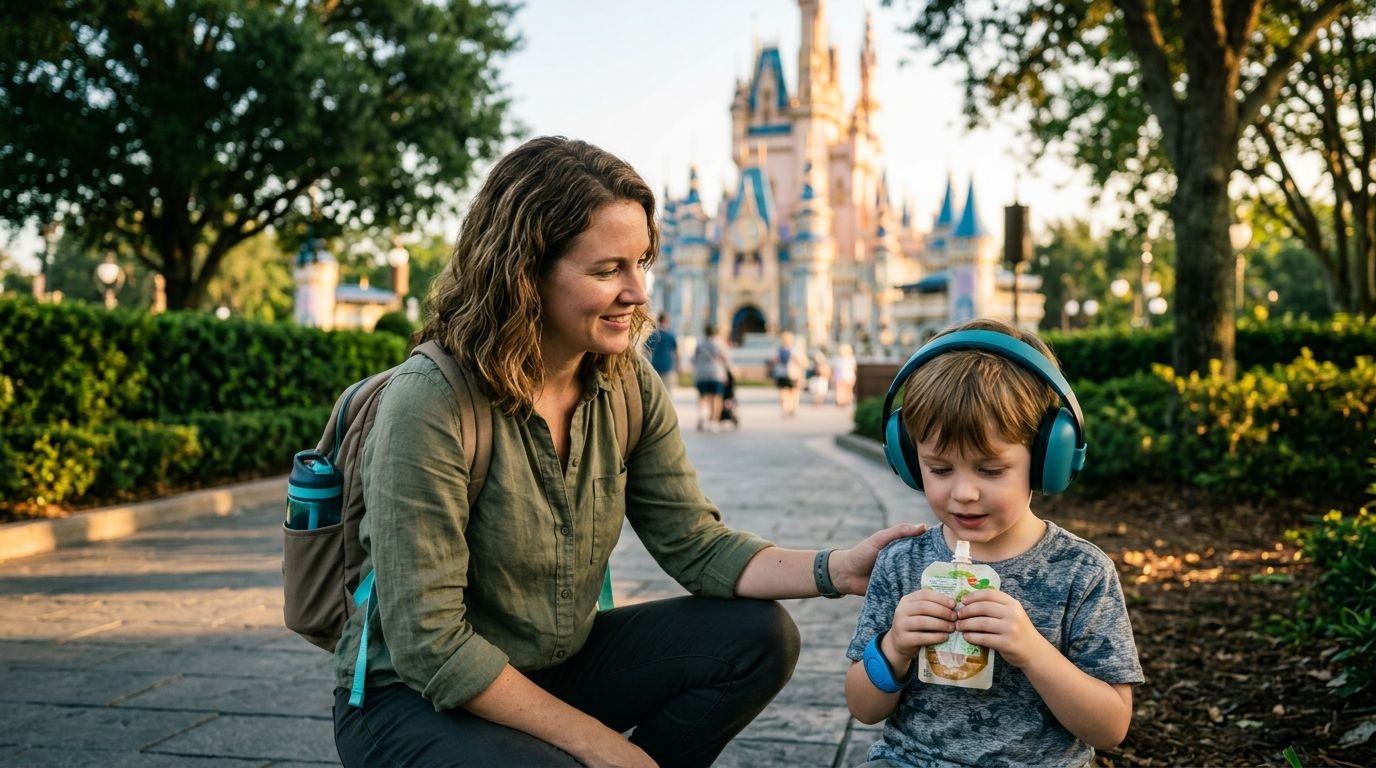
A park day doesn’t have to be a race from one ride to the next. For many families, the best day includes favorite attractions, familiar food, quiet breaks, and permission to leave before everyone is worn out.
This Magic Kingdom autism guide is for autistic guests, parents, and caregivers supporting someone with cognitive disabilities. It helps make a Disney World day feel more comfortable and manageable.
Start with your autistic child’s needs, not a packed park itinerary.
Key Takeaways
- Start with your child’s sensory, communication, food, and break needs instead of trying to complete a packed itinerary.
- Review Disney’s current Disability Access Service rules before your trip. DAS provides a return time for an eligible guest; it does not remove every wait or act as a front-of-the-line pass.
- Plan one land or a few nearby attractions at a time, and schedule quiet breaks before signs of sensory overload appear.
- Use practical supports such as headphones, familiar snacks, communication cards, a stroller designation, Rider Switch, and Companion Restrooms when helpful.
- Let the day change course. Leaving early, skipping fireworks, returning to the resort, or choosing one favorite ride can still make the day a success.
Prepare Before Your Disney Park Day
Good vacation planning often starts at home. Theme parks have music, crowds, ride announcements, character interactions, changing weather, and lots of walking. None of that means your family can’t enjoy the day. It simply means familiar routines and clear expectations matter.
Create a simple visual schedule with the parts of the day your child needs to know. It doesn’t need to show every attraction. Too many details can make a schedule feel like a test.
A helpful visual schedule may include:
- Wake up, get dressed, eat breakfast, and travel to the park.
- Go through the security checkpoint and scan into the park.
- Pick one first ride or one first stop.
- Take a snack, bathroom, or quiet break.
- Eat lunch, return to the hotel, or rest in a shaded area.
- Choose one more favorite thing before deciding whether to stay or leave.
Use real photos when possible. Show pictures of Cinderella Castle, the monorail, a stroller, a favorite character, or the outside of a ride. Short attraction videos can also help, especially if your child prefers to know what to expect before trying something new.
Practice the small details before travel day, especially if your child has sensory sensitivities. Try the headphones your child will use in the park. Test sunscreen, cooling towels, new shoes, ponchos, and a portable fan at home. Families with special needs related to clothing, food, communication, or transitions may want extra backups. Pack preferred clothes for more days than you think you need. A spilled drink, Florida rainstorm, or uncomfortable fabric can change the whole mood of an afternoon.
Security can also be a surprise if it hasn’t been explained ahead of time. Keep it simple: a cast member may look in your bag, the security team may direct your family through a scanner, and then you will enter the park. Security screening is separate from the DAS pass process, so it helps to make this step feel expected.
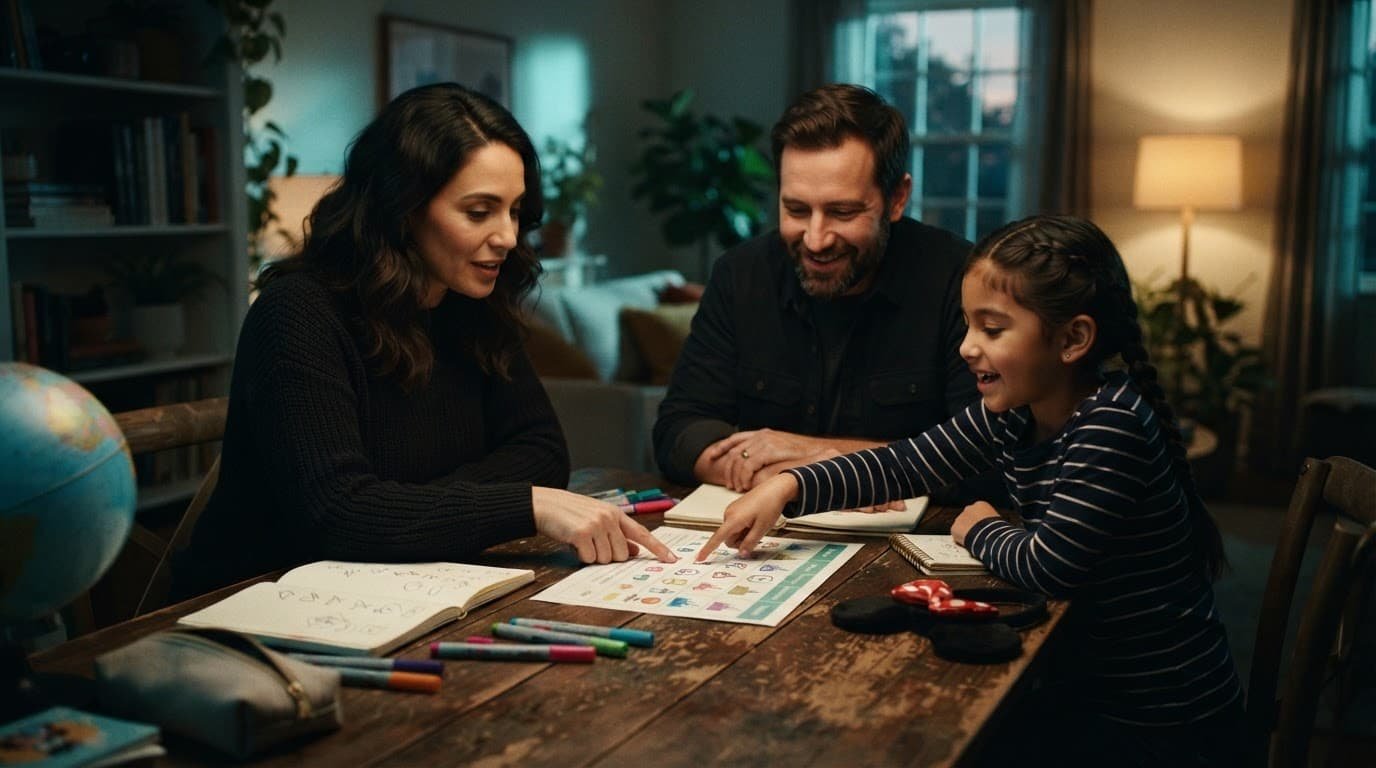
A small park-bag pouch can make a big difference. Keep headphones, a fidget, a comfort item, a charging cable, and a portable battery together. Many families remember the tablet and forget the cord. A dead device can feel like a much bigger problem after a long, hot day.
DAS at Magic Kingdom: What It Does and How to Register
Disney’s Disability Access Service, often called DAS, is for guests with developmental disabilities, including autism, who cannot wait in a conventional queue for an extended period. It is not a front-of-the-line pass. It gives an eligible guest a return time so they can wait somewhere else.
That difference matters. Many families search for the phrase “DAS pass,” even though Disney officially calls the program DAS. A diagnosis, including cognitive disabilities, doesn’t automatically guarantee access. Instead of being stuck in a crowded queue, your family can sit in shade, have a snack, use the restroom, visit a quieter area, or take a short break at the resort.
Review Disney’s current Disability Access Service details before your trip. Rules and registration steps can change, so older social media posts and previous trip reports may not match today’s process.
How to pre-register online for the DAS pass
Disney World currently uses a live video chat process to register for the DAS pass. You can request the video chat up to 60 days before your first park day, once valid theme park admission is linked in My Disney Experience.
The guest requesting registration must be visible during the call. A parent or guardian should join when the guest is a minor. Disney wants to understand the practical challenge with a standard line. If cognitive disabilities affect queue tolerance, describe what happens during a long wait and why waiting elsewhere is needed.
You don’t need to give a full medical history. Clear, honest details are enough. For example, explain if close crowds, unpredictable line movement, heat, noise, or limited exit options lead to distress or unsafe behavior.
If you cannot complete registration in advance, Disney also offers a same-day video chat option. A cast member may clarify the process during same-day assistance. Don’t plan on stopping at the park’s Guest Relations desk for an initial in-person DAS registration. The current process is handled by video chat.
A plain-language DAS eligibility overview can also help families understand why Disney has narrowed the program around developmental disabilities and queue tolerance.
Use DAS without turning it into another stressful schedule
Once the DAS pass becomes active, the registered guest or a connected caregiver can request a return time in the My Disney Experience app. That creates a return window for the attraction. You can generally hold one active DAS return time at a time. After your family uses it, you may request another.
The DAS guest must be present and ride with the party. Disney uses photo verification at attraction entry, so the pass cannot be used by other family members on their own.
Lightning Lane Multi Pass is separate from DAS and costs extra. It can help if your family has a few must-do rides and can handle scheduled times. It can also create too many times to watch. You don’t need every paid add-on for a good Disney World trip.
DAS gives your child a different place to wait. It does not remove every wait, every crowd, or every need for a break.
Plan a Disney Park Day Around Your Child
The park is easiest when you stop treating it like one large park. Think of Disney theme parks as several smaller areas. Fantasyland, Tomorrowland, Adventureland, Frontierland, Liberty Square, and Main Street, U.S.A. each have a different sound level, crowd pattern, and pace.
Pick one land for the morning. Let your family enjoy a few nearby attractions, checking wait times before crossing to another land. Walking back and forth between lands can create tired feet, missed meals, and frustration before lunch.
Use attraction descriptions as a starting point, then consider your child’s individual sensory sensitivities and trust their sensory profile. A ride that is difficult for one child may become a favorite for another.
| Attraction or area | Sensory considerations | A planning idea |
|---|---|---|
| The Many Adventures of Winnie the Pooh | Bright colors, playful sounds, bouncing ride vehicles | Watch a short ride video before the trip. |
| Pirates of the Caribbean | Dark scenes, cannon sounds, water, and a small drop | Skip it if darkness or sudden loud sounds are difficult. |
| Haunted Mansion | Spooky images, darkness, moving ride vehicle, eerie music | Explain the theme in advance or choose a calmer ride. |
| Tomorrowland Speedway | Engine noise, gas smells, bright sun, and long waits | Bring ear protection and choose a lower-crowd time. |
| Tomorrowland Transit Authority PeopleMover | Steady movement, narration, dim sections, open views | It can be a gentle reset for guests who enjoy motion. |
Fantasyland can be a good starting point for children who enjoy familiar stories, simple rides, and colorful spaces. It can also become crowded fast. If the area feels busy, move on instead of waiting for the perfect moment.
Is this park right for a five-year-old autistic child who seeks sensory input?
It can be a strong choice for a five-year-old who enjoys movement, music, characters, and ride variety. Dumbo the Flying Elephant, the Mad Tea Party, Tomorrowland Speedway, Barnstormer, and PeopleMover all offer different kinds of motion.
Still, more stimulation is not always better. A child may love fast rides but dislike crowded queues. Another may enjoy loud music but need quiet time after a character meet-and-greet. Build in breaks between high-energy experiences.
Animal Kingdom may feel more open and slower for some families, while Hollywood Studios can suit families with a few highly preferred attractions. This option has more rides and familiar Disney stories than some alternatives. Epcot offers broader walking routes, while Epcot’s longer transitions make planned breaks important. Its varied sensory experiences can suit some families, but there is no single best Disney World park for every sensory-seeking child. Choose the one that best fits your child’s favorite activities and recovery needs.
Quiet Break Areas and a Gentler Arrival
The park does not have a dedicated sensory quiet room that families should expect to use on demand. It does have places where you can pause, sit down, cool off, and reset before a hard moment becomes a full shutdown.
First Aid on Main Street, U.S.A. is useful for medical concerns or guidance from Disney staff. The nearby Baby Care Center may help families with young children. Guest services can help direct families to appropriate support, but neither location is a general hangout space.
For a short, lower-stimulation break, look for the Tangled-themed rest area in Fantasyland, shaded seating along the edge of Liberty Square, or quieter paths in Adventureland. Noise and crowd levels change all day, so check the space before settling in. A spot that feels calm at 10:00 a.m. may be busy after lunch.

Plan breaks before you think your child needs one. Covering ears, pacing, repeated questions, irritability, refusal, or a sudden need to leave may signal sensory overload. These signals communicate a need, not bad behavior.
Arrive early enough to get through security without rushing, but don’t feel pressured to join the rope-drop rush. The opening crowd can be loud and fast-moving. A slower arrival may work better for your family.
If fireworks are difficult, leave before the nighttime crowd forms. You can also schedule an early dinner, take a resort break, or choose a calmer evening activity. Missing fireworks does not mean you missed the day.
Stroller Tags, Rider Switch Program, and Support Tools
A stroller can be more than a place to sit. For some autistic children, it is a familiar, safe space that helps with fatigue, elopement concerns, or sensory overload.
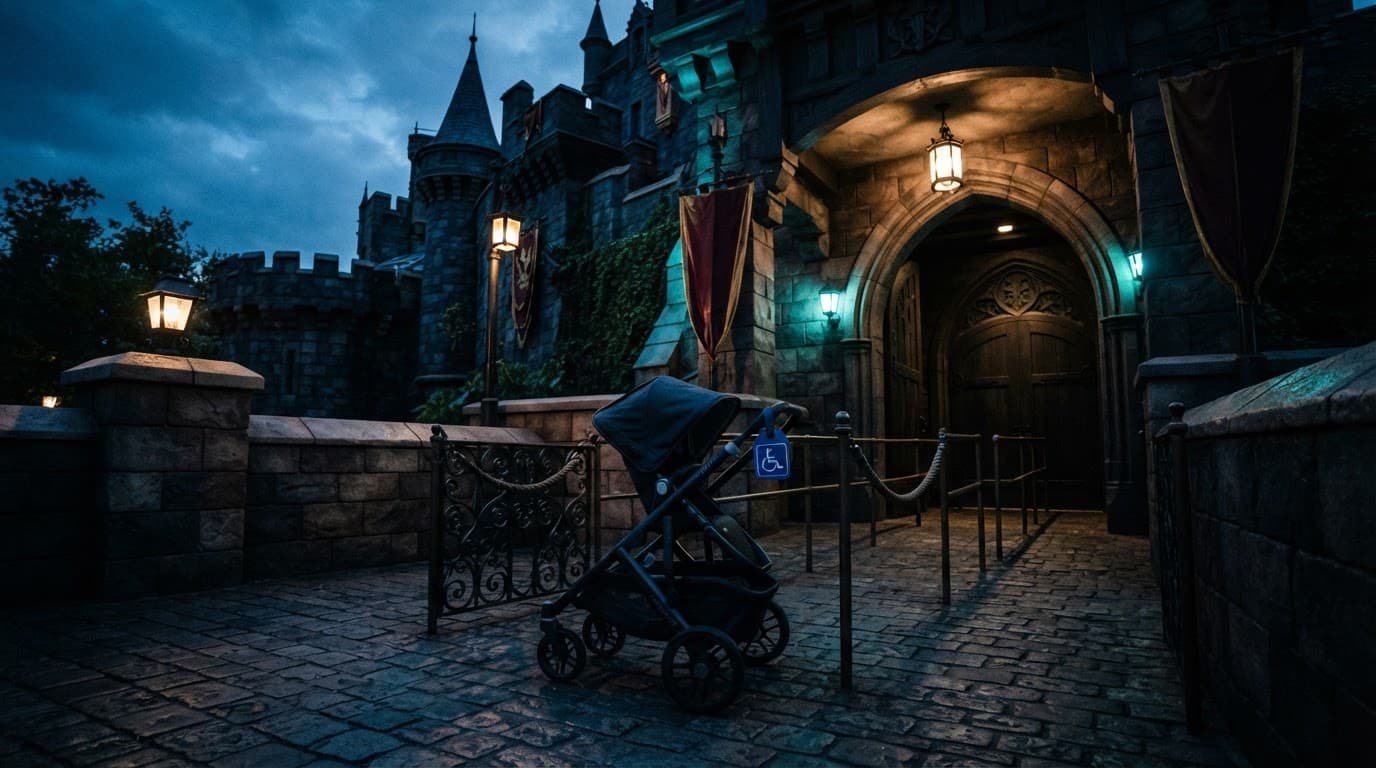
Ask at guest services or a Guest Experience Team location whether you can designate your stroller as a wheelchair. The attraction team can explain where this access applies. The stroller as a wheelchair designation may allow your child to remain in the stroller through accessible queue areas. It does not approve DAS, replace a return time, or allow the stroller onto a ride vehicle.
The rider switch program is another helpful tool when one child cannot or does not want to ride. Bring your party to the attraction entrance and tell a cast member you need Rider Switch. One adult rides while another waits with the non-rider. Then the adults switch without both waiting through the full line.
Ask the attraction team how the process works at that attraction before the first adult rides. Procedures can vary, and a quick explanation avoids confusion later.
Companion Restrooms can also take pressure off when a child needs caregiver support or more privacy. Find them in the My Disney Experience app or ask Disney staff for the closest option. It is always better to ask early than wait until the situation feels urgent.
Keep communication supports easy to reach. A simple card with choices like “wait,” “break,” “food,” “bathroom,” and “all done” can help when spoken words are hard. You can also give Disney staff a short note explaining communication needs, including pictures, gestures, AAC, or limited speech. These tools can be useful for children with cognitive disabilities.
Meals, Characters, and Flexible Timing
Food decisions can become harder when everyone is tired and hungry. Look at menus before your trip and make a short list of familiar meals, snacks, and backup choices.
Mobile Order through My Disney Experience can reduce time spent standing in line. Choose a pickup window, review choices during a calmer moment, and wait nearby until food is ready. If a busy dining room feels too loud, take your meal to an outdoor table or bring it back to your resort for a midday break.
Crystal Palace is the park’s best-known option for meeting Winnie the Pooh and friends over a meal. It can be a happy experience for children who love characters. It can also be busy, loud, and full of unexpected movement around the table.
Book character dining because your child enjoys it, not because it feels mandatory for every family. Let your child know characters may come close, wave, sign an autograph book, or move to the next table. A simple hand signal for “no thank you” can give your child more control.
An early lunch, a late breakfast, or an early dinner may feel calmer than the busiest meal periods. When you check in, ask the dining team for an edge table or a spot away from speakers. The restaurant staff can’t promise every request, but they will often try to help.
Familiar snacks are part of good planning, not a failure to try new food. Bring the items that help your child feel settled. A preferred granola bar, crackers, fruit snacks, or a refillable water bottle can prevent a small hunger issue from becoming a difficult afternoon.
A Park Day That Can Change Course
A flexible plan gives your family choices without creating pressure. Start with one favorite ride, one calm attraction, and one meal goal. Everything else is extra.
Your morning might include Fantasyland and a snack break. After lunch, you might return to one of the Disney resorts for swimming, quiet time, or a change of clothes. Later, decide whether the family wants to return for one ride, a parade, or nothing at all.
Keep this Magic Kingdom autism guide in your back pocket, but let your child’s energy lead the day. A ride closure, rainstorm, missed return time, or changed plan does not mean the day is ruined.
Families who want more help with planning can use the Disney World With Autism Guide PDF on Etsy or this Disney autism trip planning ebook on Amazon. Both can offer ideas for sensory supports, park days, and breaks across Disney’s theme parks.
Before leaving home, compare any older DAS pass advice with Disney’s official DAS page and this DAS overview from Undercover Tourist. Disney access policies and attraction details can change.
Frequently Asked Questions
Is DAS a front-of-the-line pass at Magic Kingdom?
No. DAS gives an eligible guest a return time so the family can wait somewhere else instead of remaining in a conventional queue. The guest must be present and ride with the party, and DAS does not remove every wait or crowd.
How can I register for DAS before visiting Magic Kingdom?
Disney World currently uses a live video chat process, which can be requested up to 60 days before the first park day when valid admission is linked in My Disney Experience. Review Disney’s official DAS information before your trip because registration rules and procedures can change.
Does Magic Kingdom have a dedicated sensory quiet room?
Families should not expect an on-demand sensory quiet room at the park. You can look for lower-stimulation areas such as the Tangled-themed rest area, shaded seating near Liberty Square, or quieter paths in Adventureland, while remembering that crowd levels change throughout the day.
Can I use a stroller as a wheelchair at Magic Kingdom?
Ask guest services or a Guest Experience Team location whether your stroller can be designated as a wheelchair. This may allow your child to remain in the stroller through certain accessible queue areas, but it does not approve DAS or allow the stroller onto a ride vehicle.
What should I do if my child becomes overwhelmed?
Treat covering ears, pacing, irritability, refusal, or a sudden need to leave as signs that your child needs support, not as bad behavior. Move to a calmer area, offer familiar tools or a snack, take a resort break, or leave the park if that is what the family needs.
A Park Day That Feels Like Yours
The best park day is not measured by ride count, fireworks, or how late you stay. It is measured by whether your family felt supported, comfortable, and connected.
Plan around favorite activities, quiet spaces, familiar supports, and genuine breaks. A calmer pace often makes room for the memories your family will want to keep.