
You shouldn’t have to choose between caring for your health and making family memories. Planning for chronic migraine travel starts with flexibility, a treatment plan, and enough breathing room to change the day.
An unpredictable migraine attack can add stress to flights, hotel stays, and activities. We help families plan around their needs, while their clinicians guide medical decisions.
Start with a trip your family can comfortably manage, then build support into each stage.
Key Takeaways for a More Comfortable Trip
- Keep daily and rescue medication with you, in original prescription-labeled packaging, with supplies for delays.
- Choose transportation, private accommodations, and activities that protect meals, sleep, and recovery time.
- Give your family a backup plan for attacks, including childcare arrangements, medical contacts, and an easy way to return to your room.
Before Booking: Choose a Trip That Fits Your Needs
Travel worries are understandable. A Condé Nast Traveler migraine survey included 500 people diagnosed by a physician. Of those respondents, 94% said the possibility of an attack during a family getaway caused stress. Another 89% had postponed a trip.
The same survey found that 55% lacked sufficient acute treatment, while 40% lacked confidence managing attacks away from home. Preparation deserves time before booking.
Plan Around Your Current Symptoms
Consider your recent attack pattern, recovery time, and how well your usual treatment works. If symptoms have changed or attacks aren’t controlled, involve your clinician before choosing a demanding trip.
When attacks happen close together, leave several days flexible. A nearby getaway or shorter break can reduce transportation demands.
Choose Privacy and Flexible Reservations
Book your own room and bathroom so you have a private place during a flare. Request blackout curtains, a quieter location, and distance from elevators or entertainment areas.
Choose health insurance for medical costs abroad, and consider cancellation or interruption coverage. Pre-existing-condition exclusions can affect migraine-related claims; coverage isn’t automatic.
Our family vacation planning checklist helps organize reservations, transportation, and family essentials.
Is Flying or Driving Better With Migraine?
Flying isn’t automatically dangerous, but it can trigger an attack. Barometric pressure changes can affect pressure-sensitive travelers.
Research on the aircraft cabin environment describes pressurization below an equivalent altitude of 8,000 feet. A typical cabin altitude is comparable to an elevation of roughly 5,000 feet or more, often around 6,000 to 8,000 feet.
Compare common migraine triggers across the whole travel day, including transfers.
| Option | What may help | What needs planning |
|---|---|---|
| Air travel | A direct flight can shorten travel time. | Pressure changes, airport noise, queues, and delays. |
| Driving | You control breaks, meals, and departure time. | Glare, motion sensitivity, fatigue, and driving safety. |
Driving offers control, but mountain routes can involve altitude changes. Choose manageable daytime stretches and overnight stops for a road trip rather than attempting one exhausting drive.
Don’t drive during disabling pain, visual symptoms, dizziness, or medication-related drowsiness. Another capable driver is an important backup.
Build a Clinician-Approved Medication Plan
A dependable chronic migraine travel plan covers what to take, when to take it, and what to do if acute treatment doesn’t work.
Discuss Rescue Treatment and Short-Term Bridges
Ask your clinician whether you need a short-term bridge or a revised rescue plan for your trip. A bridge is temporary treatment around a predictable period of increased risk.
Dr. Fred Freitag has suggested acetazolamide, a medicine for altitude sickness, for flight-related migraine. MigreLief’s travel guidance discusses this option. Tingling or temporary numbness can occur. It’s not routine migraine prevention, and it requires individualized prescribing.
Dr. Juan Lacayo suggests rimegepant on the morning of departure may help prevent an attack. He also recommends keeping it accessible for acute treatment. Your prescriber should decide whether that approach fits your regimen. Don’t add doses beyond your prescribed schedule.
Protect Prescriptions During Every Transfer
Follow CDC medication travel guidance: carry medicines in original labeled containers, in your carry-on. Bring prescription copies and a doctor’s letter listing generic names and care needs. Your usual medicine may not be available abroad.
Sprix, an intranasal NSAID, requires refrigeration before opening. Opened bottles have different storage instructions and a short usable period. Ask your pharmacist to plan storage for your exact product.
Use suitable cooling supplies without freezing medicine. Cabin crew may provide an ice pack, but it isn’t a dependable storage plan. Arrange suitable refrigeration at your destination and bring backup cooling.
Pack a Carry-On You Can Use During an Attack
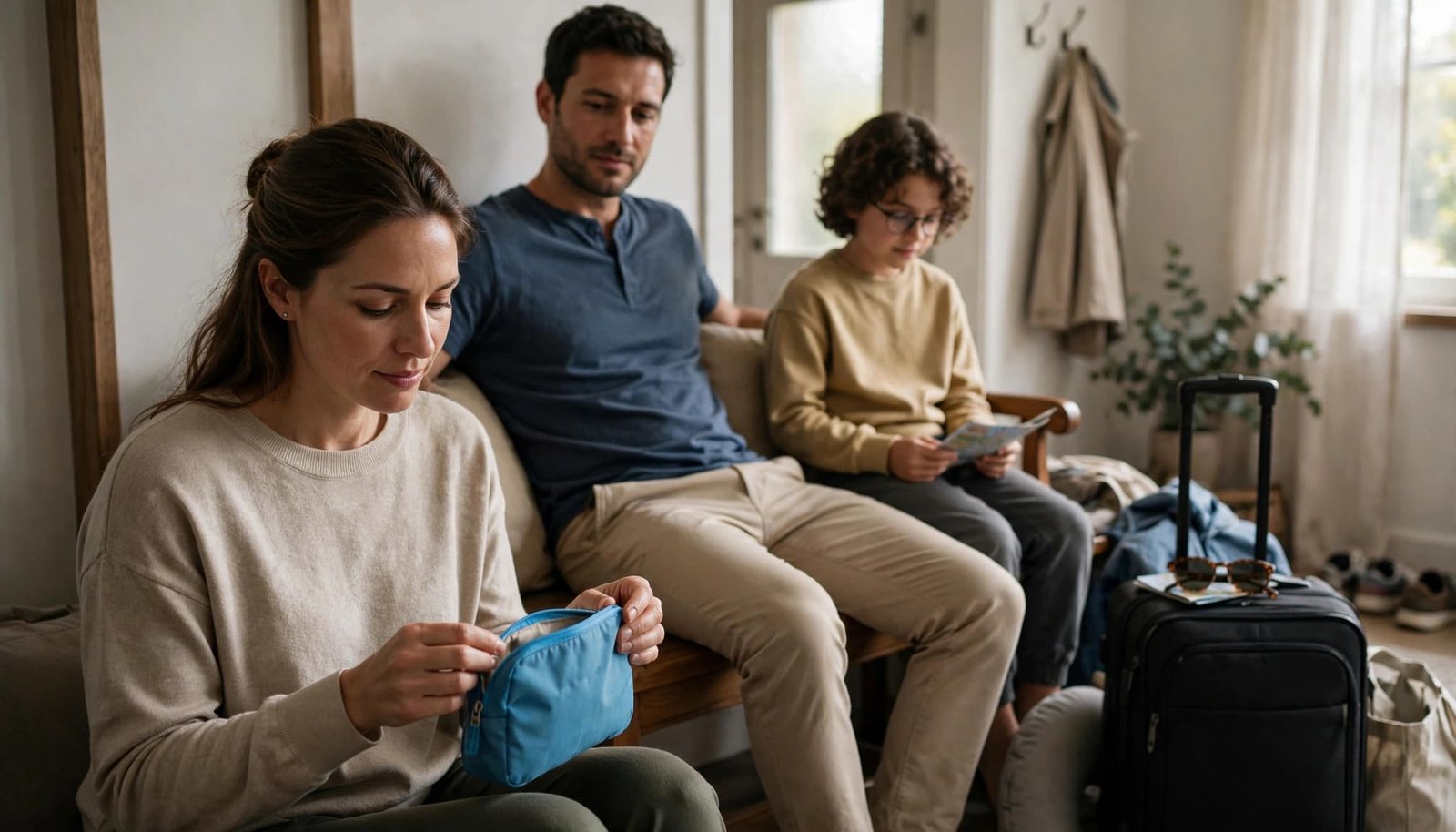
Keep your supplies for a migraine episode in one reachable pouch. Tell your travel companions where it is, and remove it before any carry-on is gate-checked.
Your carry-on should include:
- Pack preventive prescriptions, prescribed acute treatment, nausea treatment, and an approved extra supply for delays.
- Bring prescriptions, your doctor’s letter, insurance information, and paper copies of important contacts.
- Include sunglasses, a wide-brimmed hat, earplugs or comfortable headphones, and a cooling pack if helpful.
- Carry familiar snacks, a refillable water bottle, a phone charger, and a portable battery.
- Add a change of clothes, tissues, wipes, and disposal bags for an unexpected sick day.
Test unfamiliar comfort items before departure. Vacation day isn’t the time to discover that headphones press painfully against your head.
Our Trip Rescue Shop travel essentials include strollers and cleaning supplies for sick-on-vacation moments. Keep cleaning products separate from food and medication. These supplies support preparation; they don’t replace your medical plan.
Make the Airport and Flight Less Demanding
Arrange Assistance Before Travel Day
Ask the airline in advance for assistance between check-in and the gate, early boarding, and help on arrival. Describe the support you need, such as avoiding prolonged standing or finding your connection. Assistance arrangements vary.
Choose daylight departures and shorter transfers when possible. A late arrival can turn an ordinary travel day into a long stretch without regular meals or rest.
Allow enough connection time to eat, use the restroom, and reach the next gate without rushing.
Reduce Sensory Strain and Infection Exposure
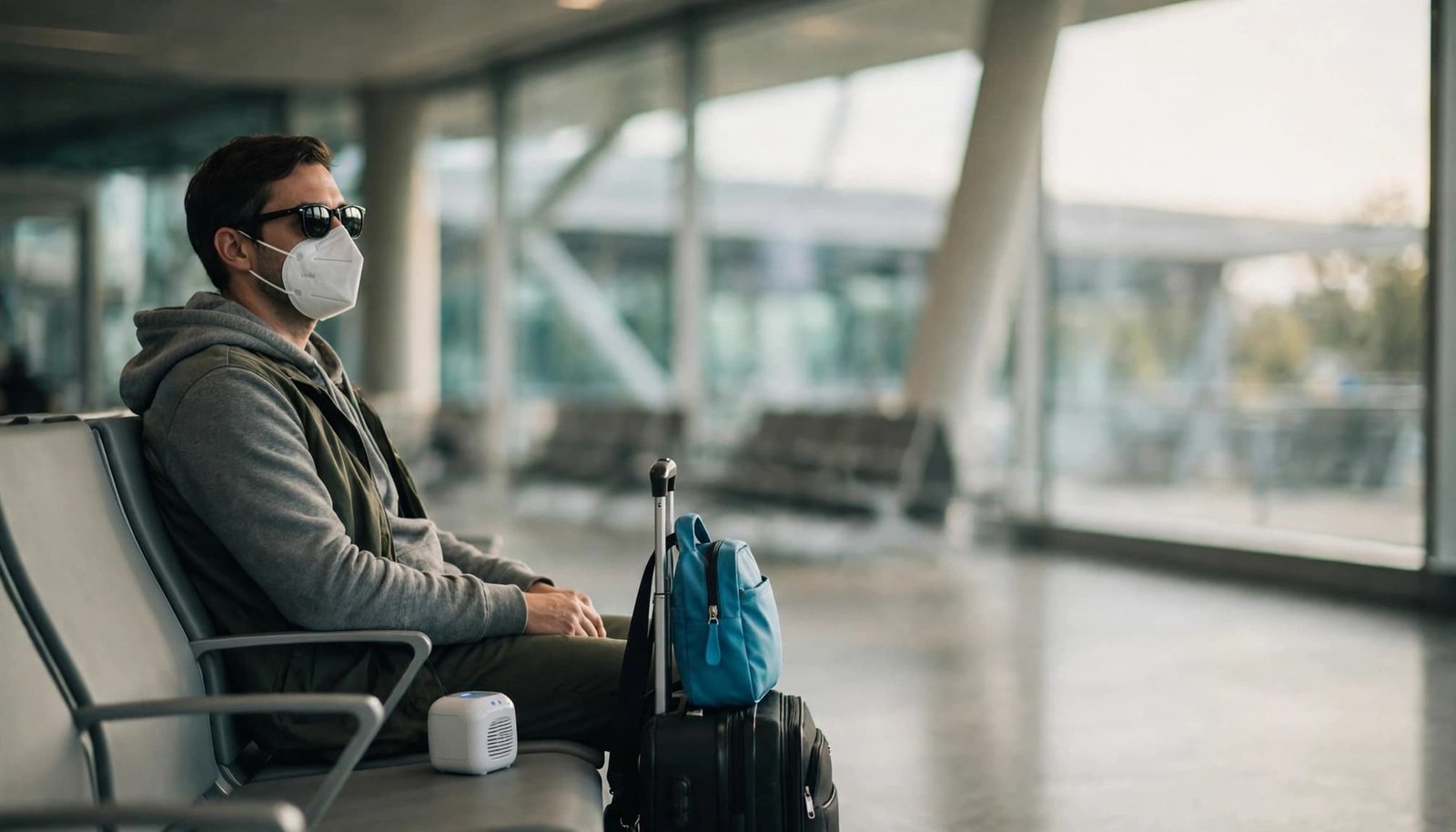
Use noise reduction when helpful. Wear a well-fitting KN95 or N95 in the airport, on the plane, and in crowded indoor spaces.
A personal HEPA filter is an optional addition where permitted, but it doesn’t replace a well-fitting mask.
Keep familiar snacks and water in your carry-on instead of waiting for delayed meal service. The cabin air is dry, so keep water accessible.
When flying overseas, sleep when it supports nighttime at your destination. An eye mask and comfortable ear protection may help.
Protect Sleep, Meals, and Recovery After Arrival
Keep the First Day Light
When you travel, choose one hotel base when possible, with short transfers and an easy route back from activities. Leave arrival day free of prepaid evening commitments.
Protect your usual sleep and meal schedule as closely as practical. When crossing time zones, shift gradually rather than skipping meals or staying awake well past your usual bedtime.
The CDC’s jet-lag guidance emphasizes correctly timed sleep, light exposure, and melatonin. Discuss low-dose melatonin, such as 0.5 mg, with your clinician. Taking it about four hours before bedtime may fit some schedules, but timing depends on travel direction and your body clock. It isn’t a universal bedtime rule.
Give Each Day an Easier Alternative
Plan one main activity, a meal break, and protected downtime to reduce the chance of a migraine attack. Keep an optional second activity available only if you feel well.
For a Disney vacation, consider a morning park visit followed by lunch and hotel rest. Keep evening entertainment optional.
Use sunglasses and a wide-brimmed hat outdoors. Sun, heat, and glare can trigger attacks. Carry water and avoid long stretches without food.
Discuss altitude plans with your clinician, especially if pressure changes are a known trigger.
Give Your Family a Clear Attack and Emergency Plan
Choose who will stay with you during a migraine and who can supervise the children if another adult is traveling. Keep your return transportation simple. A hotel rest period is easier when everyone knows the next step.
Make the backup plan usable during an attack: one reachable medication pouch, one designated helper, and one clear route back to your room.
Save a phone note and paper copy that describe your usual symptoms during a migraine attack and the help you need. For international travel, have the note translated into the local language. You can point to it when speaking is difficult during a familiar attack.
Record the nearest suitable emergency department, local emergency number, and clinician contact. Don’t let an insurance call delay emergency care.
Seek urgent medical assessment for a sudden worst-ever headache, new weakness or speech difficulty, fever with a stiff neck, or symptoms unlike your usual attacks. Ongoing vomiting, dehydration, or uncontrolled symptoms also need medical advice.
Planning for Migraine Alongside Autism or Sensory Needs
Some families are balancing a parent’s migraine with a child’s autism, sensory needs, or communication needs. Shared routines, familiar food, and planned quiet breaks can support everyone.
Our 57-page Disney World with Autism: The Complete Family Guide covers DAS preparation, quiet spots, transitions, pacing, and in-park planning. It’s available as an Etsy Disney autism guide PDF and an Amazon Disney autism travel ebook.
The guide supports family preparation; it isn’t migraine treatment or a guarantee of Disney accommodations.
We also offer special needs travel planning to coordinate lodging, transportation, and flexible itineraries around your family’s needs. Your care team remains responsible for medical guidance.
Frequently Asked Questions
Is it safe to fly with chronic migraine?
Flying isn’t automatically dangerous, but cabin pressure changes, airport noise, queues, and delays can trigger an attack. Compare the full travel day with driving, and ask your clinician about a plan if pressure changes are a known trigger.
How should I pack migraine medication for a trip?
Keep preventive and prescribed acute medicines in your carry-on, in their original labeled containers, with supplies for delays. Bring prescription copies and a doctor’s letter, and ask your pharmacist how to store any medicine that needs refrigeration.
What should my family do if I have a migraine attack while traveling?
Choose a designated helper, decide who will supervise the children, and keep an easy route back to your room. Store your usual medication and a written note about your symptoms and care needs where your companions can reach them.
When should I seek urgent medical care for a headache while traveling?
Seek urgent assessment for a sudden worst-ever headache, new weakness or speech difficulty, fever with a stiff neck, or symptoms unlike your usual attacks. Ongoing vomiting, dehydration, or uncontrolled symptoms also need medical advice.
A Family Vacation With Room to Rest
A more comfortable vacation with migraine starts with rest as part of the plan. Keep medication within reach, build rest into travel days, and agree on a backup plan to reduce avoidable stress.
Your family doesn’t need to complete every activity for the trip to feel meaningful. Good planning leaves room for comfortable accommodations, thoughtful pacing, and the care you need.
Leave a Reply