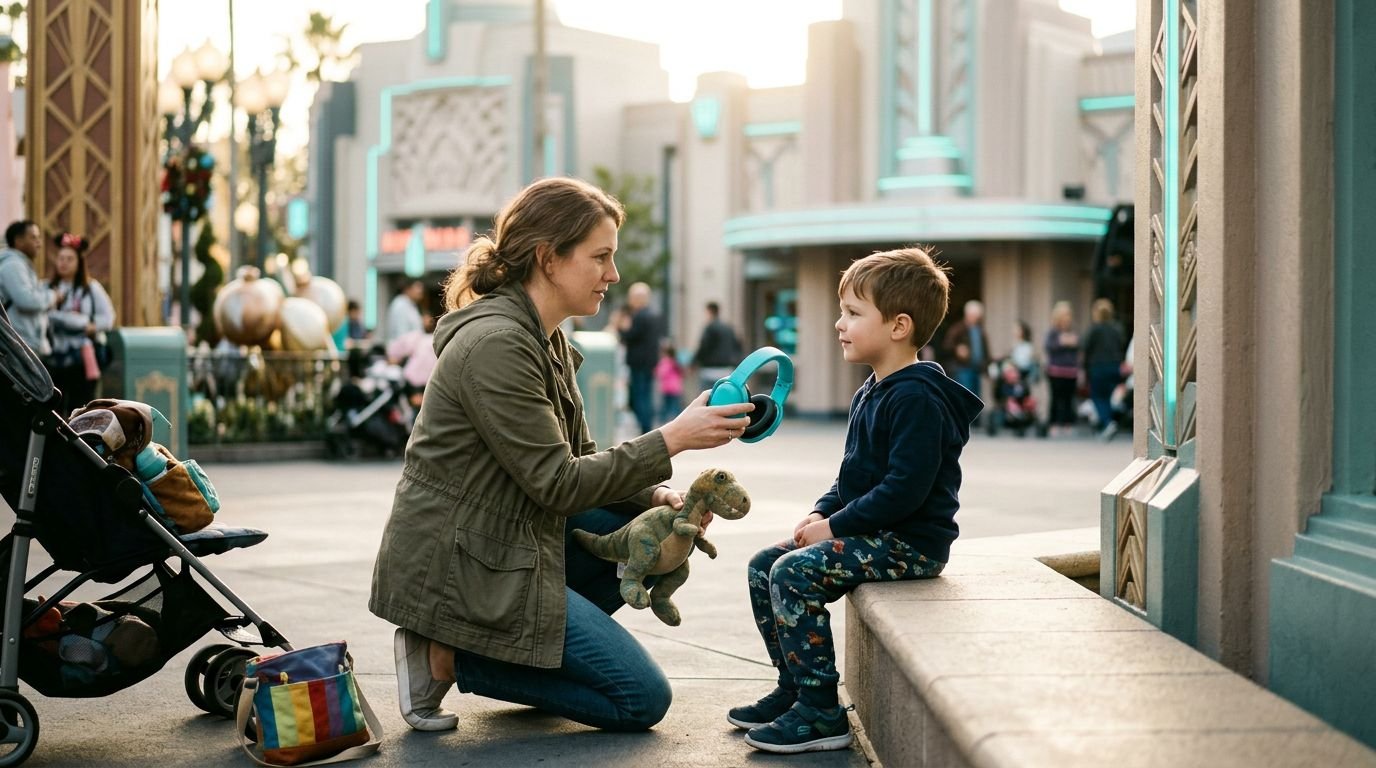
A day at the park can be exciting, loud, crowded, and full of surprises. For a first-time Disney family, a Hollywood Studios autism guide offers a calmer way to plan without tackling every ride, show, meal, and character visit.
Your child does not need to love every part of the park for the day to feel special. Familiar comforts, realistic priorities, and permission to take breaks can reduce sensory overload and make Walt Disney World feel far more manageable.
Start with a plan that fits your family, not one that tries to fit the whole park.
Key Takeaways
- Choose three true must-dos, prepare your child with simple visuals, and keep the rest of the day flexible.
- Disability Access Service (DAS) may help guests who cannot manage extended waits in a traditional queue, but it is not a front-of-the-line pass and rules can change.
- Pack familiar sensory supports, snacks, communication tools, and charging supplies so your family can respond to heat, noise, fatigue, and unexpected changes.
- Tour by area, schedule breaks before overwhelm begins, and use indoor shows, shaded seating, or a resort break as needed.
- A successful Hollywood Studios day is based on comfort and meaningful family memories—not completing every attraction.
Start Planning Before the Gate
Hollywood Studios has big sounds and busy spaces, especially in Toy Story Land and Star Wars: Galaxy’s Edge. It also has indoor shows, shaded paths, familiar quick-service food, and places to slow down when your child needs a reset.
Before the trip, choose three true must-dos for the day. They might be Toy Story Mania, meeting Mickey, and seeing the Frozen Sing-Along. Keep one or two backup choices nearby, but don’t make a long list your child feels pressured to complete.
Preparation can match your child’s sensory needs. Whether your child has autism spectrum disorder, sensory processing disorder, or no diagnosis, visual schedules and familiar supports can help.

Show your child photos or short ride videos at home. Talk through the simple order of the day: travel to the park, security, ticket scan, first ride, snack, and break. A visual schedule can help, but keep it flexible. Weather, ride closures, hunger, and tired feet can change the day quickly.
Bring familiar items that help your child feel comfortable. That may include noise-reducing headphones, a favorite fidget, sunglasses, a comfort item, a tablet, or communication cards. Put headphones, devices, charging cords, and a portable battery in one small pouch. Remembering the tablet but forgetting the charging cable can become a big problem after lunch.
If your child uses a stroller for safety, fatigue, or regulation, ask Guest Relations about having it treated as a wheelchair. This is separate from other attraction accommodations, and it doesn’t guarantee a shorter wait. It may still make long walks and queues easier.
A good Disney plan gives your family a clear first step, then leaves room to stop when the day becomes too much.
How Disability Access Service Works at Hollywood Studios
Disney’s Disability Access Service helps guests whose developmental disability, including autism or a similar disorder, makes extended waits in a standard queue difficult.
DAS is not a front-of-the-line pass. Instead, an approved guest receives an attraction return time that is generally similar to the current standby wait. Your family can wait somewhere else, such as at a quiet table, in a shop, on a shaded bench, or while having a snack.
Disney uses live video chat for DAS registration. The person who needs DAS should be present for the conversation. Focus on the real challenge your child has in a traditional line. You don’t need to share every medical detail. Explain what happens during a long, enclosed, noisy, or unpredictable wait and why waiting elsewhere helps.
Once DAS is active, the basic process is simple:
- Enter the park with valid admission.
- Use the My Disney Experience app to request a DAS return time for an eligible attraction.
- Wait outside the regular queue until the return time arrives.
- Ride the attraction, then request another available DAS return time.
You can generally hold one DAS return time at a time. The registered guest must be present and ride with the group. Keep your phone charged because it may hold your tickets, dining plans, park map, messages, and DAS selections.
DAS is separate from Lightning Lane Multi Pass. Lightning Lane is a paid service with scheduled return windows for participating attractions. Some families like using it for a few must-do rides. Others find that more timed reservations create another clock to watch.
You don’t need every Disney add-on for a successful day. A child who needs frequent breaks may do better with DAS, one major ride, a show, and a calm lunch than with a packed schedule.
For a supplementary overview, the Sensory Kids Guide to Disney disability services offers family planning ideas, not official Disney policy.
Eligibility, registration methods, attraction procedures, and return-time rules can change, so verify details through official Disney channels before travel. Check the My Disney Experience app and speak with Guest Relations or guest services when something is unclear.
Ride Sensory Triggers at Hollywood Studios
Every autistic child has different sensory needs. One child may love bright lights and fast rides. Another may enjoy characters but dislike unexpected movement. Use this guide as a starting point, then trust what you know about your child.
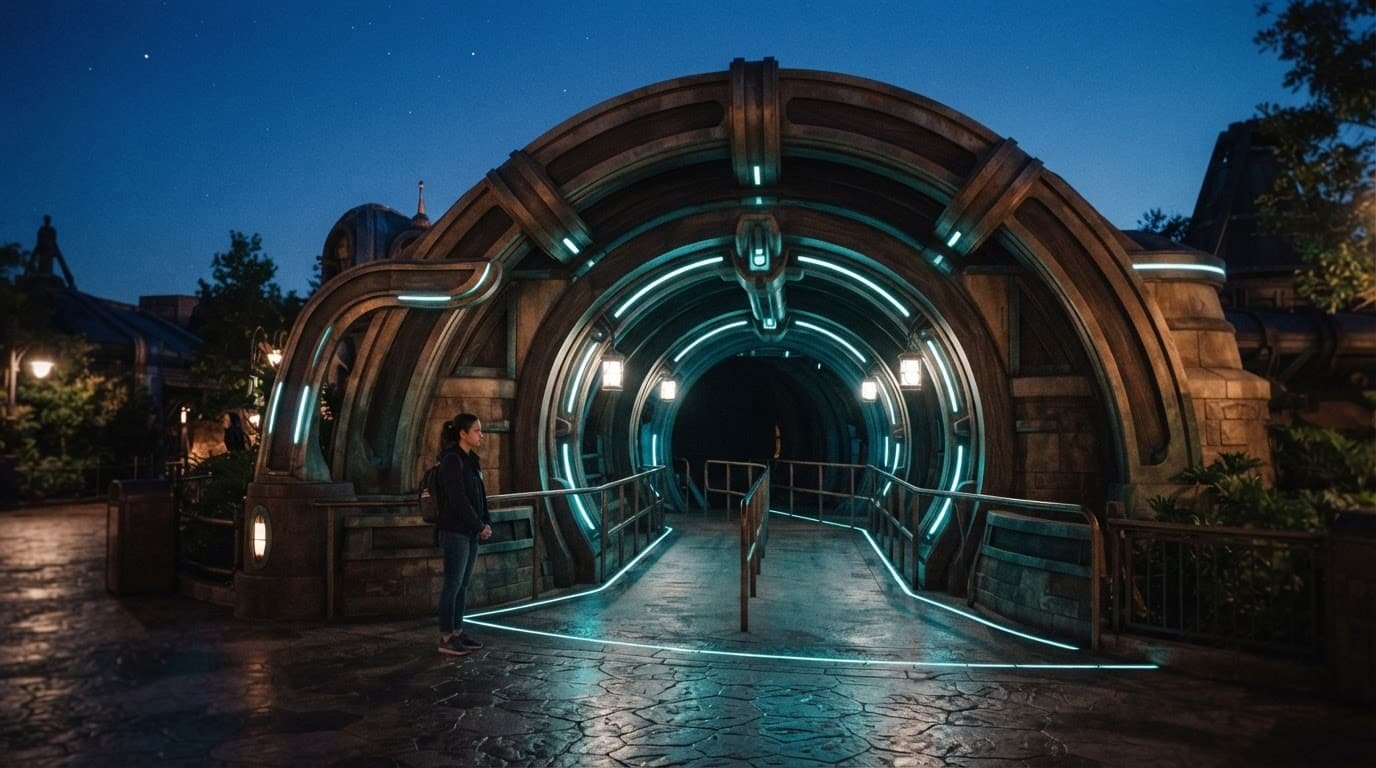
Here is a practical look at common sensory triggers on popular attractions.
| Attraction | Sensory triggers to consider | Helpful preparation |
|---|---|---|
| Toy Story Mania | 3D glasses, spinning, bright screens, game sounds | Explain that the ride stays indoors and moves between game screens. |
| Alien Swirling Saucers | Circular spinning, upbeat music, sudden turns | Skip it if spinning causes motion sickness or distress. |
| Slinky Dog Dash | Coaster drops, speed, wind, loud ride sounds | Watch a ride video first and explain that it moves outdoors. |
| Mickey and Minnies Runaway Railway | Dark scenes, loud effects, sudden movement, cartoon chaos | Tell your child that the train car moves in unexpected directions. |
| Star Tours | Motion simulation, 3D visuals, darkness, loud sound | Consider sitting out if your child dislikes simulators or motion sickness. |
| Millennium Falcon Smugglers Run | Enclosed cockpit, loud effects, flashing screens, team roles | Explain the buttons, job assignments, and simulated flight before boarding. |
| Star Wars Rise of the Resistance | Dark spaces, alarms, blaster effects, bumpy ride track, brief drop | Watch a non-spoiler ride overview and give your child an easy “no” option. |
| Tower of Terror | Ghost story themes, darkness, loud sound, sudden drops | Only ride if your child wants intense drops and spooky scenes. |
| Frozen Sing-Along Celebration | Theater crowds, music volume, snow effects | Sit near an aisle so leaving early feels easy if needed. |
Prepare for Tower of Terror and other intense rides
Star Wars Rise of the Resistance is often the biggest question for families. It is an impressive attraction, but a lot happens at once. Guests move through several rooms, encounter loud effects and dark scenes, ride in a trackless vehicle, and experience a short drop.
Don’t describe the attraction as a small ride if your child is sensitive to surprises. Be honest in simple language. You might say, “We will walk through big Star Wars rooms, hear loud noises, ride in a moving vehicle, and there is one short drop near the end.”
Headphones may help during the queue, but they may not be practical or safe during every attraction. Ask the Cast Member at the entrance if you have questions. If your child decides not to ride after seeing the entrance, that is okay. Leaving is better than forcing an experience that could make the rest of the day harder.
Tower of Terror also needs careful thought. It has dark scenes, a spooky story, sudden loud sounds, and repeated elevator drops. Some children love the anticipation. Others find the loss of control upsetting. Treat it as an optional experience, not a required Disney memory.
Wheelchair access and ride transfers
A queue can be wheelchair accessible even when the ride vehicle requires a transfer. Many attractions allow guests to enter through an accessible queue but still require a transfer into the ride vehicle.
Toy Story Mania and the railway have accessible ride vehicles that may allow some guests to remain in a wheelchair. Theater shows also have wheelchair seating. Guests usually transfer for Slinky Dog Dash, Star Tours, and Millennium Falcon Smugglers Run. The attraction may also require a transfer.
Ask a Cast Member at each attraction entrance about the current process. They can explain the ride vehicle, transfer needs, and whether an ECV must be exchanged for a manual wheelchair in the queue.
Build a Low-Anxiety Hollywood Studios Itinerary
The park works best when you tour by area instead of crisscrossing it. Toy Story Land, Star Wars: Galaxy’s Edge, Echo Lake, and Sunset Boulevard are not next door to each other. Extra walking adds up quickly in Florida heat.

A lower-pressure park day may look like this:
- Start with one priority attraction in the morning, when your child has the most energy.
- Take a snack and bathroom break before your child looks overwhelmed.
- Use an indoor show or Walt Disney Presents as a chance to sit down and cool off.
- Eat lunch before noon or after the main rush, then decide whether to rest at the resort.
- Return for one evening activity only if your family still feels good.
Walt Disney Presents is often a helpful indoor reset. It has exhibits, seating, and a slower pace than the park’s major rides. Grand Avenue can also feel calmer when you step away from the main entrance paths and lunch crowds.
Don’t count on finding a dedicated sensory room inside the park. Build your own calm plan with quiet corners, indoor shows, shaded seating, familiar snacks, and the option to return to your resort.
A midday resort break can make a major difference. Optional choices include All Star Music Resort or Disney’s Port Orleans Resort, French Quarter, for a simpler on-site stay. Families who need more room may consider an Art of Animation Family Suite, with extra sleeping space, two bathrooms, and a kitchenette for familiar foods.
A resort only trip can also be a valid Disney vacation choice. Sleep late, enjoy the pool when it is less busy, eat at the food court during an off-peak time, and let everyone reset. You are not wasting a ticket day when rest helps the rest of the trip go better.
Hollywood Studios Dining for Selective Eaters
These restaurant recommendations help you compare noise, seating, menu flexibility, and character interaction. Review menus before leaving your hotel, especially if your child has food allergies, food sensitivities, or a short list of preferred foods. If you’re considering a character buffet, check the menu and meal format ahead of time.
Quick-service dining often gives families more control. You can mobile order through My Disney Experience, choose a pickup time, and avoid a long ordering line. ABC Commissary and Backlot Express offer indoor seating and familiar choices for many families. Seating is usually calmer outside peak lunch hours.
Docking Bay 7 Food and Cargo has fun Star Wars theming and varied meal choices, but it can feel busy and noisy during popular meal times. It may work well for a child who enjoys Galaxy’s Edge. It may not be the right fit for a child who needs a quieter meal.
Woody’s Lunch Box is popular, but most seating is outdoors in the middle of energetic Toy Story Land. Bring headphones if the area is a favorite but the noise is hard.
Hollywood and Vine can be a good character buffet option for some children. Other children may find the music, buffet area, and character visits overwhelming. Let the host know if your child needs extra space or does not want a character at the table. Character experiences and meal themes can change, so confirm the current offering before your trip.
Try not to schedule every meal. A familiar snack, quiet table, and water break may work better than forcing a full meal at a certain time.
Pack for Changes, Not Perfection
A well-packed park bag gives your family options when weather, fatigue, spills, communication needs, or sensory demands change. Keep these items easy to reach:
- Noise-reducing headphones, sunglasses, a hat, and a preferred fidget can help prevent overwhelm.
- Pack a portable charger, charging cord, and any communication device in the same pouch.
- Bring familiar snacks and refillable water bottles for long waits or food emergencies.
- Add a spare shirt, dry socks, poncho, and small towel for rain, spills, and heat.
- Keep simple cards or pictures for “wait,” “break,” “all done,” and “change.”
Visual supports can help children understand the rhythm of a Disney day. Some parents share visual guides for autistic kids before travel, so rides, lands, and characters feel less unfamiliar.
For at-home planning support, families can use the Disney World with Autism Guide on Etsy or the Disney autism travel guide on Amazon as a trip planning guide. Use only the pieces that fit your child, then leave the rest behind.
Frequently Asked Questions
Is Hollywood Studios a good park for autistic children?
It can be, especially when your family chooses a few priorities and plans for breaks. The park has loud, crowded areas, but also indoor shows, shaded seating, familiar food, and quieter places to reset.
How does DAS work at Hollywood Studios?
Approved guests can request an attraction return time through the My Disney Experience app and wait outside the standard queue. DAS is not a front-of-the-line pass, and eligibility and procedures may change, so confirm current details with Disney before your trip.
What should I pack for a sensory-friendly day?
Consider noise-reducing headphones, sunglasses, a preferred fidget, familiar snacks, water, communication cards, a portable charger, and a comfort item. Keep the items your child may need first in an easy-to-reach pouch.
Which Hollywood Studios attractions may be difficult for sensory-sensitive children?
Attractions such as Star Wars: Rise of the Resistance, Tower of Terror, Star Tours, and Slinky Dog Dash may include darkness, loud effects, sudden movement, drops, or motion simulation. Review each attraction’s triggers with your child and make riding optional.
Should we take a midday break at the resort?
A resort break can help your child recover from heat, walking, crowds, and sensory demands. You can also choose an indoor show, shaded area, snack, or quiet table if returning to the resort is not practical.
A Disney Day That Feels Like Yours
The best Hollywood Studios autism guide is not a strict ride schedule. It is a flexible plan that offers comfort, choices, and time to recover when the day feels too loud or busy.
Choose a few meaningful experiences and leave room for breaks or changes. Keep food, rest, and familiar comforts within reach.
A successful Disney day is not measured by how long you stayed. It is measured by whether your family felt supported and made memories together.