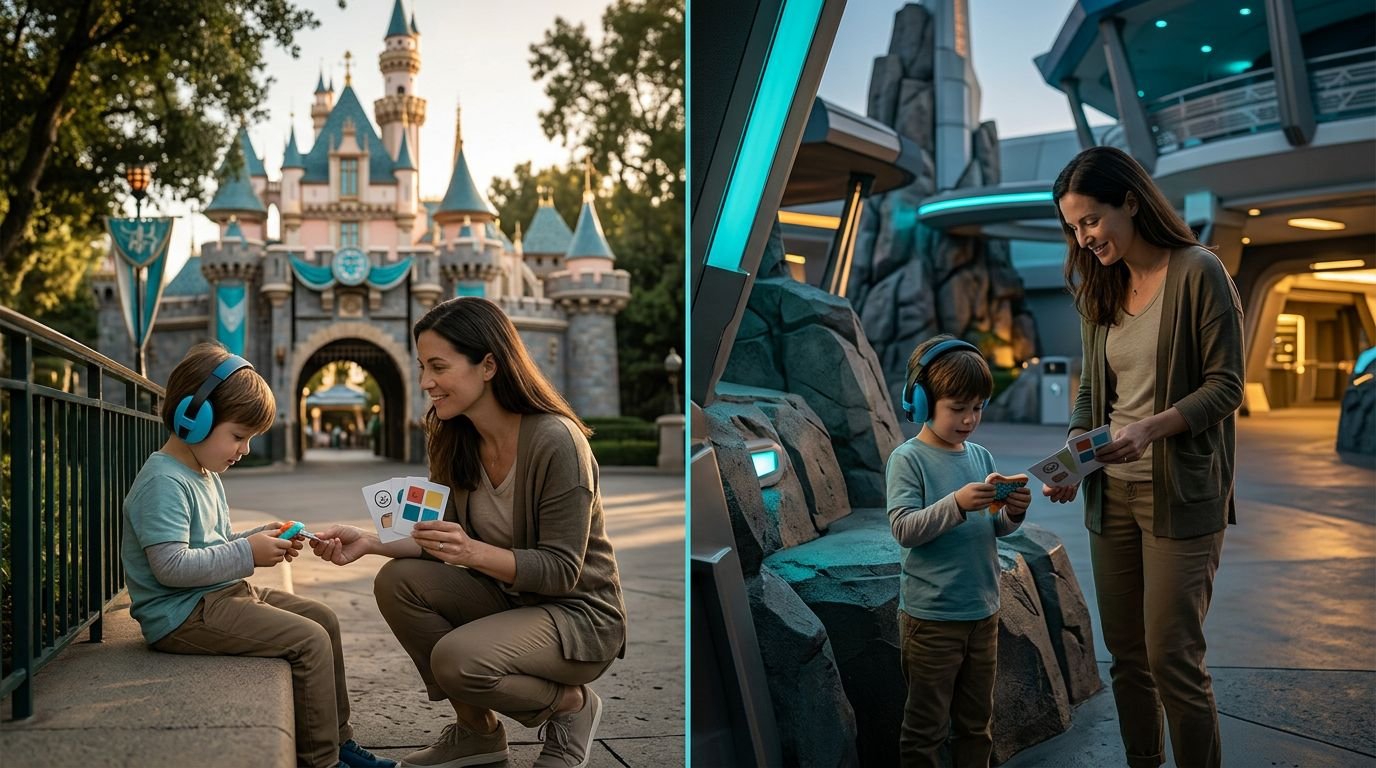
An Orlando theme park trip does not have to be a test of how much your child can tolerate. The best autism-friendly Orlando vacation is built around your child’s needs, favorite things, and limits, not a packed list of rides.
Disney World and Universal Orlando can be loud, crowded, and full of surprises. They can also be wonderful places for family memories when you plan for breaks, clear choices, and room to change course.
Start with a plan that feels supportive, then let the day be what it needs to be.
Autism-friendly Orlando Planning Starts With Your Child
A diagnosis does not tell you everything about a good vacation day. Your child does. Think about what helps at school, in restaurants, on long drives, and during unexpected changes.
Write down what helps on a hard day
Make a short list before you book anything. Include sensory needs, food preferences, communication supports, movement needs, sleep routines, and what helps your child reset.
Some children need headphones during parades and indoor shows. Others need a stroller for distance, frequent snacks, a familiar hoodie, or a quiet spot after a busy attraction. A child who communicates with AAC, pictures, gestures, or sign language may need those tools easy to reach.
Avoid broad labels such as “good” or “bad” behavior. Use practical notes instead. “Needs time before answering,” “does not like sudden water effects,” or “needs a break after a crowded ride” gives your family a plan you can use.
Give each park day one clear win
Choose one or two meaningful experiences for each day. It may be meeting a character, riding Harry Potter and the Forbidden Journey, seeing fireworks from a quieter spot, or eating a favorite Mickey-shaped snack.
Once that moment happens, everything else is extra. This takes pressure off everyone.
Build in a slow morning, an afternoon at the hotel, or a full rest day after several park days. A pool afternoon or room movie is not wasted vacation time. It may be what helps your child enjoy tomorrow.

Choose the Park Plan That Fits Your Family
Disney World and Universal Orlando have different layouts, ride styles, transportation needs, and daily rhythms. Neither is automatically easier. The best choice depends on what your family enjoys and what takes the most energy.
Disney World is large, so keep each day local
Walt Disney World has four theme parks, large resort areas, buses, boats, the monorail, Skyliner routes, and long walks. A Park Hopper ticket does not remove those transitions.
For many families, one park per day feels calmer. At Magic Kingdom, stay near Fantasyland for the morning instead of racing across the park for every reservation. At EPCOT, remember that Remy’s Ratatouille Adventure, Frozen Ever After, and Soarin’ are spread far apart.
An autism-friendly Orlando itinerary should leave time for bathrooms, shade, food, transportation, and a changed plan. The map may look manageable. Your child’s energy matters more.
Universal can feel compact but still intense
Universal Studios Florida, Islands of Adventure, Epic Universe, Volcano Bay, and CityWalk have a more concentrated layout than Disney World. That can reduce travel time between attractions.
Still, many Universal attractions include intense sound, darkness, motion, screens, heat, water, or frightening scenes. Some children love that excitement. Others may want slower experiences, shops, character encounters, play areas, or time back at the hotel.
Review the ride details before you promise an attraction. A child should never feel pressured to ride because the family waited, paid for tickets, or made it to the entrance.
Disney World Accessibility Support: What to Know
Disney offers several services, but each one handles a different need. Start with Disney’s neurodivergent guest resources before your trip, then check current park information again close to travel.
Understand how Disability Access Service works
Disability Access Service, often called DAS, is for guests with developmental disabilities, including autism, who cannot wait for an extended time in a conventional queue. A diagnosis alone does not guarantee approval. Disney looks at how waiting in a standard line affects the guest.
Walt Disney World uses a live video chat process for registration. Disney states that families may complete registration up to 60 days before their visit, or on the day of the park visit. The guest requesting DAS must be present for the conversation.
Disney lists video chat hours as 7:00 AM to 8:00 PM Eastern Time. Review the current Disney World DAS details before you travel, because procedures can change.
Once DAS is active, the registered guest or a linked adult can request an available attraction return time in the My Disney Experience app.
DAS gives an eligible guest a different place to wait. It does not remove every wait, crowd, ride closure, or surprise.
Use the other tools that fit your needs
DAS is separate from stroller-as-wheelchair tags, Rider Switch, Lightning Lane Multi Pass, and attraction queue re-entry. Your family may use more than one service, but you do not need every option.
A stroller-as-wheelchair tag may help when a stroller is needed as a mobility device in a queue. Rider Switch can help adults take turns riding when a child does not want to ride. Guest Experience Team members and Guest Relations can help when you have questions during the day.
Disney also has accessibility services for guests with disabilities with planning materials for mobility, hearing, vision, and cognitive needs.
Universal Orlando: Queue Support and Ride Information
Universal Orlando’s attraction queue accommodation is called the Attraction Assistance Pass, or AAP. It is meant to provide equal access, not to move a family ahead of everyone else waiting.
Start the AAP process before you arrive
Universal’s current process for attraction queue accommodations uses the IBCCES Individual Accessibility Card, often called an IAC. Families generally begin the IAC process within 30 days of their visit.
If you cannot complete the process in advance, Universal says you can contact Guest Services at 407-224-4233 or visit a Guest Services location in the parks. Universal’s Guest Services Coordinators are also available by phone for accessibility questions.
Read Universal Orlando’s accessibility information before you leave home. Keep your plans flexible, because eligibility and attraction procedures can change.
The AAP may provide a return time when a child cannot remain in a traditional queue. Ask questions early, and explain what makes the line difficult for your child.
Check ride requirements before park day
Universal’s rides can have strict height, transfer, restraint, and evacuation requirements. These rules are about safety, and it helps to review them before your child is standing at the entrance.
Choose a few rides that feel like a good fit. Then make a second list with easy alternatives. A missed ride should lead to the next comfortable choice, not a stressful discussion in a busy walkway.
It is okay if your child decides no at the last minute. A great family day does not depend on riding every headliner.

Pack Supports That Your Child Already Uses
Do not save a new sensory tool for the first day of vacation. Bring the supports your child knows, likes, and already uses at home, school, or on outings.
Keep technology together in one pouch
Your phone may hold tickets, maps, mobile food orders, attraction return times, and messages between adults. A portable charger is not an extra item. It belongs in your park bag.
Keep charging cords, headphones, tablets, communication devices, and a power bank in one small pouch. Families often remember the tablet and forget the cable.
Bring a low-tech backup, too. A printed visual schedule, communication card, favorite photos, or simple “wait,” “break,” “change,” and “all done” cards can help when a device battery dies or Wi-Fi is slow.
Add familiar comfort items and communication tools
Pack familiar snacks when allowed, especially if your child has food restrictions or strong preferences. A small fidget, comfort item, sunglasses, spare shirt, or lightweight hoodie can also be helpful.
Keep communication supports where your child can reach them. Do not bury them under ponchos, souvenirs, and sunscreen.
For extra planning help, the Disney World with Autism Guide on Etsy includes practical ideas for DAS, park breaks, and flexible Disney days.
Build Sensory Breaks Into the Park Day
Breaks work better when they are part of the plan, not only used after someone is overwhelmed. You do not need a perfect quiet room to take a reset.
Plan where you can step away
Before entering a land or attraction area, notice benches, shaded tables, indoor shows, quieter paths, first-aid locations, and exits. Ask a Cast Member or Team Member where your family can take a calm break nearby.
Park conditions change by day and season. A spot that feels quiet at 10:00 AM may be busy after a parade or during rain. Give yourselves permission to keep walking until you find a better place.
Try a break before lunch, before a parade, or after a high-sensory ride. Waiting until everyone is exhausted can make it harder to reset.
Let meals support the schedule
Quick-service meals often give families more control than a long table-service reservation. Mobile ordering can also help. You can review menus at a calm moment instead of standing in a crowded line.
Eat before the usual rush if possible. A meal at 11:00 AM or 2:00 PM may mean easier seating and less noise.
If your child needs familiar food, bring approved snacks and do not force a vacation food experiment. A meal that feels safe and predictable can change the tone of the afternoon.

Make Your Hotel and Transportation Part of the Support Plan
Your room is not only where you sleep. It is where your child can decompress, recharge devices, change clothes, eat familiar food, and recover after a demanding day.
Choose the room setup that helps most
An on-site Disney hotel can make midday breaks easier, especially when your family wants access to Disney transportation. An off-site hotel may offer a quieter setting, more room, a kitchenette, or a better price.
Ask practical questions before booking. How far is the room from the pool, elevator, ice machine, bus stop, and food court? Does the room category have a refrigerator, microwave, or laundry access?
If laundry matters, confirm the exact room type. One-bedroom villas may have in-room machines, while other room categories may require a walk to a shared laundry room.
You can also review Disney resort accessibility information before choosing a Disney hotel.
Reduce transitions before they become stressful
Airports, rental-car counters, parking garages, security lines, buses, and hotel check-in all take energy. Explain the next step in simple terms. “We are getting the car now,” is easier than a long travel rundown.
If you rent a car, take a photo of the parking level and row. Set up a familiar playlist before leaving the airport. Confirm how toll charges work before driving away.
Florida traffic, summer storms, and theme park closing times can add delays. Leave extra time, but do not fill every minute of that extra time with another stop.
Use Paid Time-Savers Only When They Reduce Stress
A paid add-on is helpful only when it makes your day easier. More reservations are not always better for an autistic child or their caregivers.
Lightning Lane Multi Pass is separate from DAS
Lightning Lane Multi Pass is a paid Disney service with scheduled attraction return windows. It is separate from DAS and does not replace it.
It may help when your family has a few must-do rides. EPCOT can be one of those parks if Remy’s Ratatouille Adventure, Frozen Ever After, or Soarin’ are important priorities.
Still, a packed schedule can become another clock to watch. If your child needs breaks, finds changes difficult, or gets upset when a ride closes, fewer return windows may feel better. Check the My Disney Experience app before buying because prices, attractions, and availability change.
An autism-friendly Orlando trip is not the one with the most paid upgrades. It is the one that gives your family enough breathing room.
Let the app help, not control the day
Download the park apps before you travel. Link tickets, check maps, look at menus, and make sure more than one adult can access the plans.
Then put the phone away when you can. Wait times will change. Weather will change. Your child may love something more than expected, or be ready to leave early.
The Disney World with Autism guide on Amazon can be a helpful reference for families who want more support as they build a flexible trip plan.
Give every day one clear win. If that win happens before lunch, your family can relax and decide what feels right next.
A Disney and Universal Vacation That Fits Your Family
Disney World and Universal Orlando do not need to look like anyone else’s vacation. Your child may love the rides, need long breaks, prefer one park, or decide the hotel pool is the best part of the trip.
The strongest plan is built around your family’s needs, not a schedule that looks impressive on paper. Choose a few priorities, pack familiar supports, and leave room for a change of plans.
A calm moment, a favorite ride, and a child who feels heard can be more meaningful than a full day of checked-off attractions.