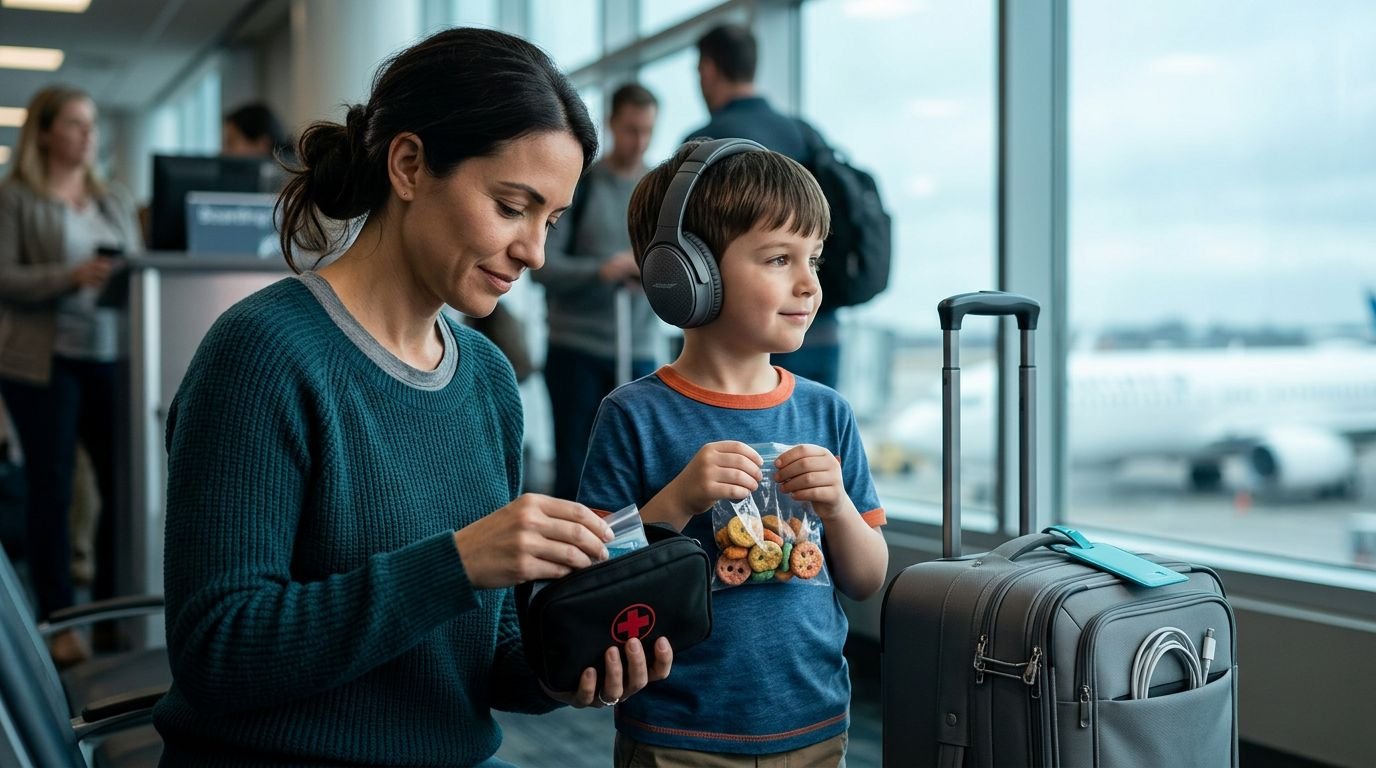
Travel days can feel harder when your child has autism spectrum disorder and a diagnosed food allergy. This combination of needs may require more planning, but it doesn’t have to take the joy out of a family vacation.
The goal isn’t a perfect schedule. It is a trip with familiar foods, clear next steps, real breaks, and a plan for when something changes.
With a few simple routines in place, you can spend less time putting out fires and more time making memories together.
Autism food allergies: start with your child’s usual needs
Every child has a different relationship with food, sensory input, routines, and communication. Start with what already works at home. A vacation is not the best time to test a new snack, restaurant style, or eating routine.
Food allergy and food sensitivities are not the same
A food allergy involves an immune system reaction. It can cause symptoms such as hives, swelling, vomiting, breathing trouble, or anaphylaxis. Food intolerance and food sensitivities may involve different mechanisms and can cause digestive discomfort or other symptoms. They shouldn’t automatically be treated as a food allergy.
A respiratory allergy and a skin allergy are examples of distinct allergic conditions. These allergic conditions may each require their own diagnosis and management plan.
That difference matters while traveling. A child with a diagnosed food allergy needs a clear emergency plan and careful avoidance. A suspected sensitivity needs observation and support from the child’s doctor or allergist before major diet changes.
A parent-reported cross-sectional study based on the national health interview survey found an association between food allergies and autism spectrum disorder. Children with food allergies had higher odds of an autism spectrum disorder diagnosis, with an odds ratio of 2.29. These prevalence rates show an association, not causation. You can review the published allergy and autism study for its full findings and clinical research context.
Association is not cause. Food allergies don’t cause autism, and autism doesn’t automatically mean a child has food allergies.
Watch for patterns without jumping to conclusions
Some children can’t easily explain nausea, reflux, itching, cramps, or a headache. Gastrointestinal symptoms may show up as behavioral changes, sleep disturbances, pacing, withdrawal, sensory challenges, or emotional dysregulation.
The gut-brain axis is the two-way connection between the digestive system and the brain. Gastrointestinal symptoms can affect comfort, sleep, mood, and behavior. Still, behavior alone doesn’t prove a food is the problem.
Keep the focus on your child. Note repeated symptoms and possible food triggers, then share the record with a qualified provider. Discuss dietary management before broad restrictions, since unnecessary limits can affect nutritional status. Neither behavior nor a single meal can establish chronic inflammation.
Build the travel plan before you leave home
A travel plan for a child with autism spectrum disorder and a food allergy should make the first day easier, not fill every minute. Start with your child’s established eating needs, including food sensitivities, safe foods, and needed accommodations. Share the basic plan with every adult traveling with your child.
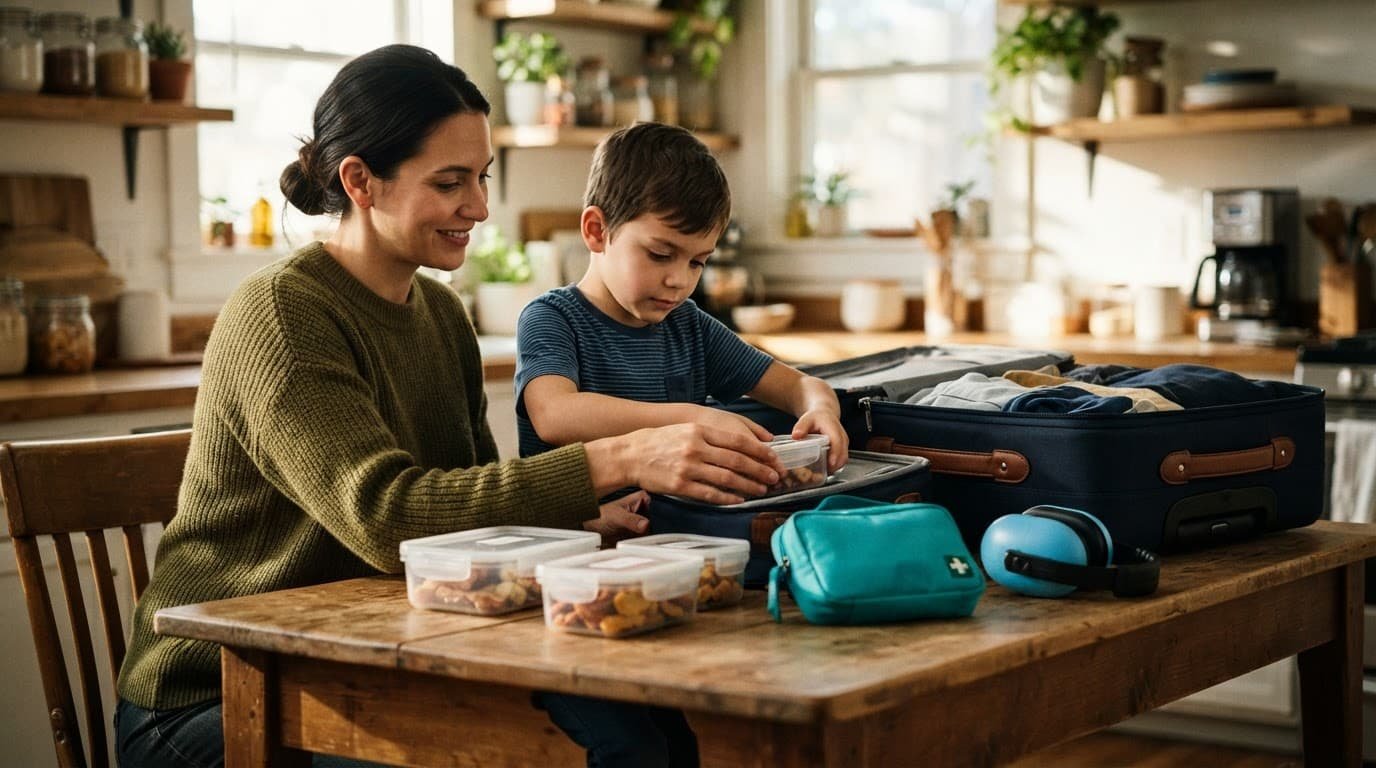
Make transitions familiar
Use a short visual schedule, photos, or a simple written list. Show the order of the day: car, airport, plane, hotel, snack, pool, bedtime. Keep the language short.
Social narratives can rehearse airport, hotel, meal, or bedtime transitions. Try wording such as: “We will go through security. My bag will go on the belt. Then we will get our snacks and find our gate.” Read it together more than once before the trip.
Bring the items your child already knows. Headphones, a favorite hoodie, a comfort item, a familiar game, or downloaded shows can make unfamiliar spaces more manageable when sensory challenges arise.
Keep devices, charging cords, headphones, and portable batteries in one pouch. Families often remember the tablet and forget the cable.
Choose travel details that lower pressure
The cheapest room or flight is not always the best fit. A hotel with a refrigerator, microwave, nearby grocery store, and easy transportation can save energy every day.
Think about arrival time, too. A late-night check-in after a long flight may be difficult if your child needs a familiar bedtime routine. When possible, leave room for a quiet first evening.
Call the hotel before booking. Ask about refrigerator access, microwave availability, grocery deliveries, laundry, food storage, and the distance from the room to parking or transportation. Small details can make a big difference after a long day.
Pack food, medication, and comfort items in layers
Checked bags can be delayed. Your carry-on should hold the things your family cannot easily replace.
Keep the medical plan within reach
Your child’s prescribed medication for a food allergy belongs in a personal item or carry-on bag, not checked luggage. For a child with autism spectrum disorder, a clearly labeled medication pouch and familiar communication supports may make travel easier.
If your child carries epinephrine, pack two doses if their food allergy care plan calls for them. Keep the allergy action plan and prescription information with it. If your child also has a respiratory allergy, pack prescribed inhalers; if they have a skin allergy, bring prescribed skin treatments.
The CDC guidance for severely allergic travelers recommends keeping injectable epinephrine and anaphylaxis information accessible during the trip. Don’t count on an airline, hotel, restaurant, or attraction to supply what your child needs.
Check current airline and TSA rules before departure, since policies can change.
Your main travel bag may include:
- Safe snacks that match your child’s food sensitivities, plus enough for delays. These support routine eating, not emergency treatment.
- Prescription medicine, epinephrine for a food allergy, inhalers, and a copy of the care plan.
- Wipes for tables, tray tables, armrests, and hotel surfaces.
- A refillable water bottle for use after security.
- Headphones, comfort items, communication supports, and a portable charger.
TSA medical screening guidance may allow medically necessary liquids over the standard 3.4-ounce limit. Remove them from your bag and tell the officer at the start of screening.
Contact dining providers early
Before you travel, call airlines, hotels, cruise lines, restaurants, and tour companies. Ask direct questions about ingredients, shared fryers, cross-contact procedures, and how requests are communicated to the kitchen.
Keep a short food allergy communication card on your phone and in your bag. List diagnosed allergic conditions, relevant allergens, your child’s name, emergency contact information, and what must be avoided.
You don’t need to explain your child’s full medical history at every meal. A clear request works better: “My child has a milk allergy. Can you tell me if this meal contains dairy or is made on shared equipment?”
Airports and flights need a calm routine
Airports bring crowds, noise, lines, changes, and food smells. These sensory challenges can feel overwhelming, so arriving early gives your family more choices and fewer rushed decisions.
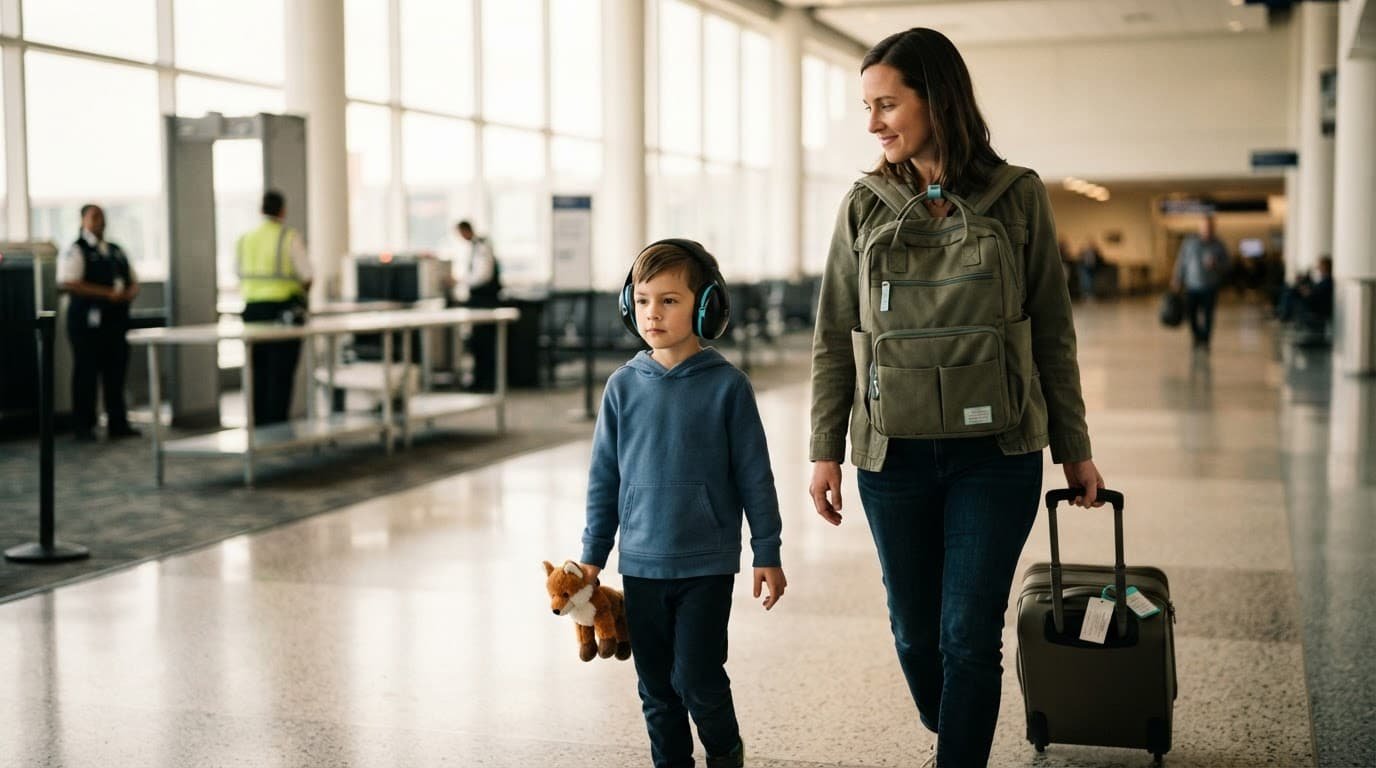
Ask for support before security becomes stressful
TSA Cares can help eligible travelers with disabilities, medical needs, and other circumstances that may make screening harder. Some eligible travelers with autism spectrum disorder may benefit, but TSA Cares isn’t an autism-specific guarantee. Families can contact TSA Cares at least 72 hours before a flight to discuss what to expect.
Explain what may help your child. That could mean a quieter explanation, extra time, a parent staying nearby, or help with a medical device or food bag.
Practice the process at home if you can. Use social narratives to rehearse taking off a backpack, placing it in a bin, going through a scanner, and picking it back up. Keep the explanation simple: “First the bag goes on the belt. Then we walk through. Then we get the bag.”
Prepare for the flight, not only the airport
Confirm the airline’s food allergy policy before booking and again before departure. Tell the gate agent and flight attendants about your child’s food allergy and any other allergic conditions. Ask whether your family may pre-board to wipe down the seating area and get settled.
Bring family-provided food to manage the food allergy. Airlines can’t promise an allergen-free cabin, and last-minute meal substitutions can happen. The Food Allergy Research & Education travel guide also recommends keeping epinephrine with you rather than placing it in checked luggage or an overhead bin. If your child has a respiratory allergy, keep prescribed medication in your carry-on.
Give your child one simple next step at a time. “We are sitting on the plane now.” “Next, we will have our snack.” “Then we will watch a show.” That predictable rhythm can help when the cabin feels loud or unfamiliar.
Road trips and rental cars can offer useful breaks
A rental car gives your family a private place to snack, cool down, listen to familiar music, or leave an area when it becomes too much. For some children with autism spectrum disorder, that controllable setting makes it easier to reset. It also adds driving, tolls, parking, and traffic to the plan.
Set up the car before pulling away
Before leaving the garage, take photos of the vehicle condition report, fuel gauge, windshield, tires, and any existing marks. Set the temperature, connect a familiar playlist, and place snacks and comfort items where you can reach them safely.
Tell your child the next step in plain language: “We are going to the hotel now.” Use brief social narratives to rehearse the route, hotel arrival, fuel stops, traffic, and possible changes. Save longer explanations until everyone has settled.
Keep a small car bag with wipes, water, familiar, already accepted snacks, extra clothes, a vomit bag if needed, sensory tools, and medication. For a child with a food allergy or food sensitivities, stick with accepted foods rather than experimenting on the road. It is much easier to take a short reset in a parking area than to search through a packed trunk.
Ask about toll charges before driving
Florida uses electronic tolling on major Orlando roads, including State Road 417, State Road 528, State Road 408, and the Florida Turnpike. Don’t assume there will be a cash booth.
Ask the rental company whether the vehicle has a toll transponder, what the daily fee is, whether there is a trip cap, and how tolls are billed if you decline the service. Verify current rental and toll policies, since fees and transponder rules can change. Surprise charges after a vacation are never fun.
Build extra time around I-4, resort areas, park closing times, afternoon storms, and missed turns. If the first drive feels like too much, use a ride-share or hotel transportation for the next outing and give everyone time to reset.
Make the hotel room and meals work for your family
Where you sleep affects how the whole trip feels, especially when a child with autism spectrum disorder needs predictable routines. A room close to transportation, food, or parking may matter more than a bigger pool or a lower nightly rate.
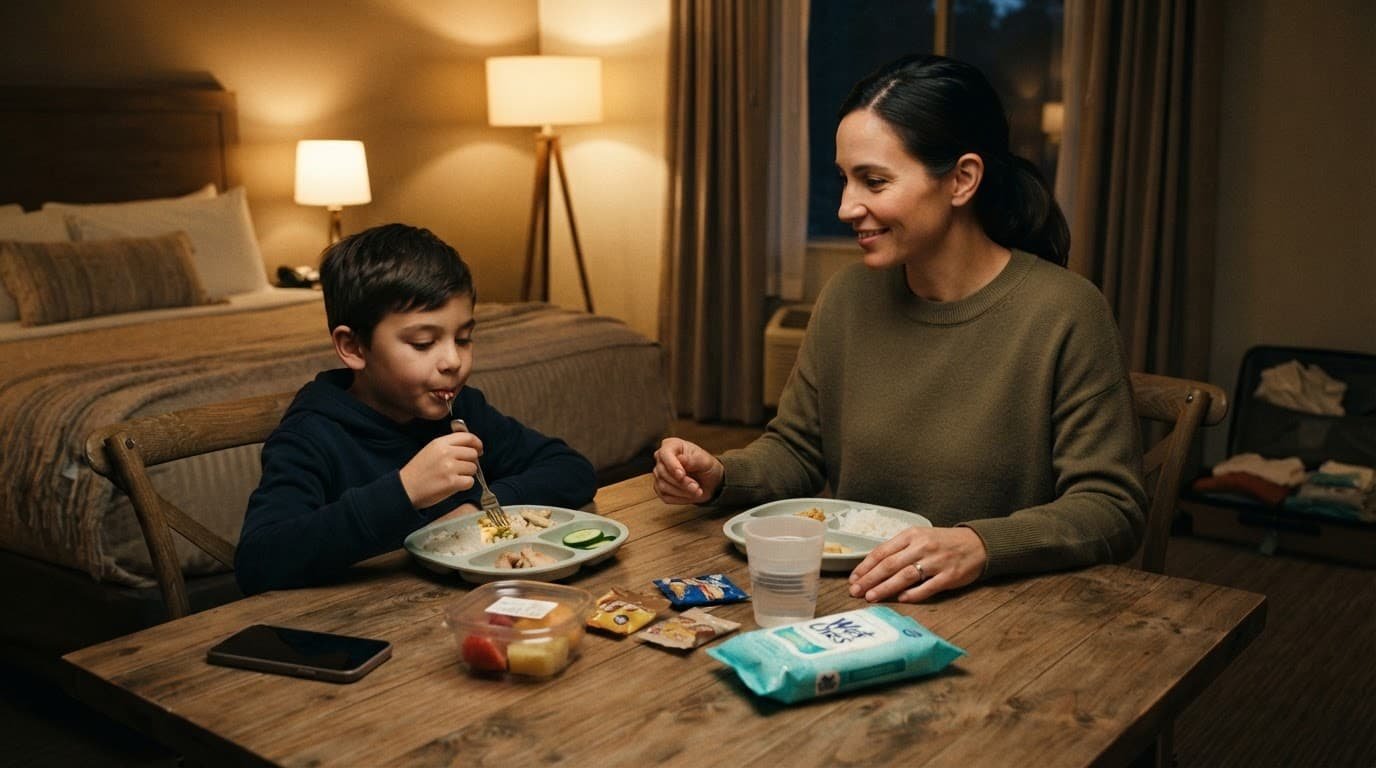
Create a safe-food base at your hotel
Unpack safe foods first. If your child has a food allergy, put snacks, drinks, breakfast items, and medication in one reliable location. If your child prefers the same breakfast every day, pack it or order groceries ahead of time.
A kitchenette or vacation rental can be a good choice for children managing multiple food allergy needs, selective eating, or food sensitivities. It gives your family more control over dietary management, breakfast, late-night hunger, and recovery days than restaurant-only meals.
At a hotel, confirm refrigerator space before storing food or medication needed for a food allergy. If your room has only a beverage cooler, ask whether a true refrigerator is available.
Keep restaurant meals simple and familiar
Travel is not the time to pressure a child to try new foods. A safe meal can be plain pasta, a packaged snack, fruit, fries prepared safely, or food you brought from the hotel.
Ask to speak with a chef or manager about a serious food allergy. Then ask about the restaurant’s food allergy process before deciding whether it feels like a safe fit. You are allowed to leave and choose another option.
For children who need extra support with changes, use social narratives before hotel check-in, breakfast, or a changed meal. Show two choices, such as “safe snack now” or “chicken and rice later?” Clear choices can lower food-related stress.
Disney trips need flexible food and sensory plans
Disney can be exciting, colorful, loud, busy, and tiring. For a child with autism spectrum disorder, a good Disney day doesn’t depend on riding every attraction or staying until the fireworks.
Plan fewer must-do moments
Choose one or two priorities for each park day. Leave room for bathroom breaks, quiet snacks, weather changes, attraction closures, and an early return to the resort. Social narratives can help rehearse attraction queues, unexpected closures, or leaving before the fireworks.
Disney offers services for neurodivergent guests and points families toward accessibility resources before arrival. Review current details before your trip because DAS procedures, dining processes, and other offerings can change.
Disney also shares special dietary request information for guests with a food allergy, food sensitivities, or other dietary needs. It can’t guarantee an allergen-free environment, so tell the dining location and server about a food allergy. Ask for a chef or manager when needed. When several allergic conditions lead to four or more food allergy requests, Disney asks families to contact its Special Diets team before travel.
Use access tools without overbooking your day
Disability Access Service, often called DAS, may help eligible guests who cannot wait in a conventional queue for long periods because of a developmental disability, including autism spectrum disorder. Eligibility is individualized, and autism spectrum disorder alone doesn’t guarantee access. It changes where a guest waits. It isn’t a front-of-the-line pass, and it doesn’t remove crowds, heat, ride closures, or the need for breaks.
Check Disney’s current accessibility services information before you leave. Keep your phone charged because it may hold tickets, dining plans, maps, mobile orders, and attraction return times.
Lightning Lane Multi Pass is separate from DAS and costs extra. It can be helpful when your family has a few high-priority rides. A schedule packed with return windows can also become another clock to watch.
For more family-focused Disney planning support, the Disney World With Autism Guide on Etsy and the Amazon edition of the guide offer practical ideas for park days, sensory needs, breaks, and accessibility planning.
Use a simple journal to spot travel food triggers
A short behavior and food journal can help when a child with autism spectrum disorder can’t describe discomfort clearly. It may clarify concerns about a food allergy and show whether the same concern recurs. Food sensitivities and travel stress can look similar to a food allergy, so the journal isn’t diagnostic. Write down what happened, then move on with the day.
Track the details that matter
Use your phone notes app or a small notebook. Keep entries short and factual.
| What to note | Example |
|---|---|
| Food and drink | Chicken, rice, packaged applesauce |
| Time eaten | 12:30 p.m. |
| Gastrointestinal symptoms | Stomach pain, loose stool |
| Skin or breathing symptoms | Rash, coughing |
| Parent-reported behavioral changes | Restless, tearful during dinner |
| Sleep disturbances | Woke twice overnight |
| Emotional dysregulation | Difficulty calming after a loud dinner |
| Other factors | Long park day, heat, missed snack, loud dinner |
These parent-reported observations are not diagnostic results. They can help a clinician separate possible food reactions from travel fatigue, constipation, illness, anxiety, heat, or sensory overload.
In this journal, the regulation entry means an observable change in regulation, not evidence of an allergy.
Let the journal guide the next conversation
If the same food triggers happen repeatedly, share the journal with your child’s pediatrician or allergist. The record can inform dietary management, while a clinician guides testing, treatment, or an elimination diet with professional supervision. Discuss any dietary intervention before making major restrictions.
A behavior change after a meal is a reason to look closer, not a reason to remove half of your child’s safe foods.
Protect accepted foods whenever possible. Restrictive diets can affect your child’s nutritional status and make travel even harder for children with strong food preferences.
Be ready when the plan changes
A delay, closed restaurant, forgotten snack, thunderstorm, or packed bus can test even the best plan. Your backup plan should account for known food triggers without becoming complicated.
Know what to do during an allergic reaction
Follow your child’s written food allergy action plan. If a food allergy reaction or anaphylaxis is suspected, use prescribed epinephrine as directed and call emergency services. Don’t wait to see whether symptoms pass.
Keep the plan where every adult can find it. Before the trip, brief grandparents, relatives, or other caregivers on your child’s support needs related to autism spectrum disorder. Tell them where medication is stored and how to contact you.
Give yourself permission to change the day
Leaving a park early, ordering groceries, eating in the hotel room, or skipping a reservation isn’t a failed vacation. It’s a family making the right choice for the moment.
A quieter afternoon may protect tomorrow’s plans. Social narratives can help your child rehearse leaving a park, eating in the hotel room, or waiting for a delayed meal. A safe snack may be better than a restaurant meal. One favorite ride may be enough for the day.
Frequently Asked Questions
How should we prepare for travel with autism and a food allergy?
Start with your child’s usual safe foods, sensory supports, communication tools, and daily routines. Pack prescribed medication, the food allergy action plan, and enough familiar food for delays or unexpected changes.
Can food sensitivities cause autism-related behaviors?
Gastrointestinal discomfort, poor sleep, or a food sensitivity may affect behavior and regulation, but behavior alone does not prove an allergic reaction. Track repeated patterns and discuss them with your child’s pediatrician or allergist before removing foods or making major dietary changes.
What should we do if an allergic reaction happens while traveling?
Follow your child’s written food allergy action plan, use prescribed epinephrine as directed, and call emergency services if a reaction or anaphylaxis is suspected. Keep medication and the plan in your carry-on or personal item so they remain accessible.
How can we make airports, restaurants, and theme parks easier?
Use short visual schedules, social narratives, familiar comfort items, and one clear next step at a time. Build in breaks, ask providers about accommodations and food allergy procedures, and give yourself permission to leave or change plans when your child needs a reset.
A Calm Trip Starts With What Your Child Needs
Traveling with autism, a food allergy, or food sensitivities takes preparation, but it doesn’t require perfection. Familiar foods, accessible medication, clear communication, visual schedules, and social narratives give your family a stronger foundation.
The best trips leave room for breaks, changed plans, and small wins. Comfort and safety matter more than checking every item off a vacation list, so leave room for flexible pacing.
Comments
One response to “Traveling With Autism Food Allergies: A Family Plan”
[…] your child has allergies or a special diet, let Disney know in advance and speak with a Cast Member when ordering. Do not assume a […]