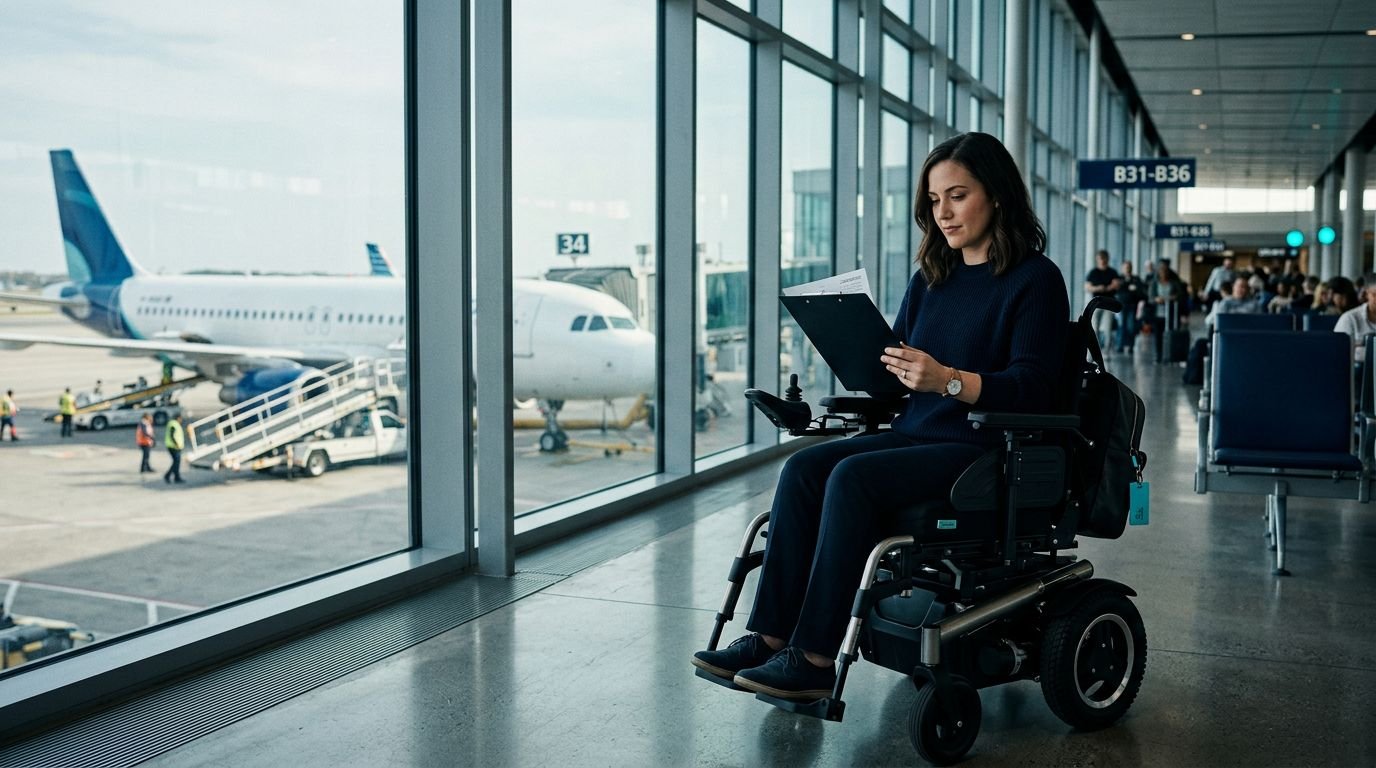
Your wheelchair is not a suitcase. It is how you move, sit, work, and stay independent when you travel.
Wheelchair air travel feels far less stressful when planning starts before you buy a ticket. A few calls, clear equipment details, and a realistic airport plan can protect your chair and give you more control.
Start with the parts you can prepare, then leave room for delays you can’t control.
Key Takeaways
- Start planning before booking by contacting the airline’s accessibility desk, describing your wheelchair accurately, and confirming the assistance you need.
- Choose nonstop flights when possible, and check the aircraft’s cargo-door size, seating features, aisle chair, and accessible lavatory options.
- Create a clear wheelchair profile with dimensions, battery details, handling instructions, photos, and emergency contact information.
- Keep removable and essential equipment with you when airline rules allow, then inspect and document your wheelchair before leaving the airport.
- Build extra time into your itinerary and report any damage, missing parts, or loss of function before leaving the airport.
Wheelchair Air Travel Starts Before You Book
Book as early as you can, especially if you use a power wheelchair, need specialized boarding help, or need assistance through a large airport. Add wheelchair assistance to the reservation, but don’t stop there.
Call the airline’s accessibility desk after booking. Give the agent an accurate profile of your mobility device, then ask them to record your transfer assistance needs and your request to stay in your personal wheelchair until the aircraft door.
The Paralyzed Veterans of America overview of the Air Carrier Access Act is a helpful starting point for understanding the protections available to disabled passengers flying on U.S. itineraries.
Ask for help in plain language
You don’t need to explain your full medical history. Explain the practical support you need.
Say whether you need gate assistance, an aisle chair, help getting to a connecting gate, or a seat with a movable armrest. If you travel with a companion, ask about seating together early. It’s much easier to solve that before the gate area gets busy.
Some services can require up to 48 hours’ notice. Give the airline 72 hours when possible, then call again 48 hours before departure. Write down the agent’s name, the date, and any confirmation number.
Choose Flights That Give You More Breathing Room
A nonstop flight is often the best choice. It means fewer chair handoffs, fewer rushed transfers, and fewer chances for a mobility device to be loaded incorrectly.
A connection isn’t impossible, but choose one with extra time. The standard connection time may work for a traveler carrying one backpack. It may not work when you’re waiting for an aisle chair, traveling with a power chair, or changing terminals.
Check the aircraft, not only the airline
Aircraft type matters. A smaller regional plane may have a lower cargo door and less room for a power wheelchair. Ask whether your chair can pass through the aircraft’s cargo door and fit safely in the cargo hold, based on its height, width, weight, and turning needs.
Ask about the aircraft seat, too. A movable aisle armrest can make a transfer easier. Find out whether an onboard wheelchair is available and whether the aircraft has an accessible lavatory.
A plain-language Air Carrier Access Act summary can help you prepare questions before you call. Ask about the actual aircraft, your chair’s dimensions, your transfer needs, and its onboard facilities, not a generic accessibility promise.
Give the Airline a Clear Wheelchair Profile
Airline staff shouldn’t have to guess how to handle your chair. Create a one-page wheelchair profile for your mobility device, and keep printed copies in your carry-on bag. Airline and cargo staff can use it to identify lifting points, battery procedures, and fragile controls.
Include:
- Your wheelchair’s make, model, serial number, weight, and full dimensions.
- The battery type, battery capacity, and clear instructions for removal or disconnection.
- Photos of tie-down points, removable parts, and any controls that need protection.
- Your name, phone number, destination, and mobility equipment supplier’s contact information.
Attach the airline’s handling form to the profile, or carry both documents together.
Power wheelchairs need extra detail
Measure your chair at its widest and tallest points, including headrests and footplates. Record any tilt or recline position that affects loading. Give the airline maximum height, width, and turning requirements before arrival, so cargo staff can plan for the cargo hold and handle the mobility device safely.
Battery rules depend on the battery type and how the chair is built. If your chair uses lithium ion batteries, confirm the airline’s requirements before you fly. Batteries may need to be removed, protected from short circuits, and carried in the cabin.
Tell the airline if a battery must stay upright or if the chair cannot be placed on its side. A battery powered wheelchair may need special loading procedures, depending on the aircraft and battery design. Provide clear information so staff can assess whether it can be carried safely and prevent a last-minute problem.
Protect Your Personal Wheelchair Before Gate Check
Take photos of your chair from every angle before leaving home. Record a short video of the mobility device, showing that its brakes, joystick, lights, seating system, recline, and other features work.

Make handling instructions easy to see
Attach a durable handling card where staff can find it. Use simple language and photos. Point out the correct lifting points, how to place the chair in freewheel mode if needed, and what parts must not be used as handles.
Explain that staff may move the chair through the cargo hold after you hand it over at the aircraft door.
Ask whether the airline has its own handling form for mobility equipment. If it does, complete it before boarding and keep a copy.
A clear photo set gives you proof of your wheelchair’s condition before airline staff take possession of it.
Remove only what can travel safely in the cabin
A removable joystick, headrest, seat cushion, side guard, or communication device may be safer in your carry-on bag. Wrap delicate controls and assistive devices, then label all removable parts.
Do not remove a seating item if it is needed for safe positioning. Let the airline know when a support is medically necessary. Keep your charger, medication, transfer supplies, and essential wheelchair accessories with you whenever airline rules allow.
At the Airport, Take Control of the Pace
Arrive early, especially with a battery powered wheelchair. The extra time gives airline staff time to review your chair, arrange gate assistance, and load the device correctly.
At check-in, confirm your wheelchair assistance request is active and the handling form is attached to your chair profile. At the boarding gate, tell the agent you want your personal wheelchair returned at the aircraft door whenever possible. Confirm the destination written on the gate check tag before you board.
TSA screening does not require you to walk
Wheelchair users are not required to stand up and walk during security screening. TSA can screen you while you remain in your chair, though the process may include a pat-down and screening of your mobility device, seat cushion, and attached items.
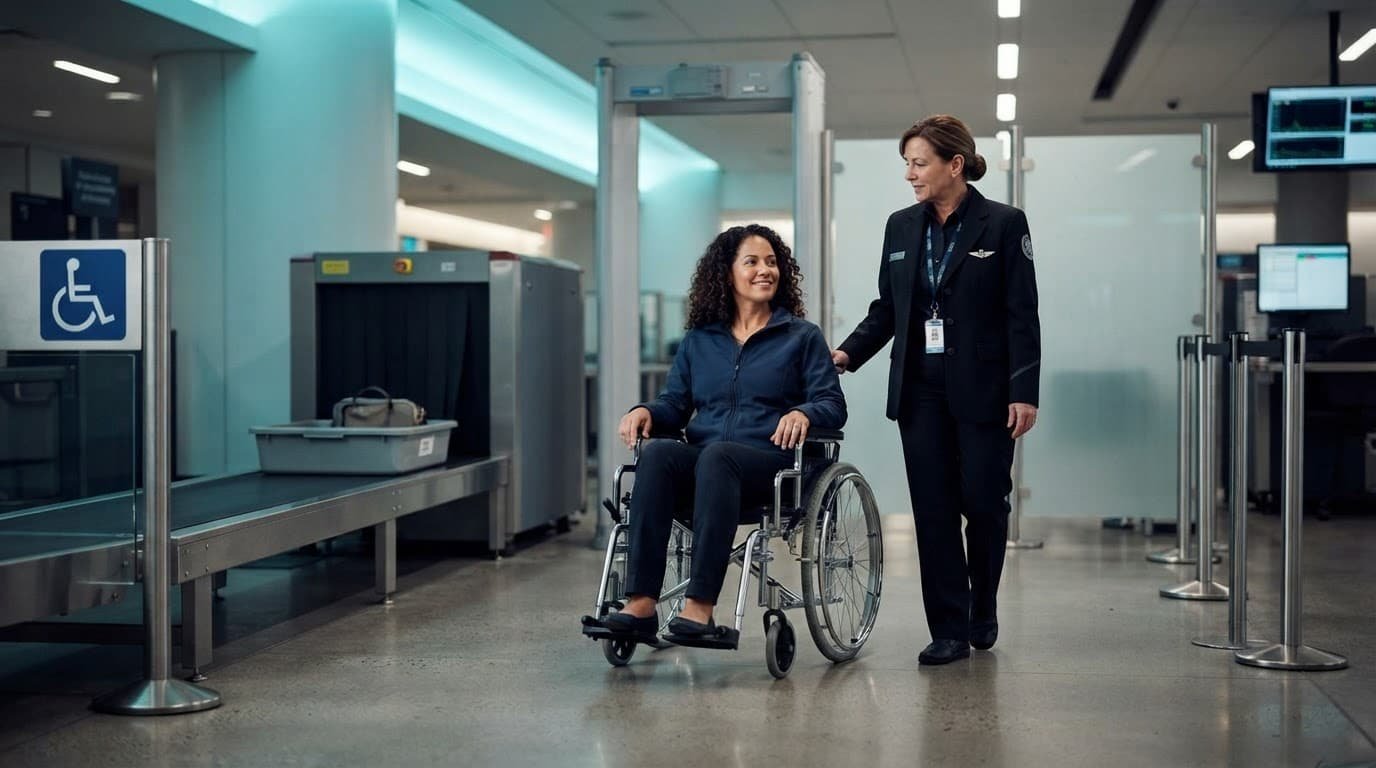
Tell the officer what you need before the process begins. You can request a private screening and explain if your mobility impairment makes it unsafe to transfer or raise your arms. TSA’s guidance for travelers with disabilities and medical conditions explains that mobility devices and non-removable items are screened too.
Keep your answers short and direct. You are explaining access needs, not asking permission to use your wheelchair.
Boarding, Aisle Chairs, and the Aircraft Seat
Pre boarding gives you time to transfer without a line of passengers waiting behind you. Get to the gate early enough to speak with the flight crew and confirm the plan.
Know how an aisle-chair transfer works
An aisle chair is a narrow mobility chair designed to fit through the aircraft aisle. Airline staff use it to bring a passenger from the aircraft door to their assigned seat.
Before boarding starts, ask what transfer equipment and trained staff will be available. Tell them your preferred transfer sequence if you have one. Ask staff to confirm your assigned aircraft seat before the transfer begins. Staff should not carry you by hand from chair to seat.
If the transfer plan does not feel safe, pause and ask for a supervisor or the airline’s accessibility contact. You deserve time to understand what is about to happen.
Keep what you can in the cabin
A folding manual wheelchair may fit in a cabin closet or approved storage space. Ask at the gate if cabin storage is available, because priority storage for mobility equipment can depend on the chair size and aircraft layout.
An onboard wheelchair is a limited mobility device, not your personal wheelchair. It may help you reach the lavatory, but it does not mean the lavatory is fully accessible.
Airline procedures can vary, so review the carrier’s own guidance before you travel. United’s Air Carrier Access Act information is one example of where airlines explain disability-related support and complaint options.
Check Your Wheelchair Before Leaving the Airport
Do not rush away from the jet bridge or baggage claim because you’re tired. Inspect your mobility device carefully before leaving the airport.
Test the parts that matter most
Check the brakes, tires, wheels, joystick, charger port, seating system, headrest, footplates, lights, and any removable supports. Drive the chair slowly in an open area if you can.
Look for bent pieces, loose wires, unusual sounds, missing parts, and new error messages. If you find a defect, missing part, or loss of function, begin the airline’s damage claim before leaving. If the wheelchair was returned without enough charge to operate, report that too.
Take fresh photos or video before leaving the airport. Save your receipt, boarding pass, wheelchair profile, and the name of every employee who helps with the report.
What to Do if Your Wheelchair Arrives Damaged
A damaged wheelchair can turn a vacation into a serious access problem. Report the issue before leaving the airport, even if you think you can manage for the moment.
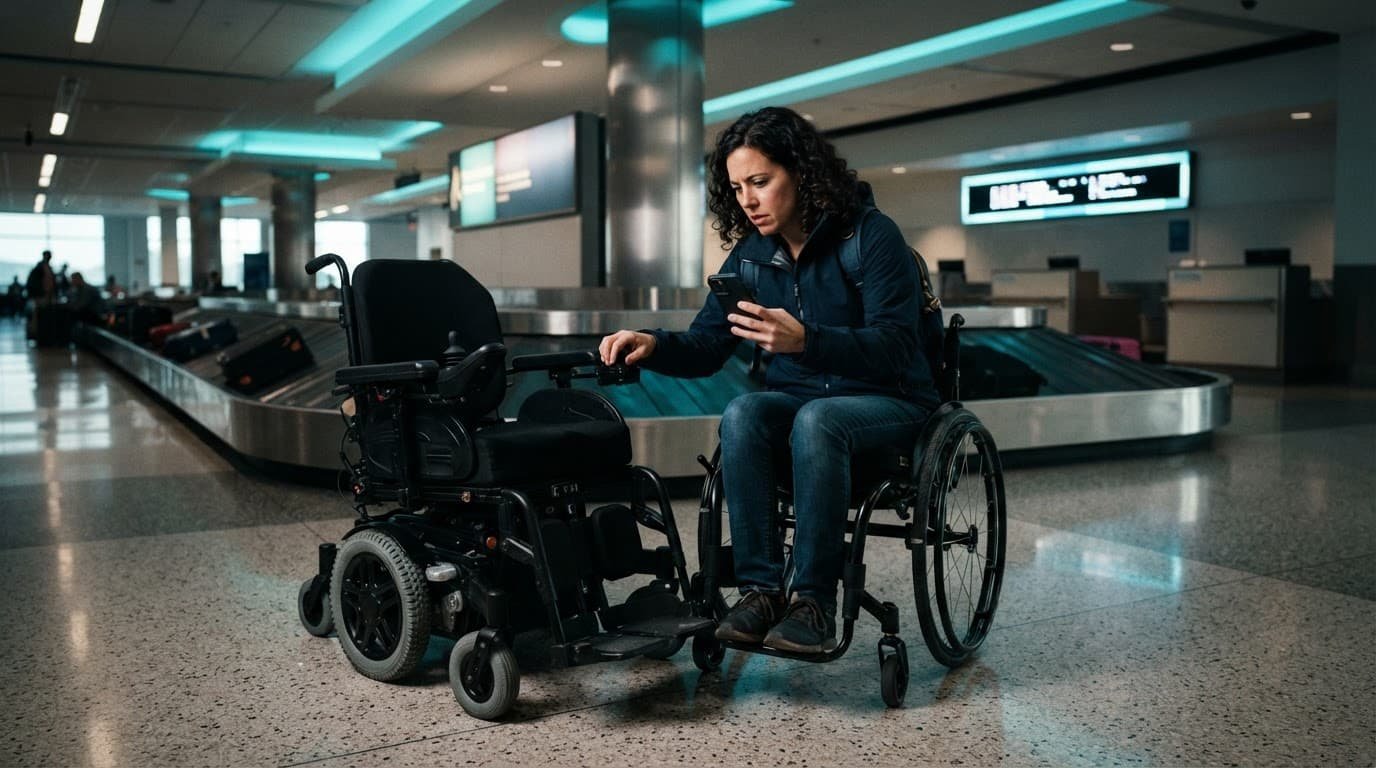
If the airline delivers your chair to baggage claim instead of the jet bridge, inspect it there before leaving. Ask for a written damage report and take photos while an airline staff member is present. Be clear about what doesn’t work and how it affects your ability to move safely.
Take these steps:
- Ask the airline to document the damage, missing part, or delay in writing, then open a damage claim.
- Request a safe repair, a suitable temporary replacement, or another safe solution while the airline assesses the damage.
- Ask for the airline’s complaints resolution official if staff dismiss the problem or can’t explain the next step.
- Keep the damage claim and its reference number, along with every receipt for transportation, repairs, equipment rental, and communication with the airline.
The U.S. Department of Transportation’s passenger disability rights information explains federal protections for disabled passengers. Your personal wheelchair is a mobility device, not ordinary checked baggage. Don’t accept an unsafe solution simply because the flight has ended.
Build a Plan That Can Handle a Delay
Delays happen. A good accessible travel plan leaves room for a missed connection, a gate change, or a long wait on the tarmac.
Pack a small backup kit
Keep medication, a phone charger, portable battery, headphones, snacks, identification, medical contacts, and any communication device in one easy-to-reach pouch. Families often remember the tablet and forget the charging cord. That small detail becomes a big problem during a long delay.
If your wheelchair has removable batteries or electronics, bring protective pouches and follow the airline’s instructions. Keep your mobility device supplier’s phone number saved in your phone, and write it on paper with your equipment backup information.
Before landing on a connection, remind the flight crew that you need an aisle chair and help with your mobility device after landing. Don’t assume the next gate has been notified. A quick reminder can save a stressful wait after everyone else has left the plane.
When Your Accessible Flight Ends at a Disney Vacation
If you are flying to Disney with a wheelchair user and an autistic child, don’t try to fill every day with rides. The first goal is helping everyone settle after a long travel day.
Keep the first park day flexible
Choose one or two must-do experiences, stay in one park area when possible, and allow time for food, bathrooms, shade, and breaks. A full schedule of return windows can become another clock to watch.
Lightning Lane Multi Pass is separate from Disney’s Disability Access Service. You don’t need every paid add-on for a good vacation. A slower day with fewer transitions may be the better choice.
For practical help with park planning, sensory needs, breaks, and flexible Disney days, explore the Disney World with Autism Guide PDF on Etsy or the Disney World with Autism Guide on Amazon. Keep headphones, devices, and charging cords together in one pouch from the flight through the park day.
Frequently Asked Questions
When should I tell the airline about my wheelchair?
Tell the airline about your wheelchair and assistance needs when you book your flight. Give at least 72 hours’ notice when possible, then call again 48 hours before departure to confirm the arrangements.
Can I stay in my wheelchair until I reach the aircraft door?
You can ask to use your personal wheelchair through the airport and have it returned at the aircraft door whenever possible. Confirm this request with the airline and gate agent, and check the destination on the gate check tag before boarding.
How should I prepare a power wheelchair for air travel?
Give the airline your chair’s maximum height, width, weight, battery type, and loading requirements before the flight. Include written battery instructions, photos of lifting points and fragile controls, and information about parts that must stay upright or protected.
What should I do if my wheelchair is damaged during the flight?
Inspect the chair before leaving the airport and report any damage, missing part, or loss of function immediately. Ask for a written damage report, open a claim, take photos, and keep the claim number and receipts for repairs or temporary equipment.
Can TSA make me walk during security screening?
Wheelchair users are not required to stand or walk during TSA screening. You can be screened while remaining in your chair, and you may request a private screening or explain any transfer and positioning needs.
A Better Flight Starts With a Clear Plan
Flying with a wheelchair takes preparation, but you shouldn’t have to accept confusion, unsafe transfers, or preventable damage. Share clear details about your chair, confirm assistance more than once, and inspect it before leaving the airport.
Your chair supports your independence every day. Your flight plan should protect it and respect that independence.