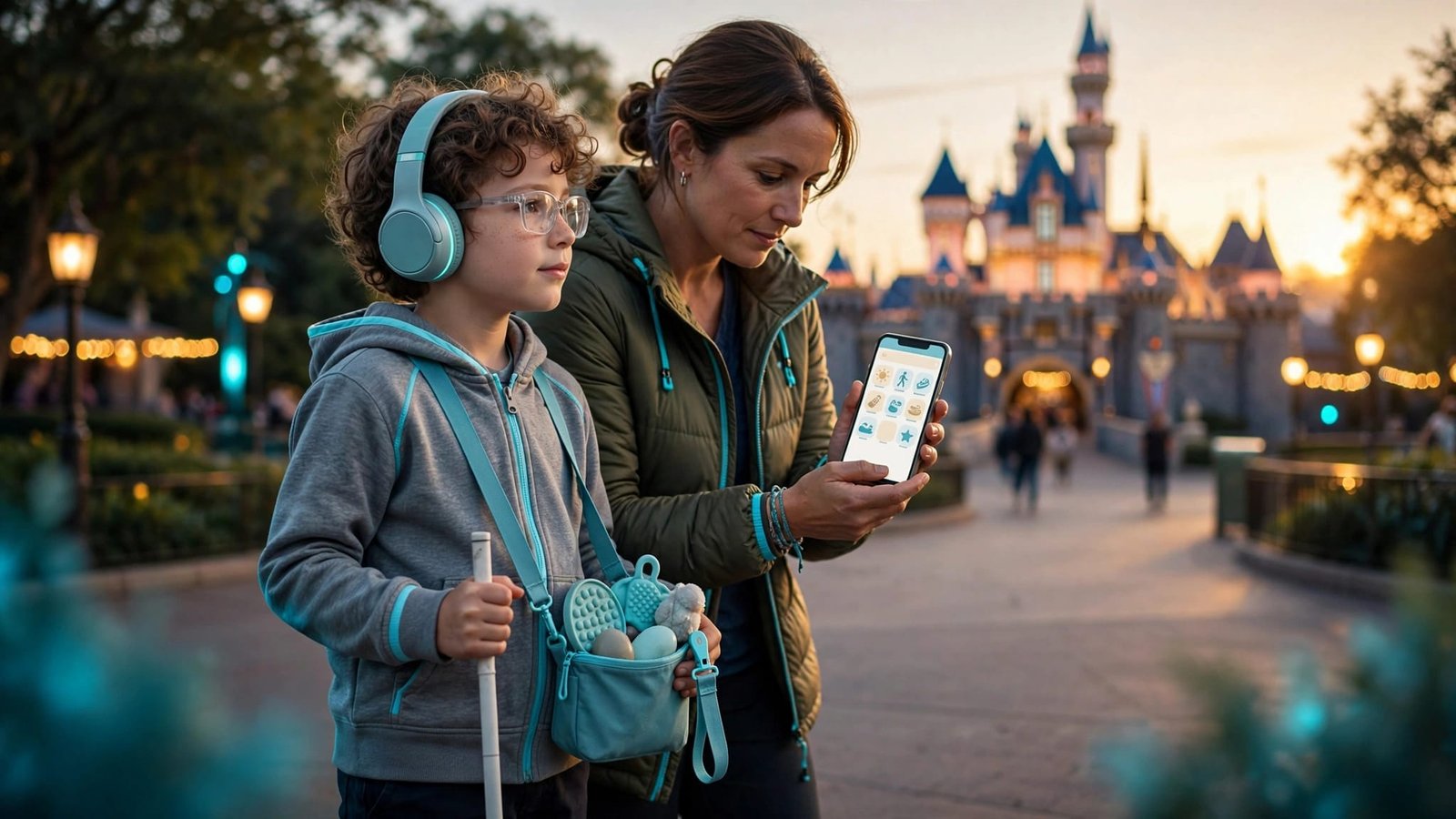
A Disney trip can feel exciting and overwhelming at the same time. For a child with autism and low vision, unfamiliar spaces, crowds, dark ride queues, and changing plans can add up quickly.
A practical park plan isn’t about doing every ride. It’s about creating a manageable day that feels clearer and more comfortable for your child. These are family planning ideas, not official Disney accommodations or medical advice.
A little preparation can give your family more room to enjoy the memories.
Start with your child’s actual needs and familiar supports at home, such as a white cane, then build a park day around them.
Key Takeaways
- Build the day around your child’s actual autism and low vision needs, using familiar supports such as a white cane, communication tools, sensory items, and regular breaks.
- Check current official Disney accessibility information before traveling, including visual accessibility tools, tactile maps, audio description, attraction procedures, and Disability Access Service details.
- Ask Cast Members about alternate attraction routes, mobility-device procedures, and available support when queues are dark, narrow, crowded, or otherwise difficult for your child.
- Keep the itinerary light with one or two priorities, flexible plans, charged devices, practical backup supplies, and enough time for food, rest, and unexpected changes.
- A successful Disney day does not require every ride or show; comfort, safety, and meaningful moments matter more than completing a packed schedule.
Start With Your Child’s Actual Needs
Every child experiences autism and visual impairment differently. Some children need extra verbal descriptions. Others need predictable routines, personal space, mobility supports, headphones, or frequent breaks.
Don’t build your trip around what another family did. Build it around what helps your child feel settled.
Make the trip easier to picture before you leave
Show your child photos or videos of the hotel, transportation, park entrance, and a few attractions. Keep it simple. Too much information can feel like another big task.
If they help your child, ask Disney about current tactile maps or a braille guidebook. Check official Disney sources before your trip, since available materials can change.
A short visual plan can help. Try using a few clear steps: “We will ride the bus, go through security, see one ride, then have a snack.” If plans change, use a familiar “change” card or give two simple choices.
Talk about the parts that may feel different. Explain that some rides are dark, some lines move slowly, and fireworks can be loud. Let your child know that leaving a ride area or taking a break is always okay.
Pack the supports you rely on at home
Your park bag should make the day easier, not heavier. Keep sensory and communication items in the same place every day so they’re easy to find.
Bring the items your child regularly depends on:
- A white cane, mobility device, or familiar stroller if your child uses one.
- Noise-canceling headphones, sunglasses, hats, comfort items, and a low-tech communication backup.
- A portable charger, charging cords, and devices in one pouch.
- Snacks, water, medication, wipes, and a change of clothes for unexpected moments.
Store mobility supports in a consistent, easy-to-find location each day. That makes a white cane or other familiar item easier to locate quickly.
A tablet isn’t much help when the charging cable is back at the hotel. Keep devices and cords together before you leave each morning.

Disney Low Vision Tools to Ask About First
Disney’s official theme park accessibility resources can support guests with a visual disability, but availability varies by location and experience. Families of children who are visually impaired should check current details and ask Cast Members when a resource or procedure is unclear.
At Disney World, services for guests who are blind or have low vision may include a braille guidebook, tactile maps, and audio description through Disney Handheld Devices at select attractions and entertainment. Availability can depend on the attraction or entertainment.
These materials may offer large-print, braille, or raised-detail information about attractions, restaurants, and shops. Raised maps can also help a child understand building shapes, walkways, and major landmarks before entering a new area.
Disneyland also lists visual accessibility resources. Its guide for guests with disabilities describes audio description, a braille guidebook, and tactile maps. Check the current Disneyland accessibility information before traveling, since offerings can change.
Pick up tools early, then make a backup plan
At the Florida resort, start with Guest Relations and ask which resources are currently available, including whether tactile maps need advance planning. At the California resort, use Guest Relations or another listed support location based on current official guidance.
Handheld devices and other accessibility devices may have collection, return, battery, or availability rules. Ask where to collect or return them, and what to do if one stops working.
Don’t depend on one official tool alone. When available, pair audio description with your own short descriptions, a phone map, and a familiar adult who can explain what comes next. Phone maps and family descriptions are planning backups, not official Disney accommodations.
Safer Ways to Move Through Busy Disney Parks
The parks are full of movement, and busy paths can make theme park navigation harder for a child with low vision. Strollers, scooters, crowds, music, uneven pavement, curb changes, and sudden stops may tire a child with a visual impairment.
Slow down when you need to. There is no prize for crossing the park in record time. A short pre-walk with tactile maps or a braille guidebook may help with orientation, if available and useful to your child.
A white cane helps more than mobility
If your child uses a white cane, bring it into the park. It can help them detect changes in pavement, edges, ramps, and nearby people. It also gives nearby adults a clear cue that your child may need room.
Keep your child close in busy areas, especially at park opening, parade times, after fireworks, and near ride exits. If your child uses a white cane, leave enough space for them to use it. A hand on a backpack strap, a caregiver handhold, or a clear family walking order can help when the path gets crowded.
If your child is visually impaired, tell nearby adults what kind of space or guidance helps. If your family travels with a guide dog, leave extra room in crowds and follow Disney’s current service-animal rules.
Watch for trolley tracks, raised curbs, wet walkways, and shifts from bright sunshine to dark indoor spaces. A white cane can help your child notice some changes, but it doesn’t prevent every collision. Give extra time when your child moves through unfamiliar lighting or pavement changes. Magic Kingdom’s Main Street, U.S.A. can be especially busy, while immersive areas like Pandora and Star Wars: Galaxy’s Edge can feel visually confusing.
Ask about alternate attraction routes
Some attraction queues are dark, narrow, or full of tight turns. If a queue won’t work well for your child, ask at the attraction entrance what options may be available.
Check current official Disney accessibility information before your visit. Confirm attraction-level procedures with Cast Members, since an alternate route, queue, or entrance may not be available.
Don’t assume every ride has the same alternate entrance or exit. Procedures depend on the attraction, current operations, and the type of mobility support your child uses.
If your child uses a stroller as a medical or mobility support, ask Guest Relations about procedures for using it as a mobility device. You can also ask at the attraction whether a wheelchair entrance might apply, but it isn’t automatically available or interchangeable with a waiting accommodation.
DAS Is About Waiting, Not a Diagnosis
Disability Access Service (DAS) is Disney’s accommodation for some guests who cannot wait in conventional attraction queues. Autism, a visual disability, sensory disabilities, or another diagnosis alone doesn’t guarantee eligibility. “DAS pass” is an informal phrase, not a separate pass or automatic entitlement.
Disney evaluates how a disability affects the guest’s ability to wait in a standard line. Explain specific challenges, such as panic in crowded queues, unsafe elopement risk, inability to tolerate close contact, or severe distress in enclosed or dark spaces.
Review DAS before your Disney World trip
For current Disney World details, review Disability Access Service registration on the official site. Registration timing, eligibility discussions, and return-time procedures can change. If a guest has a visual disability, check the page for current screen-reader and communication information.
The official page explains current registration options, including whether live video chat or in-park assistance applies. For in-park questions, ask Guest Relations what it currently handles rather than assuming it completes every registration step.
When DAS is active, your family may request an available attraction return time through the My Disney Experience app after entering the park. App functions and return-time rules can change, so verify them through current official information. The child waits somewhere else instead of inside the standard queue.
The registered guest must ride with the group. Keep your phone charged for tickets, mobile food orders, maps, return times, and family messages.
Don’t confuse DAS with Lightning Lane
Lightning Lane Multi Pass is a separate paid planning option. It may help if your family has a few must-do rides and can handle scheduled return windows.
It isn’t required for a good Disney day. Too many timed plans can create more pressure, especially when your child needs breaks or struggles with last-minute changes.
For parent-friendly support with park days, breaks, communication, and autism accommodations, the Disney World with Autism Guide on Etsy and the Disney With Autism Kids eBook on Amazon are personal planning resources, not official Disney guidance. They can help you prepare at your own pace, but neither guide can secure DAS approval.
Rides, Shows, and Characters With Low Vision
A ride can be wonderful for one child and too much for another. Read official attraction descriptions before you leave home, but also check in with your child in the moment.
You can change your mind at the entrance. That is not a failed plan. That is good parenting.
Prepare for Low Lighting and Sudden Sensory Changes
Dark rides and other attractions can create low light environments with flashing effects, loud sound, motion, fog, and unexpected transitions. A child may not notice a turn, step, vehicle edge, or scene change until it’s already happening.
Describe what you can before boarding. Say where the seat is and whether there is a lap bar. Explain how long the ride may last and when it is about to begin. Give simple updates during the attraction if your child wants them.
If your child uses a white cane, keep it nearby while waiting. Ask where to place it before boarding.
Use current official attraction information alongside Disney’s broader accessibility services information to review accessibility features before travel. Still, ask Cast Members at each attraction if you have a question. They can explain the immediate boarding process better than an old online plan.
Character meet and greets can be a bright spot
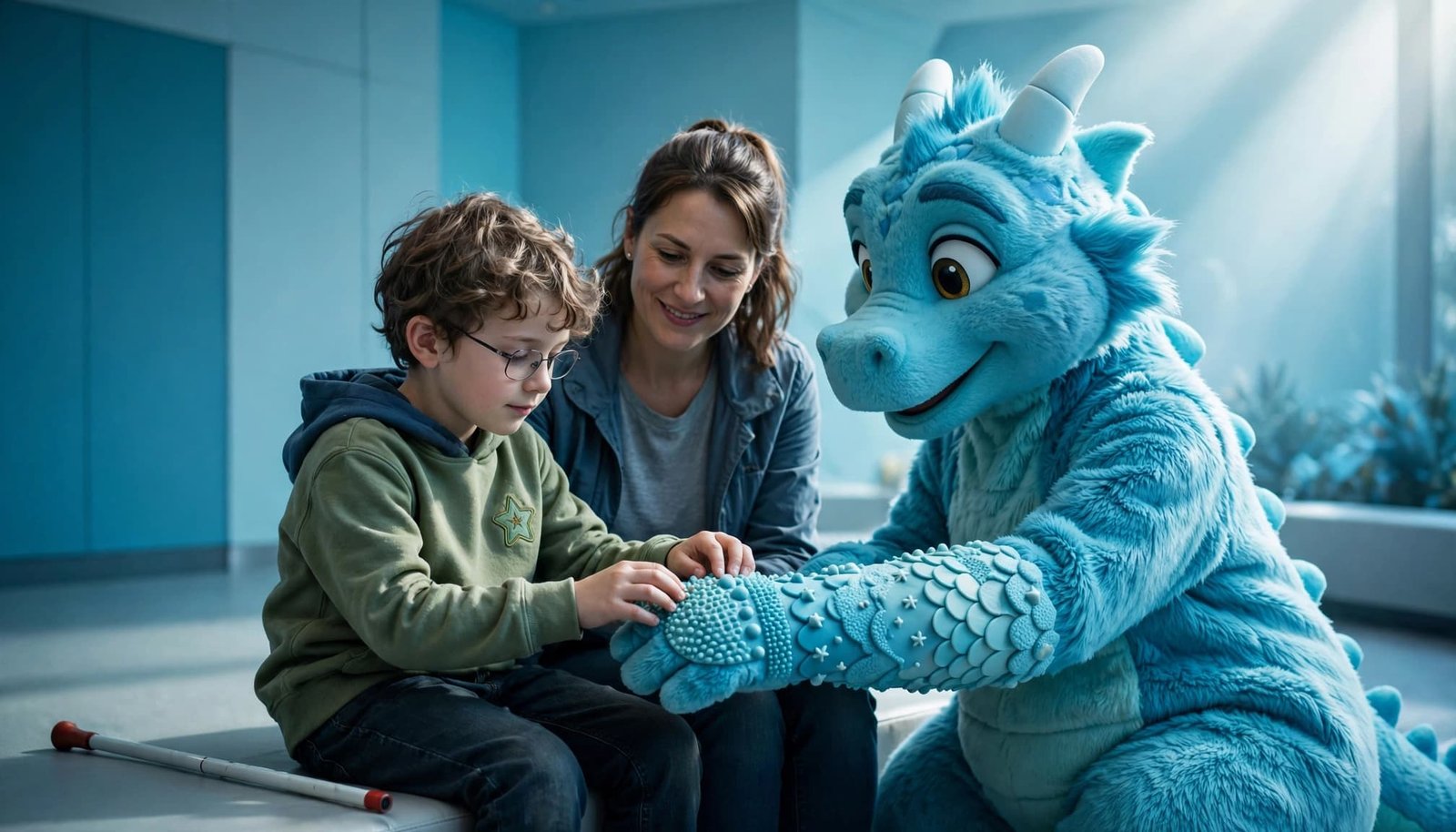
Character interactions can be joyful when they’re introduced slowly. Tell the character handlers that your child has autism, then explain how your child prefers people to approach. Ask the character to say hello from the front and give your child time to understand who is there.
A character meet and greet may involve fur characters or face characters, and their interaction styles can differ. If touching is permitted, your child may enjoy hearing a short outfit description or exploring a textured accessory. They may instead wave, listen, stand nearby, or leave.
Never force the moment. A quick hello can still be a successful character interaction.
Build a Flexible Day With Real Breaks
A detailed itinerary can fall apart before lunch. Rain starts, a ride closes, someone gets hungry, or your child needs a quiet space. That is normal during a Disney World park day.
Choose one or two priorities for the day. Everything else is optional.
Keep the schedule light and the phone charged
One park per day is often easier for families traveling with autism and low vision. Park hopping adds transportation, security checks, walking, and more transitions.
Plan a calm break before your child reaches their limit. This may mean a quiet table, a shaded bench, a hotel pool break, a familiar snack, or an early return to the room. Offer water and food before your child becomes overtired. A hotel break or pool visit may help, but it isn’t always available or calming.
Mobile food ordering can reduce one stressful line. Look at menus when your child is calm, then choose a pickup time that works for your family. Keep a portable battery in the park bag. A dead phone can make a manageable day much harder.
Bring practical backup supplies
Travel days can include spills, motion sickness, wet shoes, surprise illness, and a need for fresh clothing. It helps to have supplies before you need them.
You can also find optional packing ideas at Trip Rescue Shop, a commercial planning resource with travel items for stroller needs, cleaning supplies, backup clothing, and sick-on-vacation moments. It isn’t a Disney source or a medical recommendation. A few prepared items can save a long search for a store after a hard day.
Your child doesn’t need a packed schedule to have a meaningful Disney trip. Familiar supports, calm choices, and room to rest are personal planning tools, not official accommodations. They often make the day feel good.
Frequently Asked Questions
Does Disney provide accommodations for children with low vision?
Disney may offer visual accessibility resources such as braille guidebooks, tactile maps, and audio description at select locations or attractions. Availability and procedures can change, so check current official Disney information and ask Cast Members for help during your visit.
Does autism or low vision automatically qualify a child for DAS?
No. DAS eligibility is based on how a disability affects a guest’s ability to wait in a standard attraction queue, not on a diagnosis alone. Explain your child’s specific waiting challenges and review the current official registration process before traveling.
Should my child bring a white cane into the Disney parks?
If your child regularly uses a white cane, bringing it to the park can help with pavement changes, edges, ramps, and nearby people. It also signals to others that your child may need additional space, although close supervision is still important in crowded areas.
How can we prepare a child with autism and low vision for a Disney ride?
Use simple descriptions to explain the seat, restraint, ride length, lighting, sounds, and possible sudden changes. Show photos or videos before the trip, keep familiar sensory supports nearby, and remember that leaving or skipping a ride is always an acceptable choice.
How should we plan breaks during a Disney day?
Plan a calm break before your child reaches their limit, using a quiet table, shaded area, familiar snack, hotel room, or another option that usually helps. Keep the schedule flexible and choose only one or two priorities so rest and unexpected changes do not feel like failures.
A Disney Trip That Fits Your Family
The best Disney low vision plan leaves room for your child to wait, walk, rest, and enjoy meaningful moments. Use the tools that fit your family, including familiar supports such as a white cane, and keep expectations flexible.
Your family does not have to do every ride, see every show, or buy every add-on. A comfortable day is a successful day, and those are the Disney memories that last.
Leave a Reply