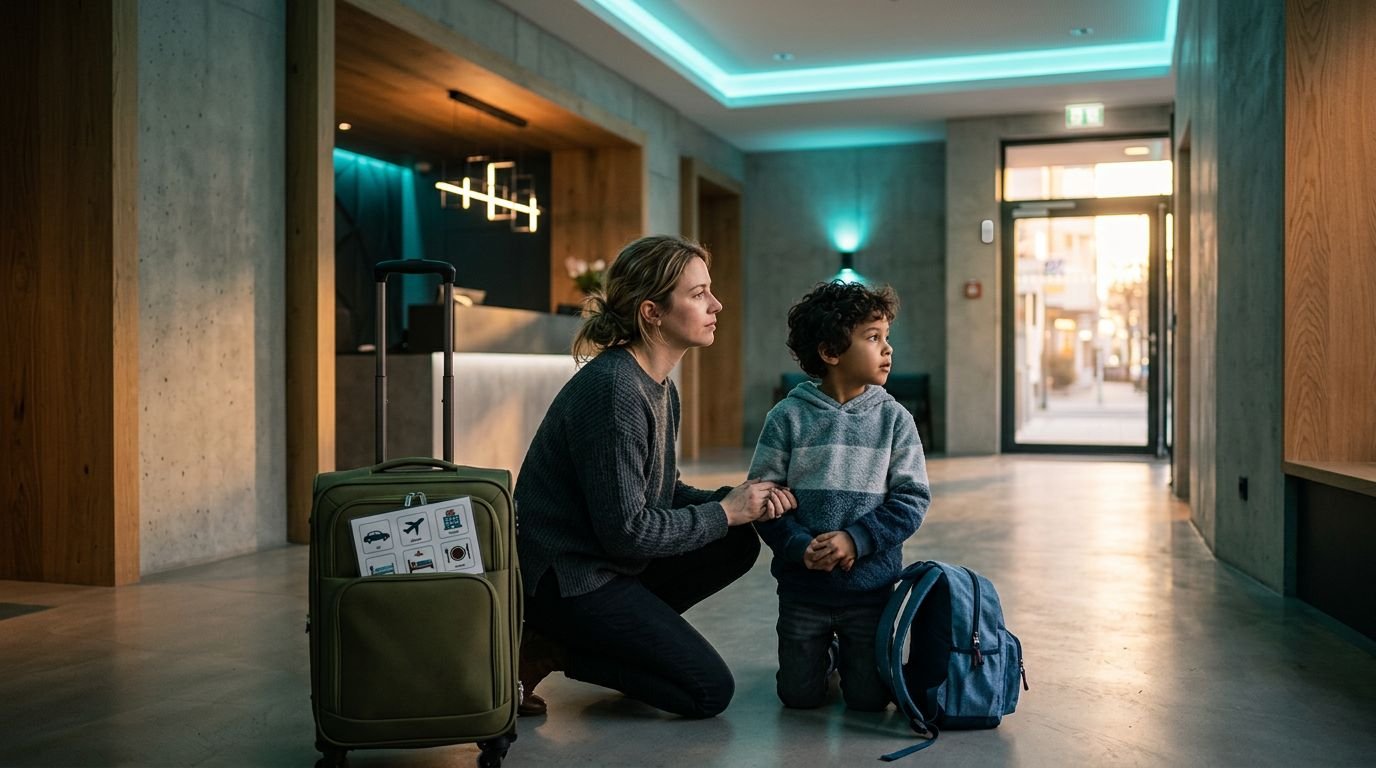
A vacation can turn stressful in seconds when a child, teen, or adult suddenly leaves a safe space. Autism elopement safety is not about taking away independence. The goal is to build safe environments while preserving choice and independence. When it happens, elopement behavior may signal a sensory, communication, or other unmet need, rather than defiance.
People with autism spectrum disorder have varied communication, sensory, and support needs. Travel adds new doors, crowded walkways, parking lots, pools, buses, airports, and unfamiliar routines. A simple plan helps your family respond with less panic and more confidence.
This is general safety information, not individualized medical or behavioral advice. Adapt the plan with the person’s clinicians and local emergency services.
Key Takeaways
- Autism elopement safety starts by understanding why someone may leave, including sensory overload, communication difficulties, a preferred destination, or an unmet need.
- Use layered safety supports such as a written safety profile, clear supervision handoffs, identification, communication tools, environmental checks, and destination-specific planning.
- Prioritize nearby water, traffic, transit areas, exits, stairs, and elevators, while using sensory breaks, predictable transitions, and clear choices to reduce distress.
- If someone goes missing, act immediately, contact local emergency services, share their communication and support needs, and direct responders toward likely destinations and nearby hazards.
- Safety planning should protect autonomy, privacy, consent, and dignity while being adapted to the person’s age, communication, mobility, sensory, and support needs.
Autism Elopement Safety Starts With Understanding the Risk
Elopement means leaving a supervised or expected location without a caregiver knowing. It can mean running from a hotel room, walking away in a theme park, leaving a restaurant, or stepping off during a busy transition.
According to AAP wandering safety guidance, nearly half of children with autism spectrum disorder have attempted to leave a safe place. The risk varies among individuals, but this wandering is common and deserves a real safety plan.
Elopement has a reason behind it
Elopement behavior may communicate a strong pull toward water, a favorite character, a familiar place, a snack, or a quiet area. It may also signal an attempt to escape loud sounds, bright lights, conflict, waiting, heat, or an unexpected change.
Communication difficulties and developmental differences can make the situation harder. A child may struggle to express pain, explain noise sensitivity, report fatigue, communicate toileting needs, or request a break. These differences can also affect hazard awareness and responses to unfamiliar adults. During overwhelm, the fight or flight response can narrow attention, making leaving feel like the fastest answer.
Try to document patterns without blame. Consider the person’s age, communication method, mobility, and support needs as you ask:
- What usually happens right before they move away?
- Are crowds, transitions, hunger, noise, or waiting part of the pattern?
- Do they seek water, transportation, animals, elevators, or a favorite attraction?
- What words, pictures, or signals can they use to ask for a break?
Knowing the “why” supports prevention planning and can help you prevent the moment before it happens. It doesn’t replace an individualized clinical assessment when concerns persist.
Water and traffic need your first attention
Water and traffic need your first attention because drowning risk and traffic injury can rise quickly. Shiny, moving, calming, or familiar water may draw attention; check pools, fountains, lakes, oceans, and drainage areas first. Appropriately matched swimming classes or water-safety instruction can help, but never replace close, active supervision near water.
Busy roads and parking lots carry their own risks. A child focused on a destination may miss cars, curbs, buses, or transit crossings.
During travel, the closest water and the nearest moving vehicles should always be part of the safety plan, even when they are not part of the day’s activities.
Autism Elopement Safety Starts With Understanding the Risk
A good plan is not one product or one rule. It is one layer of elopement prevention, supported by others when someone is tired, excited, or overwhelmed.
Start with a short written plan. Caregivers, self-advocates, and trusted support people can use it to coordinate supervision, communication supports, identification, and environmental planning as safety measures. Keep a copy on your phone, in your travel bag, and with another trusted adult.
Create a one-page safety profile
Create a one-page profile for children, teens, or adults. Include a recent photo, full name, age, height, clothing size, and medical needs. Add mobility needs, sensory supports, likely destinations, and past wandering patterns. Note details that matter in a search, such as a fascination with water, trains, elevators, mascots, or a favorite food.
Write down the person’s preferred communication. Include whether they respond to their name, use an AAC device, repeat phrases, speak only with familiar people, or become fearful around strangers. For someone with nonverbal autism, note whether they use AAC or little/no spoken language. Speech level doesn’t indicate comprehension or decision-making ability.
Record what happens before and during elopement behavior. It may reveal a need, preference, or stressor, and should guide support planning.
For teens and adults, ask what information they want included. Record consent preferences and how they want unfamiliar people to help. A safety plan should respect privacy and choices whenever possible. If an adult can make their own decisions, talk through helpful support instead of deciding everything for them.
The National Center for Missing & Exploited Children autism resources can help families identify details responders may need quickly. Current planning materials from Autism Speaks and the National Autism Association may offer additional prompts, but no organization or resource replaces individualized planning.
Before travel, contact local law enforcement to ask about available registries, response preferences, and documentation requirements. Registration does not guarantee safety. Review the plan with clinicians, including which individualized safety skills to practice, and ask local emergency services about destination-specific procedures.
Practice the plan at home
Practice does not need to feel scary. Use short, calm, voluntary routines. A person should not be punished for leaving or forced to rehearse frightening scenarios.
Teach simple requests through the person’s preferred communication method. Use a spoken phrase, AAC button, picture card, text message, gesture, or trusted-person signal:
- “I need a break.” (spoken phrase, AAC button, or gesture)
- “I am lost.” (picture card or text message)
- “Please call my parent or support person.” (spoken, typed, or a trusted-person signal)
- “My hotel is on this card.”
Practice asking for help, pausing at curbs, using agreed supports in parking lots, identifying trusted staff, and reaching a meeting point. Adapt each routine for age, communication, cognition, mobility, sensory needs, and developmental differences. Keep practice supportive, not obedience training. Let the person choose a safe meeting spot in each new location.
Visual ways to communicate plans and requests can include a schedule, card, map, or AAC device. These supports can help create safe environments in unfamiliar places. Show the next few steps instead of explaining the whole day. “Breakfast, bus, park entrance, ride, snack, hotel break” may be easier to process than a long verbal plan.
Make Hotels, Rentals, and Transportation Safer
The first few minutes after arrival are busy. Use layered safety measures for lodging, supervision, and transportation before anyone starts exploring.
Do a five-minute room safety check
Before unpacking, walk through the room as if you’re seeing it through your child’s eyes. Test the door lock, balcony door, connecting room door, windows, and patio access. Find the nearest stairwell, elevator, pool gate, parking lot, and exit.
Write a supervision handoff before unpacking. Name who is watching and who carries identification and medication. Assign someone to check nearby water, traffic, stairs, elevators, and exits. Repeat the handoff whenever responsibility changes.
Ask the hotel or rental host about approved special locks or other options appropriate for your accessibility needs. Use these as safety supports, never as punishment. No lock should block emergency egress, trap a person, or replace supervision. Check fire exits, hotel policies, and local regulations before using alarms or locks.
A higher floor doesn’t replace supervision, but it may add one more barrier. Room layouts, alarms, and transition support should adapt to developmental differences, mobility needs, sensory needs, and communication preferences. For adults who direct their own support, ask what setup and alert style feels useful.
Door and window alarms can help during sleep, naps, showers, and unpacking. Use them only if the hotel’s or rental property’s rules and fire safety requirements allow them. Consider the person’s sensory tolerance before choosing one. They alert adults when a door or window opens, but they don’t replace nearby supervision.
Keep shoes, room keys, medications, identification, and a charged phone in the same spot every day. In an emergency, you don’t want to search through suitcases.
Plan for cars, buses, and airports
Use a written seating plan before you leave the hotel. Decide who walks beside your child, who handles bags, and who watches for traffic. At every transition, state who is watching and when responsibility changes. On buses and trains, confirm the seating plan and identify the nearest exit before boarding. This sounds simple, but travel transitions can split adults apart.
For car travel, use child safety locks if appropriate. Review what to do if the car stops unexpectedly. A familiar playlist, headphones, fidget, drink, and simple next-step reminder can help lower anxiety.
At airports, train stations, cruise terminals, and bus stops, choose a meeting point before you need it. Take a photo of what your child is wearing each morning. That photo may be more useful than trying to remember details under pressure.
Pack Safety Tools Without Overloading Your Bag
The right tools depend on your child’s needs, comfort, mobility, and communication. A tracker may help some families, while others rely more on identification, visual supports, and close supervision. These tools add safety layers, but they don’t replace relationships or supervision.
The goal is not to make your child feel watched every second. The goal is to give caregivers more ways to respond quickly if separation happens.
Choose identification your child can tolerate
An identification bracelet, shoe tag, luggage tag, temporary tattoo, or pocket card can include a caregiver phone number. Some children will not wear a bracelet, and that is okay. Try more than one option before travel day.
A small card can say: “I am autistic and may have trouble answering questions. Please call my family.” Add two contact numbers, not one.
GPS devices can add reassurance, especially in large parks, airports, or unfamiliar cities. Test battery life, connectivity, geofencing, location accuracy, alert volume, and app access before departure. Discuss tracking and consent with teens and adults whenever possible, and never use a tracker secretly or to restrict movement. A tracker that is uncharged or that your child will not wear is not a full plan.
The National Autism Association’s guidance may help families start with practical items and planning materials. Check that it remains current and relevant, then verify the current provider, contents, eligibility, and link at Big Red Safety Box resource details.
Keep your travel bag organized
A packed bag is not helpful if nobody can find what they need. Put charging cords, headphones, communication devices, and portable batteries in one pouch. Many families remember the tablet and forget the charging cable.
Your essential travel bag should include:
- A portable charger, headphones, water, snacks, medications, wipes, and a change of clothes.
- A printed safety profile, current photos, ID cards, and hotel information.
- Familiar comfort items that help your child reset after a hard moment.
For optional travel basics, Trip Rescue Shop is a commercial source of strollers and cleaning supplies for unexpected sick-on-vacation moments. Check current availability and product details before buying.
Reduce Sensory Overload Before Someone Bolts
You can’t remove every loud sound, long line, or surprise from travel. You can lower the pressure before it builds too high.
Watch for early signs, including pacing, covering ears, repeated questions, quick movements, louder vocalizations, or shutting down. Movement toward an exit or preferred destination may reflect elopement behavior, interest, communication, or an unmet need. This exit-seeking behavior can signal that the environment has become overwhelming. Warning signs and effective supports vary across developmental differences, ages, communication styles, and support needs.
Build breaks into the day
Don’t wait for distress to peak before leaving a crowded area. Plan breaks before meals, after a major attraction, before transportation, and before nighttime events.
For elopement prevention, combine proactive breaks with communication access and practical accommodations. Ask about shorter lines, quiet rooms, shade, and accessible seating when they’re available. Offer hydration regularly, and include predictable transitions and rest periods in the schedule.
Choose one or two daily priorities. Everything else is optional. A slower day with a calm child is more successful than a packed schedule that ends in fear or exhaustion.
At a theme park, sit near an aisle during shows. Pick parade spots near an open walkway. Know where the nearest quieter area, restroom, first-aid station, and exit are located.
A stroller can also give some children a familiar place to rest or feel contained. If a child needs more support, size, or positioning than a standard rental provides, plan ahead for a special-needs stroller.
If distress rises, stop, reduce demands, and move to a safer, low-stimulation area when possible. A fight or flight response can make reasoning and verbal demands less effective. Use few words, keep headphones available, and preserve AAC access while the person recovers.
Give clear choices, not pressure
Use simple choices: “Do you want headphones or outside?” “Do you want a snack or hotel break?” “Do you want to watch the parade for five minutes or skip it?”
A child doesn’t need to finish every attraction, meal, or event. Giving permission to skip activities or say “no” can prevent a difficult moment from becoming dangerous.
When everyone is calm, practice safety skills such as requesting a break and finding a meeting point. Practice asking trusted adults for help, too.
Ask clinicians about individualized regulation and communication supports that match your child’s needs.
What to Do If Your Child Goes Missing
If you cannot find your child or loved one, act right away. Don’t wait to see if they return on their own.
Call the local emergency number, such as 911, when the person is missing or in immediate danger. Request law enforcement support through that call, especially near water, traffic, transit, or a large crowd.
Say clearly that the person is autistic and may not respond to their name or approach strangers. Describe their communication, sensory, mobility, and approach needs.
Give responders useful details fast
Give emergency personnel a recent photo, clothing description, last known location, and likely destinations. Add the person’s communication method, medical needs, and whether they may not respond to their name.
Tell responders about nearby water, parking areas, transportation stops, favorite characters, or other places they may head toward.
Assign caregivers clear roles instead of sending everyone in different directions. One adult stays at the last known location if possible. A second checks the highest-risk destination, prioritizing drowning risk near pools, fountains, lakes, oceans, drainage areas, and other water. A third contacts venue staff and emergency services when available.
Notify hotel security, park staff, transit personnel, or venue management immediately. Ask staff to monitor exits and cameras, check nearby water, review transportation routes, and send help toward danger areas.
Responders should approach calmly, reduce noise and crowds, and avoid assuming a lack of speech means a lack of understanding. Don’t chase or use punitive questioning. Avoid unsafe restraint, and follow trained emergency guidance if immediate physical danger exists.
Check the Autism Speaks wandering-prevention resources, and confirm that the autism elopement alert form and guidance are current. Use them to prepare these details before a crisis.
Use local emergency supports before travel
Before travel, check whether your destination supports Smart911, Project Lifesaver, a special-needs registry, or a local autism safety program. Availability varies by destination, so verify each program locally.
Where available, Smart911 may allow emergency call-takers to see a household safety profile when a registered phone calls 911.
The HHS National Autism Missing and Endangered Person Alert Initiative is also building stronger awareness and response practices across the country.
Call the destination’s non-emergency police number before a major trip if you need local information. Ask whether a registry or alert program is available, how it works, and what details officers can document. It’s much easier to ask these questions on a calm day.
Disney Days Need a Clear Exit and Reunion Plan
Disney can be full of happy moments, but it can also be loud, crowded, hot, and full of fast transitions. Build your park day around your family’s energy, not a long list of rides.
Use one park per day when possible. Park hopping adds walking, security lines, transportation, and more decisions. Pick a hotel that makes a midday reset realistic, and schedule that break before anyone reaches overload.
Review Disney’s current official accessibility and transportation information before your visit. Identify quiet or lower-stimulation areas, choose an agreed meeting place, and assign an adult to supervise during security and transportation transitions.
Take a clothing photo each morning, with your child’s consent. Keep a portable charger in your park bag because your phone may hold tickets, maps, return times, mobile food orders, and caregiver messages.
An accessibility service or disability access program may reduce waiting or sensory demands. It isn’t a missing-person plan, a substitute for supervision, or a guarantee of safety. Children, teens, and adults may each prefer different levels of support, so agree on roles before entering the park.
If your family is planning Walt Disney World, review current official policies first. The Disney World with Autism Guide on Etsy offers ideas for park days, sensory breaks, and accessibility planning. You can also find the guide on Amazon.
Frequently Asked Questions
What is autism elopement?
Autism elopement is leaving a supervised or expected location without a caregiver knowing. It may reflect a strong interest, a desire to escape sensory overload, or an unmet communication or support need rather than defiance.
What should be included in an autism elopement safety plan?
Include a recent photo, identifying information, communication method, medical and mobility needs, likely destinations, and past wandering patterns. Add supervision roles, meeting points, identification, sensory supports, transportation plans, and local emergency contacts.
What should I do if my child or loved one goes missing?
Act immediately and call the local emergency number, especially when water, traffic, transit, or crowds are nearby. Tell responders that the person is autistic, explain how they communicate and respond to others, provide a recent photo and last known location, and direct searches toward likely destinations and hazards.
Do GPS trackers or door alarms prevent elopement?
Trackers and door alarms can add useful layers of support, but they do not replace close supervision, communication access, or an emergency plan. Test equipment before travel, follow property and fire-safety rules, and discuss tracking and consent with teens and adults whenever possible.
How can travel reduce the risk of elopement?
Build in breaks, predictable transitions, hydration, quiet areas, and permission to skip activities before distress becomes intense. Offer clear choices and teach practical ways to request help, a break, or directions using the person’s preferred communication method.
A Safer Trip Still Has Room for Joy
An autism elopement safety plan gives your family a calm starting point. It combines prevention, communication, identification, sensory support, and a clear emergency response.
People with autism spectrum disorder have different support needs, so center the plan on autonomy, communication, and consent.
After a separation, near miss, or stressful travel event, check in with the person without blame. Record what happened before and after, and note which supports helped. Update the written profile and emergency contacts. Treat elopement behavior as information for improving supports, never as a reason for punishment. Review changes with clinicians or trusted support professionals.
You do not need to control every moment. You need a plan that helps your child feel supported and helps caregivers act quickly when plans change.
This article provides general information. Individualized advice should come from the person’s clinicians and local emergency services.
A slower schedule, a charged phone, and a clear meeting plan can protect the trip and its memories. Reviewing a wandering incident can strengthen future plans.
Leave a Reply