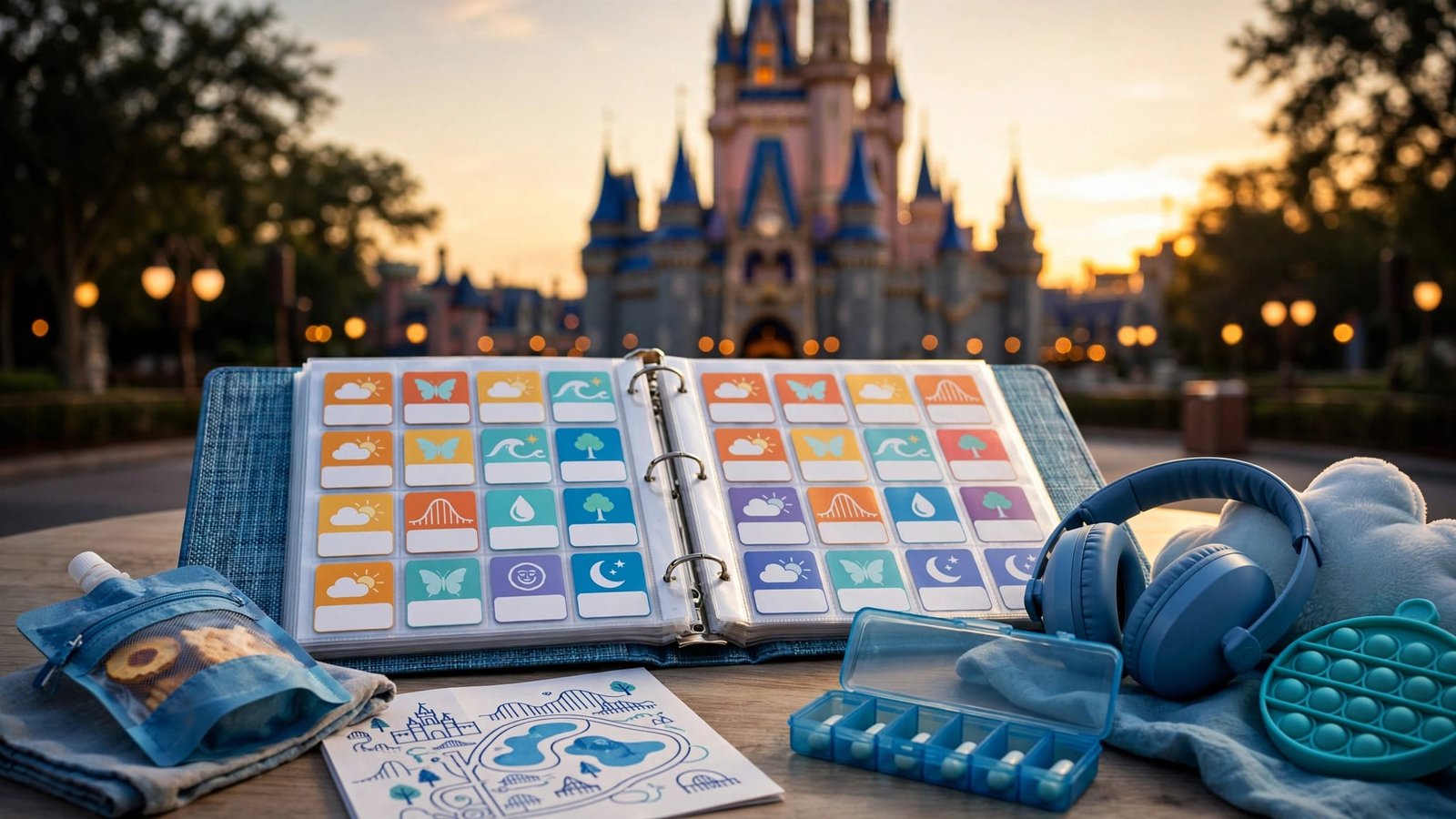
A trip to Walt Disney World Resort can be exciting, but theme parks also bring crowds, heat, long walks, loud sounds, and quick changes. A simple binder gives your family one place to find the plan when the day feels like a lot.
Your trip may look different from other neurodivergent families’ vacations. The goal of a family vacation isn’t to experience every ride, but to support safety, connection, and a realistic pace while making good memories.
Key Takeaways
- Build your binder around your child’s sensory needs, communication style, food preferences, medical needs, and early signs of overload.
- Review Disney’s current Disability Access Service rules before you travel. A DAS return time isn’t a front-of-the-line pass. Check current Disney guidance for registration details, including whether a live video chat is required.
- Plan one or two priorities each day. Add breaks, familiar food, hotel time, and an exit plan before you need them.
- Keep important information in both your binder and your phone. Travel days move fast, and every caregiver should know where to find the plan.
Build Your Disney Autism Vacation Binder
Your binder does not need to be fancy. A folder with tabs, a small notebook, or printed pages in a clear sleeve can work well. Think of it as a practical accessibility planning guide, not a guarantee of accommodations.
What matters is having key information ready before security, transportation, or a difficult park moment. Keep passwords, live app details, and digital backup copies protected on your phone or in a password manager.
Use a compact tab system to organize the caregiver checklist:
- Preparation: travel dates, lodging, transportation, and child-specific support needs
- Documents and reservations: identification, reservation confirmations, tickets, and printed summaries
- Sensory and comfort items: calming tools, headphones, comfort objects, and break ideas
- Communication and safety information: preferred communication, elopement concerns, and trusted caregiver instructions
- Medications and medical needs: medication instructions, medical equipment details, allergies, and provider information
- Daily park planning: park hours, planned meals, transportation steps, and flexible activity choices
- Emergency contacts: caregiver phone numbers, hotel details, medical contacts, and backup contacts
- Post-trip notes: what worked, what was difficult, and what to change next time
Printed summaries, reservation confirmations, emergency information, medication instructions, and visual supports belong in the binder. Store sensitive details and changing information digitally, where caregivers can update and protect them.
Start with your child’s real support needs
Place a one-page caregiver summary at the front. Include your child’s preferred name, communication needs, sensory needs, food allergies, safe foods, special dietary needs, medications, bathroom needs, mobility needs, and calming supports.
Also write down early signs of sensory overload. Your child may become quiet, pace, cover their ears, repeat questions, cry, or try to leave an area. When every adult knows those signs, you can take a break before the situation becomes harder.
Add emergency contacts and clear instructions for who to call, where to meet, and what helps your child respond. Include any information a caregiver may need if plans change or you become separated.
If autism is only one part of your child’s needs, include the full picture. Our guide to Disney World planning for multiple disabilities can help families think through mobility, medical equipment, food restrictions, anxiety, communication, and elopement concerns.
Add a visual schedule with room to change plans
Use pictures, simple words, or icons to show the big parts of the day: breakfast, transportation, park entrance, first ride, snack, break, lunch, hotel, and bedtime. Place the schedule in the binder, and save a digital copy on the caregiver’s phone.
Avoid filling every hour. Leave space for rest, unexpected changes, and activities your child chooses.
Add a “change of plan” card to your binder. It can say, “The ride is closed. We can choose something else.” A simple visual reminder can make an unexpected change feel less personal and less upsetting.
Bring the schedule with you, but let your child set the pace. A slower park day is still a successful park day.
Leave a few pages for post-trip notes. Record helpful supports, difficult transitions, favorite breaks, and updates for the next Disney vacation.
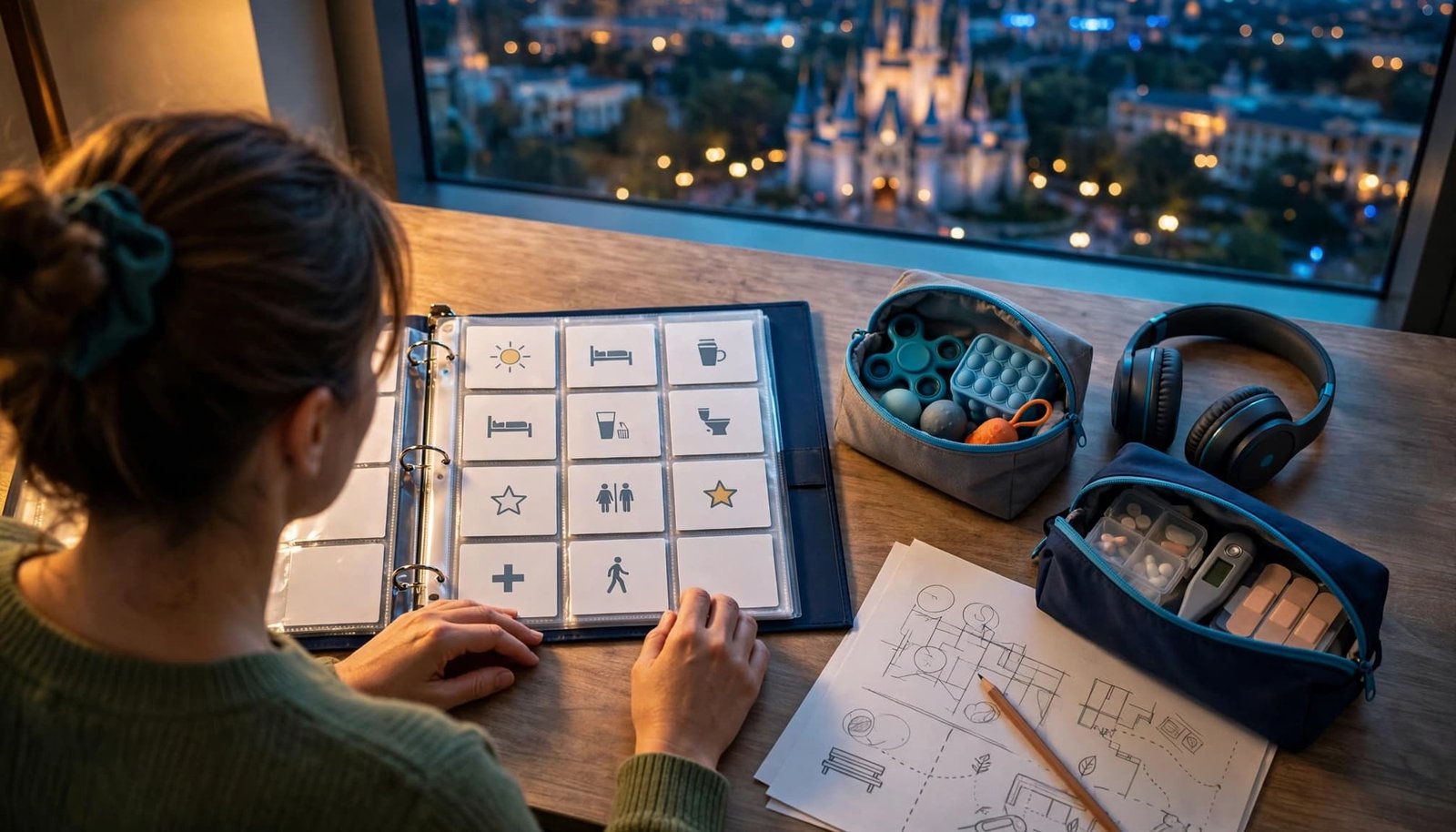
Understand DAS Before You Arrive
Disney’s Disability Access Service, known as DAS, may help guests who cannot tolerate extended waits in conventional attraction queues because of a developmental disability, such as autism. Eligibility is based on the guest’s needs in the queue, not an autism diagnosis alone.
Register early if DAS may help your child
If DAS may help, check whether advance registration through live video chat is available for your dates. Follow Disney’s current instructions for timing, required documents, and who must participate.
Have your child’s park admission details, ticket information, and My Disney Experience app account ready. During the live video chat, explain what makes a traditional queue difficult for your child. Keep it honest, simple, and focused on the waiting environment.
The eligibility conversation focuses on the guest’s queue-related needs. A developmental disability diagnosis, including autism, doesn’t guarantee eligibility. For Walt Disney World Resort, don’t assume that registration procedures match those at other Disney destinations.
Review the current Disability Access Service details from Disney before your trip. The registration process, timing, and available disability accommodations can change. Confirm whether Disney currently offers live video chat and what options apply to your visit.
Put DAS notes in the binder
Make a DAS page with your Disney account login information, ticket confirmation numbers, and a short reminder of what to explain during registration. Don’t write passwords in an unsecured binder. Use a password manager or keep that information protected.
Add a note that DAS isn’t guaranteed and that registration doesn’t promise a DAS return time. If approved, record how to request or use a DAS return time according to Disney’s instructions.
DAS isn’t a way to erase every standby wait. Your family may still need to wait for transportation, food, security, shows, restrooms, and crowded walkways.
The best DAS plan includes a place to wait comfortably, not only a return time for an attraction.
Use DAS and My Disney Experience in the Park
Once DAS is approved, the registered guest must enter the park before requesting a selection. Use the My Disney Experience app to view available DAS selections and request one for an eligible attraction. The app helps with in-park planning, but it doesn’t determine official DAS eligibility.
Know how return times work
DAS lets an eligible guest wait outside the regular queue and return when the selected time arrives. A DAS return time is based on the attraction’s current standby wait and appears with additional details in the app.
Check the app or ask a Cast Member about the selection’s expiration details. Attraction operations, closures, and park policies can affect how long a DAS return time remains available.
The app and Cast Members can show when another selection may be requested. Choose an attraction that fits your child’s energy and interests, rather than building the whole day around a tight ride order.
Travel party details can affect who may join the registered guest, so confirm the group during registration. Keep a printed plan in the binder, including each DAS return time, in case your phone loses power or connectivity.
Keep another option ready
Use the waiting time for a snack, a calm attraction, a shaded seat, or a quiet walk. Some children want movement. Others need less noise. Your plan should have both choices.
Policies and app features at Walt Disney World Resort can change, so check current official guidance before your visit. The Disney World autism guide shares more family-focused ideas for DAS preparation, sensory supports, and flexible park pacing.
Plan Sensory Breaks Before Overload
Waiting too long to pause can lead to sensory overload and make every part of the day harder. Plan breaks after a busy ride, meal, long walk, or crowded show. A break isn’t lost Disney time. It’s part of the vacation.
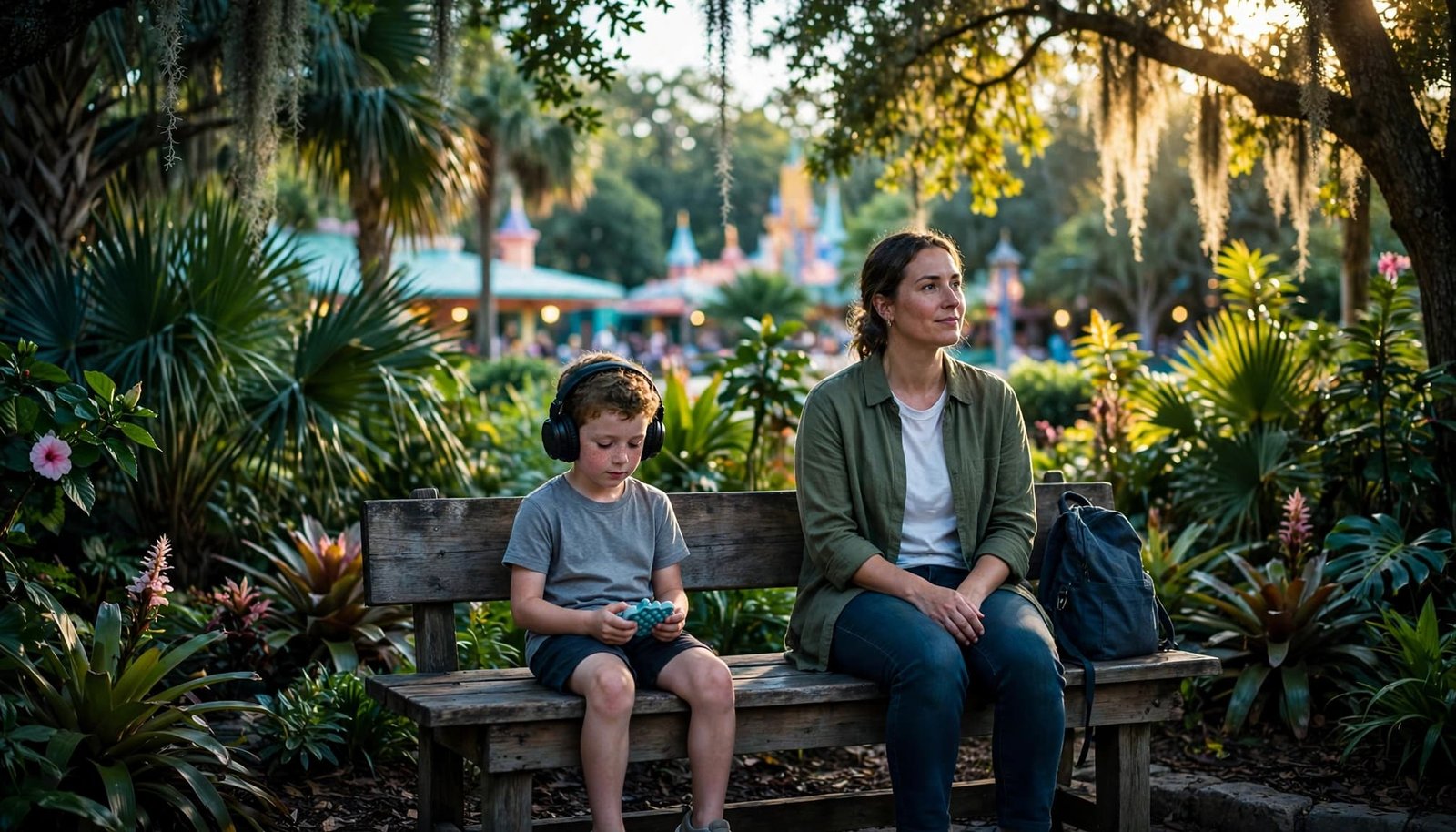
Use possible quiet areas at Magic Kingdom
Before your trip, check Disney’s current guidance for Walt Disney World Resort. Confirm whether Center Street, Miner’s Cove, the Wishing Well area, and locations near Walt Disney’s Carousel of Progress and TRON Lightcycle / Run remain listed.
These spots may offer a place to regroup, but they aren’t guaranteed sensory rooms. Needs vary among neurodivergent families, and crowd levels change throughout the day. Ask a Cast Member to help locate an appropriate nearby space when needed. Disney’s neurodivergent guest services page also lists current break areas guidance for all four parks.
Know what Baby Care Centers and First Aid can offer
Baby Care Centers are complimentary during regular park hours, subject to availability. First Aid stations are available for medical help during normal park hours. Neither is automatically a sensory room, but both may be useful resources when your family needs support. Check current Disney information before travel because locations, hours, and services can change.
Add the nearest First Aid and Baby Care Center location to each park-day page. Record the relevant DAS return time alongside those locations, without treating it as a replacement for a sensory break plan. Include your child’s doctor, pharmacy, insurance details, and medication schedule in a separate medical section.
Create the Caregiver Packing Checklist
Pack the items that help your child feel comfortable, not the items someone else says every family needs. Keep the physical binder and park-day supplies together, so another caregiver can find them quickly.
Preparation
- Record travel dates, lodging details, transportation plans, and a weather plan.
- Print your child’s support profile, including preferences, triggers, strengths, and helpful responses.
- Store a digital copy of the profile, along with passwords, account access, and current app details, securely on your devices.
Documents and reservations
- Print identification details, insurance information, tickets, reservation confirmations, dining details, and park admission information.
- Add current Disney accessibility notes to the binder. Review Disney’s accessibility information before leaving.
- Keep digital ticket backups, account access, reservation details, and updated official policy pages on secure devices.
Sensory and comfort items
- Pack noise-reducing headphones or ear defenders for parades, fireworks, loud rides, or crowded indoor spaces.
- Add sunglasses, a hat, a familiar comfort item, a fidget, and lightweight cooling supplies.
- Pack familiar snacks, preferred drinks, wipes, and a refillable water bottle.
- Keep a digital backup list of preferred comfort items and supplies in case another caregiver needs to replace something.
Disney notes that lighting, sound, and special effects can change during attractions. Watch ride videos together if that helps your child prepare.
Communication and safety information
- Print communication device instructions, a communication card, or a quick reference sheet.
- Add a recent photo of your child, caregiver roles, the meeting point, and the separation plan.
- Add a stroller tag only if a stroller is used for safety or identification.
- Store the recent photo, communication supports, and caregiver instructions digitally on each adult’s phone.
Medications and medical needs
- Print the medication list, doses, timing, allergies, prescribing clinician, and pharmacy contacts.
- Include medical equipment instructions and storage requirements.
- Keep a secure digital copy of all medical information, plus pharmacy and clinician contact details.
- Pack medications according to their storage instructions, including anything needed during the park day.
Daily park planning
- Print a visual schedule, planned breaks, transportation notes, meal plan, exit plan, and backup activity.
- Leave space to record a DAS return time when applicable. It isn’t guaranteed and doesn’t replace flexibility.
- Store the current digital schedule, app details, digital tickets, and reservation updates on a secure device.
- Record early signs, calming responses, and who takes the lead in your meltdown management plan.
Emergency contacts
- Print contact information for caregivers, the hotel, physician, pharmacy, insurer, and emergency services.
- Add the nearest relevant park support location and your family’s meeting point.
- Keep the same contacts digitally available to every adult, with phones charged before leaving.
Post-trip notes
- Record what worked, common triggers, successful foods, effective breaks, and useful locations.
- Note changes to make next time, including supplies, schedules, transportation, or communication supports.
- Save a digital copy of these notes so you can update the binder before your next trip.
Florida weather can change quickly. Pack ponchos, spare socks, sunscreen, cooling items, and a small change of clothes. Include any medication you may need during the day, stored according to its instructions.
For easy-to-forget items, Trip Rescue Shop has optional travel supplies, including stroller items, park-day basics, and cleaning supplies for illness on vacation.
A small sick-day plan belongs in the binder too. Write down where your family will rest, who will stay with siblings, and how you’ll handle a missed park day without pressure.
Decide What a Successful Disney Day Looks Like
A Disney autism vacation can be worth the cost and effort when the trip fits your family’s actual needs. A successful family vacation doesn’t require matching someone else’s itinerary or visiting every attraction.
Choose comfort over attraction count
There is no perfect age for Disney. Some children enjoy the parks when they are young. Others have a better experience when they can communicate needs, handle more walking, or understand the schedule.
Think about your child’s current stamina, sleep routine, safety needs, food preferences, and response to busy outings. Custom itineraries can include a hotel break, pool time, quiet meal, or early departure. These choices may create more happy memories than one more ride.
Consider your lodging carefully at Walt Disney World Resort. A nearby resort can make midday breaks easier, while a vacation rental may offer separate bedrooms, a kitchen, and more quiet space.
Give every caregiver the same plan
Grandparents, relatives, and friends may want to help, but they need clear information. Review the binder together before travel. Decide who carries the sensory bag and who monitors the app.
Assign someone to record each DAS return time, watch siblings, and identify where you’ll meet if separated. Clear roles help everyone adapt the day without relying on one person.
For extra planning support, the Disney World With Autism Guide on Etsy and the Disney autism travel guide on Amazon offer optional, family-focused ideas for DAS, sensory preparation, breaks, and flexible park days. These are not official Disney policy sources, but they may help families prepare questions before a live video chat about the current registration process.
Frequently Asked Questions
How do I register for DAS at Walt Disney World?
Disney currently directs guests to begin the DAS registration process through its official live video chat, typically up to 60 days before the first park day. If needed, guests can also visit Guest Relations after arrival. The guest requesting DAS must participate, and an adult registering must be at least 18. Eligibility depends on disability-related needs, including needs related to a developmental disability, not diagnosis alone. If approved, a DAS return time helps the guest wait outside the attraction queue, but it isn’t front-of-line access or a guarantee of immediate boarding. Confirm the live video chat process and current requirements before traveling.
What should I do if my child needs a break in Magic Kingdom?
Move toward a quieter area before things become too difficult. Check Disney’s current guidance for location-specific options, and ask a Cast Member for help finding a calmer place. Available spaces and access may vary throughout the park.
Should I plan a full park day?
Most families do better with fewer must-do attractions, flexible pacing, and planned breaks. Your child doesn’t need to stay for fireworks or ride every popular attraction for the trip to be meaningful. Create an exit plan, and leave early if that supports a better day.
A Comfortable Plan Makes Room for Memories
The best Disney vacation binder is the one your family will actually use. Keep it simple, personal, and easy for every caregiver to understand.
A calm day with a few happy moments is enough. When comfort comes first, your family has more room for connection, flexibility, and memories that feel good long after the trip ends.
After your trip, add notes about successful supports, difficult moments, and useful break locations. These details can guide changes for a future visit to Walt Disney World Resort.