
A family vacation should feel like time together, not a scramble to find the next outlet. Traveling with an oxygen concentrator takes extra planning when someone in your family uses supplemental oxygen, but it doesn’t have to take over the trip.
The most important step is matching the trip to the traveler’s prescribed needs and oxygen output. Once you know what the device must do, you can plan flights, charging, rest breaks, and backup supplies with more confidence.
Key Takeaways for Your Family
- Ask the oxygen prescriber to confirm the traveler’s oxygen delivery needs and expected oxygen output before choosing a portable device or booking a flight.
- Check your exact concentrator model against each airline’s rules, and plan battery power for its required reserve, not just the scheduled flight time.
- Keep the device, batteries, medication, chargers, and medical information where you can reach them.
- For cruises and international trips, confirm equipment and power arrangements before you make final payments.
Make Oxygen Concentrator Travel Fit the Care Plan
Confirm what the traveler needs
Start with the clinician who manages the traveler’s oxygen therapy. Ask about prescribed flow settings, use during sleep or activity, and whether flying or a higher-altitude destination changes the medical plan. If the traveler uses a stationary concentrator at home, ask which portable oxygen concentrator and oxygen output are appropriate for the trip.
Don’t change settings to stretch battery life. A lower setting may extend run time, but it may not provide the prescribed oxygen output. Ask whom to call if the equipment stops working away from home. A pulse oximeter reading of oxygen saturation doesn’t replace clinical guidance.
Understand pulse dose and continuous flow
Pulse dose concentrators deliver oxygen when they detect a breath. They can be smaller and easier to carry. Continuous flow models deliver a steady stream and are usually heavier. A pulse dose setting number isn’t the same measurement as liters per minute of continuous flow.
That difference matters when shopping. The Inogen Rove 6 is an example of a portable pulse dose option, while the CAIRE Eclipse 5 offers continuous flow capability. Compare the prescribed oxygen delivery method, oxygen output at that setting, battery run time, weight and portability, and charging options with the oxygen supplier.
Check Flight Rules Before You Buy Tickets
Confirm device acceptance and paperwork
The FAA’s portable oxygen concentrator criteria explain which devices may be accepted aboard an aircraft. Don’t assume your model is FAA approved; verify your specific device against official FAA guidance and your airline’s current rules. For example, check whether an Inogen Rove 6 is currently accepted before traveling.
For air travel, airlines can have different notice and documentation requirements, including whether they request a medical prescription. United’s oxygen travel guidance, for example, is a useful reminder to check the carrier you’ll actually fly. Tell the airline about your portable oxygen concentrator when you book, and confirm its requirements again before departure. If you’re connecting on another airline, check that carrier too.
Calculate batteries for the trip you have
Many airlines require enough charged batteries for at least 150% of the expected maximum flight time. Southwest’s concentrator policy states that requirement for travelers using an approved device. For a five-hour flight, that means at least seven and a half hours of battery power at your prescribed oxygen output.
Calculate actual battery run time at prescribed flow settings, including connections and delays; pulse dose, oxygen output, battery size, and device condition can affect battery life. Use an extended battery only if your model supports one, and don’t rely on seat outlets as your only power source. Carry spare batteries in the cabin, protect their terminals, and check airline approval if a battery is rated above 100 watt-hours.
A battery that lasts all afternoon at home may run for less time when your prescribed oxygen output is higher. Test your setup before departure.
Make Airport Security a Family Plan
Tell the officer before screening
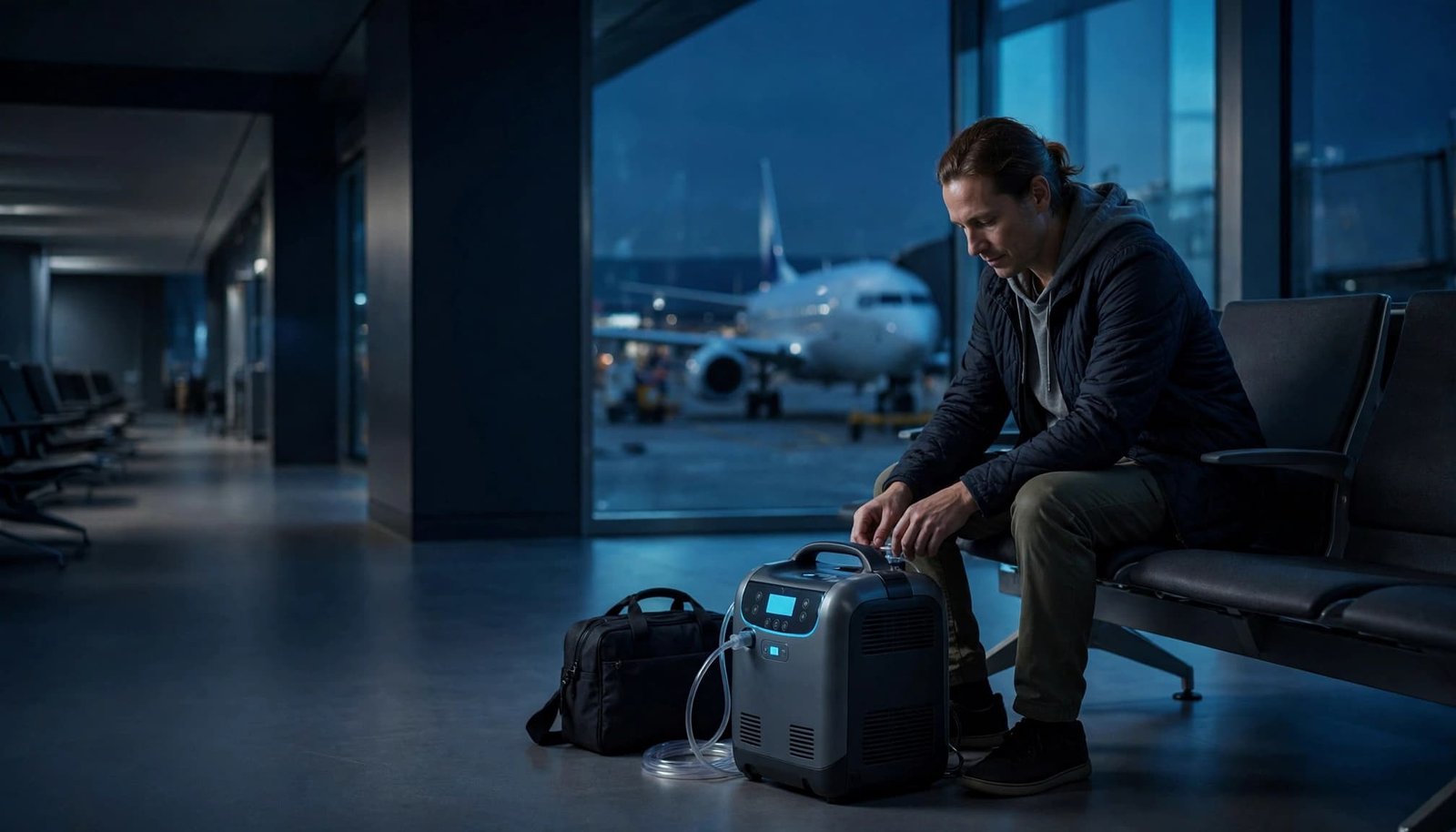
Arrive with extra time, and keep the concentrator and related supplies easy to identify. At the checkpoint, tell the TSA officer the traveler uses a portable oxygen concentrator and identify it as a medical device. Ask how the traveler and device should be screened before placing anything on the belt. You can review TSA’s concentrator guidance before you leave home.
Follow the device manufacturer’s screening instructions. If a recommended screening method could affect the device or the traveler can’t safely disconnect, explain this before screening begins. TSA determines the screening procedure at the checkpoint.
Give each adult a job
If two adults are traveling, one can manage bags and documents while the other stays focused on the person using oxygen. Keep medication, charging cords, and a printed device information sheet in the carry-on. Allow time to reconnect and check the equipment after screening.
If a child also has sensory or communication needs, explain those needs in simple terms. TSA Cares can help families prepare when contacted ahead of travel, but it doesn’t remove screening or guarantee a particular outcome.
Pack for Power, Care, and Delays
Keep the working kit together
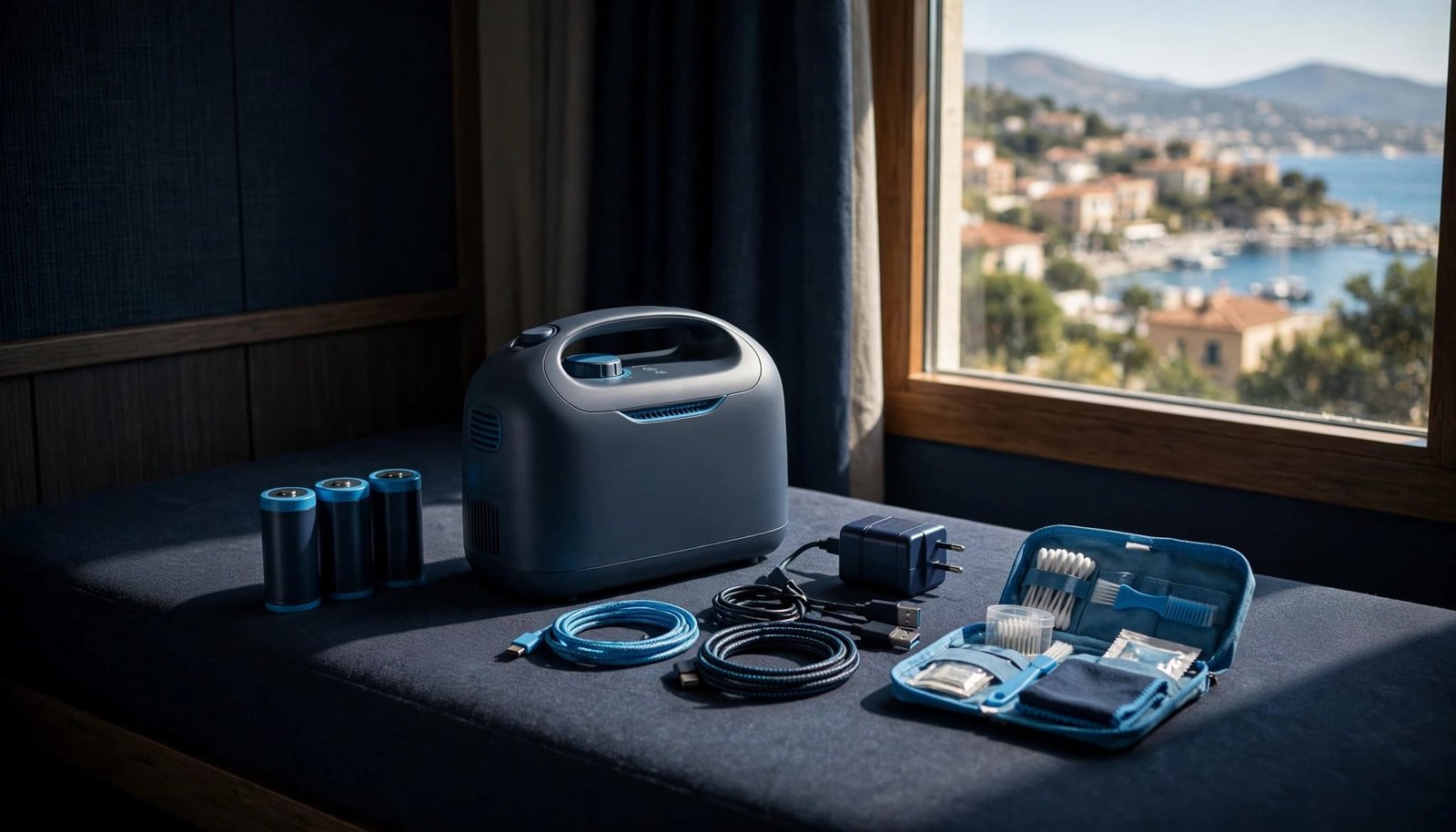
Keep the approved charger, spare batteries, power cord, and oxygen supplier contact details in an organized bag. Bring an extended battery only if your exact model supports one. Keep essential medication in your carry-on with a current medication list, the prescriber’s contact information, and details of your prescribed oxygen output. Ask the care team how much backup medication and equipment makes sense for your trip.
For the less predictable parts of a family vacation, Trip Rescue Shop has travel items ranging from stroller supplies to cleaning products for sick-on-vacation moments. Those extras are helpful, but keep medical supplies at the top of the packing list.
Check and clean the device
Before leaving, test the concentrator, both charging methods, and every battery you’ll bring. Check the manufacturer’s instructions for cleaning its intake filter. Some devices call for regular particle-filter cleaning, but schedules differ by model. Let washable parts dry fully before reinstalling them, and never submerge the unit.
Plan where the device will sit in the hotel room. It needs space around its air intake and a reliable place to charge overnight. Ask the oxygen supplier what to do if it needs service during the trip.
Plan Cars, Cruises, and International Trips Separately
On a road trip
A car gives your family more control over stops, but you’ll still need a power plan. Check whether your concentrator’s vehicle power supply supports the prescribed setting. If using a car charger, confirm it’s compatible with your specific concentrator and vehicle outlet.
Map comfortable stops for bathrooms, meals, and charging. Confirm your lodging has suitable power for the device. Keep it secured and within reach, and don’t leave it in a parked car during extreme heat or cold. Save your equipment provider’s phone number where another adult can find it.
On a cruise
Contact the cruise line’s accessibility or special needs department before booking. Ask which concentrators are permitted, whether forms or a prescription are needed, and how the cabin’s power supply works. If you need oxygen equipment delivered to the ship, confirm approved providers, delivery and pickup costs, and arrangements for port days.
A ship’s medical center can respond to emergencies, but it isn’t a replacement for your usual equipment provider or a planned backup. Check whether your chosen port activities allow enough time and access for the traveler.
Outside the United States
For air travel, check every flight segment, including flights on a partner carrier. Confirm destination rules for medical equipment and prescriptions. Check that power where you’re staying can support your prescribed setup and oxygen output, and ask about ground transportation that can accommodate the device.
Bring copies of device information and medical documents. Ask your equipment provider about local support and what to do if travel is delayed or the device needs service. Check the device’s input-voltage range, the plug type at your destination, and whether you need an adapter or manufacturer-approved power supply. A plug adapter changes the shape of the plug; it doesn’t necessarily change voltage.
Leave Room for the Vacation Part
The goal isn’t to fill every hour because you’ve worked hard to get there. Choose a hotel location that makes breaks easy. Build charging and rest breaks into park days, excursions, and long drives, even if your family enjoys an active lifestyle. A shorter day that everyone enjoys is a good day.
For Disney trips, our Disney vacation planning for families can help you plan your resort location, transportation, and a realistic daily pace. If your family is also planning around autism, our Disney World with autism guide is available on Etsy and Amazon. It can help with sensory preparation and flexible park plans, while medical equipment decisions should stay with your care team.
K&S The Travel Crusaders brings firsthand family experience, practical travel planning, and Kellie’s B.A. in Child Development to family trips. Our special needs travel planning can help coordinate vacation details around your family’s routines and access needs.
Ask About Costs Before Choosing a Device
A travel-ready concentrator can be a significant expense, especially if the traveler already has oxygen equipment at home. Ask your current supplier whether a portable device is available through your existing arrangement. Also ask about travel repairs, including costs for a model such as the Inogen Rove 6.
Medicare or private insurance may help with covered oxygen equipment, but coverage depends on the traveler’s medical needs, plan, and supplier. Check that a lower-cost device can provide the oxygen output prescribed for the traveler. Don’t assume a travel-only upgrade, spare batteries, or vacation rental will be covered. Get device, accessory, and service costs in writing before making a decision.
Frequently Asked Questions
Do you need a prescription to buy a portable oxygen concentrator?
Ask the seller about its purchase requirements. More importantly, work with the oxygen prescriber before choosing a device. The traveler’s prescribed delivery mode, settings, and required oxygen output determine whether a model meets their needs. Pulse dose and continuous flow aren’t interchangeable, so confirm the device matches the prescription. An airline may also request medical paperwork.
How long will the battery last?
There isn’t one dependable battery life for all concentrators. Battery size, device model, delivery mode, and flow setting all matter. Check the manufacturer’s exact run-time specifications at the prescribed setting, including model-specific information for the Inogen Rove 6. Test your batteries before the trip, and build in more power than the minimum your airline requires.
Can we take a stationary concentrator on vacation?
Possibly, but plan how you’ll transport it and power it at the destination. A stationary unit isn’t a substitute for an approved portable device during a flight. Ask your supplier about delivery, a rental, or a suitable portable option before booking.
What if we need help during a flight delay?
Keep the airline’s assistance contact and your oxygen supplier’s number easy to reach. Tell airline staff about the equipment and any power concerns early, and ask what options are available.
A More Comfortable Trip Starts With the Right Plan
Oxygen concentrator travel doesn’t mean your family needs to plan every vacation minute around an outlet. You do need a device that matches the care plan, enough power for the journey, and clear answers from each travel provider.
Start those conversations before you book. Then leave space for breaks, changes of plan, and the family time you came for.