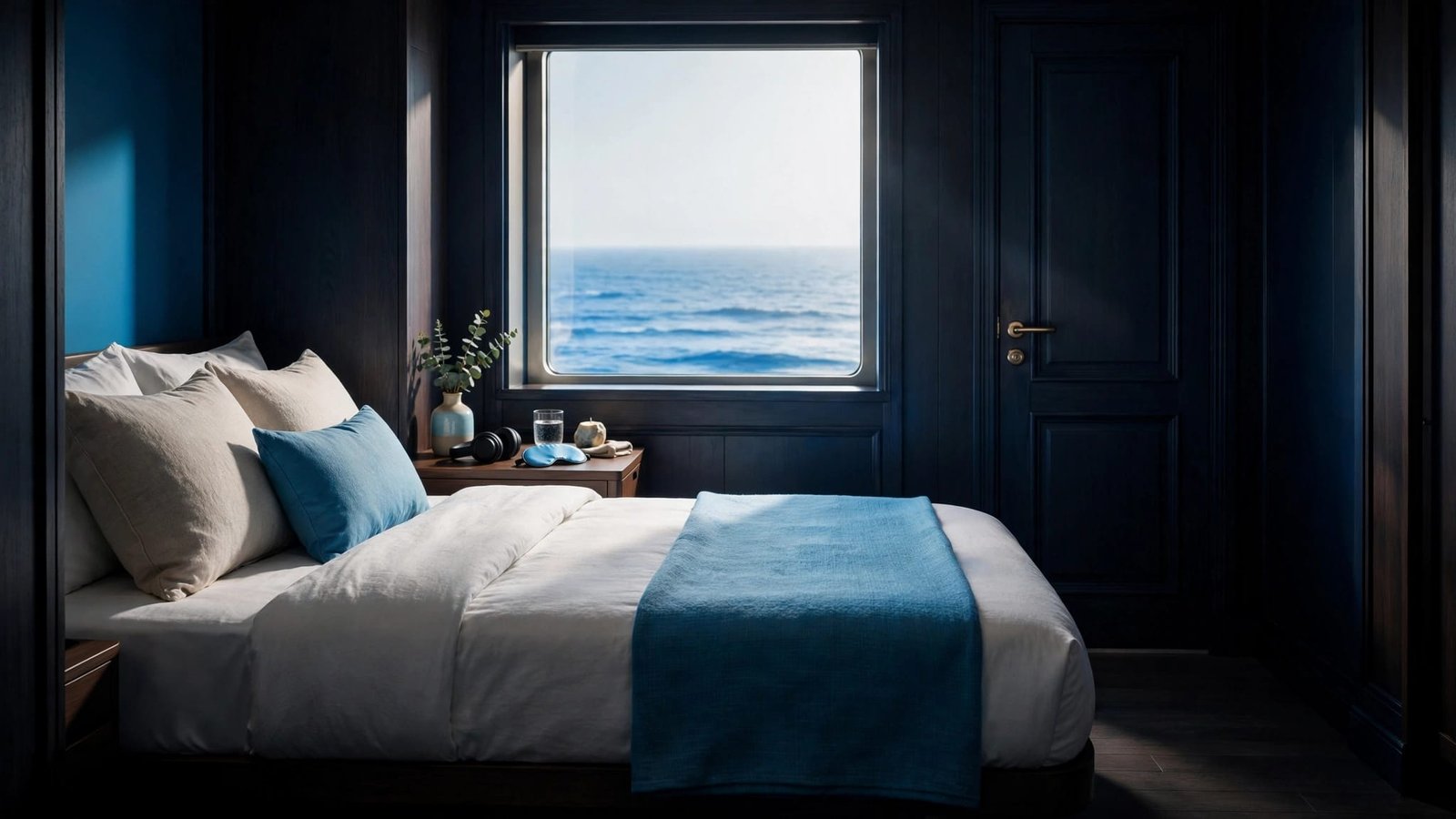
Your cruise cabin should be the place you can return to when the ship feels too loud or busy. But a cabin near a deck party, elevator, or service door can make that break harder to enjoy.
Choosing a sensory-friendly cruise cabin starts with your traveler’s needs, then moves to the deck plan and the details you can confirm before booking. A good room won’t remove every surprise at sea. It can give your family a more comfortable place to rest, reset, and enjoy the trip.
Key Takeaways
- Choose a cabin based on your traveler’s biggest concerns, such as noise, light, scents, sleep, or mobility.
- Check what sits above, below, and beside the room. A convenient location may also be a busy one.
- Ask about the actual cabin layout and available accommodations before paying a deposit.
- Keep familiar sensory supports in your carry-on. Checked bags may arrive after you board.
Start With the Traveler, Not the Cabin Label
A room that feels comfortable to one person may feel overwhelming to another. Before comparing cabins, list the traveler’s most important sensory needs and consider what makes a good night at home.
Identify the hardest sensory moments
Does your traveler wake when a door closes nearby? Do bright bathroom lights make bedtime harder? Are unfamiliar bedding, cleaning scents, or crowded hallways a concern? Write down the top two or three issues that could affect rest.
That short list makes your questions more useful. “We need a room away from late-night activity” gives a travel advisor more to work with than “We need an autism-friendly room.” It also helps you decide where to spend your budget.
Think about the whole day
The cabin is part of your daily routine. Consider the walk to dining, elevators, youth spaces, and a quiet outdoor spot. A room far from activities may have less hallway traffic, but repeated walks could be tiring.
Cruises keep your lodging, meals, and entertainment in one place. There are still announcements, embarkation lines, port deadlines, and busy dining rooms. Plan a cabin break before everyone is exhausted, especially on the first day.
Where Is the Most Sensory-Friendly Cruise Cabin?
There isn’t one deck or cabin type that works for every traveler. The best location depends on which sounds and transitions are hardest for you.
Check every side of the room
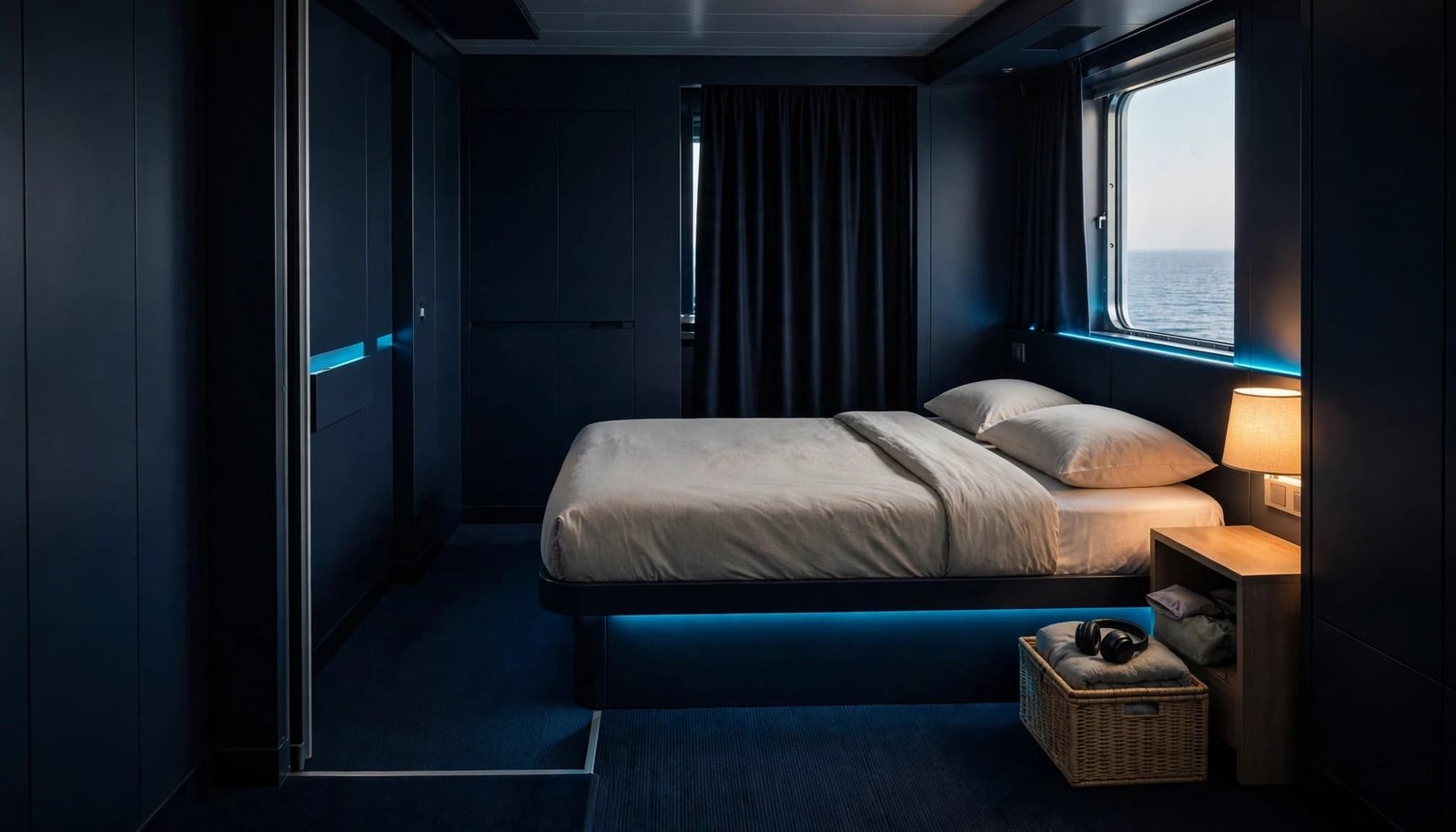
Look at the ship’s deck plans before choosing a cabin number. Check the spaces above and below it, not only the rooms next door. Pool decks, theaters, lounges, restaurants, and outdoor gathering areas may bring activity at times you want to rest.
Also check the distance from elevators, stairs, crew access doors, and public bathrooms. Ask whether connecting doors or nearby service areas could affect your room. A midship location may appeal to someone concerned about motion, but location alone can’t promise quiet.
Decide which tradeoffs matter
An interior cabin can be dark for sleep, but some travelers dislike having no natural light. A balcony provides private outdoor space, yet nearby decks, wind, and balcony doors may bring sounds of their own.
If separation matters, ask about connecting rooms or a larger layout. If predictability matters most, a familiar route to dining might be worth a busier hallway. Choose for the need that affects your trip most, rather than assuming a particular cabin category is always calmer.
A sensory kit can help with noise on deck. It cannot change a cabin’s location beneath a late-night venue.
Don’t Confuse Accessibility With a Quiet Room
Accessible staterooms address physical access, but they aren’t automatically designed for sensory comfort. If your traveler has both mobility and sensory needs, check both sets of details.
Compare the right cabin categories
Carnival’s guide to facilities for guests with disabilities is a useful starting point, but confirm the accessibility features of the specific ship and cabin. The cabin number and layout still matter. Fully accessible and ambulatory accessible rooms can meet different needs.
| Cabin type | Often suited to | What to confirm |
|---|---|---|
| Fully accessible cabins | A guest who needs wheelchair access and room to maneuver | Doorway, turning space, shower, and bedside clearance |
| Ambulatory accessible | A guest who walks but needs certain bathroom supports | Entry width, grab bars, shower setup, and device storage |
An ambulatory accessible cabin may be too tight for someone who regularly uses a wheelchair or scooter. Don’t rely on the category name alone.
Measure your equipment before booking
Ask for the doorway width, bathroom entry, shower threshold, and clear space beside the bed. Compare those details with your wheelchair, scooter, or special-needs stroller. Confirm where mobility devices can be parked and charged without blocking an exit.
Mobility devices generally need to stay out of cruise corridors. If you need wheelchair assistance during boarding or departure, ask the cruise line what it offers at your ports and how to request it. Review tender ports and shore excursions separately, since getting off the ship may involve different limits.
Prepare the Cabin Before You Board
You don’t need to turn a stateroom into a special-purpose room. A few familiar items and clear requests can make an unfamiliar space easier to use.
Pack for sleep and recovery
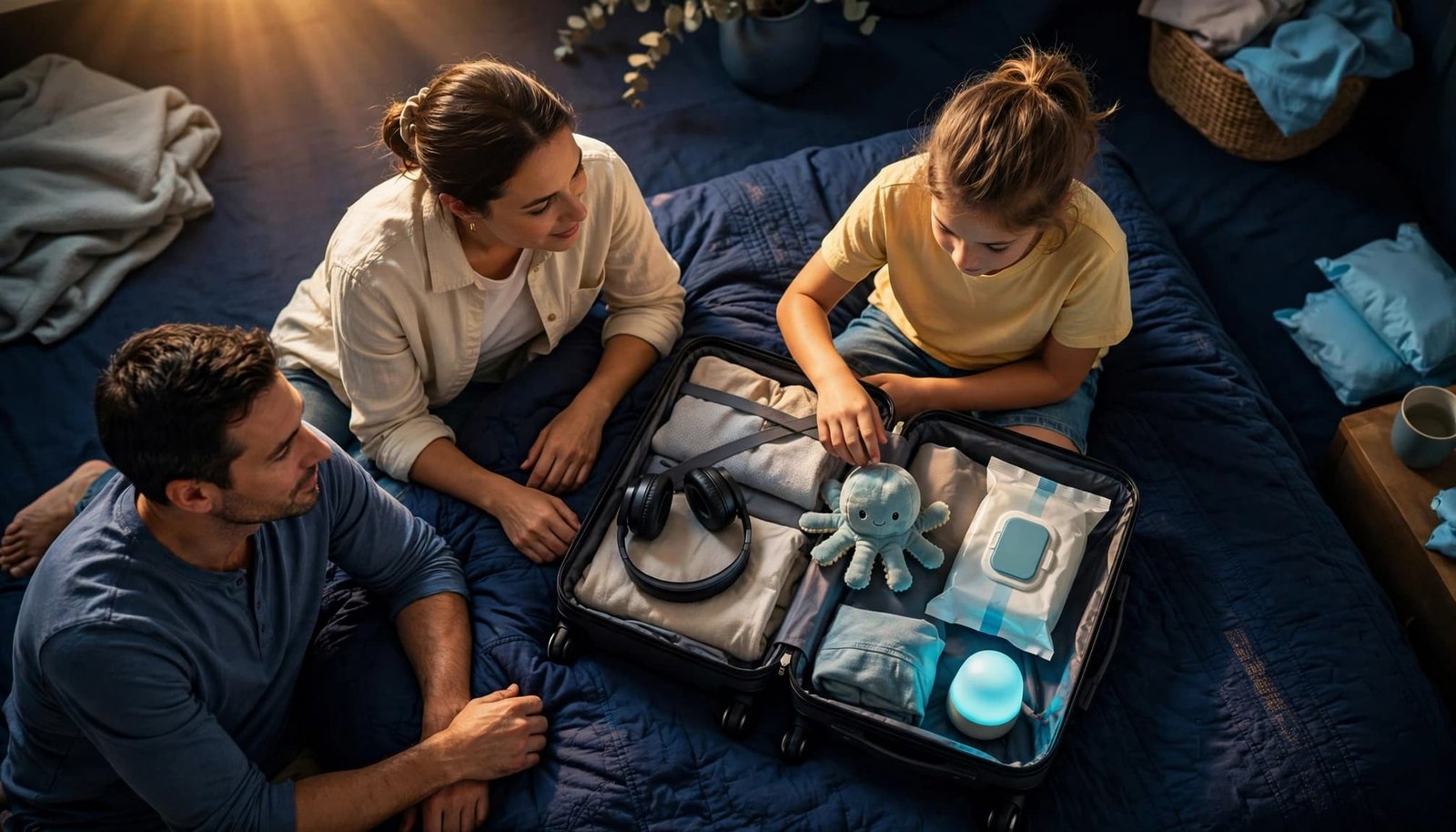
Bring the items your traveler already uses: headphones, comfortable clothes, a familiar pillowcase, sunglasses, fidgets, or a favorite bedtime item. A social story may help a particular traveler understand what to expect from the trip. Download entertainment before sailing in case the connection onboard is unreliable.
Keep medication, safe snacks, communication tools, and the essentials for your first evening in a carry-on. Ask before bringing a night-light or other electrical item, since cruise lines have rules about permitted devices. For families stocking a travel bag, Trip Rescue Shop’s travel supplies include items ranging from strollers to cleaning supplies for trips when someone gets sick.
Once aboard, give important items a consistent place. A simple plan such as breakfast, one activity, lunch, and a room break can make the day feel easier to follow.
Ask about changes rather than assuming
If scents are difficult, ask whether housekeeping can avoid fragranced products or provide another workable option. If lighting matters, ask what controls the cabin actually has. You can also ask about bedding, a refrigerator, and housekeeping timing.
Make these requests early and keep the answers in writing. Cruise lines don’t generally advertise soundproofed rooms, specialized sensory lighting, or fragrance-free cabins as standard features. A clear answer before final payment is more helpful than a hopeful guess on boarding day.
Compare Onboard Support, Then Return to the Cabin Choice
An autism-friendly program can make activities easier to plan. It doesn’t tell you whether your stateroom will be quiet, dark, or close to the places you need.
Royal Caribbean and Celebrity
Royal Caribbean’s autism-friendly ships offer a toy-lending program through Adventure Ocean on select ships and sailings. The line also offers special dietary accommodations, including gluten-free and dairy-free choices, and describes lower-volume, lower-light films. Film availability varies by ship and sailing, so check before promising your child a particular showing.
Celebrity’s autism-friendly program describes sensory-friendly films, toys, dietary menu options, and priority check-in and boarding. Ask how its Camp at Sea youth programs handle your child’s needs, including age rules and available support, on your sailing. Discuss food allergies directly with the cruise line; general dietary options don’t answer every question about safe meals.
Carnival and KultureCity
Carnival works with KultureCity on sensory inclusion. KultureCity’s Carnival information explains how to request a sensory bag or other applicable accommodations. Check what’s available on your ship and complete any required request before sailing.
Crew training and a sensory bag can help when public spaces become overwhelming. They don’t mean a cabin has soundproofing or special lighting. Ask separate questions about your room location and setup.
Autism on the Seas
For families who want more hands-on help, Autism on the Seas’ staff-assisted cruise schedule lists select sailings. Available services may include staff assistance, respite sessions, and private activities.
These services aren’t included automatically with an ordinary cruise booking. Ask what support is available on the sailing you want, how to arrange it, and what it costs. Then choose the cabin that fits your traveler.
Get Requests and Paperwork Sorted Early
A good cabin choice can be lost if you wait until only a few rooms remain. Start the conversation before paying a deposit, especially if you need accessible staterooms or a particular location.
Ask questions that lead to clear answers
Share your preferred cabin number and ask the cruise line or your travel advisor to check nearby venues. Explain if you need a quieter route, space for mobility devices, or a room near a companion’s cabin. If food is a concern, ask how the dining team handles food allergies and special dietary accommodations on your sailing.
Request written confirmation of what can be arranged and what remains a preference. At K&S The Travel Crusaders, our planning draws on firsthand family experience, real-world travel planning, and Kellie Neff’s B.A. in Child Development. We can help you organize the questions that matter to your family, then check the answers with the cruise line.
Include service animals and boarding needs
If you travel with a service dog, contact the cruise line well ahead of departure. Ask about its relief area, required pre-cruise forms, vaccination records, and entry rules for every port. Carnival calls for advance notice and may require documents such as a current vaccination record, rabies information, a microchip number, and a CDC Dog Import Form Receipt. Port requirements can add paperwork.
Also ask how wheelchair assistance works during embarkation and debarkation at your departure port. Keep medications, device chargers, identification, and service-dog documents where you can reach them during check-in.
If You’re Choosing Between a Cruise and Disney World
Some families like having a cruise cabin to return to throughout the day. Others prefer the space and choices available during a park vacation. Our Disney cruise and park comparison can help you weigh routines, crowds, and energy levels.
If Disney World is part of your plans, our Disney World autism planning guide offers more park-focused ideas. The family-created Disney World With Autism Guide is also available as a PDF on Etsy and through Amazon. These are planning resources, so check Disney’s current policies directly before your trip.
Frequently Asked Questions
Is there a cabin guaranteed to be sensory-friendly?
No cabin location can guarantee silence. Start with your traveler’s main triggers, check the deck plans, and ask about nearby activity. Bring familiar supports for sounds and changes you can’t control.
Should I book an accessible cabin for sensory needs alone?
Accessible cabins are intended for physical access needs and may be limited. If your main concern is noise or light, discuss location and room features instead. If you also need mobility support, confirm the exact layout before booking.
Can a youth program replace a cabin break?
Youth programs may offer toys or activities your child enjoys, but participation should fit their comfort level. Ask about age rules, grouping, and support before sailing. Keep the cabin available as a place to rest whenever the day feels too full.
A Better Cabin Starts With Better Questions
The right room gives you a dependable place to sleep and reset. Match its location and layout to your traveler’s real needs, then confirm the details the deck plan can’t show.
A comfortable cruise doesn’t require doing every activity. It needs a place your family can return to and a plan that leaves room to rest.
Leave a Reply