
Your dialysis schedule deserves a place in your vacation planning before you book flights, a hotel, or activities. For people with chronic kidney disease, a trip may be possible, but your care team should review your health and treatment arrangements first.
The goal is a comfortable family trip with dependable care, manageable travel days, and room to rest. Start with the medical calendar, then build the vacation around what you and your family need.
Key Takeaways for a More Comfortable Trip
- Begin arranging travel dialysis at least six to eight weeks ahead, with extra time for busy destinations.
- Confirm treatment, medical records, supplies, and payment arrangements before making nonrefundable bookings.
- Keep medications, care instructions, and important contacts within reach.
- Build a written backup plan for delays, equipment problems, and medical concerns.
Start Planning Before Traveling With Dialysis

Review the Trip With Your Care Team
Bring your dates, route, transportation plans, and activities to your nephrologist and healthcare team. Ask whether your current health supports the trip and which arrangements need changing.
Review medication refills, time-zone changes, access care, and symptoms that need prompt assessment. Your clinicians should guide any changes to treatment or medicines.
If you’re active on a kidney transplant waitlist, contact your transplant coordinator. Ask whether travel affects your status and how quickly you’d need to return if an organ becomes available. Each program has its own requirements.
If you’ve had a kidney transplant and still receive dialysis, confirm travel plans with your clinicians.
Give Treatment Arrangements Enough Time
The National Kidney Foundation recommends starting dialysis travel arrangements at least six to eight weeks before departure. Popular destinations may need longer.
Contact your home dialysis center before committing to a destination. If your trip requires transient dialysis, ask what medical records and medical documentation the destination clinic needs. Your social worker or patient coordinator may help locate treatment options and organize the transfer of information.
Protect treatment dates first. Then choose flights and lodging that leave room for transportation, meals, and recovery. A lower airfare doesn’t help if it creates a rushed treatment day.
Match the Travel Plan to Your Dialysis Type
Your usual treatment method determines which arrangements need attention first.
| Dialysis type | Main travel arrangement | Confirm before booking |
|---|---|---|
| In-center hemodialysis | Temporary treatment at a destination center | Acceptance, treatment dates, records, and payment |
| Peritoneal dialysis | Supplies and a suitable treatment space | Delivery, storage, clean workspace, and backup support |
| Home hemodialysis | Equipment and supplies at your accommodation | Transport, utilities, setup requirements, and emergency options |
These arrangements aren’t interchangeable. For transient dialysis away from home, discuss the destination with your home team before choosing a hotel or rental.
A convenient room location can matter more than a resort’s activity list. Consider the distance to treatment, reliable transportation, and how easily you can return for a break.
Confirm Your Destination Dialysis Center
Temporary treatment away from your home center is often called transient dialysis. A nearby center isn’t confirmed until the destination dialysis center accepts you and confirms an appointment.
Ask your home team about available facilities for transient dialysis. If you receive in-center hemodialysis, ask about centers equipped for your treatment. DaVita’s dialysis travel support is another resource for exploring treatment arrangements. Availability and acceptance still need confirmation.
Request written details showing the center’s address, contact number, treatment dates, arrival instructions, and payment arrangements for your dialysis treatment. Check how long transportation takes during busy traffic periods.
Ask Which Records Are Required
The receiving center sets its documentation requirements. Ask your home center to confirm the exact packet and submission deadline.
Common requests may include your dialysis prescription, medication list, recent laboratory results, treatment records, and infection-screening information. Some centers may also request medical documentation, such as an EKG or clinician letter. Don’t assume every facility uses the same list.
Check the Handoff Before Departure
Have both centers confirm that your medical records arrived and were reviewed. Ask whether anything remains outstanding.
Carry a current medical summary and protected digital copies. Also confirm who handles questions after hours and what happens if a delayed flight affects your arrival. Keep your home treatment arrangements in place until the travel plan is settled.
Plan Home Dialysis Supplies and Equipment
Peritoneal Dialysis: Confirm Delivery and Storage
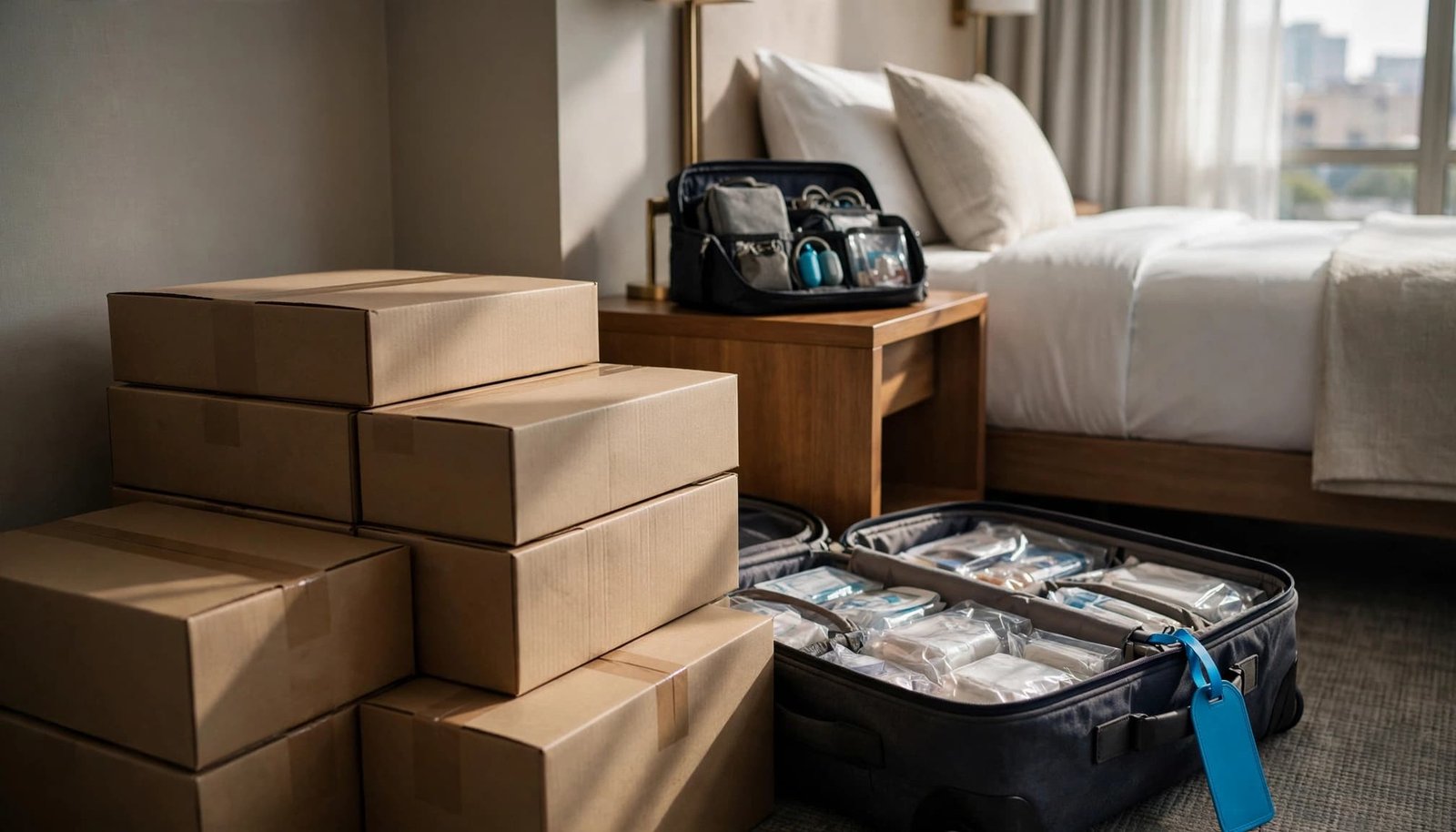
Coordinate orders for dialysis supplies with your home dialysis team and supplier. Ask how much extra to carry for delays and how early destination deliveries should arrive.
Give the supplier the complete address, reservation name, arrival date, and a reliable receiving contact. Ask the accommodation about receiving fees, storage space, and access to delivered boxes.
Get delivery confirmation before departure. Ask your team to confirm your prescribed automated peritoneal dialysis setup and review the treatment space, handwashing access, and storage conditions. Find out what to do if supplies arrive damaged or don’t arrive.
Home Hemodialysis: Verify the Full Setup
Discuss travel with your home dialysis nurse and equipment supplier. Ask whether your dialysis machine and prescribed setup are suitable for the accommodation.
Confirm medical equipment transport, packing instructions, electrical requirements, and any water or plumbing needs. Check the manufacturer’s voltage requirements before using an adapter. A plug adapter doesn’t necessarily change voltage.
For international travel, ask the destination’s customs authority about required medical documentation for equipment and supplies. Keep model details, prescriptions, and a medical letter available as required. These rules vary.
Arrange equipment support and a backup treatment option with your care team before leaving.
Check Insurance and the Full Travel Budget
Domestic Treatment Coverage
For Original Medicare, covered in-center hemodialysis at a Medicare-certified dialysis center in the United States and its territories generally carries 20% coinsurance after the Part B deductible. Secondary insurance coverage may help.
The National Kidney Foundation’s travel guide for kidney patients explains travel coverage considerations. Medicare Advantage and commercial plans may have network and authorization requirements for transient dialysis. Most state Medicaid programs don’t pay for treatment outside the home state, so verify your plan.
Ask your insurer and the receiving facility about authorization, upfront payment, reimbursement, and treatment costs. Coverage varies by plan and destination, so confirm costs and payment terms directly with both. If coverage is denied, request the written reason and the plan’s appeal instructions and deadline. Keep medical documentation, and ask your social worker for help gathering supporting information.
International Treatment and Extra Costs
For international travel, Medicare generally doesn’t cover routine outpatient dialysis abroad. DaVita’s international dialysis travel guidance highlights the importance of arranging treatment and reviewing costs ahead.
Get a written treatment estimate from the receiving facility. Ask whether laboratory tests, consultations, medicines, and supplies are included, and confirm payment terms with the facility and your insurer. Don’t assume travel insurance pays for scheduled dialysis because it covers medical emergencies.
Review coverage for your underlying condition, emergency care, evacuation, equipment problems, and trip interruption.
Your vacation budget should also include treatment transportation, supply delivery or storage charges, and a possible extra hotel night. Flexible booking terms can be worth paying for when medical arrangements are still being finalized.
Plan Flights, Road Trips, and Cruises Separately
Flying With Dialysis Supplies
Contact your airline about medical equipment, baggage handling, onboard use, and assistance. Check TSA screening requirements separately. Screening rules and airline transport rules have different purposes.
Keep medications, medical documentation, and the dialysis supplies your team recommends in your carry-on luggage. Confirm how larger equipment and additional supplies will travel.
Follow your individual fluid and food restrictions during the flight. Don’t increase fluid intake because generic travel advice recommends it. Ask your dietitian about snacks that fit your kidney diet, and your clinician about medication timing across time zones.
Taking a Road Trip
A car gives you more control over stops, but treatment appointments still set the schedule. Leave enough time for traffic, meals, and comfortable breaks.
Keep essential supplies accessible rather than buried under luggage. Follow supplier storage instructions, including temperature limits. Don’t leave temperature-sensitive medicines or supplies in a parked car.
Save treatment-center directions offline. Identify a backup route and ask your care team how to respond if a delay threatens your appointment.
Choosing a Cruise
A ship’s medical center doesn’t automatically provide routine dialysis. If you need transient dialysis, verify that treatment is available on the exact sailing before paying.
Ask about equipment policies, supply deliveries, cabin space, utilities, and port-day arrangements. Onboard dialysis services, where available, require separate confirmation.
Our accessible cruise planning guidance can help with cabin location, boarding support, and shore access. Those arrangements complement your medical plan; they don’t replace it.
Make the Vacation Work for the Whole Family
Choose lodging that makes treatment transportation and rest manageable. Reliable elevators, comfortable room space, and nearby meals can reduce unnecessary effort.
Give family members clear jobs. One person might track appointments while another manages transportation or takes children to an activity during treatment. Agree on how you’ll communicate when plans change.
K&S The Travel Crusaders offers special needs travel planning for families coordinating access needs, routines, and a more comfortable pace. Your clinicians guide care; we help coordinate vacation details around that plan.
If your family is also planning a Disney trip with an autistic child, our Disney World With Autism Guide is available as an Etsy downloadable guide and an Amazon ebook. These resources support autism-focused preparation, not dialysis care.
Our Trip Rescue Shop offers practical travel items, including strollers and cleaning supplies for unexpected sick-on-vacation moments. Prescribed supplies remain the priority. Check cleaning products with your dialysis team before using them around treatment equipment.
Have a Written Plan for Delays and Medical Concerns
Before departure, save your home team’s number, destination center, equipment supplier, insurer assistance line, and local emergency number as emergency contacts. Every caregiver should know where to find your medical documentation. If you’re on a transplant waitlist, coordinate travel plans with your kidney transplant team.
Ask your team what to do about a missed dialysis treatment, supply shortage, or equipment failure. Don’t change your prescription or skip treatment without clinical guidance.
An accepted appointment for transient dialysis doesn’t guarantee emergency treatment capacity. Ask the destination center what support it provides after hours.
Know which nearby hospital offers appropriate emergency care. Chest pain, severe breathing trouble, or loss of consciousness require emergency services. Contact your team promptly about fever or new access problems, following your written instructions.
For international travel, carry a medical summary and a checked translation when needed. When traveling with dialysis, emergency care comes first, and insurance calls shouldn’t delay treatment. Keep enough financial flexibility for an unexpected transfer or overnight stay.
Frequently Asked Questions
How far ahead should I plan a trip with dialysis?
Start arranging travel dialysis at least six to eight weeks before departure, and allow more time for popular destinations. Confirm treatment, records, supplies, and payment arrangements before making nonrefundable bookings.
Can I receive dialysis at a different center while traveling?
Yes, but the destination center must accept you and confirm your treatment dates. Ask your home team to coordinate the required medical records and confirm the appointment in writing before you leave.
What should I pack when traveling with dialysis?
Keep medications, medical documentation, important contacts, and the supplies your care team recommends within reach. For home dialysis, follow your team’s instructions for equipment, supply storage, and backup arrangements.
What should I do if travel delays affect my treatment?
Ask your care team before departure how to respond to delays, missed treatment, supply shortages, or equipment problems. Contact your team for guidance rather than changing your prescription or skipping treatment on your own.
Leave Room for Care and Family Time
A comfortable vacation starts with confirmed treatment, dependable supplies, and a schedule that leaves room to adjust. Build your vacation planning around your care needs rather than fitting care into the busiest itinerary.
Review the medical plan with your healthcare team first. Then let K&S The Travel Crusaders help coordinate the travel details around it.
Your family deserves time together without feeling rushed through every vacation day.
Leave a Reply