
Travel during cancer treatment may be possible when your oncology team approves the proposed dates. Your treatment schedule, blood counts, recovery, and access to medical care all affect that decision.
A trip can give you something meaningful to look forward to. Flexible planning helps you make room for rest and changing needs.
Ask your care team for medical clearance before paying a deposit, then build a vacation around your individual needs.
Key Takeaways Before You Book
- Ask your care team for medical clearance before booking dates, destinations, and activities.
- Keep medications, medical instructions, and emergency contacts with you throughout the trip.
- Plan movement breaks, comfortable transportation, and access to suitable medical care.
- Arrange travel insurance early if you need coverage for a pre-existing condition.
Is This Trip Safe for You?
Ask your oncology team directly: “Is it safe for me to take this trip?”
Bring your proposed travel dates, transportation plans, destination, and activities. Mention long flights, cruises, remote excursions, and higher elevations. These details help your care team assess your itinerary.
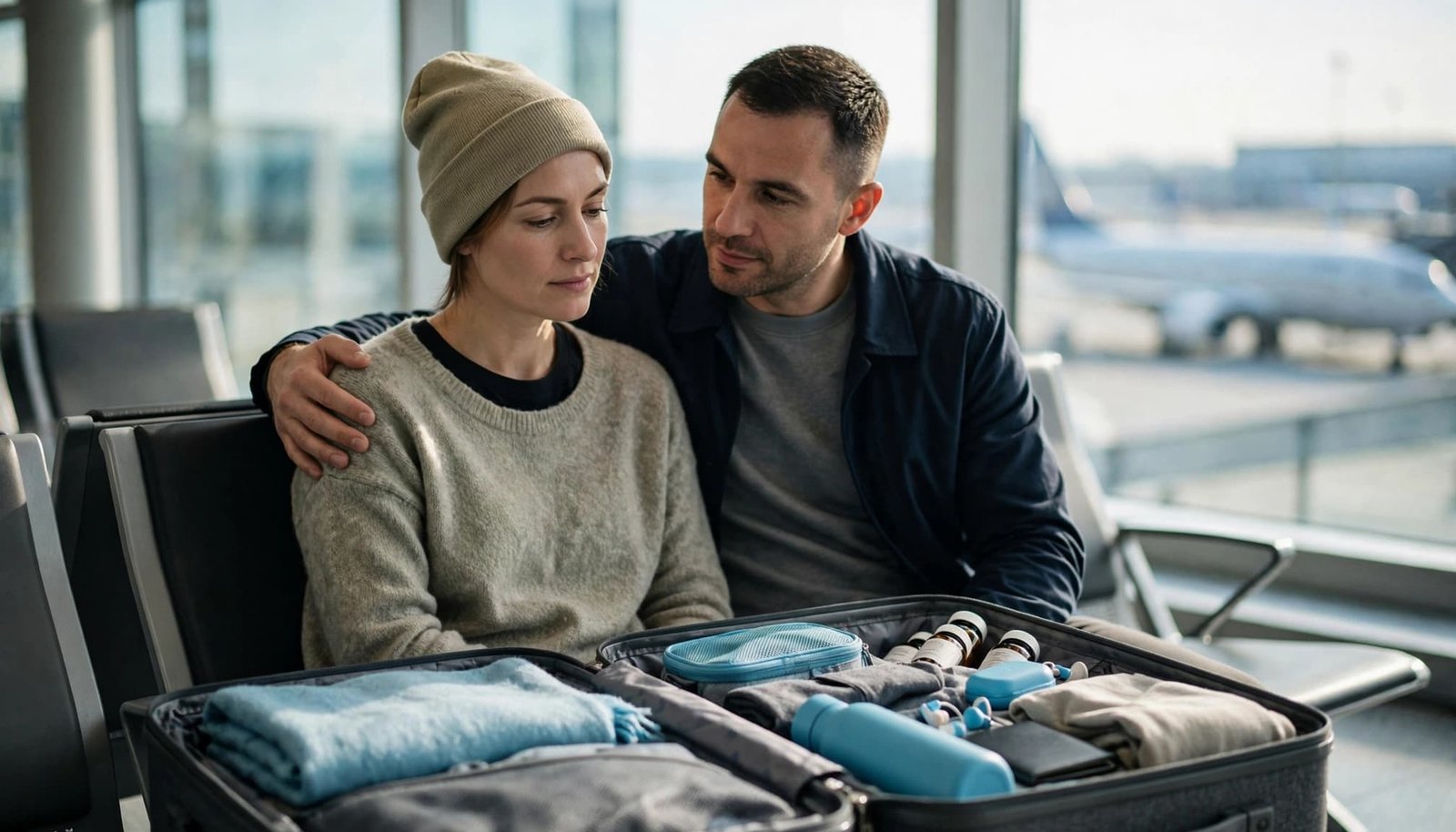
Ask whether you need blood counts checked before departure and which symptoms or side effects would mean postponing. Discuss recent surgery, infections, fatigue, anemia, breathing concerns, or previous blood clots.
For flights, ask whether lower cabin oxygen could affect you. If prescribed oxygen is part of your care, our guidance on traveling with an oxygen concentrator covers practical equipment planning.
Your clinicians decide whether you’re medically ready. We can help coordinate travel plans around that decision.
When Should You Travel Around Treatment?
There’s no single waiting period that works for everyone. Your own treatment calendar comes first when you plan travel. Timing and recovery vary by treatment and patient, so confirm dates with your care team before booking.
Chemotherapy Timing
Breastcancer.org describes many chemotherapy cycles as lasting 14 to 28 days. Side effects are often worst the day after infusion, with many people feeling better by day three or four. Fatigue can also affect how you feel after treatment.
That pattern doesn’t apply to every regimen. Feeling better doesn’t mean your immune system has recovered.
MD Anderson notes that blood counts with temozolomide usually reach their lowest point about 21 days into each cycle. Ask when your counts are expected to fall and whether testing is needed before departure.
Nausea may improve while your immune defenses are still low.
Surgery, Radiation, and Scheduled Injections
Breastcancer.org gives general timelines of one to two weeks after lumpectomy, with a radiation plan in place. Recovery after mastectomy or reconstruction commonly takes six to eight weeks. These general estimates for lumpectomy and mastectomy vary, and your surgeon’s clearance depends on healing and complications.
In general, radiation schedules may involve treatment once or twice daily, five days a week, for one to five weeks. Many people wait until treatment finishes before taking more than a long weekend away.
The usual Faslodex schedule is injections on days 1, 15, and 29, then monthly. The first month can involve more appointments, so confirm suitable dates before booking.
Don’t skip sessions, move injections, or change medication timing without your team’s direction.
Does Your Destination Fit Your Medical Needs?
An immunocompromised patient may find a nearby trip with easy hospital access more manageable than a remote resort or cruise. When planning travel, consider how quickly you could reach appropriate care if symptoms change.
Choose lodging with reliable transportation, elevators when needed, and space to rest. Cruises and remote excursions need extra planning because specialist care may be far away.
Ask about destination-related infections and vaccine needs. The CDC’s guidance for immunocompromised travelers offers general information, not individual medical advice. Travel and treatment plans should be discussed with your oncology team.
Treatment can affect your immune system and vaccine decisions. Live vaccines, including measles and chickenpox vaccines, are generally avoided during immune-suppressing treatment. COVID vaccines and injected flu vaccines are generally safe for many people with cancer, but your team should advise you on timing and exceptions.
For immunocompromised travelers, discuss masks in crowded spaces, hand hygiene, food safety, drinking water, and mosquito protection. Planning these details early can help you choose a destination that fits your care needs.
How Can You Reduce Blood Clot Risk?
Cancer, some treatments, and long periods of sitting during travel can increase your risk of blood clots.
Follow CDC guidance to get up and move every two to three hours during long flights or car journeys. Schedule walking stops on road trips. On trains and buses, use safe opportunities to move.
While seated, raise your heels, flex your ankles, or trace the alphabet with your feet. An aisle seat can make movement easier.

Ask your clinician whether compression socks are appropriate. Don’t start aspirin or blood-thinning medicine on your own.
New leg swelling, pain, or tenderness needs prompt medical assessment. Difficulty breathing, chest pain, a fast heart rate, or lightheadedness can indicate blood clots in the lungs. Seek emergency care immediately for these symptoms.
Movement breaks help reduce risk, but they don’t replace medical advice or make symptoms safe to ignore.
What Should Stay in Your carry-on?
Medications and Prescribed Supplies
Keep all medications in your carry-on, in their original labeled containers. Bring an extra supply for travel delays, following your care team’s instructions.
Include nausea medicines, pain medicines, and any prescribed rescue medication. Carry a medication list with generic names, doses, and allergies.
Ask how to manage doses across time zones and maintain required storage temperatures. Bring a doctor’s letter for injection supplies or controlled pain medicines such as opiates. International medication restrictions can differ, including in transit countries.
Our Trip Rescue Shop offers practical travel items, including strollers and cleaning supplies for unexpected illness on vacation. Prescribed medical supplies remain the priority.
Airport security and assistance
TSA’s medication guidance permits medically necessary liquids above the usual 3.4-ounce limit in reasonable quantities. Declare them before screening and remove them from your bag for separate inspection.
Tell TSA officers about ports, catheters, ostomies, prostheses, or other relevant medical items. Request airport wheelchair assistance if walking or standing would use too much energy.
Allow extra time so screening and boarding don’t become a rushed part of your day.
What Should Your Emergency Instructions Include?
Ask your team for a short medical summary and written symptom plan. Keep paper copies alongside protected digital copies.
Use a simple format another person can follow:
- State your cancer diagnosis, current treatment, allergies, and medications, including names and doses.
- List your oncology team’s number, emergency contact, and the destination’s emergency number.
- Include your team’s instructions for fever, vomiting, missed medication, and other treatment-related concerns.
- Add clear wording such as, “Take me to the nearest hospital and show staff this medical summary.”
Have the instructions translated when needed. Your companion should know where the medical bag is. Keep these emergency instructions accessible during travel.
Emergency treatment comes before insurance calls.
Will Travel Insurance Cover Your Cancer?
Buy Early for Pre-Existing-Condition Protection
Cancer is a pre-existing medical condition for travel insurance purposes. Coverage isn’t automatic, and protection for existing conditions can cost more. Insurers may require medical documentation.
Breastcancer.org says purchase windows often fall within 14 to 20 days of booking. The deadline varies by policy and may start with your first trip payment.
For example, Allianz’s existing-condition coverage requirements include purchase within 14 days for certain plans. Other plans use the period stated in the policy.
A waiver may also require you to insure the full prepaid, nonrefundable trip cost and be medically able to travel when you buy the policy. Disclosing a diagnosis and qualifying for a waiver are separate steps.
Compare Benefits and Exclusions
Compare emergency medical care, evacuation, cancellation, and interruption separately. Coverage limits for medications, equipment, and companion expenses may differ.
Read the look-back period, which determines how far back the insurer reviews your medical history. Recent symptoms, medication changes, and pending tests can affect coverage.
Ask how the policy handles cancellation based on a clinician’s advice against travel. A diagnosis alone doesn’t create a covered claim, and routine treatment may be excluded.
Keep policy documents, receipts, medical records, and cancellation paperwork accessible.
How Can You Make the Trip Comfortable for Everyone?
Plan travel around the energy you have, rather than the itinerary you originally imagined. Fatigue may mean one main activity and a rest break are enough for the day.
Choose direct transportation when practical, avoid rushed connections, and keep your arrival day light. When you travel, nearby meals and easy access to your room can simplify daily routines.
Give your companion useful responsibilities, such as carrying backup supplies or handling transportation. Agree on a simple message that means you need rest or a change of plans.
Our family vacation planning support can help coordinate lodging, transfers, and a comfortable pace around your medical plan.
If your family also needs autism or sensory planning for Disney, our Disney World with Autism guide is available as a PDF guide on Etsy and an edition on Amazon. It covers preparation, quiet spaces, transitions, and flexible park days.
Frequently Asked Questions
Do I Need a Doctor’s Note to Fly With Cancer?
A cancer diagnosis alone doesn’t create a universal airline medical-clearance requirement. Documentation may be needed for particular medical circumstances, oxygen equipment, injection supplies, or controlled medication. Your care team can provide an appropriate letter. Recovery after a lumpectomy or mastectomy also needs individualized guidance.
Can I Travel Between Chemotherapy Sessions?
Sometimes, with your oncology team’s approval. The decision depends on your regimen, blood counts, symptoms, and destination. A gap between appointments doesn’t automatically mean it’s a safe window.
What If I Develop a Fever Away From Home?
Follow your oncology team’s written instructions immediately. Fever or nausea during treatment can require urgent assessment, especially with low white blood cell counts. Don’t wait until you return home or rely only on hotel rest.
Plan Around Your Care, With Room to Enjoy the Trip
Travel during cancer treatment starts with medical clearance and a plan that can change as your needs do. Include treatment dates, accessible medications, and emergency instructions.
Once your team approves the trip, we can help organize comfortable vacation arrangements. Your care and your family’s enjoyment both deserve room in each day of the itinerary.
Leave a Reply