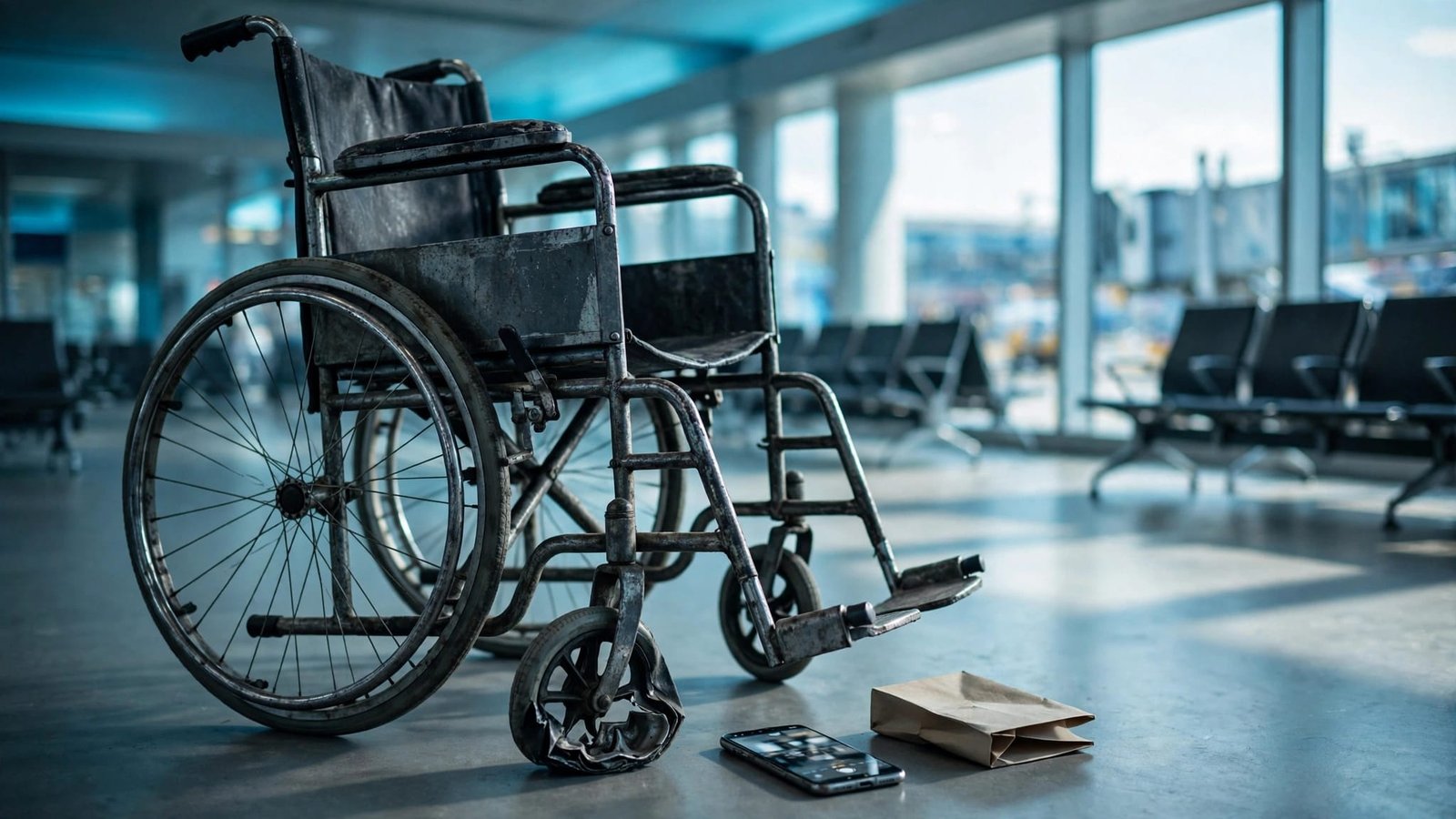
If an airline damages your mobility aid, photograph the damage, report it before leaving the airport, and request safe temporary equipment. Wheelchairs are essential assistive devices, so ask for the airline’s Complaint Resolution Official if staff can’t resolve the problem.
Airline wheelchair damage can affect your mobility, positioning, and ability to continue your trip. Your safety comes first, even when everyone around you seems ready to move on.
Start with a written record and a clear explanation of the support you need.
Key Takeaways
- Inspect your wheelchair immediately and open a damage claim before leaving the airport.
- Request a suitable loaner and choose how your repair or replacement will be handled.
- Keep photos, reports, receipts, and every airline response.
- A partial enforcement pause doesn’t remove all wheelchair protections.
1. Inspect and Document Your Wheelchair
Take time at the aircraft door or baggage claim to inspect your chair. If it was stowed in the cargo hold, check it as soon as it’s returned. Ask staff to stay nearby while you document any damage.
Check the brakes, wheels, footplates, joystick, seating supports, headrest, and charging port. Look for bent components, loose wires, missing parts, unusual sounds, and error messages. Report a depleted battery if the chair no longer operates.
Only test movement if it’s safe. Don’t drive a chair with suspected brake, frame, or control damage.
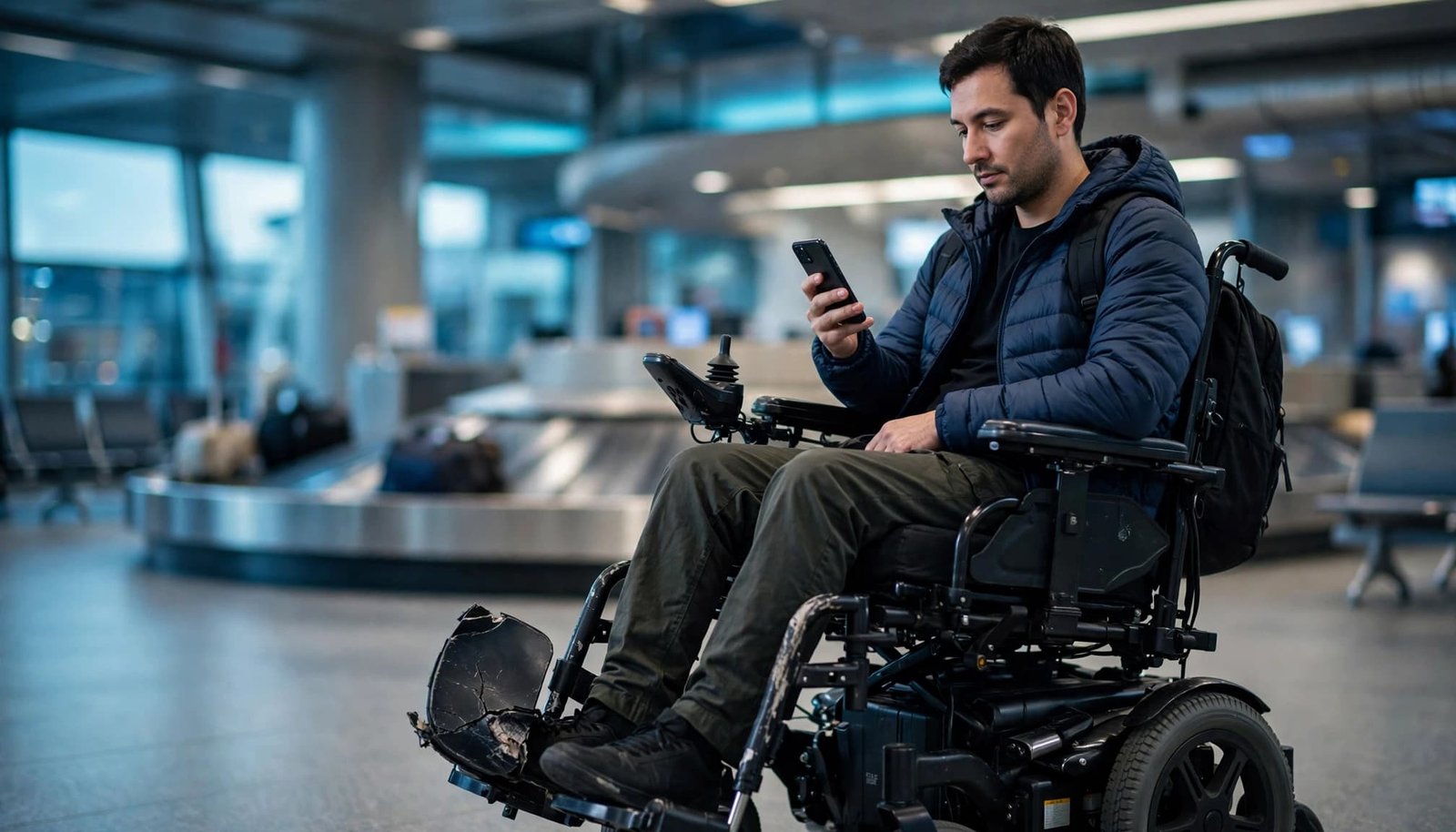
Photograph the whole wheelchair, then take close-ups of each problem. A short video can document an error message or loss of function without putting you at risk.
Keep your boarding pass, wheelchair claim tag, serial number, and any preflight photos together as documentation. Describe the practical effect: “The joystick won’t respond,” or “The footplate no longer supports my foot.”
If you’re traveling with someone, ask them to handle the paperwork while you focus on safe seating and positioning.
2. File a Damage Report Before Leaving
Get the Claim Details in Writing
Go to the airline’s baggage service office and report the damage before leaving the airport. Explain that your disability-related mobility device was damaged.
File a claim with the airline and ask for a printed report, claim number, and direct contact for the baggage office manager. Make sure the report lists every damaged or missing component.
Save employee names, the time, and the location. If staff direct you to an online form, submit it and save the confirmation. Reporting procedures and deadlines can vary by airline, itinerary, and governing rules, so report the damage in writing promptly. Don’t rely on a verbal promise.
Ask for a Complaint Resolution Official
Request the Complaint Resolution Official, usually called the CRO, if staff dismiss the damage or can’t arrange support.
Every U.S. airline must make a Complaint Resolution Official available in person or by telephone during operating hours at airports it serves. Ask what staff training or escalation process applies to your situation.
You can say: “My wheelchair was returned damaged. I need a written claim, safe temporary equipment, and help from your CRO.”
An airport transport chair may move you through the terminal but still lack the positioning support you need afterward.
3. Request a Suitable Loaner and Repair Plan
Explain What a Safe Loaner Requires
On flights covered by U.S. DOT rules, airlines must provide and pay for a loaner wheelchair or scooter when the rules’ conditions are met, while a mishandled device awaits return, repair, or replacement.
Explain your requirements, including seat width, pressure-relieving cushions, head support, power controls, and tilt or recline. A basic manual chair may not meet your needs.
If the airline’s loaner isn’t suitable, ask to use a better alternative and confirm whether the airline must cover its cost under the rules for your itinerary. Document why the first option doesn’t work and request written payment arrangements.
Keep receipts for rentals and necessary accessible transportation. Our guide to wheelchair-accessible airport transfers can help you plan the next part of your journey.

Choose Who Handles the Repair
For flights covered by U.S. DOT rules, you can choose airline-arranged repair or replacement or your own preferred vendor. If you select your vendor, the airline must pay that vendor directly when the rules apply.
Ask your mobility equipment supplier or assistive technology professional for a written assessment. It should identify damaged parts, safety concerns, repair costs, and expected timing.
If repair won’t restore safe function, request an explanation supporting replacement. Send the assessment under your existing claim number.
Ask for a written timeline for prompt repair and confirm what suitable interim support you’ll receive while your device is unavailable.
Keep the claim open until you can safely assess the completed work. Read any settlement or release carefully before signing.
What Airline Wheelchair Damage Rules Apply Now?
The Rule and the Enforcement Pause
The agency announced its wheelchair protection rule on December 16, 2024, with an effective date of January 16, 2025.
The DOT wheelchair rule announcement says checked wheelchairs must be returned in the condition they were received. Damage creates a rebuttable presumption of mishandling under the Air Carrier Access Act, which the airline must overcome with evidence.
The agency reported that at least one in every 100 wheelchairs or scooters transported on domestic flights was damaged, delayed, or lost.
In September 2025, DOT paused enforcement of four requirements pending further rulemaking: mishandled-device liability, refresher-training frequency, pre-departure CRO notices, and fare-difference reimbursement. The pause affects refresher-training frequency, not other applicable training requirements, which may include hands-on training.
A 2026 Federal Register notice set the enforcement pause through April 30, 2027. The pause isn’t a repeal of all wheelchair protections.
The paused fare difference provision concerns an alternative flight on the same day, same airline, and same origin and destination because the chair wouldn’t fit. It doesn’t cover every rebooking expense.
Liability Depends on the Itinerary
The pause doesn’t create blanket immunity. Existing repair and replacement protections may still apply.
For domestic travel, MDA’s Air Carrier Access Act guide describes coverage up to the device’s original purchase cost. Don’t assume compensation is unlimited or that ordinary baggage limits apply.
U.S. disability rules apply to U.S. airlines and some foreign-airline flights involving the United States. International compensation may involve the Montreal Convention and different limits. Flights wholly outside the United States are subject to other applicable national rules.
4. Escalate a Denied or Unresolved Claim
Respond to a “Cosmetic Damage” Denial
If the airline calls the damage cosmetic, request its reasoning in writing. Send dated before-and-after photos and your technician’s findings.
Explain whether the damage affects safe use, structural integrity, controls, seating, or protective surfaces. Don’t describe a functional problem only as a scratch.
For appearance-only damage, document the changed condition honestly and request a written decision. Strong evidence helps without overstating the problem.
Ask the airline to identify the policy or legal basis for its denial. Keep the discussion within the original claim so your records stay connected.
If the airline says your wheelchair is lost, ask for written confirmation and follow its separate loss-report process.
File a DOT Complaint When Needed
If the airline refuses repairs, fails to provide suitable equipment, or stops responding, submit a disability complaint to the Department of Transportation through DOT’s passenger disability rights page.
Include your flight details, claim number, timeline, photos, repair assessment, and airline responses. State what remains unresolved and the remedy you’re requesting.
Airline damage claims have separate reporting steps and deadlines, which may vary. A DOT complaint is an enforcement complaint, not a court judgment awarding you money, and it doesn’t replace your airline claim. Continue pursuing that claim while the accessibility issue is reviewed.
Small claims or another lawsuit is a separate process. An attorney familiar with aviation and disability law can assess available claims, deadlines, and jurisdiction. The Air Carrier Access Act may not provide a private damages lawsuit on its own.
Public social media posts or local consumer-news coverage can add pressure, but neither guarantees faster payment. Protect your medical information and booking details.
Prepare Your Records Before the Next Flight
Photograph and video your wheelchair before handing it over. Include existing marks, controls, supports, and the serial number.
Remove detachable cushions, joysticks, and headrests for cabin storage when safe and permitted. Keep any support needed for safe positioning in use until an appropriate transfer.
Carry a wheelchair profile with dimensions, battery details, handling instructions, and repair contacts. Our wheelchair air travel planning guide covers these preparations.
For families planning Disney with a child with autism, Disney World with Autism: The Complete Family Guide is an optional resource available as an Etsy PDF guide and an Amazon ebook.
Our travel essentials shop offers strollers and other travel supplies, including cleaning supplies for illness during vacation. Contact a qualified mobility provider for specialized wheelchair repair or replacement.
Frequently Asked Questions
How Long Does an Airline Have to Return a Delayed Wheelchair?
For covered domestic flights and international flights of 12 hours or less, the airline must return a delayed wheelchair within 24 hours after your arrival. For international flights longer than 12 hours, the deadline is 30 hours.
These deadlines apply to returning a delayed wheelchair, not to reporting damage or filing an airline claim. Ask for a suitable loaner while you wait.
What If I Discover the Damage After Leaving the Airport?
Report the wheelchair damage to the airline promptly in writing. Explain when you noticed it and why it wasn’t apparent when you arrived.
Attach photos, your flight information, and any earlier inspection records. Request a claim number and a professional assessment. Procedures and deadlines vary by route and applicable rules. International written-notice deadlines can be short, so report the damage before waiting for a repair estimate.
Your Safety Comes Before Continuing the Trip
A damaged wheelchair needs a documented claim, suitable temporary support, and a clear repair or replacement plan. You shouldn’t have to accept equipment that doesn’t safely meet your needs.
Keep the paperwork together and use the CRO and appropriate formal complaint process when needed. Your mobility and independence deserve careful attention throughout the resolution.
Leave a Reply