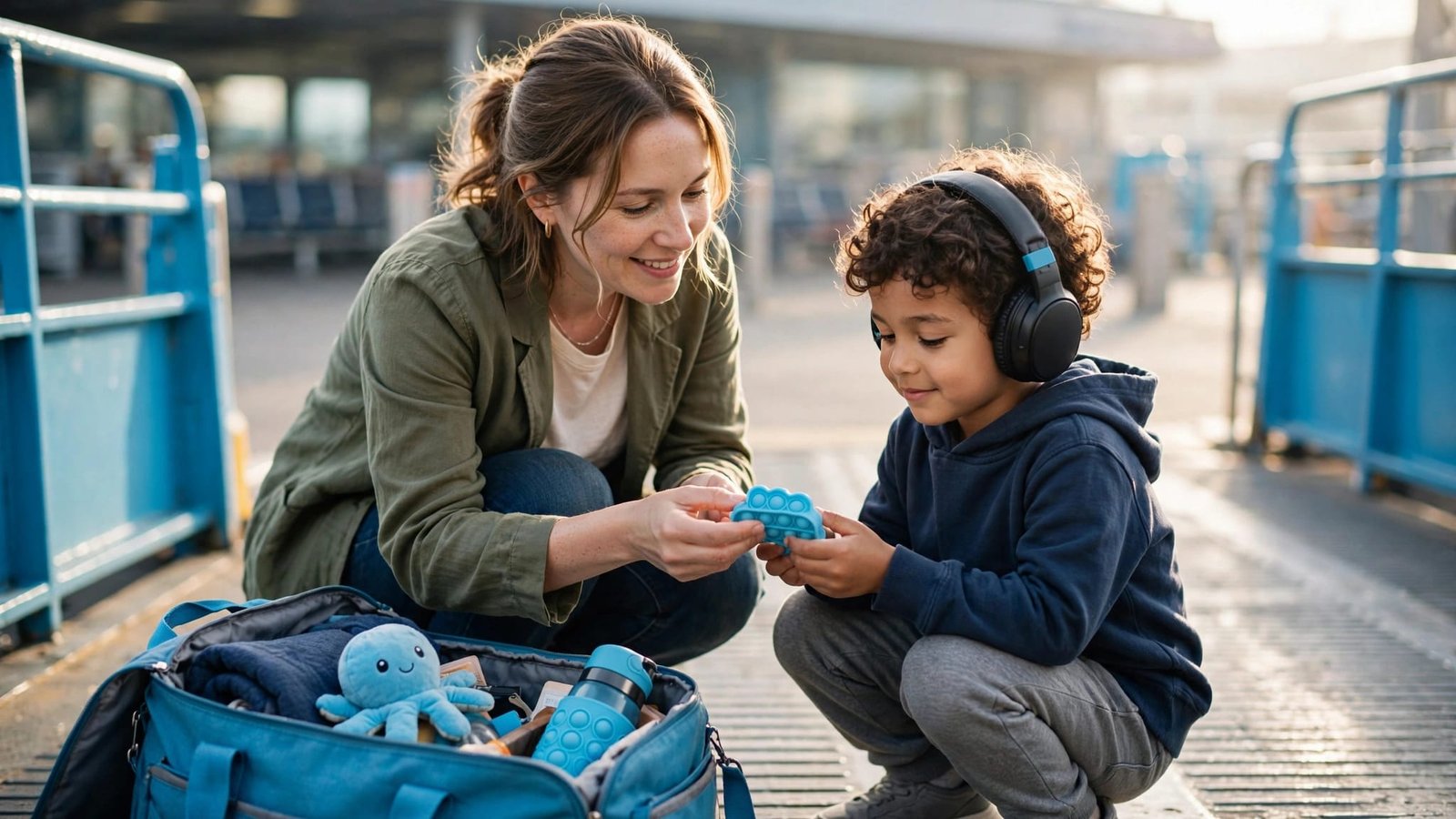
Autism-friendly ferry trips start with a calm, manageable crossing, a clear boarding routine, and familiar sensory supports within reach. Planning around your traveler’s comfort and preferred ways of expressing needs can make a ferry trip more autism friendly and predictable.
Ferry travel adds sounds, movement, waiting, and transitions that deserve their own preparation. We help families make room for those needs without filling every moment with activities.
Start with the whole travel day, including the terminal wait and the journey after you leave the boat.
Key Takeaways
- Choose a crossing that fits your traveler’s tolerance for waiting, crowds, and time onboard.
- Preview boarding with simple pictures or steps, including a clear way to show changes.
- Keep familiar ways to express needs, sensory supports, medication, and spare clothing in one reachable bag.
- Plan a place to regroup onboard, and leave the rest of the day flexible.
Choose a Ferry Trip Around Your Traveler
A short crossing can still involve parking, ticketing, waiting, boarding, and another journey after arrival. Build your plan around that complete experience.
Choose off-season dates and less crowded departures when your schedule allows. Keep meals, medication, and rest close to their usual timing. For a first ferry outing, favor a simple journey over a busy sightseeing day with several connections. If you travel with service animals, check the specific ferry operator’s current rules and arrangements before travel.
Contact the operator in advance to ask about boarding procedures and requested support. Include boarding assistance or step-free access in your reservation request when needed. Describe the practical support that helps, such as clear instructions, a caregiver staying close, or additional processing time.
The U.S. DOT passenger-vessel guidance covers disability access on passenger vessels. Physical accessibility and sensory comfort still need separate consideration.
Older Autism Speaks summaries cited one in 36 U.S. children and 31% with intellectual disability. Those historical figures don’t describe any individual traveler’s needs. The CDC’s current prevalence estimate is one in 31 eight-year-olds.
Start with what your traveler communicates about noise, space, movement, and unfamiliar routines. Involve autistic children, autistic adults, and older children in choosing departures, supports, and activities that fit their needs.
Prepare for Boarding Before Ferry Day
Show the Steps Without Overloading the Schedule
Use a short, sensory-friendly visual sequence to preview the trip: arrive, use the bathroom, wait, board, find a seat, cross, wait for crew direction, disembark, and regroup. Include ticket scanning or bag screening when those are part of the journey.
Photos of a ferry, terminal, and boarding ramp can make unfamiliar surroundings easier to recognize. Explain that the gangway is the walkway connecting the terminal and boat.
Prepare for possible horn blasts, announcements, engine sound, and vibration. Keep the preview brief, use a calm voice, and stop if it increases anxiety.
Add a simple change phrase, such as, “The plan changed. We’re waiting here.” A picture for “wait” or “different plan” can help if the sailing time, boarding point, or queue changes.
Make Waiting and Boarding Separate Tasks
Meet food, bathroom, and comfort needs before joining the boarding queue. Keep your sensory bag with you rather than buried in luggage.
A needs card can say, “I need extra processing time and clear instructions.” Share only information that helps staff provide support.
When two caregivers travel together, one can manage tickets while the other stays with the child. Follow crew directions around ramps, vehicles, and passenger doors.
Boarding early isn’t automatically calmer if it means a longer onboard wait. Confirm current boarding procedures and updates with the specific operator, and request support that fits your traveler.
Plan for Onboard Sensory Needs

Choose a Comfortable Place to Settle
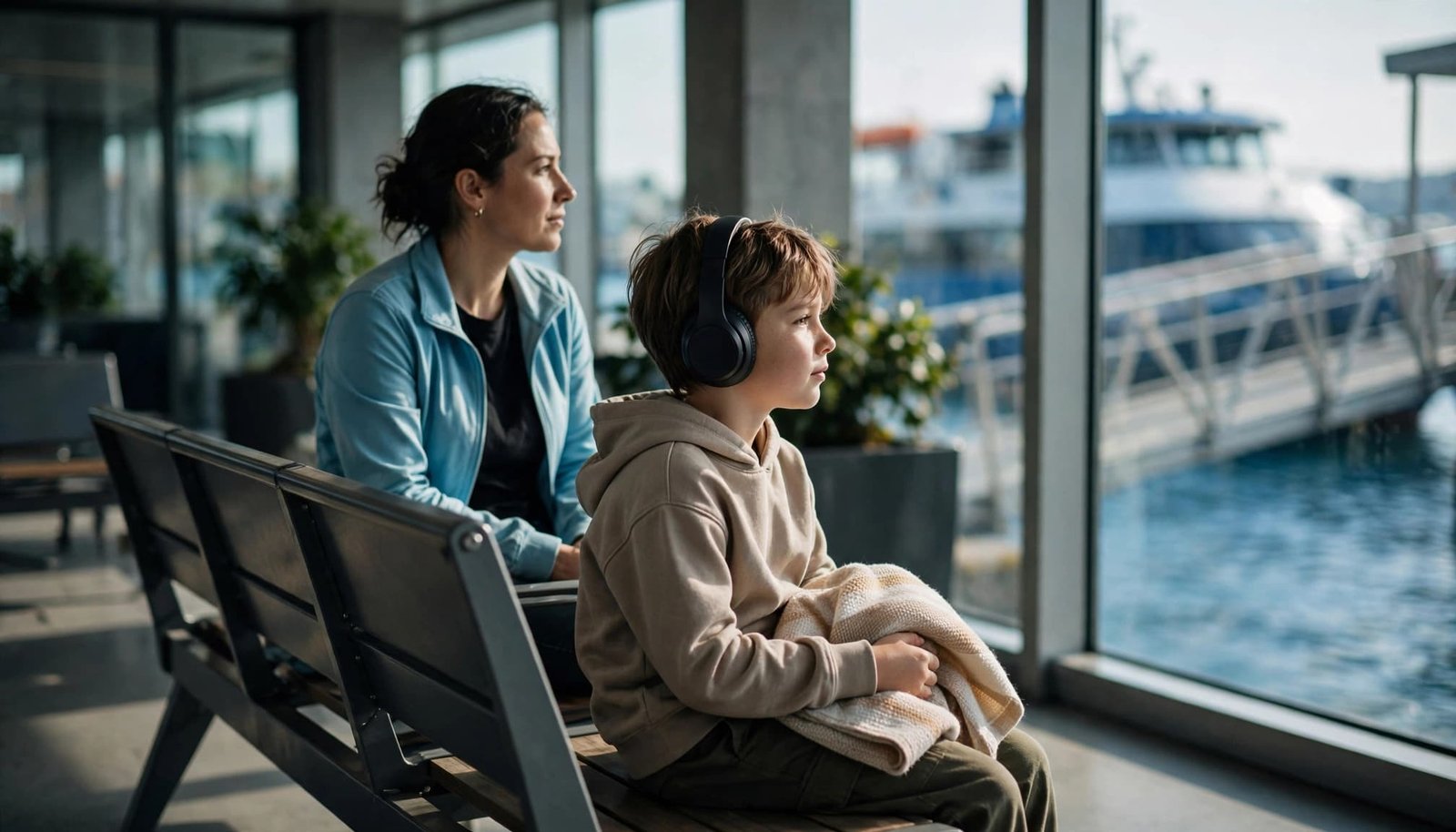
Treat an enclosed cabin, open deck, and busy seating area as different sensory environments. Outside seating adds wind and weather. Indoor seating can add conversation, lighting, and announcements.
Where seating choices allow, settle away from loudspeakers, food queues, and frequently used doors. Leave room for safe movement without blocking aisles.
Create a mobile calming space with familiar headphones and a blanket. These supports can make the onboard setup more sensory-friendly, even without a separate space.
Ask your ferry operator whether quiet areas or a separate recovery space are available, and plan a fallback if neither is.
On vehicle ferries, follow crew instructions about passenger areas and vehicle-deck access. Don’t build your sensory plan around staying in the car.
Prepare for Discomfort Before It Builds
Keep communication tools available throughout the crossing. A traveler may need to communicate nausea, pain, temperature discomfort, or a bathroom need rather than sensory overload.
If motion sickness is a concern, discuss suitable options with a clinician before travel. Medication choices should account for age, health needs, and other medicines.
Headphones can reduce sound, but a caregiver still needs to hear safety instructions. Keep safety announcements part of your support plan.
Once the ferry leaves, stepping off isn’t an immediate option. Plan onboard recovery support before boarding, not only an early departure from your destination.
Pack One Reachable Ferry Bag
Pack for the waiting area and crossing, not only the destination. Familiar items deserve priority over new products that haven’t been tried at home.
Your ferry bag should include:
- Bring familiar headphones or ear defenders, a comfort item, and weather-appropriate layers.
- Keep medication, suitable snacks, water, and any feeding supplies accessible.
- Carry communication devices, a charger, a portable battery, and a paper backup.
- Pack spare clothing, wipes, toileting supplies, and sealable bags for wet or soiled items.
- Include identification, emergency contacts, and a simple visual schedule.
Download preferred music, shows, and communication resources before departure. Don’t depend on onboard Wi-Fi.
Keep the most useful items near the top. When possible, divide essential supplies between caregivers so one misplaced bag doesn’t remove every support.
Our Trip Rescue Shop carries practical travel supplies, including strollers and cleaning supplies for unexpected messes or illness on vacation. Choose what supports your family’s established routine rather than adding equipment you don’t need.
Give the Ferry Its Own Place in Your Vacation
Plan one main activity each day, with everything else optional. This pace works well for autism friendly vacations. Give the ferry crossing its own place in a family vacation, especially when the terminal and boat are unfamiliar.
Leave a real break after arrival. Familiar food, a quiet room, and time without demands may be more helpful than another attraction.
For an overnight stay, request a hotel room away from bright lights and loud areas. Save the hotel’s check-in details in your visual plan, and include elevators, ice machines, and pool gates in that request. If the ferry leads to a summer camp stay, add camp arrival and check-in to the plan.
Keep changes simple. Offer two manageable choices, such as a snack break or returning to the hotel. Our autism and anxiety travel preparation offers more support for unfamiliar routines and flexible family days.
If Disney or other theme parks are part of your vacation, our Disney World autism guide on Etsy and Disney autism travel guide on Amazon offer family-focused ideas for sensory preparation and park planning.
Keep ferry day expectations separate from park day expectations. Each travel day deserves its own pacing.
Understand What Autism-Friendly Labels Mean
Certification Describes Training, Not Every Experience
The International Board of Credentialing and Continuing Education Standards, or IBCCES, issues the Certified Autism Center designation. Its requirements include autism-specific staff training.
For example, IBCCES’s LEGOLAND certification announcement reported that LEGOLAND Florida and California received certification in 2022. LEGOLAND New York became a Certified Autism Center when it reopened on March 31, 2023.
These designations apply to the named destinations. They don’t confirm that nearby ferries offer autism training, quiet rooms, or priority boarding.
For a ferry trip, identify the specific support you need rather than relying on an “autism-friendly” label alone.
Look for Specific, Clearly Described Support
Sesame Place San Diego’s autism resources describe a Certified Autism Center with quiet rooms near First Aid, low-sensory areas, and a sensory-focused accessibility guide. Guest Services offers headphones, but they aren’t permitted on select dry rides or on water rides and slides.
Fleet Science Center’s Accessibility Mornings take place on the third Saturday of each month, starting at 9 a.m., one hour before general opening. The San Diego Zoo and Safari Park also have KultureCity sensory-inclusive recognition.
Visit Myrtle Beach promotes the Hidden Disabilities Sunflower Program at Myrtle Beach International Airport and the Autism Travel Card.
These examples include communication tools, quieter visiting periods, trained staff, and recovery spaces. They are destination services, not promised ferry amenities. When planning a ferry trip, confirm which supports are available during the crossing.
Frequently Asked Questions
What If My Child Needs to Leave Early?
Before departure, choosing not to board is a valid option. After departure, focus on a safer, lower-demand place onboard and involve crew if assistance is needed.
Once ashore, skip the next activity or return to your accommodation. Leaving early doesn’t mean the day failed.
How Can We Keep Familiar Routines?
Protect the routines that matter most, such as meals, medication, bathroom breaks, and rest. Use a short visual sequence rather than a minute-by-minute schedule.
A familiar phrase, snack, or comfort item can help connect an unfamiliar ferry journey with something predictable.
Does Ferry Preparation Need to Include Therapy?
No. Vacation doesn’t need to become therapy or a social-skills lesson.
If your child already works with a provider, familiar transition or communication strategies can be carried into travel preparation. Therapy isn’t a requirement for taking a trip. Use supports your traveler knows and accepts.
What Should We Do During Sensory Overload?
Reduce conversation and demands. Offer familiar ways to express needs and a comfortable place to sit, without forcing a new activity.
Tell crew if you need help finding a suitable passenger area. Seek immediate assistance for illness, injury, or any safety concern.
A Comfortable Crossing Starts With a Flexible Plan
Autism-friendly ferry trips work best when boarding, waiting, and onboard recovery receive the same care as the destination. Familiar supports and clear next steps give your traveler a stronger foundation.
Keep comfort and safety ahead of completing the itinerary. A shorter outing or changed plan can still be a successful family day.
We offer personalized special-needs travel planning built around your family’s routines, preferences, and support needs.
Leave a Reply