
Plan accessible shore excursions by matching the vehicle, boarding arrangements, route, and pace to your mobility needs. A wheelchair symbol is a helpful starting point, but your specific access needs should guide the booking.
You deserve a port day that feels comfortable, whether you use a wheelchair, scooter, walker, or cane. Start with how you’ll reach shore, then look at transportation and activities.
Key Takeaways
- Choose excursions based on transfer requirements, equipment measurements, surfaces, and restroom access, rather than the tour’s accessibility label.
- Include tender transfers and the return trip in your plan. An excursion ticket doesn’t guarantee that your mobility device can go ashore.
- Reserve accessible transportation early, keep agreed arrangements in writing, and leave room for rest or a shorter outing.
Find Accessible Shore Excursions That Fit Your Needs
Understand What the Wheelchair Icon Means
A wheelchair icon or accessibility advisory can point travelers toward options where transportation is wheelchair accessible. Open the full description to verify the specific vehicle and boarding arrangements.
Carnival’s shore-excursion accessibility guidance distinguishes ambulatory-accessible tours from fully accessible tours. Ambulatory options may require steps, transfers, or short walks. Fully accessible options use lift-equipped or ramp-equipped transportation and avoid steps.
For someone using a cane, a short transfer may be manageable. A traveler who remains in a power chair needs a different arrangement. Neither traveler should have to guess what the listing means.
Read Beyond “Easy” and “Panoramic”
“Easy” describes activity level, not necessarily wheelchair access. A panoramic tour may offer comfortable sightseeing through the vehicle windows while leaving some stops inaccessible.
An accessibility rating alone doesn’t confirm lift capacity, restroom layout, or walking distance.
U.S. ports aren’t a blanket guarantee of accessible tours. Outside the U.S., local vehicle availability, cobblestone streets, missing curb cuts, and older buildings can further limit options. Plan around the actual route rather than assumptions about the destination.
Start With Getting Off the Ship
A suitable van waiting ashore won’t help if the transfer off the ship doesn’t work for you.
At a tender port, passengers use a smaller boat between the ship and land. Boat design, waves, equipment size, and crew safety decisions affect boarding. Some travelers can transfer safely; others need to remain in their own chair.
Include a direct question in your planning: “Can I board this tender with my specific wheelchair or scooter, and must I transfer?”
When that arrangement is unresolved, keep the port optional. Staying aboard can be a comfortable choice, with less rushing and fewer crowds.
Pier access usually removes the small-boat transfer, but gangways and distances through the terminal still matter. Our accessible cruise planning guidance covers how the ship, cabin, and itinerary fit together.
Questions to Ask Before Booking
Share practical information about your equipment and how you travel. Include its make, model, dimensions, weight, and whether you can transfer into a regular vehicle seat.
Vehicle Access, Transfers, and Storage
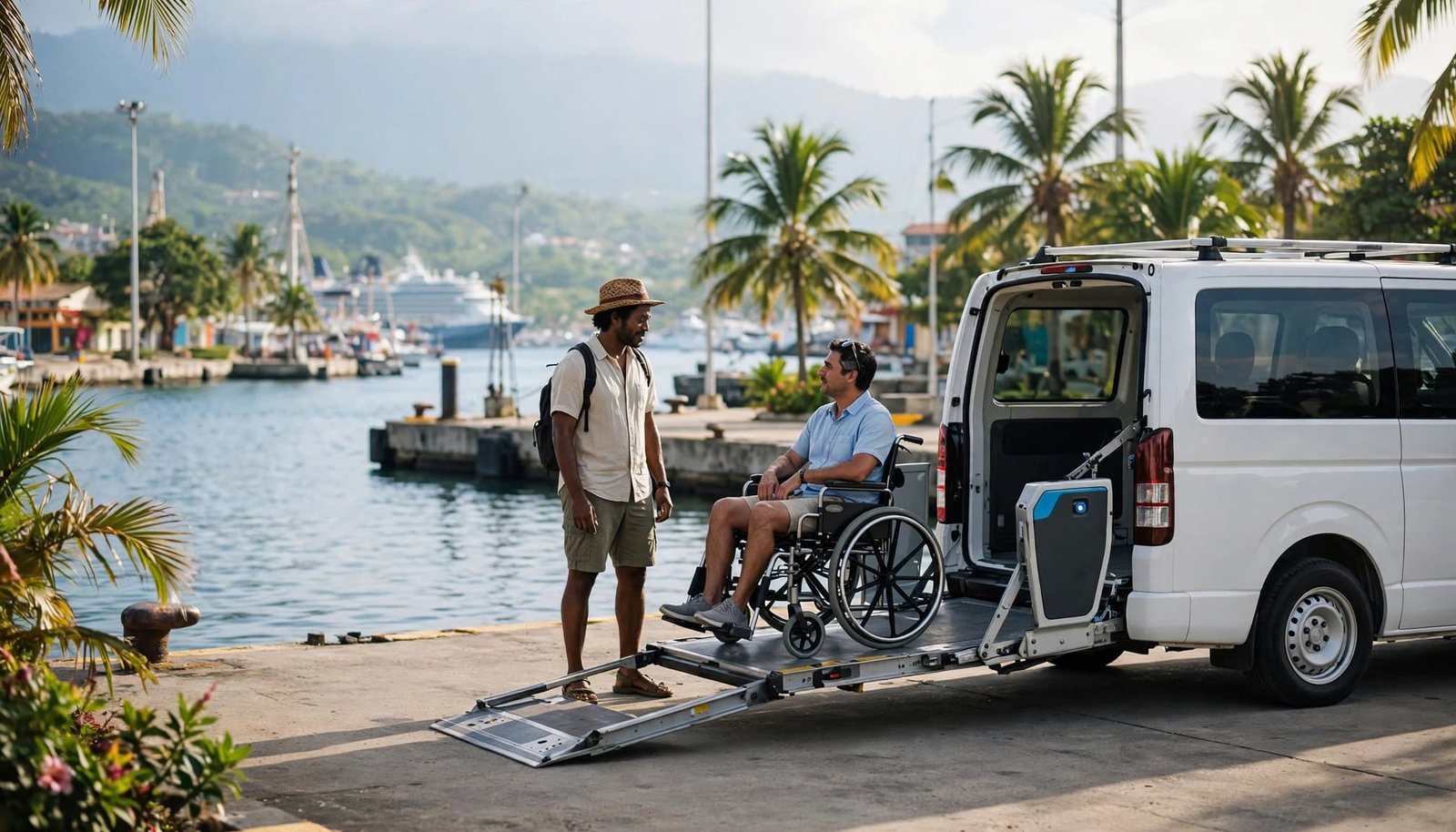
These questions help separate accessible transportation from ordinary transportation with storage space:
- “Does the assigned vehicle have a wheelchair lift or ramp, and what are its usable dimensions and weight limit?”
- “Can I remain in my wheelchair during the ride, and what securement and passenger restraints are provided?”
- “If I transfer, is there enough storage for my folded wheelchair or mobility scooter, and who handles it?”
A scooter fitting inside a vehicle doesn’t establish that it’s suitable as a passenger seat during travel. The boarding and seating arrangements need separate answers.
Routes, Restrooms, and Rest Stops
Ask about the entire outing, including stops advertised as optional:
- “Is the route step-free throughout, with usable curb cuts, and where are hills, cobblestones, sand, or uneven paths?”
- “How far is each entrance from the vehicle, and where can I sit or return early?”
- “What are the restroom doorway width, turning space, and toilet transfer arrangements?”
Keep the responses with your reservation. Photos of the assigned vehicle and measurements provide more useful information than a general reassurance. An ADA-compliant label doesn’t guarantee the arrangements fit your needs, so confirm the vehicle setup, route, restroom details, and other arrangements before booking.
Our guidance on sharing your travel support needs helps organize these details before booking.
Compare Real Port and Tour Options
San Juan and Ponce
Discover Puerto Rico describes Carnival’s Accessible New and Old San Juan as a 2.5-hour tour using wheelchair-accessible vans. It highlights smooth terrain for motorized wheelchairs and readily available curb cuts.
Carnival’s listing also mentions taking a few steps into the vehicle. That distinction matters for travelers who cannot transfer, even when the title says “accessible.”
Ponce offers areas with ramp access and wide entrances. Discover Puerto Rico describes accessible attractions and sensory-friendly environments at Castillo Serralles; travelers should verify which areas and facilities are accessible. Access to one area doesn’t establish access throughout an attraction.
Puntarenas, Costa Rica
Sage Traveling’s Highlights of Costa Rica Accessible Shore Excursion uses an accessible van with a lift or ramp. Its listing states that wheelchair users don’t need to transfer out of their own chairs.
That is a useful feature for travelers who need their seating support throughout an outing. It also shows why a clear boarding description matters more than a rating alone.
Vehicle access is only one part of the day. Paths, activity entrances, toilets, and any boat boarding need their own access arrangements.
Santorini and Ephesus

Santorini’s Old Port sits beneath the cliffs, with Fira reached by cable car or steps. Tender transfers and the steep layout make it a demanding stop.
At Ephesus, uneven marble creates a different challenge. A downhill route from the Upper Gate still requires effort for manual-wheelchair users. A downhill direction doesn’t remove rough surfaces or assistance needs.
Book Early and Compare Your Options
Start Before the Minimum Deadline
Capacity is limited, and options aren’t available everywhere, so book in advance when reservations open for your sailing. Don’t wait for the onboard shore excursion desk.
Royal Caribbean’s accessible excursion guidance recommends requests at least 10 working days before departure. That is advance-request guidance, not a promise that space will remain available.
Other assistance has separate timelines. Royal Caribbean asks for contact 30 days ahead for pier boarding and departure assistance. Terminal help and shore-tour transportation are different arrangements.
Compare the Whole Cost of a Private Tour
A private accessible vehicle can offer flexible timing, fewer stops, and space for companions. It can be helpful when group pacing doesn’t match your stamina or bathroom needs.
Compare the total vehicle price, admission charges, whether a private guide is included, waiting time, and cancellation terms. A per-person price can depend on how many travelers share the booking.
When booking with local tour operators, confirm the meeting point, emergency contact, and return time in writing. The ship’s all-aboard deadline needs a generous margin for traffic and slower boarding.
A cruise-line booking may simplify coordination, but its accessibility description still needs to fit your equipment and transfer ability.
Make Comfort Part of the Port-Day Plan
A successful outing leaves enough energy for the rest of your cruise. Choose a manageable duration, regular bathroom opportunities, and time for meals or medication.
Keep essential medication, mobility-device keys, communication tools, and necessary charging supplies with you. Don’t depend on access to bags stored beneath the vehicle during a stop.
Sensory needs belong in the same plan. Loud narration, crowded markets, heat, and repeated transitions can make a physically accessible tour uncomfortable. Quiet breaks and a clear return plan give your family more flexibility.
Our Trip Rescue Shop carries travel essentials, including strollers and cleaning supplies for unexpected messes or illness on vacation. Choose supplies that support your existing routine rather than adding unfamiliar equipment at the last minute.
If your cruise vacation also includes Walt Disney World, our 57-page Disney World autism family guide is available through our Etsy Disney autism guide listing and our Amazon Disney autism guide listing. It supports family planning around sensory needs, breaks, and transitions.
Frequently Asked Questions
Does a Tour Guide Provide Personal Care?
A standard guide’s role doesn’t automatically include toileting, lifting, feeding, or medication administration. Include a companion or caregiver when you need personal assistance. Any paid care arrangement needs a clear scope of service, separate from sightseeing and transportation.
What If a Different Vehicle Arrives?
If the replacement lacks the agreed lift, space, or restraints, don’t accept an unsafe boarding arrangement. Contact the excursion organizer and keep a record of the vehicle and the assistance offered. Written booking details support your request for a suitable replacement or consideration under the cancellation terms.
Can Companions Join an Accessible Excursion?
Companion places depend on the vehicle layout and tour capacity. Wheelchair spaces and regular seats aren’t interchangeable. Include everyone in the original reservation, along with the number of mobility devices. This helps keep your group together without assuming that extra seats will be available.
Plan a Port Day That Works for You
The right accessible shore excursions fit your equipment, comfort, and energy. Clear transportation arrangements and realistic routes make it easier to enjoy your time ashore.
We offer special needs travel planning to help families build vacations around their individual needs. Your port day can be short, flexible, and memorable, with comfort built into the plan.
Leave a Reply