
Traveling with lupus can be more manageable when your plans protect your energy, limit UV exposure, and keep treatment close. Your rheumatology team should help decide whether your health is stable enough for the trip.
You deserve a vacation that leaves room for downtime and flexibility, without pressure to keep up with everyone else. Start with your usual care routine, then build transportation, accommodations, and activities around what feels comfortable for you.
Key Takeaways for a More Comfortable Trip
- Keep medication, approved backup supplies, and medical paperwork in your carry-on.
- Plan outdoor activities around lower-UV hours, with sunscreen and protective clothing.
- Arrange cooling for refrigerated medicines throughout the journey, including delays.
- Build movement breaks, quiet afternoons, and recovery time into your schedule.
Before traveling with lupus, make a care plan
Decide whether this is the right time
Share your destination, travel time, and planned activities with your rheumatologist before booking nonrefundable arrangements. Recent flares, organ involvement, infections, or treatment changes may make postponing the safer choice.
Dr. Ortiz advises waiting for at least six months of stable lupus before a major trip. That’s an individual clinician’s recommendation, not a universal clearance rule. Avoid traveling soon after starting a new lupus medication without your prescriber’s approval.
Ask for written instructions covering missed doses, changing symptoms, and when to seek care. Discuss whether an emergency steroid prescription, such as a Medrol dose pack, belongs in your plan.
Arrange travel medicine and vaccines early
Consult a travel medicine specialist at least one month before international travel, ideally four to six weeks ahead. Immunosuppressed travelers may need several months for preparation. The CDC’s destination health guidance outlines country-specific risks.
Potent immunosuppressants can make live vaccines, including MMR and yellow fever, unsafe. The CDC’s immunocompromised traveler guidance explains why recommendations depend on your treatment and immune status.
Don’t stop lupus medication to receive a vaccine unless your treating team directs that change.
Pack medication for the whole journey
Keep prescriptions and paperwork together
Bring enough medication for your trip plus an approved extra supply for delays. Include prescribed flare medicine in its original bottles, with labels intact.
Carry a signed doctor’s letter listing your diagnosis, prescriptions, doses, allergies, and necessary supplies. Keep prescription copies and your care team’s contact details on paper and offline on your phone.
Essential medicine stays with you, not in checked luggage. Remove your medical kit if your carry-on is gate-checked. A doctor’s letter explains medical needs, but it doesn’t override destination or transit-country import restrictions.
Have your pharmacist map dosing across time zones, including the return journey. Use phone reminders based on that schedule.
Choose cooling that matches your prescription
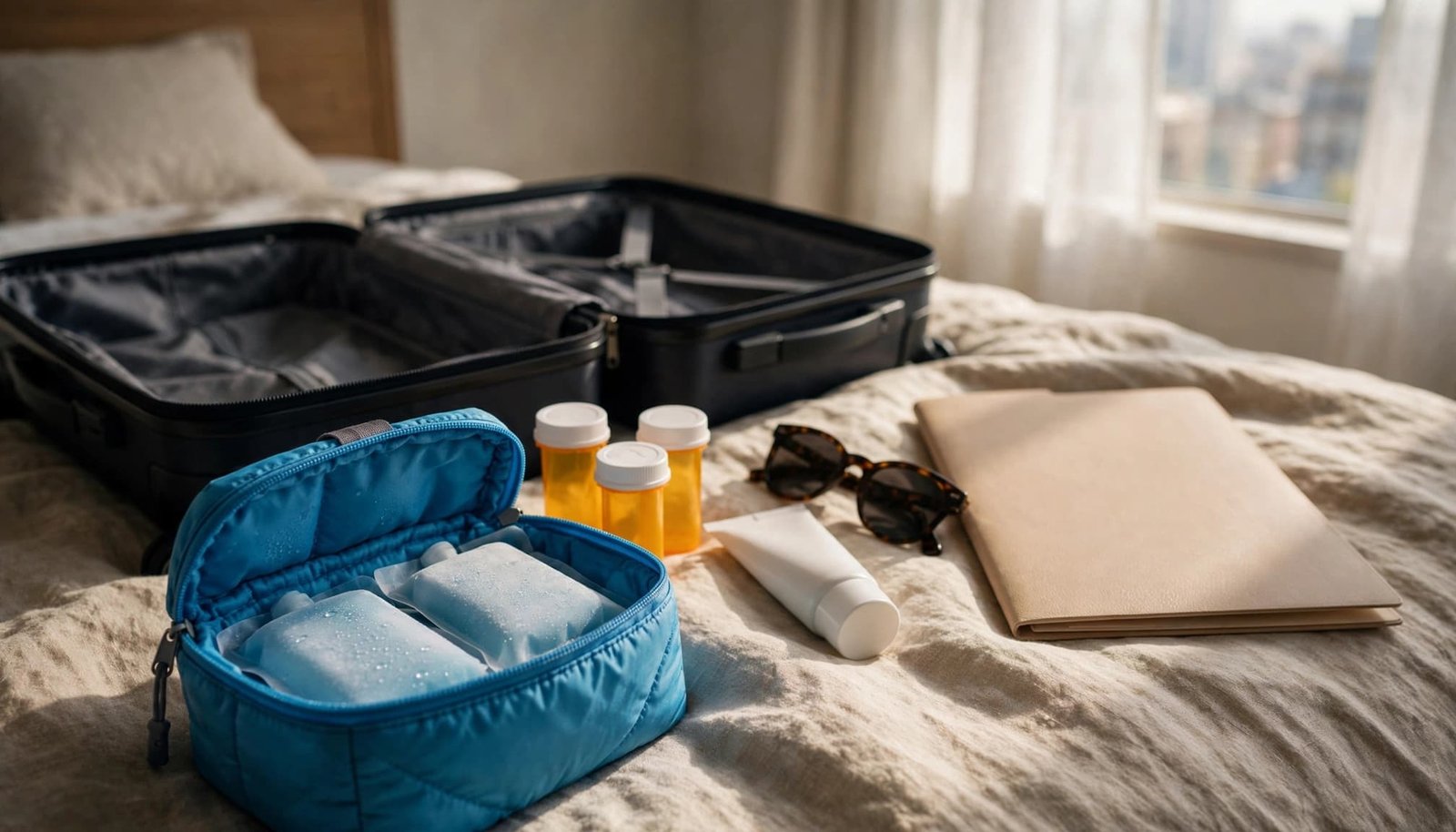
For Benlysta and other refrigerated treatments, follow product-specific requirements for cold storage. Use an insulated medication case, suitable cold packs, and a divider that prevents freezing. A minimum-and-maximum thermometer helps track temperature changes.
Request suitable hotel refrigeration before arrival. Beverage coolers and aircraft refrigerators aren’t dependable medication-storage plans.
Anecdotal reports describe gel packs lasting about 48 hours in a soft lunchbox and over 72 hours in a hard-sided cooler. Those aren’t safe-storage guarantees. Test your setup without medication and include connections, transfers, and room-access delays.
TSA permits reasonable quantities of medically necessary cooling packs, including melted or slushy packs. Declare them before screening and allow extra time. International security rules can differ.
Plan your days around sun exposure
Photosensitivity affects some people with lupus and other autoimmune conditions. UV exposure may trigger skin symptoms or a lupus flare, even without a sunburn, and protection can’t guarantee symptoms won’t occur. Cloud cover doesn’t remove the need for protection.
For UV protection, choose a broad-spectrum, water-resistant sunscreen with SPF 70 or higher. Look for a label that lists 80 minutes of water resistance.
Reapply every two hours outdoors, and after swimming, sweating, or toweling off. For ongoing indoor daylight exposure, lupus-focused advice includes reapplying every four to six hours.
Plan outdoor activities for lower-UV hours, and choose shaded or indoor alternatives when UV is strong. Water and sand reflect UV, while car windows can allow UVA through.
Wear tightly woven clothing with UPF 30 or higher, preferably UPF 50. Add a wide-brimmed hat and UV-protective sunglasses.

Shade helps, but reflected UV still reaches shaded areas. Keep your other protection in place during outdoor breaks.
Make flights and drives easier on your body
Long-distance travel lasting more than four hours can roughly double the risk of blood clots, although your personal risk depends on other factors.
Prior clots, antiphospholipid syndrome, and limited mobility deserve a pretravel discussion with your clinician.
Plan gentle movement and stretch breaks about every hour when safe. On road trips, stop and walk. During flights, use ankle rolls and calf movements while seated, then walk when permitted. Comfortable neck rolls and gentle seated twists can ease stiffness.
Below-knee graduated compression stockings may help higher-risk travelers. Your clinician should recommend the fit and compression level. Don’t start aspirin or blood thinners for travel on your own.
Drink regularly to stay hydrated and avoid dehydration, unless your care plan limits fluids. Hydration supports comfort, but doesn’t replace movement or clot prevention.
Request airport assistance to reduce exhausting walks. Bring a well-fitting face mask for crowded spaces and practice regular hand washing.
Build rest into the itinerary and return home
Choose a pace you can adjust
Start with one main activity, then leave room for meals, transportation, and recovery time. Choose lodging with easy access to your room, nearby food, and dependable transportation.
Alternate busier outings with lighter days. Keep arrival day simple, schedule early nights, and agree on a clear way to tell companions you need a break.
Put downtime on the itinerary before booking activities. Otherwise, the only available break may come after you’ve already exceeded your limits.
A mobility aid or airport wheelchair can save energy for the parts of your vacation you want to enjoy. You don’t need to wait until you’re exhausted to use support.
Protect sleep and recovery time
Time-zone changes can contribute to jet lag and disrupt sleep and medication routines. A scheduling app such as Timeshifter may help organize sleep changes. If using a light device, choose one without UV output and discuss suitability with your clinician.
The Lupus Encyclopedia discusses melatonin doses of 1 to 10 mg, often 3 mg, for five nights after arrival. These aren’t personal dosing instructions. Melatonin can affect immune activity and interact with medicines, so your rheumatologist should decide whether it’s appropriate.
Leave downtime after returning home. Avoid placing a demanding workday immediately after a long journey when possible.
Know what to do if symptoms change
When booking lodging, identify a nearby urgent care center and hospital. For international travel, save the local emergency number and a brief medical summary in the local language when needed.
Choose travel insurance with coverage for your pre-existing condition, emergency treatment, and medical evacuation. Pre-existing-condition waivers often have purchase deadlines and eligibility requirements. Routine care and prescription replacement aren’t automatically covered.
If familiar symptoms worsen, reduce activity and follow your written action plan. Contact your treating team early rather than waiting until you’re too unwell to travel home comfortably.
Don’t assume every new symptom is a flare. Fever during immunosuppressive treatment, chest pain, breathing trouble, confusion, or one-sided leg swelling needs prompt medical assessment.
Seek local emergency care first when symptoms are serious. Insurance calls and messages to your home clinician shouldn’t delay treatment. Don’t start emergency steroids outside your prescribed instructions, especially when infection is possible.
Support for your whole family’s travel needs
Your clinicians guide treatment and travel fitness. We help with the practical arrangements around that plan.
Our special needs travel planning can help coordinate accommodations, transportation, and a comfortable vacation pace. Tell us which details would make daily routines easier for you.
For everyday extras, our Trip Rescue Shop travel supplies include strollers and cleaning supplies for unexpected sick-on-vacation moments. Keep comfort supplies separate from your essential medical kit.
If your family also needs autism or sensory planning for Disney, our Disney World with Autism: The Complete Family Guide is available as an Etsy PDF download and through our Amazon guide listing.
Frequently Asked Questions
Does lupus fatigue ever go away?
Fatigue can improve when disease activity, sleep problems, anemia, or other contributing conditions are treated. It can also continue when lupus is otherwise controlled. Tell your clinician about new or worsening fatigue. For travel, plan around your current energy rather than expecting vacation time to remove it.
Can sunscreen prevent every travel-related flare?
Sunscreen reduces UV exposure, but it can’t guarantee protection from a flare. Clothing, shade, rest, and your usual treatment still matter. Symptoms can develop after exposure rather than immediately. Follow your written care plan if a rash, joint pain, or unusual fatigue appears during or after the trip.
A Vacation That Leaves Room for Your Needs
Traveling with lupus works better when medication access, sun protection, and rest are planned before departure. Flexible arrangements give you room to respond when symptoms or energy levels change.
You don’t have to fill every day to enjoy your vacation. Let your medical plan guide the limits, and let your comfort guide the pace.
Leave a Reply