
A theme park sensory break starts with a simple plan: save key location details and pack a small sensory kit. Pause at early signs of sensory overload. For autistic travelers and anyone feeling overstimulated, a calm reset can make the day easier to manage.
A little preparation gives your family one less thing to figure out when the crowd noise feels overwhelming. Start with a quick stop at guest services when you arrive.
Key Takeaways
- Ask guest services for the baby care center’s location when you arrive, then save it on your phone. If you travel with a service animal, save the location of a nearby relief station too.
- Pack a small sensory kit with noise-canceling headphones, a fidget toy, and a water bottle. Bring familiar white noise if it helps your family.
- Take a break at the first signs of sensory overload. Look for a quiet space, shade, and nearby seating when practical.
- For Disney trips, check current official Disability Access Service information and plan park routes and transitions before your visit.
Ask Guest Services When You Arrive
If your dates are flexible, consider a low-attendance day, though crowd levels vary. Check current Disney information about Disability Access Service if it may be relevant to your family’s needs.
Ask guest services where the baby care center is, then save its location on your phone. Take care of this arrival step before someone in your family needs a break.
The two steps are straightforward:
- Ask guest services for the baby care center’s location.
- Save its location on your phone, plus a nearby service animal relief station if you travel with a service animal.
For families visiting Disney, our caregiver checklist for Disney sensory breaks offers additional planning support before your park day.
Pack a Small Sensory Kit
Keep your sensory kit simple. The suggested items are:
- Noise-canceling headphones.
- A fidget toy.
- A water bottle.
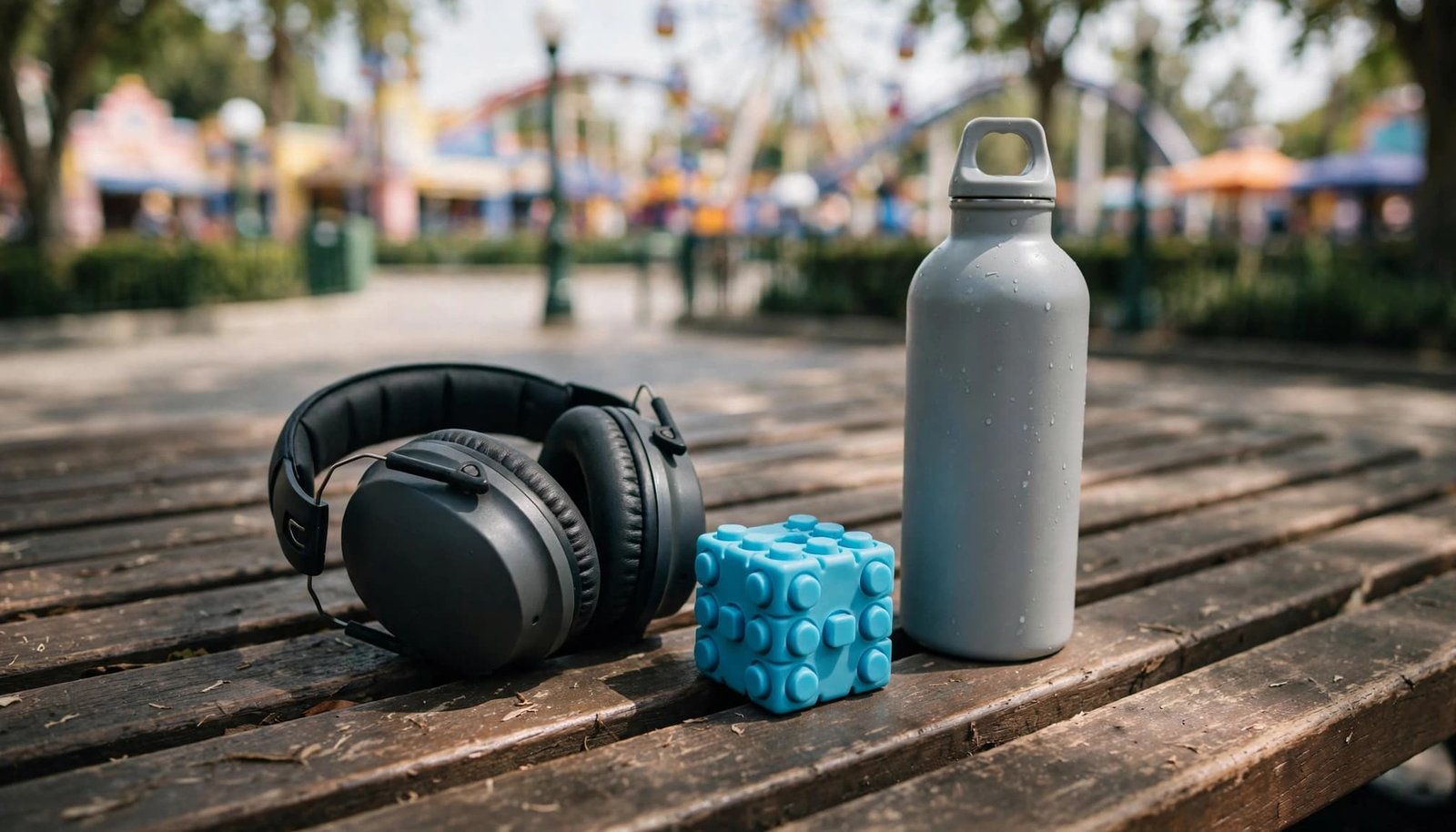
These are the three items to have ready when it’s time to pause. If your family already finds it calming, bring a familiar recording of white noise. There’s no need to turn this short packing list into a complicated project.
For your broader vacation packing needs, our Trip Rescue Shop carries travel supplies, including strollers and cleaning supplies for those times when someone gets sick on vacation.
Take a Break at the First Signs of Overload
Take the break early. Head for a quiet space when sensory overload first appears, before it builds into a meltdown. Crowds can be overstimulating, so look for shade and nearby seating or benches when practical.
The timing matters as much as the preparation. Save location information and pack your sensory kit ahead of time, so those details are taken care of when someone needs a break.
Keep the focus on a calm reset for the person who needs it. This tip is for autistic travelers and anyone feeling overstimulated during a busy park day. If it’s familiar, white noise can help someone decompress.
Planning a Disney Trip With an Autistic Child?
For families who want more Disney-specific preparation, we offer Disney World with Autism: The Complete Family Guide. Our 57-page guide is available through the Disney World autism ebook listing on Etsy and the Disney World autism guide on Amazon.
Our article on using a Disney autism guide explains how to make that preparation part of your family’s trip planning.
For a Disneyland Resort trip, map transitions between parks and areas before your visit. At Disneyland, list Fantasyland, Mickey’s Toontown, and Galaxy’s Edge. At Disney California Adventure, include Grizzly Peak, and consider Downtown Disney when planning your route.
A disability guide can help you organize route notes. Check current official Disability Access Service information before your visit, and use an official park map to check for a service animal relief station.
Frequently Asked Questions
What should I pack in a theme park sensory kit?
Pack noise-canceling headphones, a fidget toy, and a water bottle. If your family already finds it calming, bring a familiar recording of white noise.
When should we take a sensory break?
Take a break at the first signs of sensory overload, before it builds into a meltdown. Look for a quiet space, shade, or nearby seating when practical.
Where can we find a place to take a break?
Ask guest services for the baby care center’s location when you arrive, then save it on your phone. If you travel with a service animal, save the location of a nearby relief station too.
What should families check before a Disney visit?
Check current official Disability Access Service information if it may be relevant to your family’s needs. You can also map park areas and transitions before your visit and use an official park map to check for a service animal relief station.
Make an Early Pause Part of Your Park Day
The main reminder is to respond at the first signs of overload. Don’t wait for a meltdown before making room for a sensory break.
Map out stops like Galaxy’s Edge and Downtown Disney before you go, and leave time to decompress.
Save this plan for your next theme park visit. Follow Vacation Rescue for more sensory-friendly travel tips that support your whole family.
Leave a Reply