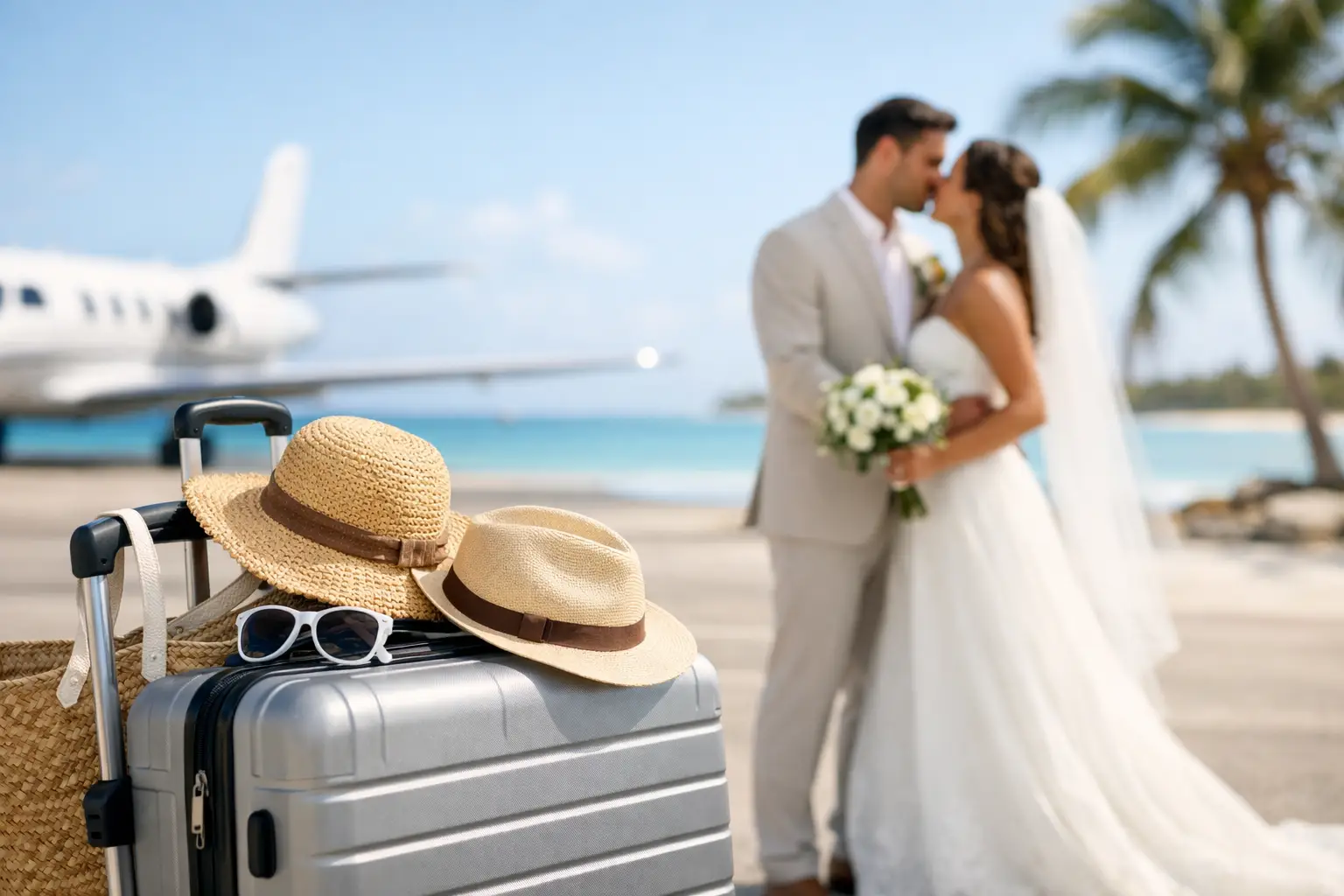
When a couple is planning a wedding in another country, the ceremony is only half the job. The other half is moving dozens of people across airports, hotel check-ins, room categories, transfer schedules, and payment deadlines without turning the celebration into a full-time logistics project. That is exactly why this case study stress free destination wedding travel matters – because most wedding stress starts long before anyone walks down the aisle.
In this real-world style example, the couple wanted a beachfront wedding in Mexico with about 42 guests coming from different US cities. They were excited about the setting, but they were already feeling the pressure. Some guests wanted nonstop flights. Some needed payment plans. A few had never traveled internationally. The couple also wanted the trip to feel special, not like they were pushing a complicated group assignment onto family and friends.
The couple’s starting point
The bride and groom had a clear vision. They wanted a tropical resort, a wedding package that felt polished but not overdone, and enough flexibility for guests with different budgets. They also wanted help with the small details that tend to get missed – passport reminders, airport transfer timing, room block management, and communication that did not depend on the couple answering the same question 20 times.
That last part mattered most. Couples often assume destination weddings are stressful because of the distance. Usually, the real problem is fragmented planning. Flights get booked separately, guests stay at different properties, deadlines are missed, and no one is sure who is handling what. A destination wedding can absolutely run smoothly, but only when the travel side is treated like a coordinated event, not an afterthought.
What made this stress-free destination wedding travel work
The first decision was to narrow the destination based on guest comfort, not just wedding photos. Mexico won for three practical reasons. Flight options from the US were strong, many resorts offered built-in wedding support, and guests could usually choose from multiple price points without losing convenience.
From there, the planning focused on structure. Instead of telling guests to “book whenever you’re ready,” the couple used a guided group process. That reduced confusion fast. Everyone received the same travel window, room options, deposit schedule, and basic travel requirements at the same time.
One point of contact changed everything
This is where many weddings either calm down or spiral. Guests do not all ask the same questions, and they do not ask them at the same time. One aunt wants to know if airport transfers are included. A college friend wants the cheapest room possible. A family with kids needs adjacent rooms. Someone else realizes their passport expires in five months.
With one travel coordinator managing those moving parts, the couple stopped acting like a call center. That freed them up to make wedding decisions instead of tracking flight confirmations and forwarding resort emails.
The room block was built around real budgets
A common mistake in destination wedding planning is choosing a resort that only works for the couple’s top-tier budget. In this case, the selected resort offered several room categories, which created breathing room for the guest list. Close family members could upgrade. Budget-conscious friends could still stay on-site. Nobody had to choose between overspending and missing the event.
That balance matters more than most couples expect. If guests feel trapped by price, attendance drops. If the property is too spread out in quality, the experience feels uneven. The sweet spot is a resort where travelers with different budgets can share the same celebration without feeling like they booked different vacations.
The planning timeline that kept everyone on track
This case study stress-free destination wedding travel plan worked because the timeline started early enough to avoid panic pricing. The couple began about 11 months before the wedding date. That gave enough room to reserve the group space, set payment deadlines, and let guests spread out their costs.
At the 10- to 11-month mark, the destination and resort were confirmed. Around 9 months out, the guest communication process began with travel details, estimated pricing, and booking instructions. By 6 months out, most guests had paid deposits and chosen room types. Around 3 months before departure, flight coordination tightened up, passport checks were revisited, and airport transfer lists were finalized.
That kind of pacing does not sound glamorous, but it protects the experience. Good travel planning gives people time to budget, ask questions, and make smart choices without last-minute pressure.
The problems that came up – and how they were handled
No destination wedding goes perfectly from start to finish. Stress-free does not mean problem-free. It means the problems are managed before they become emotional emergencies.
One guest tried to book outside the room block after seeing an online rate that looked lower. Once taxes, transfer costs, and mismatched terms were compared, the “deal” was not really better. More importantly, booking outside the group would have made coordination harder and reduced visibility for the wedding party. That guest was brought back into the managed booking process.
Another issue involved flight timing. Two guests arriving from different cities landed within 20 minutes of each other, while a third had a long delay. Because transfers had been organized with current flight details instead of rough estimates, updates were easy to communicate and no one was left guessing at the airport.
There was also a passport problem. One traveler had not realized their passport would expire too soon for international travel rules. Because reminders had been built into the communication plan, there was still enough time to renew it. Without that checkpoint, the issue might not have surfaced until it was too late.
Why communication mattered as much as booking
The strongest part of this destination wedding was not just the resort choice or the pricing strategy. It was communication that felt clear, calm, and consistent. Guests knew what to do next. They knew when payments were due. They knew who to contact. That removed a surprising amount of friction.
Couples often underestimate how much emotional energy gets burned up by repetitive travel questions. Once guests are confused, they start texting the bride, calling the groom, and comparing half-accurate information in family group chats. Clear communication shuts that down early.
For this wedding, travel updates stayed simple. Booking instructions were direct. Deadlines were repeated. Important travel reminders were sent before they became urgent. That sounds basic, but basic done well is what makes people feel taken care of.
What couples can learn from this case study
If you are planning your own wedding away from home, the big takeaway is not that you need a luxury budget or a giant guest list. The takeaway is that destination wedding travel needs the same level of planning as the event itself.
Choose a destination that works for your group, not just your Pinterest board. Give guests options within a clear structure. Start early enough that pricing and availability are still in your favor. And most of all, put one person or one team in charge of the travel details so the couple is not doing logistics management at midnight.
This is especially true for mixed guest groups. If you have older relatives, first-time international travelers, families with children, and friends coming from multiple airports, the planning needs to be practical. The best destination weddings feel easy for guests because someone worked hard behind the scenes to make them that way.
That is where a planning-first approach makes all the difference. Brands like K&S The Travel Crusaders are built around exactly this kind of support – helping couples travel with confidence while keeping the experience organized, personal, and far less overwhelming.
The real win was not just the wedding day
Yes, the ceremony was beautiful. The resort setup looked great, the guests arrived, and the events stayed on schedule. But the bigger success was that the couple actually enjoyed the months leading up to the wedding instead of spending them buried in travel admin.
That is the part people remember less often, but it matters. A destination wedding should feel exciting before you even leave home. If your planning process is thoughtful, your guests feel guided, your budget is respected, and your travel logistics are handled early, the whole experience changes.
The right trip plan does more than get everyone to the same beach. It gives you room to be present for the reason you planned the celebration in the first place.