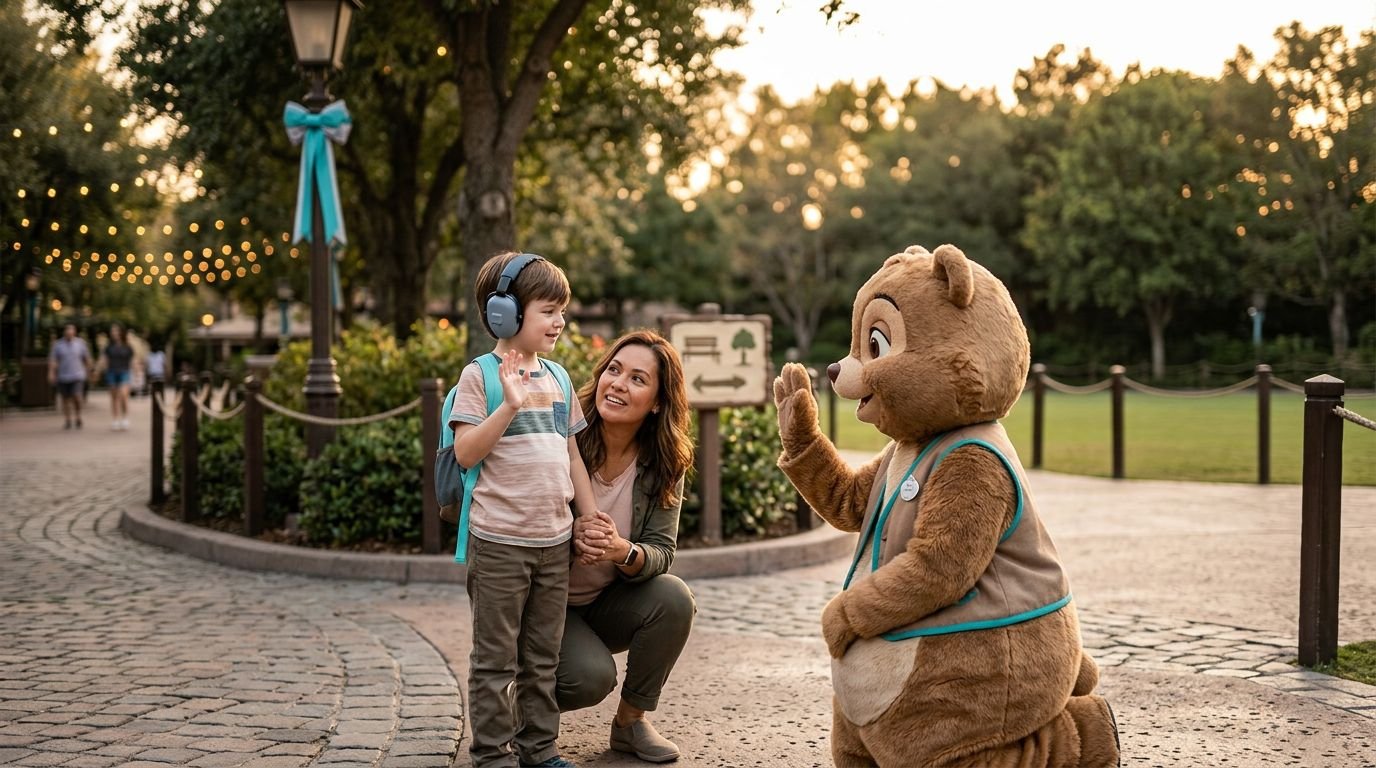
A Disney character greeting can be a dream moment, or it can feel like too much all at once. The music, the waiting, the crowd, and a large character walking close can create a lot of uncertainty for children with autism, especially when sensory issues make these environments feel overwhelming.
That does not mean your family has to skip the experience. Disney autism meet and greets can work well when you plan around your child’s comfort instead of trying to follow a perfect park schedule.
The goal is never to force a photo. The goal is to give your child a safe, positive chance to enjoy Disney in their own way.
Key Takeaways
- Character meets are optional. A wave, a quick photo, or watching from a distance can still be a successful interaction.
- Prepare your child before the trip with pictures, videos, social stories, and simple expectations.
- Disability Access Service is mainly designed for attraction queues and does not usually apply to character greeting lines.
- Let Cast Members know if your child needs space, no touching, shorter character interactions, or a quieter approach.
- Character meals can reduce line waiting, but they may still be busy, loud, and unpredictable.
Start With Your Child’s Version of a Great Character Moment
Parents often picture the classic Disney photo at Disney Parks: a big hug, a smile, an autograph book, and everyone looking at the camera. Some children love that moment. Others may want to stand nearby, wave once, or leave before the character reaches them.
All of those responses are okay.
A character greeting is not a test of whether your child did Disney right. It is one small part of a much bigger vacation. Your child may be excited about Mickey from home but feel unsure when Mickey is suddenly standing six feet away. Costumes change voices, faces, body shapes, and movement. That can be surprising, even for a child who knows the character well, which is why character interactions should always move at your child’s pace.
Before you wait in a long line, think about what your child usually enjoys:
- Do they like familiar characters on a screen but dislike close physical contact?
- Are they comfortable with photos, or do cameras add pressure?
- Can they wait better with a snack, a toy, or a simple countdown?
- Are they more comfortable when characters appear and wave from a distance, like on a balcony or a parade float, rather than a close-up meet?
- Do loud indoor spaces or tight queues cause stress?
- Would they rather watch a character parade or cavalcade from a calmer spot?
A short interaction can be a win. So can standing back while a sibling says hello.
Your child does not need to hug a character, speak to a character, or pose for a photo to have a meaningful Disney day.
It also helps to avoid surprising your child with a meet and greet. Let them know what may happen. Explain that characters can wave, clap, point, dance, or offer a hug. Tell them they can say “no thank you” at any time.
Prepare for Disney Character Meet and Greets Before You Leave Home
Preparation gives children more control and provides parents with a clearer plan. For children with autism, this pre-trip preparation is essential for managing sensory input and expectations. Start with the characters your child already knows and likes. Search for recent videos of the greeting location or look at photos in the My Disney Experience app. Focus on showing the setting, not just the happy final photo.
Use simple language. You might say, “We may wait to meet Minnie. Minnie is very tall. Minnie may wave. You can wave back, take a picture, or stand with me.”
A short social story can also help. Include the steps your child is most likely to experience:
- We walk to the character spot.
- We wait with our family.
- It is our turn.
- I can wave, smile, say hello, or stay close to my grown-up.
- When I am done, we leave.
Keep the plan flexible. Your child may feel ready at breakfast and change their mind by afternoon. Disney is full of new sounds, smells, people, and movement. That is a lot to process.
Bring familiar comfort items into the park. Noise-canceling headphones, sunglasses, a favorite fidget, a small stuffed animal, or a preferred snack can make a waiting period feel more manageable. These strategies work effectively whether you are visiting Walt Disney World, exploring Disneyland Paris, or enjoying a relaxing Disney Cruise Line voyage. A portable charger also belongs in your park bag, as your phone may hold mobile food orders, maps, park plans, and messages between family members.
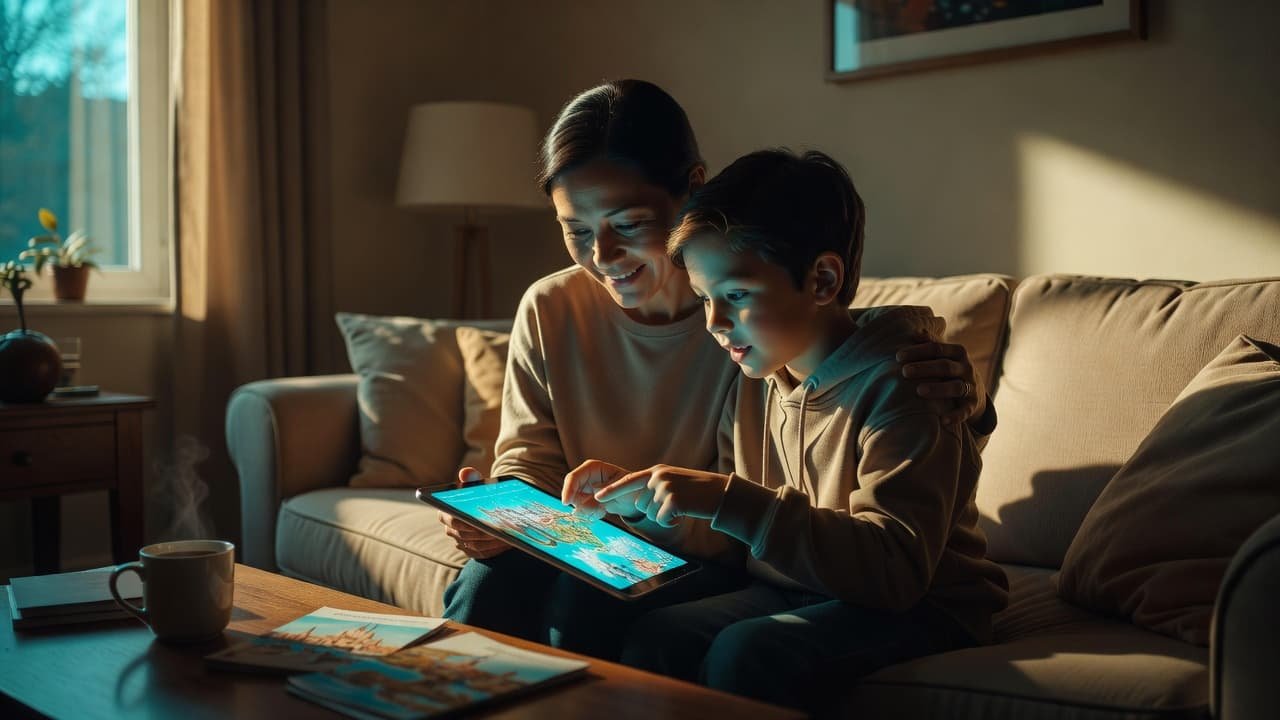
If you want more detailed support before your trip, the Download our Disney World with Autism Guide (PDF) offers practical planning ideas for families. The Download our Disney World with Autism Guide on Amazon is another helpful resource for parents who want a plan that feels organized without becoming rigid. Additionally, many families find that consulting an autism travel professional can help create personalized itineraries tailored to their specific needs.
Choose the Right Time and Location for Your Family
A character line at noon can feel very different from the same line early in the morning. Factors like heat, hunger, tired feet, and dense crowds often combine to trigger sensory overload, which can turn a manageable wait into a difficult moment.
Try to schedule character greetings when your child is usually at their best. For some families, that is soon after park opening. For others, it may be after a quiet lunch or a hotel break. Do not build the whole day around one greeting if that creates too much pressure.
When planning your trip to Disney Parks, consider that indoor character locations can be helpful because they offer air conditioning and shade. They can also feel louder or more enclosed. Outdoor greetings may have more room to step back, but weather, sun, and ambient noise can be a challenge.
When you arrive, look at the line before joining it. Ask yourself a few practical questions:
- Is there room to stand off to the side if your child needs space?
- Can another adult wait in line while your child takes a short break nearby?
- Is the wait time realistic for your child’s day so far?
- Is there an easy exit if your child decides they are done?
There is no prize for waiting through a difficult line. If your child is struggling with sensory overload, leave the area. You can try later, choose another character, or decide that today is not the day. Prioritizing your child’s comfort will always make for a better experience than forcing a photo.
Talk to Cast Members Before the Greeting
Disney staff members want your family to have a positive experience, but they cannot know exactly what your child needs unless you take the initiative to communicate. A quick, proactive conversation before you reach the front of the line can make a real difference in creating an autism-friendly experience.
You do not need to share a full medical history to get the support you need. Keep your request simple and clear. You can say, “My child is autistic and may need extra space,” or “Please no hugs, but a wave would be great.” Many families find it helpful to carry a small card with communication preferences so they can convey their needs without discussing them in front of their child.
Ask for what would help facilitate positive character interactions:
- A wave or high five instead of physical touch
- A little more personal space
- A short, low-pressure version of character interactions without an autograph
- A slower, more gradual approach if possible
- A photo with the character standing a few steps away
- A quick exit strategy if your child becomes overwhelmed
The character performer may be non-verbal, but the cast member acting as the character attendant can often help coordinate and communicate your specific request. Keep your expectations realistic, as each location has its own layout, staffing, and crowd level. A request is not a guarantee, but it gives the team a better chance to support your family effectively.
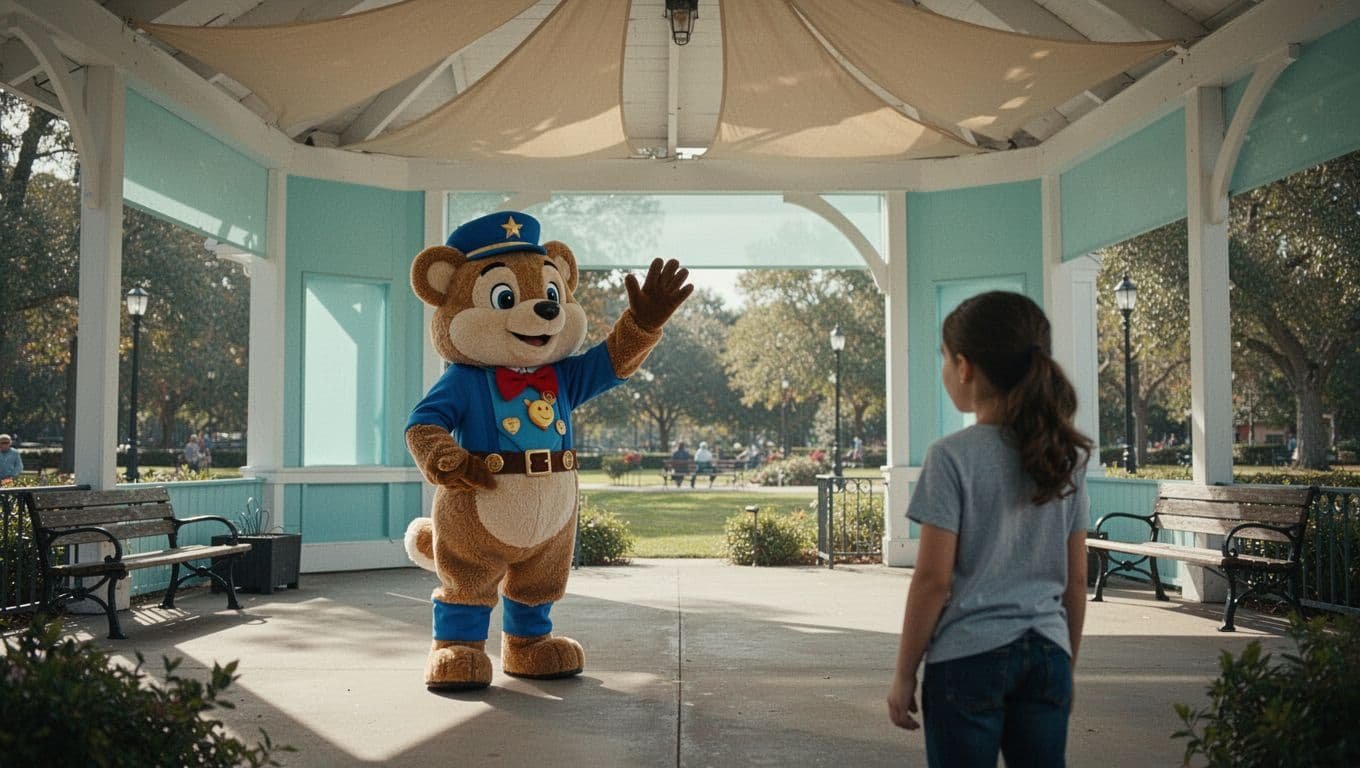
Sometimes the best plan is to let the character come into view and then simply pause. Your child can decide from there how they want to proceed. A wave from across the room may feel much safer and more comfortable than a close, direct interaction.
How DAS Works for Character Greetings
Disney’s Disability Access Service, or DAS, is designed to assist eligible guests who are unable to wait in a conventional attraction queue due to a developmental disability. If you are traveling with children with autism, you can initiate the registration process online or by speaking with Guest Services to discuss your specific needs, though approval is determined on a case by case basis.
It is important to understand that the Disability Access Service does not typically apply to character meets. While DAS provides return times for attractions, this system functions differently for character encounters. Do not plan a full character day around the assumption that you can use DAS at every greeting. If you are visiting Disneyland Paris, please note that they utilize a similar priority card system for guests with specific needs.
Before your visit, review the official information regarding the Disability Access Service and the broader accessibility services guide to understand all available accommodations. If you are traveling with a mobility device, you may also discuss the possibility of using a stroller as a wheelchair, which can sometimes allow the device to be used as a personal space in lines where permitted.
If waiting in a character line presents a challenge, speak with the Cast Member at that specific location. In some instances, families may inquire about a queue re-entry option. This allows a child and one support person to wait outside the physical line while other family members hold their place, allowing them to reconnect near the front when permitted. This is not available at every location, so always ask before making a plan.
You can also use the Disney Genie Service to monitor wait times for an attraction queue that features a character. Even if DAS does not cover these specific meets, using it for other attractions throughout the day can significantly reduce the number of long queues your child faces. This preserves their energy, making it much easier to enjoy a character greeting later in the day.
Consider Character Dining, but Keep Expectations Realistic
Character dining can be a better fit for some families because you are seated at a table instead of standing in a long greeting line. Characters come to you, and your child has a familiar home base during the interaction.
At Walt Disney World, families often consider places such as Cinderella’s Royal Table, Tusker House Restaurant, and Hollywood and Vine. These meals can offer more time and less line waiting, but they are not always calm. Restaurants may be loud, and characters may arrive unexpectedly, which can trigger sensory issues for some children. Furthermore, the meal can take longer than your child wants to sit.
Book character dining because your family wants the dining experience, not because it guarantees an easier interaction. Let your server know if timing, food needs, or sensory concerns may affect your visit. You can also tell the character attendant that your child prefers a wave from the table.
A quick-service meal, a quiet snack, or a break back at the resort may be the better choice on some days. That is not missing out. That is good planning.
Give Your Child Permission to Change Their Mind
The most helpful Disney plan has room for a different answer in the moment. Your child may be excited to meet Stitch, then decide the line is too long. They may skip a traditional princess greeting but happily watch characters appear and wave during a parade instead.
Let them change their mind without disappointment in your voice. Say, “Okay, we can try another time,” or “That was a good choice. Let’s go get a snack.”
Parents often carry a lot of pressure on a Disney vacation because tickets, hotels, and meals cost money. That pressure is understandable. Still, forcing one photo can make the next hour harder for everyone.
A calmer choice often protects the rest of the day. Take a break, find shade, or watch a show. If one person in your group needs to step away with your child to help them reset while others continue the fun, remember that Rider Switch can be a helpful tool for managing those transitions. Let your child reset completely before deciding what comes next.
Frequently Asked Questions
Do I need to book character greetings in advance?
Most character meet and greets do not require a formal reservation, but character dining experiences should be booked well in advance. For standard meet and greets, you simply join the standby line, though checking wait times on the My Disney Experience app can help you plan for lower-crowd periods.
Can my child use Disability Access Service (DAS) for character lines?
No, DAS is primarily designed for attraction queues and does not typically apply to character meet and greets. If your child struggles with the wait, consider visiting during off-peak times, such as early morning or during parade hours, to encounter shorter lines.
What should I do if my child becomes overwhelmed in line?
It is perfectly acceptable to step out of line at any time if your child feels stressed or overstimulated. Prioritize your child’s comfort by finding a quiet space, such as a nearby bench or a cooler indoor location, to help them reset before deciding whether to continue your day.
Are character interactions limited to close-up poses?
Not at all, as character interactions can be as brief or as distant as your child prefers. You are welcome to ask the attendant for a wave from a distance, a photo without physical contact, or to simply observe the character from afar to ensure your child feels safe and in control.
A Comfortable Disney Day Matters More Than a Perfect Photo
Disney Parks provide many ways to enjoy magic, but character greetings for autistic children work best when comfort comes first. Prepare at home, choose realistic times, speak with Cast Members, and let your child guide the interaction.
The photo may be wonderful. It may be a wave from ten feet away. Either way, the moment belongs to your family.
A successful Disney trip is not measured by how many characters your child meets. It is measured by how safe, supported, and happy neurodiverse families feel together.
Ready to Plan Your Calm Disney Vacation?
Let us handle the logistics so you can focus on the magic. Contact us today for expert special needs travel planning.