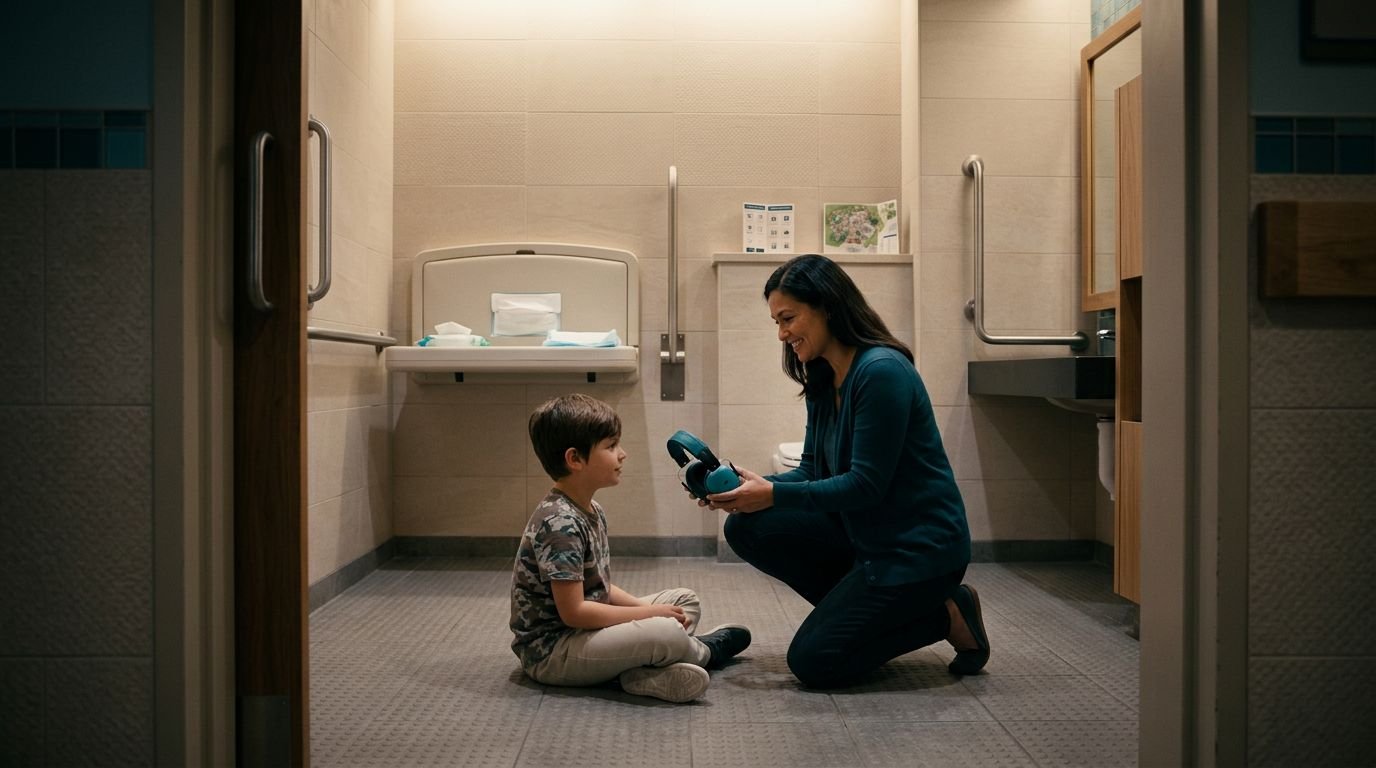
A bathroom need can become stressful fast at Walt Disney World. A loud hand dryer, an unfamiliar toilet, a crowded restroom, or a sudden accident can change the mood of the whole day.
For families managing Disney World autism toileting needs, the goal is not a perfect schedule. It is having a simple plan, knowing where to go, and giving your child or adult traveler enough privacy and time.
A little preparation can make bathroom breaks feel like a normal part of the park day instead of an emergency. This is true for families navigating sensory challenges or those currently in the midst of potty training who want to keep their routine on track.
Key Takeaways
- Look for companion bathrooms early in the day. They offer more privacy and room for a caregiver, wheelchair, stroller, or changing supplies.
- Visit restrooms before long lines, meals, shows, transportation rides, and nighttime entertainment.
- Loud flushing toilets and hand dryers can be difficult. Headphones, ear defenders, or paper towels may help.
- First Aid and Baby Care Centers can be helpful when someone needs a quieter space or more changing support.
- Keep a small toileting kit in your park bag with extra clothes so an accident does not become a reason to leave the park.
Why Disney World Bathrooms Can Feel Overwhelming
A Disney bathroom is not always a quick stop. Shared restrooms can be busy, bright, echoing, and full of unpredictable sounds. Automatic flushers can be loud, hand dryers may start without warning, and the environment often triggers sensory issues for many guests. Other guests can come in and out quickly, adding to the chaotic atmosphere.
For an autistic child or adult, those details may feel bigger than they seem to everyone else. A person who uses the toilet comfortably at home may hesitate in a Disney park bathroom. That is not stubbornness or bad behavior. It is often a response to a new environment with a lot happening at once.
The timing can also add pressure. You may be walking across EPCOT, waiting for a parade, or close to an attraction return time. Nobody wants to feel rushed when they already need a bathroom break.
Start by talking about the plan before your trip. Use direct, simple language. Let your traveler know that Disney has bathrooms throughout the parks and that you will stop when they need one. If your child is currently in the potty training phase, or simply responds well to visual preparation, a short social story can help make the routine feel familiar. These tips on toileting social stories may give you ideas for practicing potty training at home.
A bathroom break is not taking time away from the vacation. It is part of keeping the vacation comfortable.
Avoid forcing a restroom visit after every ride. That can create more anxiety. Instead, build a predictable rhythm around natural breaks in the day.
Find Private Restrooms Before You Need One
Companion bathrooms are often the most helpful option for autism and toileting needs at Disney World. These private spaces, which are also frequently referred to as family restrooms, are single-stall, lockable facilities designed to give guests more room and privacy. They can be a better fit when a caregiver needs to assist, someone uses a wheelchair, or a traveler cannot manage the sensory input of a busy shared space.
They are also useful when flushing sounds, crowded environments, or loud hand dryers are a concern. You will still hear some park noise outside, but these companion bathrooms are usually much calmer than a standard facility.
When you enter each park, take two minutes to find the closest private option in the My Disney Experience app. While many families use standard public restrooms without issue, having a private alternative can be a lifesaver during a meltdown. You do not need to memorize every location; knowing one near the entrance and one near your first major area is enough to start the day.
It also helps to make a bathroom stop before:
- Getting into a long attraction queue or waiting for a show
- Ordering a meal or sitting down for table-service dining
- Boarding a bus, Monorail, Skyliner, or boat
- Joining a crowded nighttime fireworks area
- Leaving the park for your resort
- Heading to an attraction during your Lightning Lane return window

Photo by Jan van der Wolf
You may find a regular restroom is fine at a quiet time of day. A companion bathroom may be the better choice after a parade lets out or during a busy evening. Give yourself permission to choose the option that fits the moment.
For more family-centered park support, this Disney World autism guide includes ideas for sensory needs, breaks, and using Disney accessibility options.
Make the Bathroom Routine Feel Familiar
The park day will have new foods, rides, characters, weather, and crowds. A familiar bathroom routine can give your traveler one steady point in a busy day.
Pack the items your child or adult traveler already uses at home when possible. This might include wipes, preferred pull-ups, a change of clothing, disposable bags, a folding potty seat, a travel seat cover, or a small fidget. If they use a visual schedule, place a simple bathroom symbol on the day’s plan.
Noise is often the hardest part. Bring noise-canceling headphones or ear defenders that your child has already worn at home. Put them on before entering the restroom instead of waiting for a loud hand dryer or automatic flush.
Paper towels can be a better option than electric dryers. If the auto-flush sensor is upsetting, cover it with a small post-it note or a piece of toilet paper before your child sits down, then remove it afterward. This will not work on every toilet, but it may reduce surprises.
Some families also find it helpful to use a short phrase every time: “Bathroom, wash hands, all done.” Keep the words the same. Familiar language can lower stress when everything else feels new.
Do not turn a difficult bathroom moment into a lecture. If your child refuses, give them a moment outside the restroom if it is safe to do so. Try a different nearby bathroom later. A quieter location can make a real difference for an autistic child. Maintaining this steady routine helps an autistic child feel secure, especially if you are currently navigating the challenges of potty training. Consistency is key to a successful experience during potty training, and staying patient will support their progress with potty training throughout the day.
Use First Aid and Baby Care Centers for Extra Support
Each Disney World theme park features a First Aid station that can provide significant relief during a stressful moment. These locations are excellent resources if an accident happens, your traveler needs to change clothes, or you simply require a more private setting. When you arrive at the park, make a note of where these stations are located so you do not have to search for them if you are already feeling overwhelmed. Speak with a Cast Member at the station about the space and the changing options available to you that day. First Aid is also the best place to ask for assistance if your toileting needs involve medical supplies, an adult-sized toilet, or a requirement for a longer, more private break.
The Baby Care Center is another essential resource for families navigating Disney World with neurodivergent children. Each park includes a Baby Care Center that offers air conditioning, quiet seating, and clean changing areas that can serve as a much calmer space away from the park crowds. While these centers are designed for families with infants, they are also wonderful for maintaining potty training habits while on vacation. Because these facilities often provide child-sized toilets, they can feel significantly less intimidating than the standard adult-sized toilets found in public park restrooms. If you are in the middle of potty training, having access to these familiar, quiet environments can provide the consistency your child needs to feel successful.
The space may not fit every family or every specific support need, and that is perfectly okay. The primary goal is to know these resources exist before a difficult moment arises.
If your child uses a stroller for safety, fatigue, or personal space, ask Guest Relations about a Stroller as Wheelchair tag. It is separate from Disability Access Service. It may help your family keep the stroller nearby in situations where navigating through a busy park is difficult.
Let DAS Create Space for Bathroom Needs
Disability Access Service, often called DAS, is separate from restroom access. It does not provide access to a private bathroom or allow you to skip every wait. It can, however, give eligible guests a return time for an attraction instead of remaining in a physical queue.
That flexibility is essential when toileting needs are unpredictable. Because you are not confined to a physical line, DAS makes it much easier to manage a consistent potty schedule. You can use your wait time for a bathroom break, a needed snack, a quiet calm spot, or a short walk without the pressure of losing your place in line.
The registered guest must be present and ride with the group. Use the My Disney Experience app to manage available return times, and check current Disney procedures before your trip. Rules and eligibility can change.
Keep your phone charged. It holds your DAS return times, park maps, mobile food orders, and dining reservations. Since managing your child’s needs is far more important than rushing to reach a Lightning Lane, having a portable charger in your park bag ensures you stay connected throughout the day. If you choose to prioritize a relaxed pace, you may find that you do not need to rely on a Lightning Lane to have a successful experience.
You do not need to pack every paid Disney add-on into your day. A calmer pace often works better than a packed list of reservations. One missed attraction is easier to handle than a child who is tired, overstimulated, and afraid to use the bathroom.
For more ideas on sensory support around Disney bathrooms and other busy park spaces, this sensory guide for Disney travel offers useful perspective.
Pack for Accidents Without Making It a Big Deal
Accidents happen. They can occur during travel or even if your child’s potty training seemed complete long ago. Heat, excitement, new drinks, and missed bathroom cues can all affect the day, even for children who are usually consistent with their potty training progress.
Carry a small zippered toileting kit in a backpack or stroller. Keep it easy to reach, rather than buried under ponchos and souvenirs.
Include a few practical items:
- Extra clothes, including extra underwear and socks
- Wipes, tissues, disposable bags, and hand sanitizer
- Pull-ups, pads, or other necessary potty training supplies
- A small towel or absorbent pad for a stroller or wheelchair
- A familiar snack and water, especially for long park days
Place used clothing in a sealed bag. Then move on without making the accident the main story of the day. Your calm response matters. A simple “We fixed it, and we are okay” can help your traveler reset and continue their potty training journey with confidence.
If you want more detailed Disney planning support, the Disney World With Autism Guide PDF on Etsy and the Disney autism travel guide on Amazon offer additional family-focused planning ideas.
Frequently Asked Questions
Can I use the Baby Care Centers if my child is older but still potty training?
Yes, the Baby Care Centers are available to any family needing a quieter, more private space. They provide a calm environment away from the park crowds, which can be very helpful for children who struggle with the sensory input of standard restrooms while working on their potty training.
How can I handle loud automatic flushers in park restrooms?
These sensors can often be covered with a small piece of toilet paper or a post-it note to prevent the toilet from flushing unexpectedly. If your child is sensitive to noise, bringing along ear defenders or noise-canceling headphones to wear before entering the restroom can also help reduce anxiety.
Should I continue potty training while on vacation at Disney World?
Consistency is helpful, but it is important to balance your training goals with the reality of a busy park day. If your child becomes stressed, it is perfectly fine to use familiar supplies like pull-ups to manage the day comfortably and return to your standard routine once you are back in a more predictable environment.
What should I do if an accident happens in the park?
Stay calm and remember that accidents are a normal part of the process, especially in a new environment like Disney. Carry a compact toileting kit with extra clothes and wipes so you can address the situation discreetly and then move on with your day without making it a major focus.
A Comfortable Bathroom Plan Supports the Whole Day
Disney World bathroom needs do not have to control your vacation. By identifying quiet companion bathrooms across the parks, keeping familiar pull-ups in your bag, and maintaining flexible attraction plans, you can remove much of the pressure from your visit.
Your family does not need to follow another family’s pace. If you find that a standard stall is too loud or crowded, look for a companion bathroom that provides the privacy your child requires. If you are worried about timing or sudden needs, packing extra pull-ups allows you to manage accidents discreetly. Remember that identifying the nearest companion bathrooms early in the day helps you feel prepared for any situation. Take the bathroom break when you need it, step out of the noisy area, and use those quiet spaces to reset. Let the day bend when it needs to.
The best Disney days are not always the ones with the most rides. They are the days when everyone feels safe, supported, and comfortable enough to enjoy the memories.