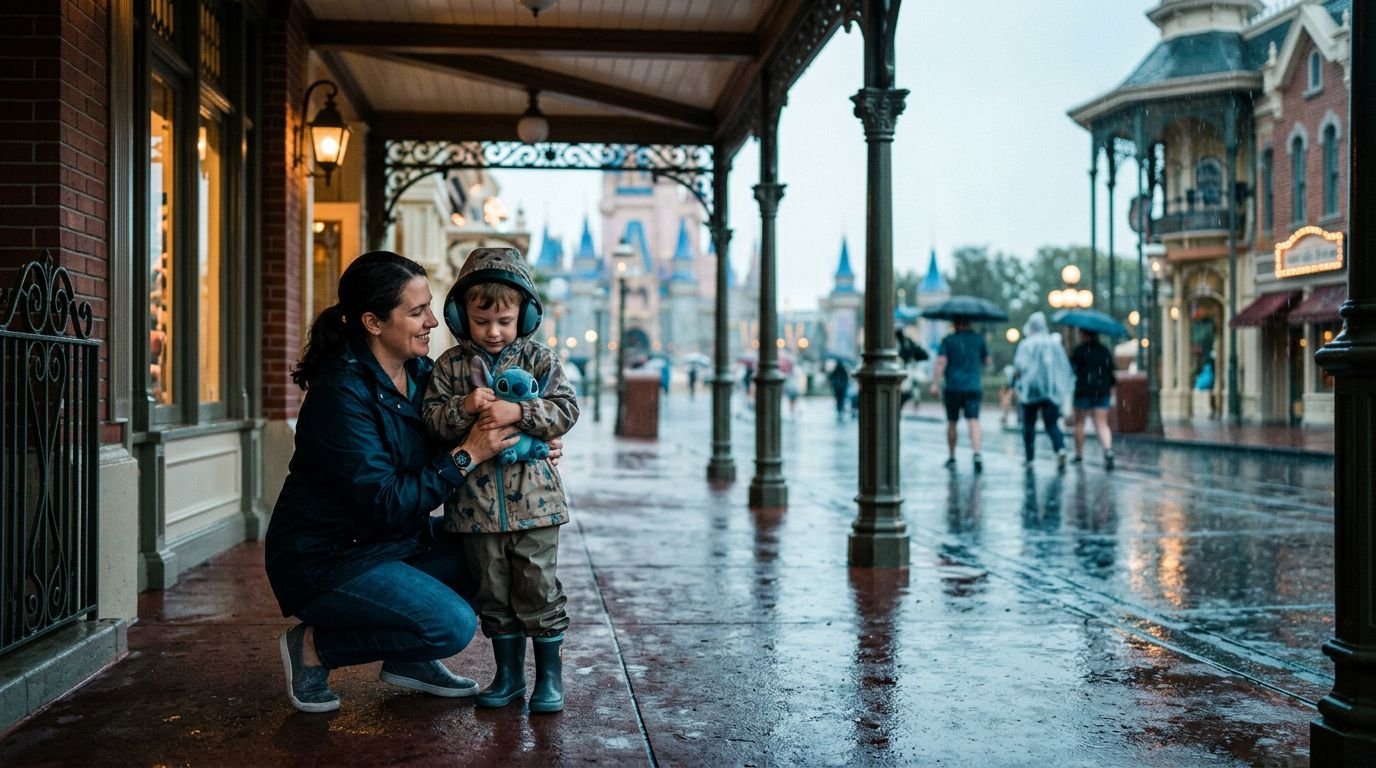
Rain at Walt Disney World can be a small inconvenience for one family and a full sensory overload moment for another. The sound on a poncho, wet socks, packed indoor walkways, thunder, and sudden ride closures can change a good park day fast.
For sensory-sensitive children, the goal is not to push through every storm. It is to have a calm backup plan before the first raindrop hits. Using specific Disney rainy day tips can help your family stay comfortable, dry, and flexible.
Key Takeaways
- Pack rain jackets or rain ponchos your child has already worn and tolerated at home.
- Use storms as a reason to slow down, eat, reset, or enjoy a familiar indoor attraction.
- Avoid crowded store entrances and covered walkways when possible.
- Keep extra socks, comfort items, medication, and a portable charger easy to reach.
- Remember that a hotel break is always an option. Leaving the park early is not a failed Disney day.
Prepare for Rain Before You Leave Your Resort
Florida rain often arrives quickly. A bright morning can turn into a heavy afternoon storm, especially during the warmer months. You do not need to panic, but you do need a simple plan.
Start with gear that feels familiar. Standard rain ponchos can be loud, sticky, and uncomfortable. Some children dislike the feeling of plastic against their arms or the sound it makes when they move. High-quality reusable ponchos may offer a softer texture, but it is still important to test them before you travel. Others hate wet shoes more than they dislike a poncho.
Try rain gear at home before your vacation. Let your child walk around in it, sit in it, and practice putting it on without help.
Lightweight rain jackets may work better than a poncho for some children. They are less noisy, stay closer to the body, and do not flap as much in the wind. Other families prefer a poncho because it covers backpacks and stroller handles.
Pack a small rain kit in a zip bag or packing cube:
- Reusable ponchos or rain jackets for each person
- Stroller covers to keep your gear dry
- Shoe covers or waterproof shoes
- Extra shoes and dry socks
- A small towel
- A change of clothes for children who cannot tolerate damp fabric
- Compact umbrellas for quick coverage
- A waterproof pouch or zip bag for phones and electronics
- A familiar comfort item, such as a fidget, hoodie, or small stuffed animal
These sensory-friendly Disney packing ideas can also help you think through the small items that make a big difference during a long park day.
Do not bury your rain kit at the bottom of the stroller. When the sky changes, you want to grab it quickly. The faster you can get everyone covered, the less stressful the transition feels.
Have a Rain Plan Before the Storm Starts
The hardest part of rain is often not the water. It is the sudden change.
Your child may have expected to ride Slinky Dog Dash, participate in outdoor character meet and greets, or watch a parade. Then thunder starts, ride closures begin, and crowds rush toward the nearest building. That is a lot to process.
Check the weather before leaving your resort. The My Disney Experience app is also helpful for watching attraction availability, mobile food orders, park maps, and family communication. Keep a portable charger with you every day.
When rain is coming, tell your child what will happen in simple terms. You might say:
“If it rains, we will put on our jackets, go inside, have a snack, and choose a dry ride.”
A visual schedule on your phone can help. Keep it short. Rain jacket. Indoor ride. Lunch. Check rides again.
Do not promise that a favorite outdoor attraction will reopen at a certain time. Lightning can keep rides closed longer than expected. Disney may also change entertainment plans or cancel parades when conditions are unsafe, though you might get lucky and catch the Rainy Day Cavalcade instead.
Instead, give your child choices they can handle. “Would you like to sit inside with headphones, or would you like to ride something indoors?” A small choice can restore some control when the day feels unpredictable.
Choose Indoor Disney Attractions With Care
Rain can bring shorter wait times at indoor rides, but an indoor ride is not always a low-sensory ride. Dark scenes, sudden sounds, flashing effects, and crowded queues can still be hard.
Build a small list of indoor rides that your child already enjoys or can preview ahead of time. At Magic Kingdom, Carousel of Progress, Mickey’s PhilharMagic, Enchanted Tiki Room, it’s a small world, and the PeopleMover are often easier places to slow down. Haunted Mansion and Space Mountain are indoors, but they may not feel calm for every child.
At Epcot, The Seas with Nemo & Friends, Living with the Land, and Spaceship Earth can give families a break from the rain. The aquarium area inside The Seas is also a useful place to move at a slower pace.
Disney’s Hollywood Studios has several indoor shows and attractions. Walt Disney Presents is a good option when your family needs time out of the weather without another intense ride experience. Mickey & Minnie’s Runaway Railway, Toy Story Mania!, and Star Tours may work well for some children, but each has its own sound and motion level.
At Animal Kingdom, Festival of the Lion King is indoors and offers seating, though the music and crowd energy can be loud. Na’vi River Journey is gentler for many families, while DINOSAUR is dark, loud, and intense.
The IBCCES sensory guide can help families think through sound, lighting, crowds, and ride movement before arriving.
You do not need to fill the storm with attractions. A quiet snack, a bathroom break, or time looking through a gift shop can be enough.
Find a Calm Place Before Everyone Is Overwhelmed
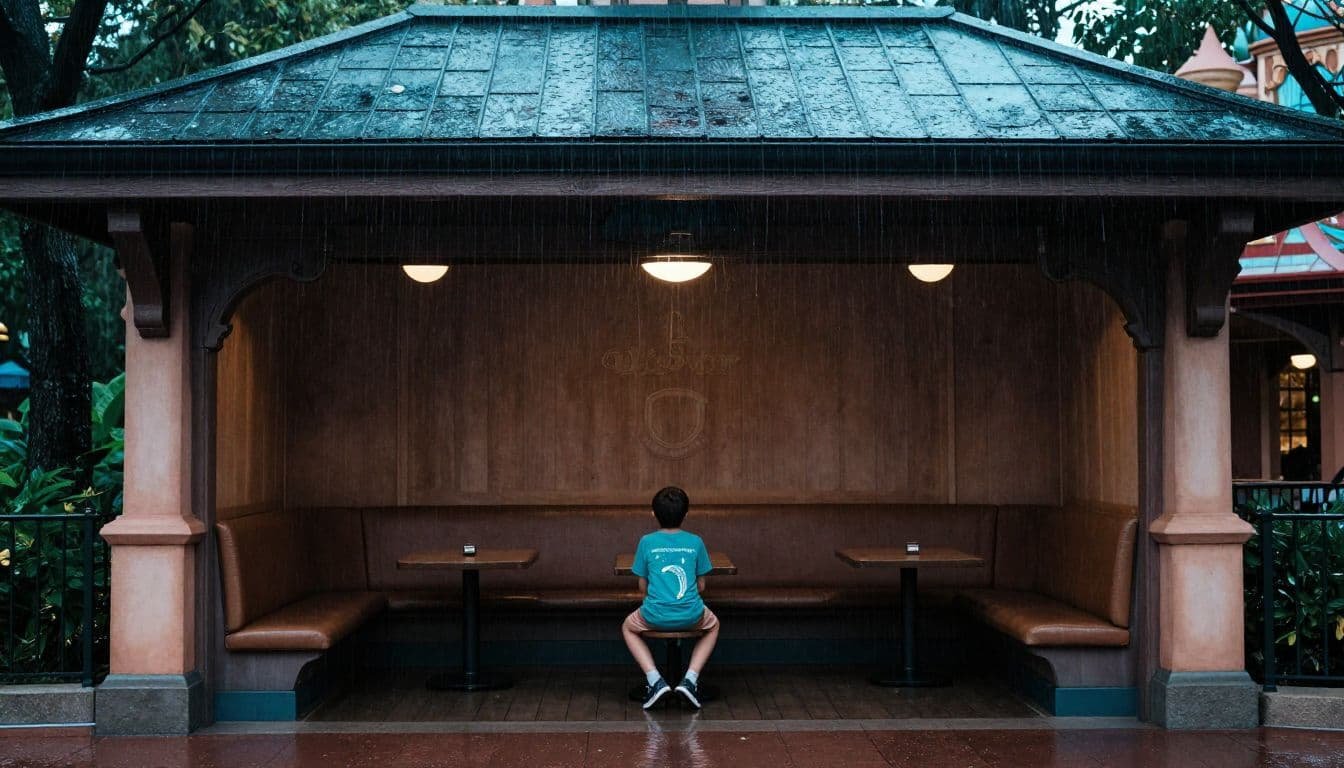
When rain begins, many guests crowd into indoor queues, shops, ride entrances, and covered walkways. Those spaces can become loud and tight very quickly. If your child is already struggling, standing shoulder-to-shoulder with wet strangers may make things worse.
Move away from the busiest entrance if you can. Look for a quieter indoor attraction, a less crowded restaurant seating area, a covered side path, or a quieter corner of a resort lobby.
Cast Members can help if you ask directly. Tell them your child needs a calmer place to wait out the storm. They may be able to point you toward the nearest option or explain what is open.
Guest Relations is also worth visiting early in your trip. Whether you are at Walt Disney World, the Disneyland Resort, or visiting California Adventure, ask about current accessibility resources, quiet break options, and any sensory items available that day. Procedures can change, so it is better to ask than rely on an old social media post.
The Disability Access Service, also called DAS, is for guests with developmental disabilities who cannot tolerate a traditional standby queue. It is not a rain pass, and it does not change transportation or weather closures. If DAS may fit your child’s needs, review Disney’s current access planning information and complete any required steps before your trip.
A rain delay is often the right moment to use a DAS return time to enjoy shorter wait times, mobile order food, or simply take a break. There is no prize for staying in the storm.
Keep Wet Clothing From Becoming the Big Problem
Wet clothes can feel unbearable for a sensory-sensitive child. Once socks are soaked or a shirt sticks to the skin, the problem may not go away until you make a change.
Bring extra socks in a sealed bag. They take almost no space and can save an afternoon. A small towel is helpful for drying off stroller covers, hands, glasses, and shoes. Some parents also pack a lightweight oversized T-shirt or soft shorts for a quick change.
Choose your footwear with rain in mind. While comfortable sneakers are standard for long walking days, they can stay wet for hours, so consider packing extra shoes. Water-friendly sandals may be easier during a rainy forecast, as long as your child already likes wearing them.
Avoid forcing rain ponchos, hoods, or wet shoe solutions that are clearly upsetting your child. Find the option that works for them. You may need to stop, sit down, change clothes, and reset before the next plan.
For more detailed support before your vacation, the Disney World With Autism Guide PDF on Etsy includes planning ideas for DAS, sensory needs, transportation, and flexible park days. The Amazon edition of the Disney autism travel guide is another helpful resource to keep on hand while you plan.
Know When a Resort Break Makes More Sense
A rainy Disney day does not have to stay a park day.
If your child is shivering, exhausted, wet, or close to a meltdown, returning to the resort can be the kindest choice. On-site Walt Disney World transportation gives families more flexibility for this. You can go back for dry clothes, a quiet room, familiar food, a nap, or pool time once the weather clears.
Off-site families can do the same thing, but allow extra time for parking, shuttles, or ride-share pickup. Do not wait until everyone is past their limit.
A full reset may take an hour. It may take the rest of the afternoon. Both are okay.
A calmer family matters more than one more attraction.
Keep your evening plans loose when rain is in the forecast. You may return for dinner, fireworks, or a few favorite rides. Or you may stay at the hotel and try again tomorrow. Disney World is big, and there will always be more to see.
Frequently Asked Questions
How can I make rain gear more comfortable for a sensory-sensitive child?
Focus on testing gear at home before your vacation to ensure your child tolerates the texture and sound. Some children prefer soft, lightweight rain jackets over standard plastic ponchos, which can feel sticky or noisy when moving.
What should I do if my child gets overwhelmed by crowds seeking shelter from the rain?
Try to move away from primary building entrances and popular shops, which tend to become loud and cramped during storms. Ask a Cast Member to direct you toward a quieter corner of the park or a less crowded indoor space where you can regroup.
Is the Disability Access Service (DAS) useful during rainy weather?
While DAS is not specifically designed as a rain pass, it can certainly help you manage wait times more flexibly during weather delays. You can use your return times to enjoy shorter waits for indoor attractions or simply use that time to find a quiet space while the rain passes.
Should we leave the park if the weather gets bad?
Leaving the park for a resort break is always a valid and often recommended choice when your child reaches their limit. A change of clothes, a nap, or some quiet downtime at the hotel can prevent a total meltdown and help everyone feel ready to try again later.
A Flexible Rain Plan Makes Disney Feel Safer
The best Disney rainy day tips are not about avoiding every drop of rain. They are about helping your child feel prepared when the day changes.
Pack familiar gear, identify a few indoor rides, and give yourselves permission to pause. A dry pair of socks, a quiet table, and a simple backup plan can turn a difficult storm into a manageable break.
A good Disney day is not measured by how long you stayed in the park. It is measured by whether your family felt supported, comfortable, and able to make happy memories together.