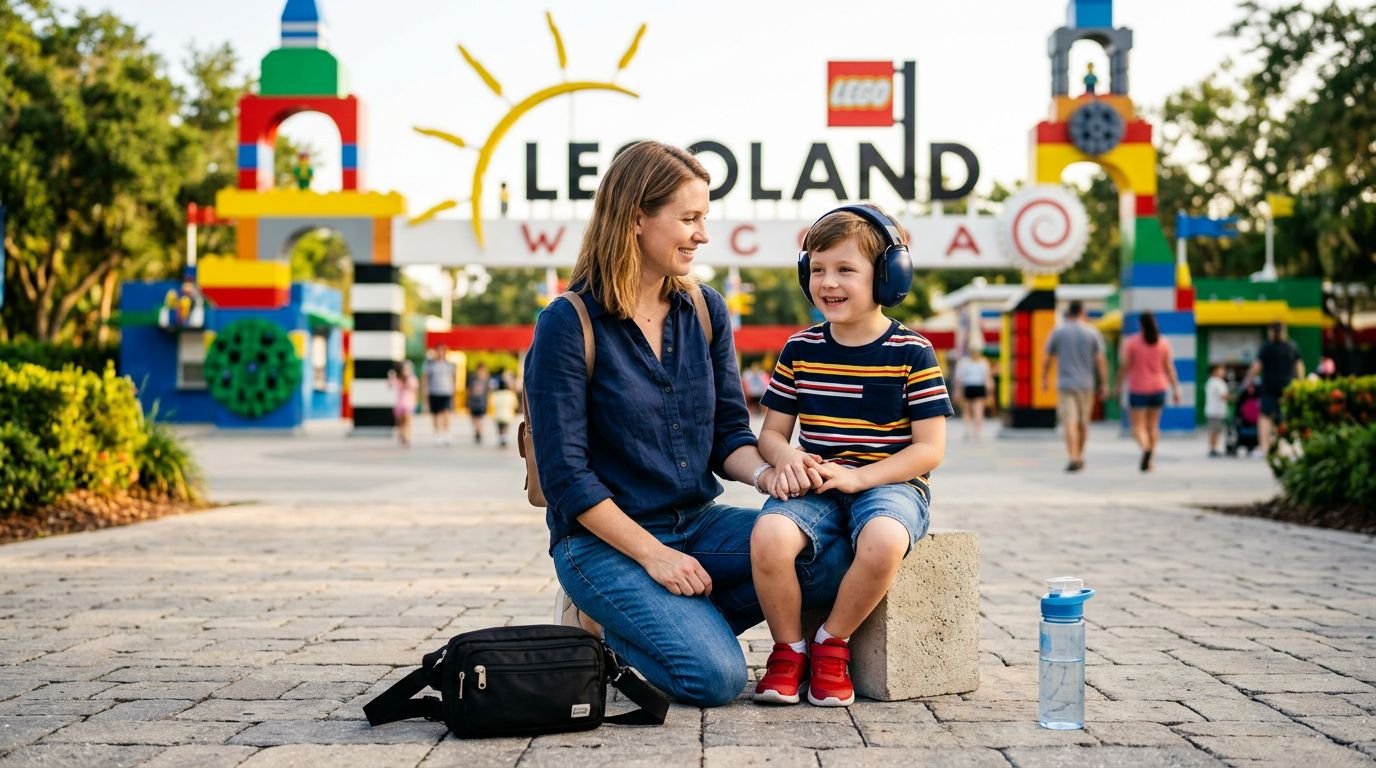
A first trip to LEGOLAND Florida can be full of big smiles, favorite characters, and proud “I did it!” moments. It can also be loud, hot, busy, and unpredictable.
This LEGOLAND Florida autism guide focuses on practical theme park accessibility and calmer planning around your child’s sensory needs, rather than an unrealistic attraction list. The goal isn’t to do everything. The goal is for your family to have an enjoyable day together.
A little preparation can make a big difference before you even walk through the gate.
Key Takeaways
- Prepare before travel day by reviewing LEGOLAND Florida’s accessibility information, attraction details, sensory guides, and quiet-space options. Keep your schedule simple and flexible, with only two or three early priorities.
- Visit Guest Services early to ask about current disability accommodations, including the Hero Access Pass, and explain the specific challenges your child experiences in standard queues.
- Pack familiar sensory supports, snacks, water, comfort items, and extra clothing. Watch for early signs of overload and take breaks before your child becomes distressed.
- Choose attractions based on your child’s sensory preferences rather than popularity. It is always okay to skip a ride, change plans, or watch an experience from a distance.
- A shorter visit can still be a successful visit. Leaving before heat, crowds, or fatigue become overwhelming may help your child remember the day positively.
Start Your LEGOLAND Florida Autism Guide Before Travel Day
LEGOLAND Florida Resort is in Winter Haven, about an hour from Orlando in normal traffic. That drive time matters. A child who has already spent hours in a car, on a plane, or in a rental-car line may need a slower start.
Don’t schedule a packed park day immediately after a late arrival if you can avoid it. Give your family time to settle into the hotel, eat familiar food, and get a good night’s sleep.
Before your trip, review the resort’s official accessibility information. LEGOLAND Florida Resort is a Certified Autism Center, and its team receives IBCCES training to better support autistic guests and families. The resort also offers resort accessibility resources, sensory guides, quiet spaces, and support for guests with disabilities.
Read through the attraction information and sensory guides with your child if that helps them feel prepared. You don’t need to make a big presentation. A few simple details can be enough:
- “There may be loud music when we walk in.”
- “Some rides move fast, but we can skip any ride you don’t like.”
- “We can take breaks whenever you need one.”
- “We are going to see LEGO buildings, rides, and maybe some characters.”
Look at the park map before you go. Point out the entrance, bathrooms, food locations, and a few rides your child may enjoy. Choose only two or three early priorities. Anything else is a bonus.
For a child who likes visual schedules, make a simple plan with pictures or short phrases. Include arrival, one ride, a snack, a quiet break, lunch, and leaving the park. Keep it flexible. A schedule should offer comfort, not pressure.
A successful LEGOLAND day may be three rides, a favorite snack, and leaving before anyone reaches their limit.
If your child is comforted by familiar videos, watching a park walk-through can help make the setting feel less unknown. This LEGOLAND autism resource video shows some of the sensory supports families may find at the resort.
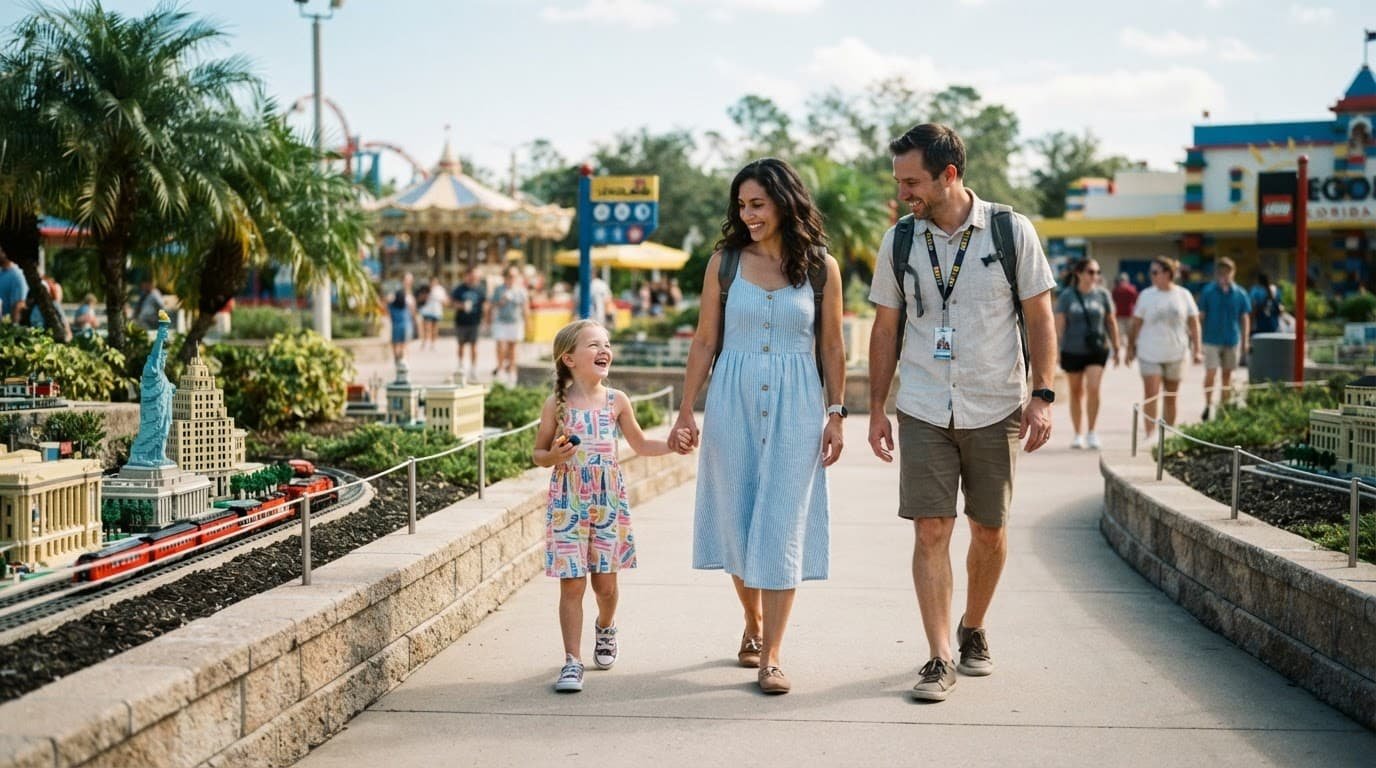
Plan a Calm Arrival, Not a Rope-Drop Race
Many families feel they need to arrive at opening and stay until closing to get their money’s worth. That can create a difficult start before the day has even begun.
If your child wakes up slowly, needs extra time to eat, or struggles with rushed transitions, give yourself a gentle morning. Arriving a little after opening may be the better choice. You can still have a full and meaningful park day.
Pack bags the night before. Put tickets, sunscreen, medications, snacks, headphones, a water bottle, and comfort items in one place. A small tech pouch is also helpful. Keep a portable charger, charging cable, and any needed devices together. It is easy to remember the tablet and forget the cord.
At security and the park entrance, use short, clear language. Let your child know what comes next. You might say, “We are waiting for our bag check, then we will walk inside.” Avoid giving ten steps at once.
Once you enter, don’t head straight into the busiest area if your child looks overwhelmed. Find a quieter spot, offer water, and let them take in the surroundings. The colors, music, crowds, and excitement can hit all at once.
Guest services should be one of your first stops if you have questions about disability accommodations or other guest assistance. Explain what makes a standard queue difficult for your child. Focus on the practical need, such as difficulty tolerating close crowds, long waits, unpredictable noise, or staying in one space for an extended time.
Ask guest services whether the Hero Access Pass, LEGOLAND’s disability pass, may be available for your visit if your child needs modified queue access. Policies can change, so ask the team about current procedures and which attractions may be a good fit.
Sensory Supports and Quiet Breaks at LEGOLAND Florida
Sensory breaks are not a sign that the day is going wrong. They are part of a good plan.
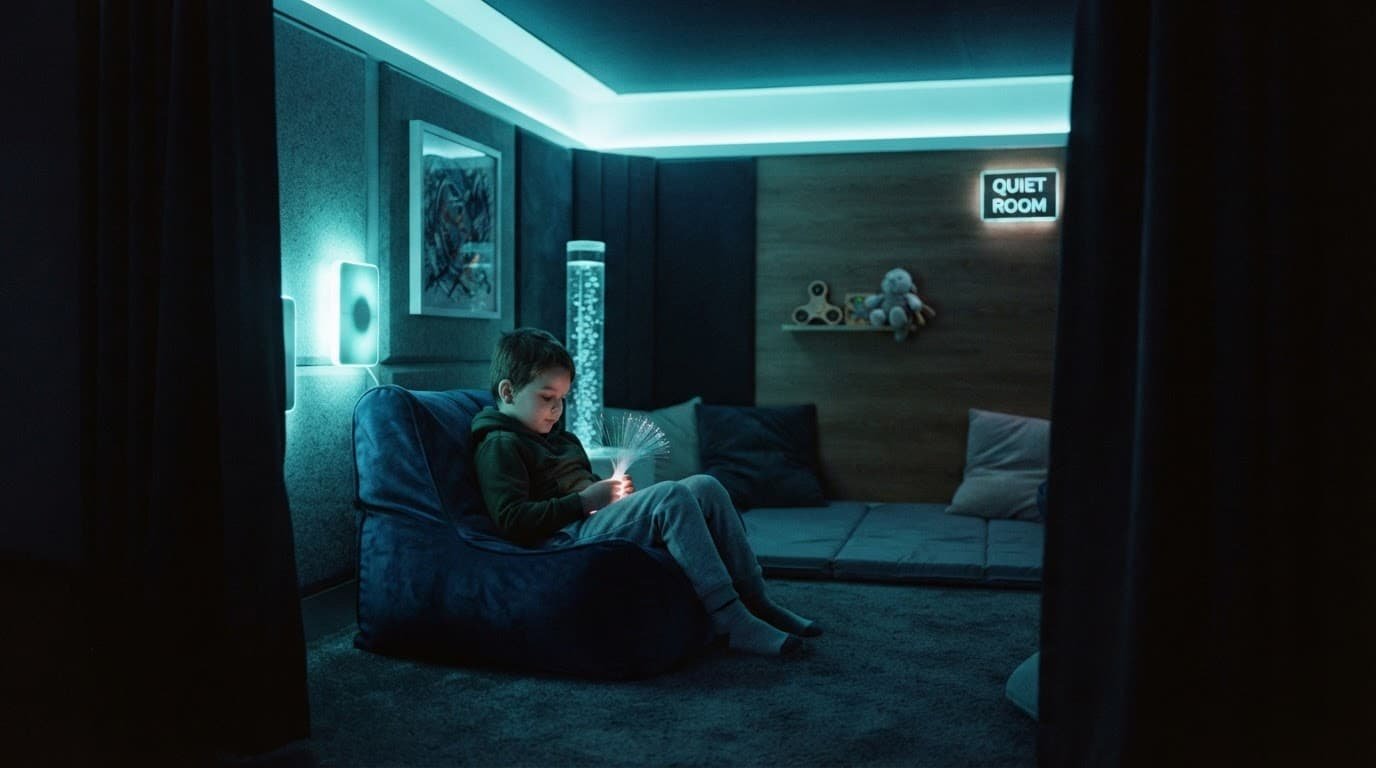
LEGOLAND Florida’s focus on autism awareness includes quiet rooms, dedicated sensory rooms, and resources such as sensory guides for guests who need a reset. The resort’s autism inclusion announcement describes these supports as part of its offerings.
Ask Guest Services where the closest quiet spaces are when you arrive. You can also check the official sensory guides and ask whether a sensory sensitivity hour is scheduled during your visit. Do not wait until your child is already distressed. Knowing where to go ahead of time gives you a simple backup plan.
A quiet room is not a place to push through the next ride. It is a place to pause. Let your child sit, use headphones, have a snack, watch a familiar video, or hold a comfort item. Sometimes 10 quiet minutes can change the rest of the day.
Bring your own sensory supports, even when a park offers them. Your child already knows what works. A park bag may include:
- Noise-reducing headphones or ear defenders for music, crowds, and ride sounds.
- A favorite fidget, chewy, weighted lap item, or small stuffed animal.
- Sunglasses or a hat for bright Florida sunshine.
- Familiar snacks, especially if your child has selective eating habits.
- A change of clothes, wipes, and a small towel for water-play areas or sudden rain.
- A printed visual schedule if phone screens are not helpful during stressful moments.
Some children love the busy energy of a theme park. Others need space between exciting experiences. Both are okay.
Pay attention to early signs that your child needs a break. They may become quiet, move faster, cover their ears, repeat questions, become frustrated over small changes, or refuse a favorite activity. A snack, a restroom break, shade, or a slow walk can help before feelings become too big.
This LEGOLAND Florida autism guide is not about avoiding every challenge. It is about making room for recovery when the environment becomes too much.
Choose Rides by Sensory Experience, Not Popularity
The most popular ride is not always the right ride for your child. A ride can have a short height requirement and still be intense because of darkness, sudden motion, loud sounds, water spray, or close character encounters.
Review the resort’s attraction details before your trip, including ride limitations and the physical and sensory demands of each experience. Think about what your child usually enjoys at playgrounds, fairs, museums, movies, or smaller amusement parks.
Some children may enjoy slow, visual attractions and hands-on LEGO play. Others may want coasters and fast rides. Let their interests lead the day.
Start with one lower-pressure attraction. Gentle areas such as DUPLO Valley can be a good place to begin, and watching the ride vehicles move before boarding may help your child understand what to expect. If that goes well, you can build from there.
For each ride, consider a few simple questions:
- Are the attraction queues indoors, outdoors, dark, or crowded, and are they ADA accessible?
- Does the ride use sudden drops, spinning, water, flashing effects, or loud music?
- Can your child see the ride before deciding?
- Is there a nearby place to sit if another family member rides?
- What is the exit like after the ride ends?
You can also ask a ride attendant about the experience before joining the line. A simple question like, “Is there darkness, loud sound, or a big drop?” can help you make a confident choice.
Don’t force a ride because you waited in line. If your child changes their mind near the entrance, it is okay to step away. That is not wasted time. You learned something important about what feels safe that day.
The same goes for character experiences. A child may love a LEGO character from a distance but dislike a close hug, a large costume, or a crowd around the photo area. Watch from farther away first. If your child wants to approach, great. If not, take a picture from a comfortable distance and move on.
Avoid crossing the park repeatedly to chase every ride. Pick one area, enjoy what is nearby, then decide whether your family has energy to move. Less walking means fewer transitions, fewer decisions, and less stress.
Use Queue Support Without Filling Every Minute
Long lines can be one of the hardest parts of a theme park day. The heat, close spaces, boredom, crowd noise, and uncertainty can add up fast.
Speak with Guest Services early about the Hero Access Pass, LEGOLAND Florida’s disability pass for guests who cannot wait comfortably in traditional attraction queues. Explain your child’s needs honestly and clearly so the team can determine what queue line assistance may be appropriate. Bring any information you feel comfortable sharing, but let the team guide you through the current process.
The Hero Access Pass may provide a return time instead of requiring your child to remain in the physical queue. When available and appropriate, the system doesn’t eliminate waiting. It allows your family to wait somewhere else, such as in the shade, a calmer area, over a snack, or while looking at LEGO displays.
Use that time with care. Don’t turn every return window into another rushed schedule. Too many timed plans can become another source of stress.
Choose one ride at a time. After you finish, pause and check in. Is your child still comfortable? Are they hungry? Do they want a break or another ride? The answer may change throughout the day.
One helpful phrase is, “We have a plan, but the plan can change.” Repeat it before the trip and during the day. It gives everyone permission to adjust without feeling disappointed.
A parent-created short LEGOLAND accessibility reel may also help you picture quiet-room and queue-support options before you arrive. Treat it as a preview, then confirm the current details directly with the resort.
Food, Heat, and Water Can Change the Whole Day
Florida heat can affect mood, appetite, sleep, and patience. A child who seems fine at breakfast may be struggling by lunchtime because they are hot, thirsty, hungry, or tired.
Offer water often, even if your child says they are not thirsty. Pack preferred snacks that travel well. Granola bars, crackers, fruit snacks, pretzels, and familiar protein options can bridge the gap when a restaurant menu is not a good fit.
Try to eat before your child is extremely hungry. Theme park meal lines get longer at standard lunch times, and a busy food area can be difficult when everyone is already tired. An early lunch or late lunch may feel calmer.
If your child has food allergies, dietary needs, or a limited safe-food list, review dining options before your visit. Ask food-service staff questions directly. Bring safe snacks when permitted, especially if familiar foods are a major part of keeping your child regulated.
Water attractions can be a great break on a hot day, but check water park accessibility details in advance so you know what to expect. Water play also brings wet clothing, louder crowds, and harder transitions when it is time to leave. Nearby amenities, such as a companion restroom for easier changes, may make the experience more manageable. Pack a towel and dry clothes if water play is part of your plan.
There is no prize for staying until fireworks or closing time. Leaving during the afternoon heat may be the right move. You can return to your hotel pool, rest in the room, or have an early dinner somewhere quieter.
Where You Stay Matters More Than Families Expect
Your hotel is not only a place to sleep. It is where your child can reset after a busy day. It is where wet clothes pile up, comfort shows play, and parents get a few quiet minutes after bedtime.
LEGOLAND Florida has three on-site hotels, including LEGOLAND Hotel, LEGOLAND Pirate Island Hotel, and LEGOLAND Beach Retreat. As part of a Certified Autism Center resort, these accommodations support overall resort accessibility and can make midday breaks easier. Staying close to the park can also reduce car transitions and parking stress.
Still, an on-site hotel is not automatically the best choice for every family. Some children sleep better in a quieter off-site hotel. Others need a suite, kitchenette, separate sleeping area, or a familiar hotel brand.
Before booking, look beyond the room rate. Check:
- The real drive or walking route to the park.
- Parking costs and resort fees.
- Whether breakfast options include familiar foods.
- Room layout, noise levels, and pool location.
- ADA accessible room features and nearby relief areas for service animals.
- Grocery stores or pharmacies nearby.
- Cancellation rules if plans need to change.
A room with a microwave and refrigerator can be a big help for families with selective eaters or medication needs. Familiar breakfasts and snacks take pressure off the morning.
If you are also planning a Disney vacation, the same slower pace can work there. Our Disney World with Autism guide on Etsy offers practical planning support for families preparing for Disney parks. You can also find the Disney autism travel guide on Amazon for an easy travel reference.
Give Yourself Permission to Leave Early
Many first-time families measure a theme park day by ride count. That is understandable. Tickets are expensive, and you want your child to have a wonderful experience.
But a child who leaves happy after four hours may remember the trip more positively than a child pushed through eight difficult hours. A shorter day can be the smart choice.
Set a realistic exit plan before you arrive. You might decide to leave after lunch, after two favorite rides, or at the first clear sign that your child is done. Before your trip, contact guest assistance to ask about policies for a caregiver ticket, accommodations, and service animals. You can always stay longer if everyone is doing well.
Take photos early in the day, before heat and tiredness build. Buy souvenirs when your child is calm, not while rushing out. If a favorite LEGO set becomes too much to carry, ask about package pickup or consider buying it later online.
The best souvenir may be a child saying, “I want to come back.”
Frequently Asked Questions
Is LEGOLAND Florida autism-friendly?
LEGOLAND Florida Resort is a Certified Autism Center, and its team receives IBCCES training to support autistic guests and families. The resort also offers sensory guides, quiet spaces, and other accessibility resources.
What is the Hero Access Pass at LEGOLAND Florida?
The Hero Access Pass is LEGOLAND’s disability pass for guests who may not be able to wait comfortably in a standard attraction queue. Availability and procedures can change, so speak with Guest Services when you arrive and explain your child’s specific needs.
Are there quiet or sensory spaces at LEGOLAND Florida?
The resort offers quiet rooms and dedicated sensory rooms where children can pause and reset. Ask Guest Services about the closest locations when you enter the park, before your child needs an urgent break.
What should I pack for an autistic child at LEGOLAND Florida?
Consider bringing noise-reducing headphones, a favorite fidget or comfort item, sunglasses or a hat, familiar snacks, water, medications, and a change of clothes. A printed visual schedule and portable charger may also be helpful for some families.
How long should an autistic child spend at LEGOLAND Florida?
There is no ideal length for every child, so plan around your child’s energy, sensory needs, and tolerance for heat and crowds. A shorter visit with a few enjoyable experiences may be more successful than staying until closing.
A Calm LEGOLAND Day Is a Successful Day
A first visit does not need to look like anyone else’s vacation. Your family may ride coasters all day, spend an hour building with LEGO bricks, take several quiet breaks, or leave after lunch. Each version can be a success.
Use this LEGOLAND Florida autism guide as a starting point, then trust what you know about your child. Keep your priorities small, pack familiar supports, use available disability accommodations, ask for help when you need it, and let your day change when it needs to.
The happiest theme park memories usually come when your child feels safe, supported, and free to enjoy the moments that matter most.