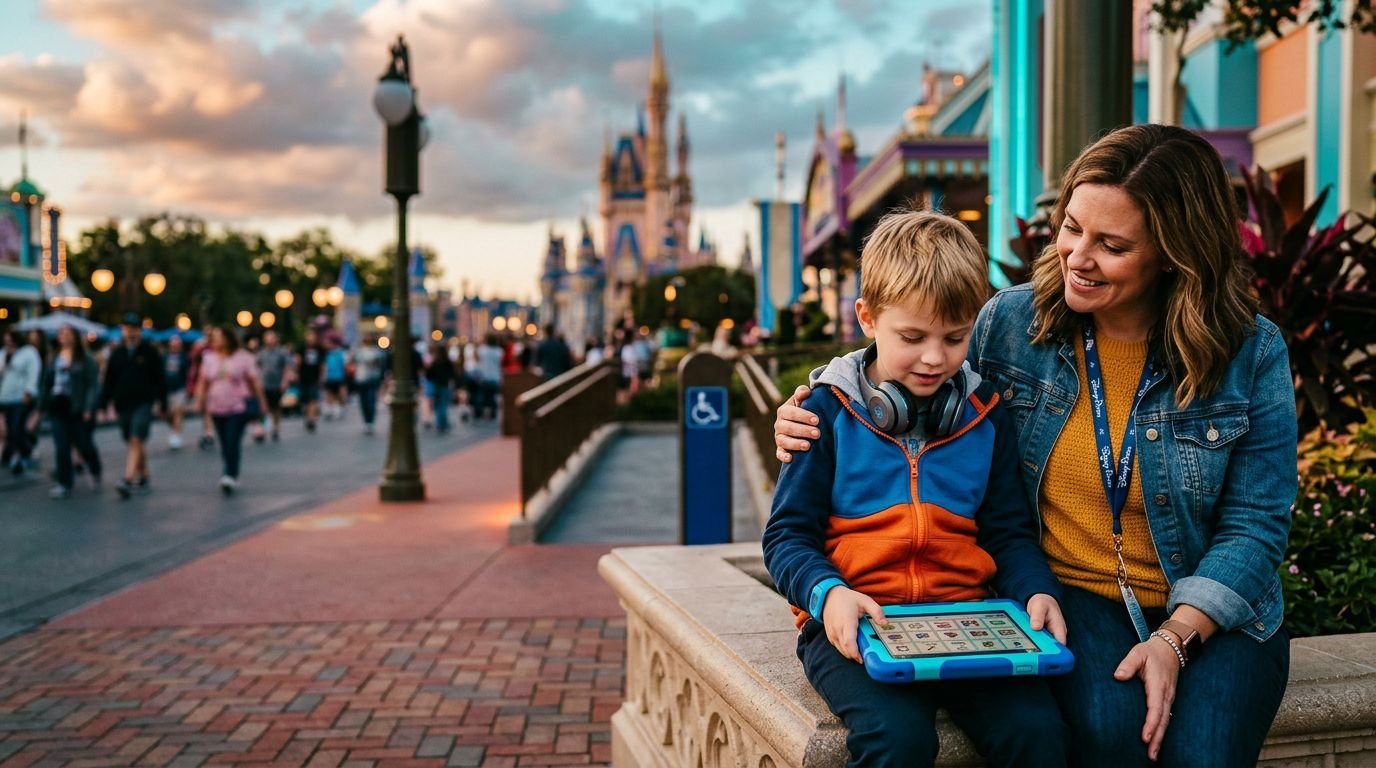
Theme parks can be full of big sounds, bright colors, long waits, and sudden changes. For autistic children who use little or no speech, those moments can feel hard without an easy way to say “no,” “break,” or “I need help.”
A thoughtful Disney World autism communication plan gives your child familiar ways to share needs before the park feels too big. It also gives caregivers a calmer way to respond when plans change.
The goal isn’t to fit every ride into one day. It’s a Disney day where your child is understood, supported, and comfortable.
Key Takeaways
- Bring your child’s familiar AAC device, picture board, or communication system, along with a charged battery, protective case, and low-tech backup.
- Use simple visual choices for breaks, food, bathroom needs, help, waiting, and changes so your child can communicate during real park moments.
- Prepare caregivers to pause, move away from crowds, offer comfort, and show two choices when your child signals “stop” or becomes overwhelmed.
- DAS can reduce time in a conventional standby queue, but it is not a front-of-the-line pass; confirm Disney’s current registration process and requirements before traveling.
- Protect energy with familiar foods, headphones, quiet breaks, resort time, and flexible plans that prioritize your child’s comfort over completing every attraction.
Start With Your Child’s Usual Communication System
Bring the tools your child already knows. Disney World isn’t the place to introduce a new AAC app, picture system, or set of expectations, especially if sensory processing disorder affects your child’s regulation. Families who already use a Sunflower Lanyard can pack it as a familiar invisible-disability identifier, but it doesn’t replace AAC, a picture board, or directly explaining your child’s needs to staff.
If your child uses an AAC device, charge it fully the night before. Turn on offline access if available. Keep it in a protective case with a shoulder strap, lanyard, or stroller pouch. Pack a low-tech backup, too. A printed communication board can still help if the device battery dies, Wi-Fi is spotty, or the device becomes too much to hold.
Focus on communication that helps during real park moments. Your child may not need a full Disney vocabulary board. They may need quick access to choices and needs such as:
- “Break,” “bathroom,” “all done,” “wait,” “help,” and “quiet.”
- Food, water, headphones, stroller, and favorite comfort items.
- Yes and no choices, especially when speech is hard.
- Photos of your resort, familiar snacks, favorite attractions, and the adults in your travel party.
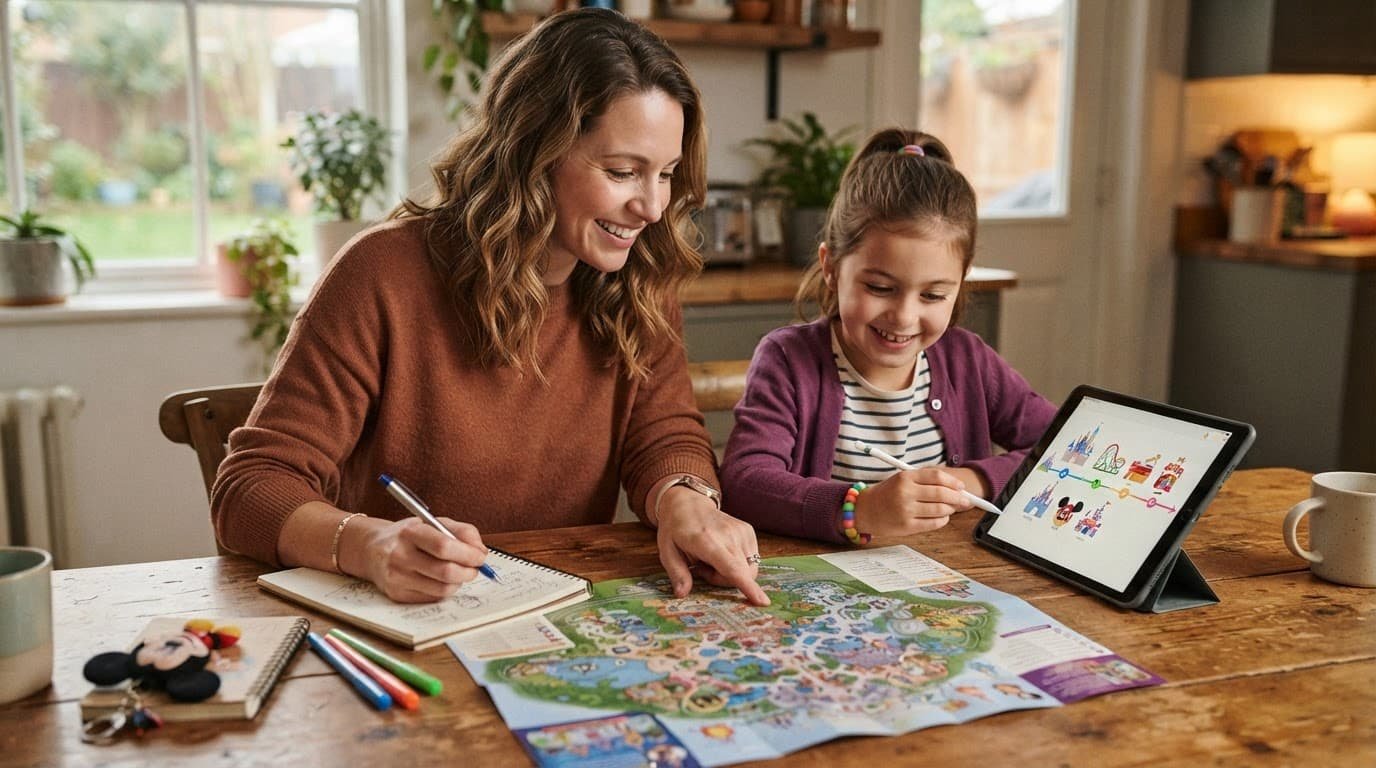
A simple visual schedule also gives the day a clear shape. Use photos or picture icons to show the next few steps, not every hour of the day. For example: breakfast, bus, one ride, snack, quiet break, then decide what comes next.
A visual schedule is not a promise that every ride will happen. It is a way to show what is happening now and what comes next if the plan changes.
Build a Communication-Ready Disney Park Bag
Your communication supports should be easy to reach in busy theme parks, not buried under ponchos and snacks. Keep devices, headphones, charging cords, and a low-tech backup in one small pouch. Families often remember the tablet and forget the cable.
A portable battery is a park-bag essential. Your phone may hold tickets, mobile food orders, park maps, messages between adults, and scheduled attraction information in the My Disney Experience app.
This simple plan can reduce stress when words are hard to find:
| Park moment | Communication support to prepare |
|---|---|
| A line feels too long | Show “wait,” “break,” and “all done” choices. |
| Your child needs food | Keep photos of familiar snacks and preferred quick-service meals. |
| A ride changes or closes | Use a “change” card, then offer two clear next choices. |
| Someone needs help | Give caregivers a short card to show Cast Members instead of explaining a full medical history. It can say your child uses AAC, gestures, sign language, or pictures. |
| It is time to leave | Show a photo of the bus, car, resort room, or favorite after-park activity. |
Practice these supports at home before the trip. Test them during a grocery trip, a restaurant visit, or a walk around the neighborhood. Familiar patterns feel safer when the Disney day gets loud or busy.
For extra planning support, keep a copy of the Disney World With Autism Guide PDF on Etsy or the Disney World With Autism guide on Amazon with your trip materials. A printed family guide can be easier to review during a quiet moment than searching online in the middle of a crowded walkway.
Use Disability Access Service With Clear Expectations
Disney’s Disability Access Service is for guests who can’t tolerate a conventional standby queue because of a developmental disability or similar need. It isn’t a front-of-the-line pass.
When DAS is approved, your family requests an attraction return time through the My Disney Experience app. You wait outside the standby line, then return when it is time to ride. That waiting period might include sitting in shade, having a snack, using a familiar communication tool, or taking a bathroom break.
Disney currently handles DAS registration through video chat, but procedures can change. Before your trip, verify the registration method, timing window, party limits, and app process through Disney’s official page or guest services information. The guest requesting DAS must be present during the video chat. For a child, a parent or guardian joins the conversation.
You don’t need a doctor note for the registration interview. Prepare practical examples of what happens in a conventional queue, such as difficulty with close crowds, unpredictable waits, sensory overload, or leaving safely. Cast Members can direct you to the correct process, but they can’t change eligibility rules.
DAS is generally set up for the registered guest plus up to three additional guests, and that guest must be present and ride with the party. Disney may consider an exception for larger immediate families. Rider Switch is a separate option when one guest can’t ride, and it doesn’t replace DAS.
Once you’re in the park, you can usually hold one active DAS return time at a time. After you redeem it, request another. Your communication plan should show your child that waiting still happens, but the waiting happens somewhere more comfortable.
Give Your Child a Way to Say “Stop” in the Moment
Non-speaking does not mean non-communicating. Your child may use facial expressions, movement, gestures, signs, behavior, pictures, or AAC to tell you they are done. Decide before the trip what each signal means and how adults should respond.
For some children, pushing a device away means “no.” For others, it means the device is too loud, too hot, or too hard to use right then. Watch the whole situation before assuming.
Teach the adults in your group a short response plan. Keep it simple: pause, move away from the crowd, offer water or a comfort item, then show two choices. Too many questions can make a hard moment harder.

Cast Members can help when they understand the need; you do not need to share your child’s complete medical history. You can say, “My child communicates with pictures and needs a quieter place for a few minutes.” A Sunflower Lanyard may be a familiar identifier for a child who already uses one. It doesn’t replace directly explaining the communication method or support need.
Disney provides resources for neurodivergent guests that can help you prepare for attraction experiences, services, cognitive accessibility, and additional needs. First Aid locations can also offer a calmer place to reset during an urgent moment, although they are not dedicated quiet rooms.
For a true decompression break, look for quiet spaces and break areas. These might include shaded tables or low-traffic walkways. Indoor resort spaces and areas away from parade routes may also help, depending on where you are standing. Ask nearby staff for the closest calmer option.
If your child uses a stroller for mobility, regulation, or safety, ask Guest Relations about the official stroller as wheelchair tag. This tells staff the stroller is being used as a mobility device and may need to stay with your child in attraction queues and other areas where strollers are normally parked.
Protect Energy With Food, Sound, and Fewer Timed Plans
Bring familiar snacks and foods that fit your child’s usual dietary routines. Disney allows guests to bring outside food and nonalcoholic drinks that do not need heating or refrigeration, subject to current park rules. In theme parks, preferred foods can take pressure off when a child is too overwhelmed to try a new meal.
Mobile ordering can help, too. You can look at menus and place an order from a quieter place rather than standing in another line. If a restaurant seating area is too loud, look for outdoor seating or take food back to your resort when that fits the day.
Fireworks, nighttime shows, and loud ride effects are optional. Noise canceling headphones or ear defenders can help, but use the pair your child already tolerates. Consider leaving before the crowd gathers, watching from a greater distance, or skipping the show completely.
A virtual queue, Lightning Lane Multi Pass, and DAS are separate tools, and Lightning Lane Multi Pass costs extra. Scheduled options can add another clock to watch. A slower day is often the better choice when changing plans causes distress.
Check Disney’s broader accessibility services information before travel. Procedures, attraction access, and app features can change, so it is smart to review the current details close to your trip.
Let the Disney Day Stay Flexible
For a theme park vacation, pick one or two priorities for each park, then leave the rest open. At Magic Kingdom, that may be a favorite Fantasyland ride, a character stop, and a familiar snack. At Epcot, it may be one attraction, a familiar snack, and a quiet walk before heading back to the resort.
Do not treat a hotel break as wasted ticket time. A midday swim, time in the room, or an early dinner can help everyone return with more energy tomorrow. Rest days are part of the plan, not a backup plan.
A successful communication plan gives your child a reliable way to say what they need. It also gives your family permission to slow down, change course, and leave a crowded moment without guilt.
Frequently Asked Questions
What communication tools should I bring to Disney World?
Bring the AAC device, picture board, signs, or other system your child already uses. Pack a charger, portable battery, protective case, and low-tech backup in an easy-to-reach pouch.
Can Disability Access Service help an autistic child who uses little or no speech?
DAS may help guests who cannot tolerate a conventional standby queue because of a developmental disability or similar need. It is not a front-of-the-line pass, and you should verify Disney’s current registration process, eligibility details, and party limits before your trip.
How can I help my child communicate during sensory overload?
Teach every caregiver what your child’s signals for “stop,” “break,” “help,” and “all done” look like. When a hard moment starts, pause, move away from the crowd, offer water or a comfort item, and show two clear choices.
Can I use a stroller as a wheelchair at Disney World?
If your child uses a stroller for mobility, regulation, or safety, ask Guest Relations about the official stroller-as-wheelchair tag. The tag tells Cast Members that the stroller is being used as a mobility device and may need to stay with your child in certain queues and areas.
A Disney Trip Where Your Child Is Heard
The best Disney days aren’t always the busiest ones. They’re the days when your child has familiar communication, time for real breaks, and adults who respond to their signals.
Bring the AAC device, picture board, headphones, charger, and snacks. Most of all, bring a flexible plan. Being understood matters more than completing every attraction.