A Disney trip can hold Disney magic while still feeling like a huge question mark. A Disney autism vacation doesn’t need a packed itinerary to feel special. It needs a plan that protects the routines, comforts, and recovery time your family relies on.
With a split stay, you use two hotels during one Disney World trip. For neurodivergent families, it can provide a calmer start, a better location for later park days, and a reset without doing everything at once. Start by deciding if a hotel change will lower stress or add it.
Key Takeaways
- A split stay can support a Disney autism vacation when it solves a specific need, such as a quiet arrival, easier park access, or a planned reset. Keep it to one hotel move and schedule that move on a mostly open day.
- Build the trip around your family’s routines, sensory needs, favorite foods, sleep patterns, and recovery time instead of trying to complete every attraction.
- Compare resorts by room layout, food access, transportation, walking distances, and noise levels. One resort can provide recovery time while the second offers more convenient access to your priority parks.
- Review Disney’s current Disability Access Service guidance before arrival, and explain the functional challenges your traveler faces in a traditional queue during the registration process.
- Plan for heat, crowds, and changing energy levels with one park per day, flexible breaks, familiar comfort items, communication supports, and a charged phone.
Decide if a split stay will help your family
Changing resorts is not automatically a better Disney vacation. It adds packing, luggage handling, a new room, a different food court, and another transportation routine. For some autistic travelers, that change can feel like too much.
For other families, one planned move is helpful. You may want protected quiet time after travel or on arrival day, followed by a hotel that keeps you close to your highest-priority park. You may also prefer to start with resort time and add park days after everyone has settled in.
A split stay works best when it solves a real problem. Don’t add it only because two resorts look fun online.
An experienced travel advisor can help compare resort layouts, transportation, and transition demands when you’re unsure.
Use this quick check before booking.
| A split stay may help when… | It may add stress when… |
|---|---|
| Your family needs one quiet arrival day before park days. | Your child struggles with hotel-room changes or unfamiliar sleep spaces. |
| You want easier access to different parks during separate parts of the trip. | Your trip is four nights or less and the move would take up too much time. |
| You can plan the move on a non-park day. | Everyone will feel pressure to pack early and rush into another park. |
Keep it to one hotel move. Three resorts in one vacation may look exciting, but it creates more transitions, more check-ins, and more chances for plans to fall apart.
A good split might look like two relaxed nights at the first resort, followed by four or five nights near the parks you plan to visit most. Leave the move day mostly open. A pool visit, grocery restock, familiar lunch, or a calm afternoon indoors is enough.
Build your split-stay Disney autism vacation around routine
Before you choose a hotel or ticket, write down what helps your traveler feel regulated at home and when traveling. This can be as simple as favorite breakfast foods, a preferred bedtime routine, a comfort item, or time alone after busy activities.
Start with three questions:
- What are the one or two things each person truly wants to do?
- What situations usually lead to sensory overload, anxiety, shutdowns, or meltdowns?
- What helps your family recover when the day becomes too much?
Your answers should guide every booking decision. If your autistic child needs a slow morning, don’t book an early breakfast across property. If a familiar meal helps after a busy day, choose a room with a kitchenette or stay near a reliable food court.
A vacation plan doesn’t need to include every ride. It needs to include the rides, meals, and moments that fit your family.
Use a visual schedule before the trip. Keep it simple: wake up, breakfast, bus or car ride, one park area, lunch, break, and then one next choice. Avoid showing a full day of attractions if your child becomes distressed when plans change.
Full YouTube ride thrus can help too. Watch them together before your trip, including the queue, loading area, darkness, loud sounds, drops, and exit. A short clip may not show the parts that are hard. Let your child decide if a ride is a “yes,” “maybe,” or “no thank you.”
Pack a small move-day bag with medication, pajamas, comfort items, snacks, chargers, and clothes for that evening. Disney may move your luggage between resorts when available, but ask your resort about timing before depending on it. Your new room may not be ready right away.
Choose resorts that make breaks easier
A Disney resort can make midday breaks easier, especially when you are close to the park you plan to visit. It can also reduce the stress of driving, parking, and navigating an unfamiliar area after a long day.
That said, the best resort isn’t always the closest or most expensive. When comparing a Disney hotel, consider room layout, food access, transportation, and walking distances. Also think about noise levels and how easily you can return after a hard morning.

Disney’s Animal Kingdom Lodge can be a good choice for a family that enjoys animals, quiet viewing areas, and slower resort time. Seeing animals from the resort can provide a meaningful activity without another ticketed event. Keep in mind that this resort relies on bus transportation, so it may not be the easiest choice for quick park returns.
Disney’s Port Orleans Resort, French Quarter is often a comfortable moderate-resort option because of its smaller footprint. Shorter walks to the food court, lobby, pool, and bus stop can make a difference when everyone is tired.
Disney’s Art of Animation Resort may work well for larger families who need more space. Family Suites include extra sleeping areas, two bathrooms, and a kitchenette. The Skyliner is helpful for some guests, but prepare your child for possible transfers at Disney’s Caribbean Beach Resort. A transfer can feel like an unexpected extra line after they think the ride is over.
Pick one resort for recovery and one for convenience, if that matches your trip. A quieter first stay and a more park-connected second stay can be a comfortable balance.
Understand the DAS pass and other disability services before you arrive
Disney’s Disability Access Service, often called the DAS pass, is designed for Guests whose developmental disability, including autism, makes waiting in a conventional queue difficult for an extended time. DAS is one of Disney’s disability services, and approval is not automatic based on a diagnosis.
Read Disney’s current Disability Access Service guidance before your trip. Rules can change, so don’t rely on an old social media post or a friend’s experience from years ago.
DAS pass registration at Disney World is handled through a live video chat process. The guest requesting DAS needs to be present, and a parent or guardian should join for a minor. Disney focuses on the functional challenge of standing in a traditional line. Explain what happens during long wait times, crowds, confined spaces, noise, or unpredictable queue movement.
You don’t need to share more personal information than needed. Focus on what support your child or autistic adult traveler needs.
If approved, the DAS pass allows the registered guest and a limited party to request an attraction return time in the My Disney Experience app. Your family waits somewhere else instead of staying in the physical line. When the return time arrives, you enter through the Lightning Lane entrance. You can generally hold one DAS return time at a time.
A DAS return time lets your family wait elsewhere. It does not remove security screening, guarantee immediate ride access, or prevent a ride from closing.
The registered guest must be present and ride with the group. Disney currently allows the DAS guest plus up to three other people, although immediate-family situations may be reviewed individually. DAS is usually valid for the length of the ticket or up to one year, whichever comes first.
A plain-language DAS eligibility overview can also help families understand why the conversation focuses on queue tolerance, not simply a diagnosis or a mobility need.
If your child cannot safely or comfortably leave a stroller in crowded spaces, ask Guest Relations about stroller tags. Cast members can explain the current process and attraction access options. Ask early in the trip, not during a difficult moment outside a ride.
Pace park days for heat, crowds, and sensory overload
A successful day at Disney theme parks isn’t measured by how many rides you complete. It’s measured by whether your family can enjoy the day without feeling pushed past their limits.
Florida heat, bright sun, park crowds, music, ride announcements, security areas, and long walks can add up fast. Start early if mornings are easier for your family. Plan one area of the park at a time, then take a real break before everyone is exhausted.

At Magic Kingdom, a morning in Fantasyland is often easier than racing between Fantasyland, Tomorrowland, and Frontierland. Check posted wait times, but don’t treat them as a quota. At EPCOT, Remy’s Ratatouille Adventure, Frozen Ever After, and Soarin’ Around the World are spread far apart. Walking back and forth across the park can take more energy than families expect.
Build your day around this rhythm:
- Choose one or two priority attractions for the morning.
- Stop for a snack, bathroom break, or indoor rest before everyone is hungry.
- If you’re using a DAS pass, treat return windows as flexible planning information, not another reason to rush.
- Return to the resort during the hottest and busiest part of the day if that helps your family.
- Decide later whether you want to go back to the park, visit the pool, or stay in.
Indoor spaces can offer a sensory friendly reset without requiring a full hotel break. The Land pavilion at EPCOT has seating and air conditioning. Walt Disney Presents at Hollywood Studios offers indoor exhibits and a calmer pace than Toy Story Land or Star Wars: Galaxy’s Edge.
Keep cooling towels, water, sunglasses, a hat, and an extra shirt in your park bag. Wet clothes, sweaty socks, and a dead phone battery can turn a manageable moment into a hard one.
If meltdowns start, reduce the number of words. Move to a quieter place when possible. Offer familiar choices, such as headphones, water, a snack, a favorite video, or “all done for now.” Leaving early is always a valid choice.
Choose tickets and paid add-ons with care
A one-park-per-day ticket is often the better fit for neurodivergent families. Park Hopper tickets sound flexible, but they also bring more transportation, more security lines, more walking, and more decisions.
Lightning Lane Multi Pass is separate from the DAS pass and costs extra. Older advice may call a similar paid option “genie plus,” but the current product name is Lightning Lane Multi Pass. It can be helpful if your family has a few must-do attractions and can manage scheduled return windows. It can also create another clock to watch.
Consider Multi Pass only for the parks where it reduces stress. EPCOT may be a good choice if Remy’s Ratatouille Adventure, Frozen Ever After, or Soarin’ are high priorities. Check the My Disney Experience app before buying because prices, attractions, and return times can change.
Lightning Lane Single Pass and virtual queues are also separate options. A virtual queue may help with a limited attraction, but it still requires phone access and a return-time plan. Don’t buy every add-on because Disney magic doesn’t depend on purchasing every option.
An experienced travel advisor can help compare paid add-ons with your family’s actual priorities. This trip is worth the financial and emotional investment when it fits your family. That may mean fewer park days, extra rest days, grocery delivery, quick-service meals, or one special character meal instead of several expensive reservations.
Mobile food ordering can also take pressure off. You can review menus in a quieter spot, check familiar foods and dietary restrictions, and choose a pickup time when your child is ready to eat.
Pack for communication, comfort, and a charged phone
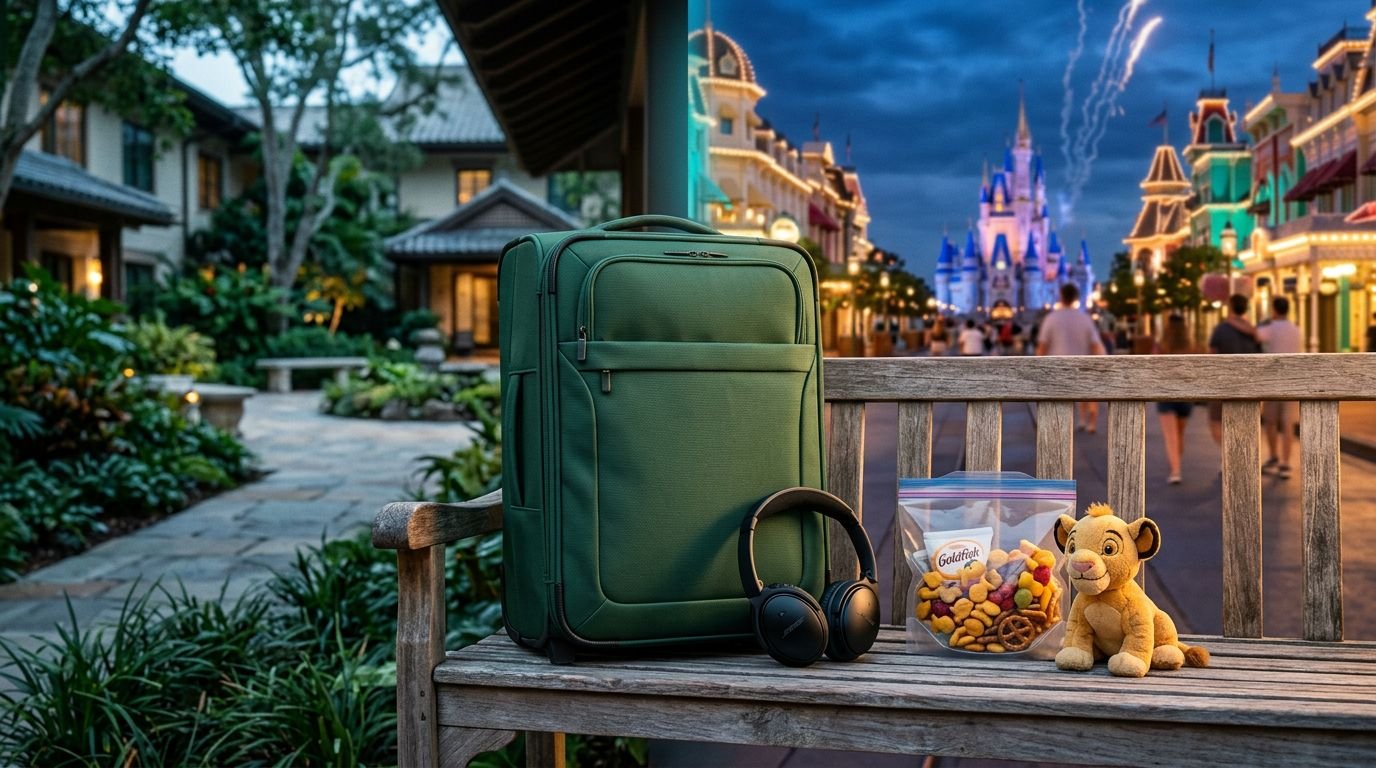
Your park bag should support your family before a hard moment happens. Keep devices, headphones, and charging cords together in one pouch. Families often remember the tablet and forget the cable.
Bring the items your child already knows and uses:
- Noise-reducing headphones, ear defenders, or familiar earbuds.
- A fidget, soft hoodie, comfort item, or small blanket.
- Prescription medication and any care items you cannot replace easily.
- Familiar snacks, water, and preferred sensory-safe foods.
- A portable charger, charging cord, and low-tech communication backup.
Your phone may hold tickets, park maps, mobile food orders, DAS return times, dining reservations, and messages between adults. A portable charger is one of the most useful things you can bring.
Keep communication supports easy to reach. A small card with “wait,” “break,” “all done,” and “change” can help when words are hard to find. If your traveler uses AAC, sign language, pictures, or gestures, carry a short note for Cast Members explaining how they communicate.
Prepare for security too. Explain that bags will be checked, Cast Members may give directions, and security dogs are working. The DAS pass does not bypass the regular security process.
Get personal support before the trip feels overwhelming
An experienced travel advisor can build custom itineraries around sleep, food, transportation, sensory needs, budget, and recovery.They can ask what a good day looks like for your child.
They should understand autism and other special needs without treating every family identically. They should not promise DAS approval or pressure you into every paid add-on. Ask whether the travel agent charges a planning fee before booking. They should help you choose the right resort, build flexible park days, understand ticket options, and leave room for rest.

For families who want extra planning help at their own pace, the Disney World with Autism Guide PDF includes ideas for park days, breaks, DAS pass preparation, and accessibility needs. You can also find the Disney travel with autism guide on Amazon.
The right support does not make a family vacation perfectly predictable. It gives you a calm plan, clear backup choices, and someone to turn to when the details feel like too much.
Frequently Asked Questions
Is a split stay a good choice for an autistic traveler?
It can be helpful when it provides a quiet start, easier access to priority parks, or a planned reset. It may add stress for travelers who struggle with unfamiliar rooms, packing, or changes in routine, so keep the trip to one hotel move.
When should we move between Disney resorts?
Plan the move on a non-park day whenever possible, and leave most of that day open. Pack a small move-day bag with medication, pajamas, comfort items, snacks, chargers, and clothes in case the new room is not ready right away.
How does the DAS pass fit into a Disney autism vacation?
Disney’s Disability Access Service is intended for guests whose developmental disability makes waiting in a conventional queue difficult for an extended time. Review the current guidance and be prepared to describe the functional challenges your traveler experiences during long waits, crowds, noise, confined spaces, or unpredictable queue movement.
Are Park Hopper tickets and Lightning Lane Multi Pass necessary?
Not necessarily. One-park-per-day tickets often reduce transportation, walking, security lines, and decisions, while Lightning Lane Multi Pass should only be considered when it genuinely lowers stress for your family’s priority attractions.
What should we pack for sensory and communication needs?
Bring familiar headphones or earbuds, comfort items, preferred snacks, medication, water, a portable charger, and any AAC, picture, sign-language, or gesture supports your traveler uses. Keep these items easy to reach so you can offer a break or communication option before a difficult moment escalates.
Let the vacation be smaller than the wish list
Disney can be loud, crowded, expensive, and full of changes. It can also be a wonderful family vacation when your plan respects your real needs.
One resort move, one park per day, familiar comforts, and protected break time can leave more room for Disney magic than a packed itinerary ever will. The best Disney autism vacation is the one that respects your family’s actual needs and lets everyone feel comfortable being exactly who they are.