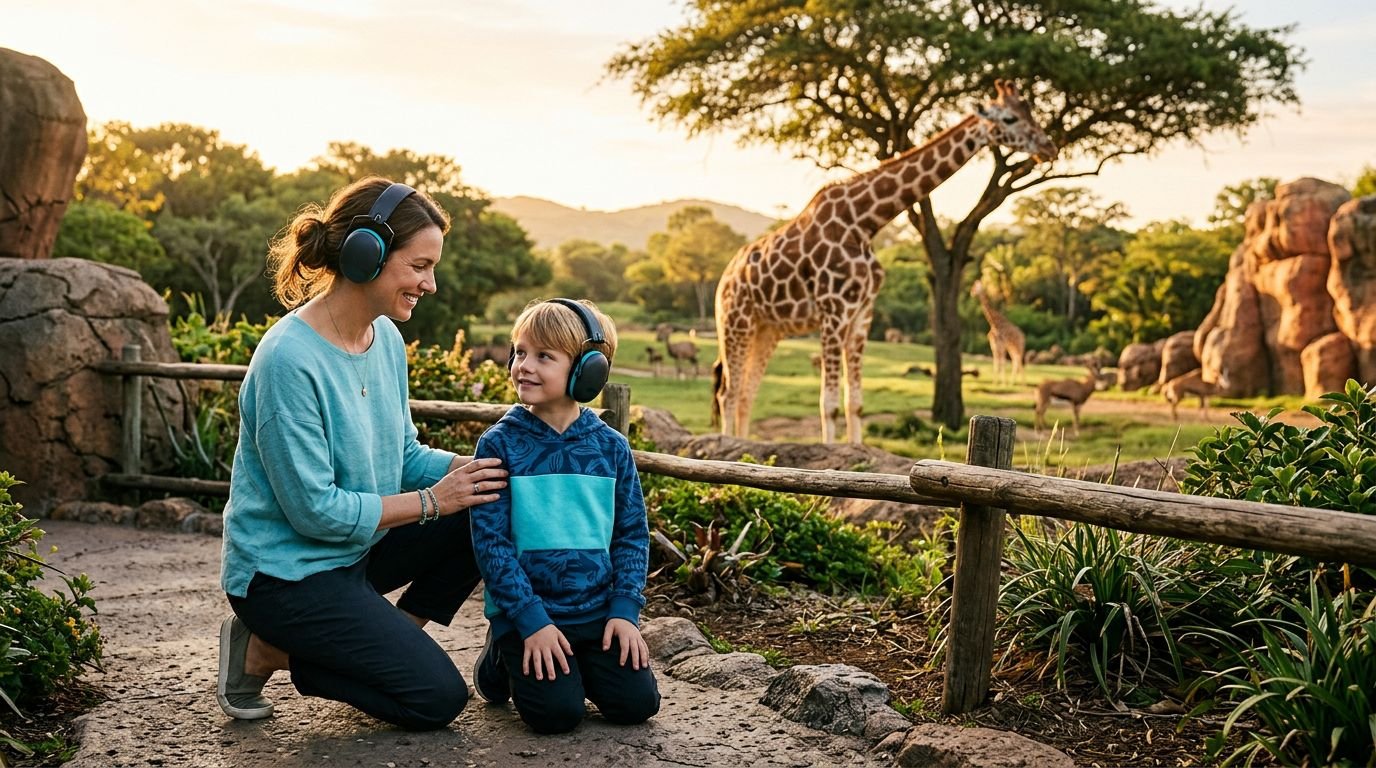
Your child’s best Disney day might end before dinner. That doesn’t mean the trip failed.
If you’re searching for autism support at Animal Kingdom before your first Walt Disney World visit, you’re likely trying to picture the real day. Children with autism spectrum disorder can have very different support needs. Neurodivergent children may respond differently to travel, too. Autism research supports individualized planning, not a universal park formula.
The sounds, heat, crowds, waiting, and transitions are environmental factors that shape the day. Attraction intensity is only part of the picture. The older label high-functioning autism doesn’t predict how a child will handle those experiences.
This park can be a wonderful first choice for animal-loving kids and teens. A good day isn’t about doing everything. It’s about helping your family feel comfortable enough to enjoy what fits.
Key Takeaways
- Plan around your child’s individual sensory, communication, mobility, food, and waiting needs rather than a universal autism-friendly park formula.
- Build the day around a few priorities, familiar supports, food and hydration, and at least one reliable place to reset or leave the park.
- Review current DAS requirements before your visit, remembering that DAS is based on functional queue needs and does not remove every wait or crowd.
- Animal trails and self-paced experiences can offer more flexibility than intense rides, shows, or crowded indoor spaces.
- Leaving early, changing plans, or repeating one favorite experience can still make Animal Kingdom a successful family day.
Your Animal Kingdom autism plan starts before the gate
Animal Kingdom has wide paths, lush scenery, live animals, music, water, and several high-energy attractions. Heat, crowd density, music, and unexpected instructions are environmental factors that can change how the entrance feels.
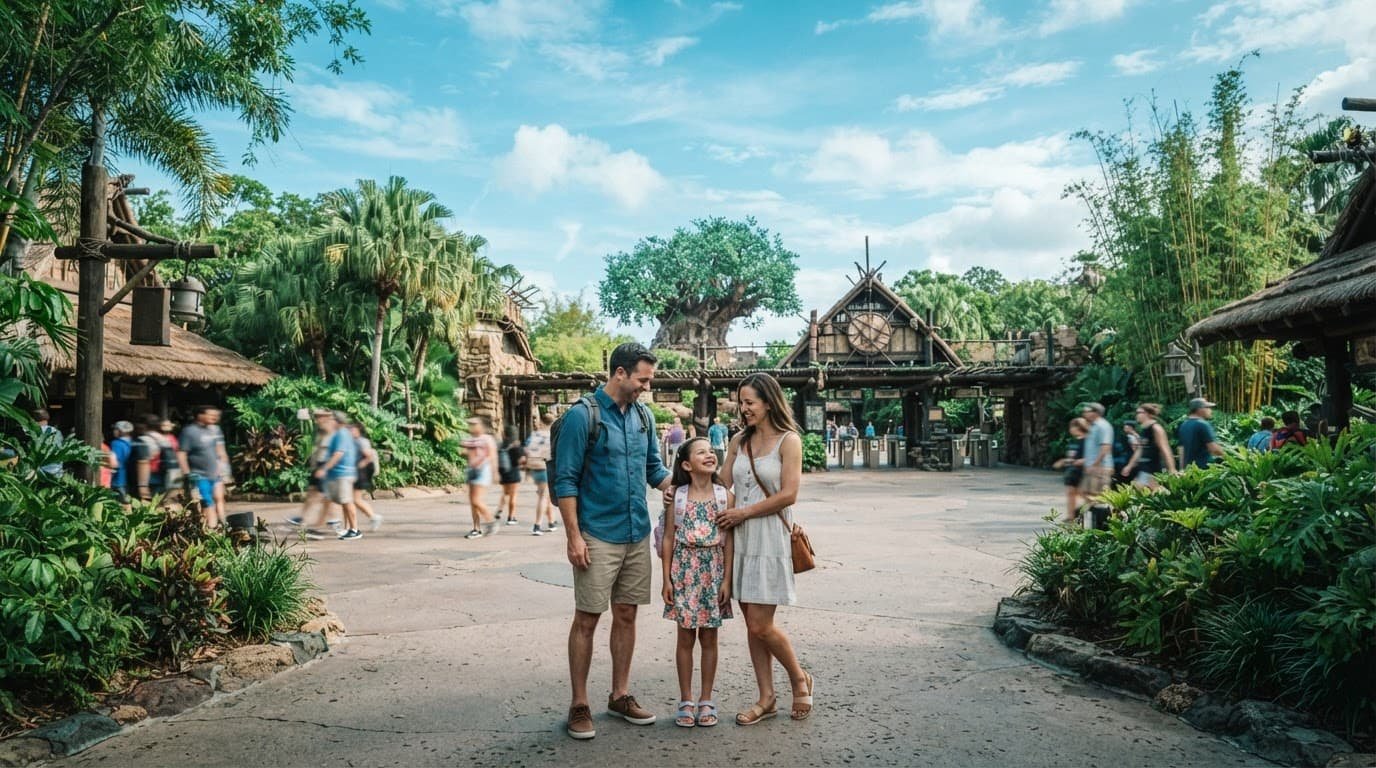
Build the day around three simple anchors: two must-do experiences, one food plan, and one place to reset. Your child may want to ride Kilimanjaro Safaris twice. They may also decide the entrance is enough for one day. Both outcomes are okay.
A visual schedule can help, but it doesn’t need to be fancy. Use a few photos from the Disney website, the My Disney Experience app, or your own phone, and keep the language simple: “First security, then animals, then snack.” These familiar supports can strengthen communication skills and support emotional regulation without requiring a new system. If your child doesn’t use visual supports at home, don’t force one in the park.
Security is often the first sensory challenge, with crowds, bag checks, scanners, and brief social interactions with Cast Members or nearby guests. Explain ahead of time that a Cast Member may look inside bags or ask your family to step into a certain area. These interactions are routine, and nobody is in trouble. It’s part of entering the park.
You don’t have to arrive at rope drop. For some families, a slower start avoids the biggest entrance rush. For others, early morning works best before Florida heat and afternoon crowds build. Choose the start time that matches your child’s regular sleep, medication, breakfast, and bathroom routine.
For more family-focused support before you travel, the Disney World With Autism Guide PDF on Etsy includes ideas for park days, sensory breaks, and accessibility planning.
Understand DAS before your Animal Kingdom day
Disney’s Disability Access Service, often called DAS, is not a front-of-the-line pass. It is an accommodation, not a paid pass, that gives eligible guests a return time for an attraction, so they can wait somewhere other than a conventional queue.
Disney describes DAS as an accommodation for guests with developmental disabilities, including autism spectrum disorder, who cannot tolerate extended waits in a standard line. Eligibility centers on functional queue needs, not diagnosis alone. Genetic components alone do not predict a child’s queue tolerance, and autism research highlights why individual responses matter more than labels.
Families with special needs should review Disney’s current DAS registration details before their trip and prepare concrete examples of what happens in a conventional queue. Rules can change, so don’t rely on an older social media post or a friend who visited years ago.
At Walt Disney World, DAS registration is handled by live video chat. Disney allows families to complete registration up to 60 days before their visit, and the guest who may use DAS needs to be present. If social interactions with a Cast Member feel difficult, rehearse the conversation or write down concrete examples beforehand. Don’t wait until you reach Animal Kingdom expecting to register in person.
If DAS is approved, the registered guest can usually include up to three additional people in their party. The DAS guest must be present and ride with the group. If you have a larger immediate family, ask Disney about your options instead of assuming every person will be included.
Once you are in the park, the registered guest or an adult linked to their account can request one available return time through the My Disney Experience app. After your family uses that return time, you can request another.
DAS changes where your child waits. It does not remove every wait, every crowd, or every change of plan.
Keep your phone charged. It may hold park tickets, attraction return times, mobile food orders, maps, and messages between adults. A portable battery is not an extra item at Disney. It belongs in the park bag.
DAS is also separate from Lightning Lane Multi Pass, Rider Switch, and a stroller-as-wheelchair tag. You don’t need every service or paid add-on for a successful day. A schedule packed with return windows can become another source of pressure.
Disney also provides park guides through its accessibility services page. Read through the Animal Kingdom information before you leave home, then check the app again on the morning of your visit.
Animal Kingdom autism sensory map: choose experiences with care
There is no universal list of sensory-friendly Disney attractions. One child may love an enclosed boat ride with colorful lights. Another may find the same experience too dark, loud, or unpredictable.
Your Animal Kingdom autism day works better when you screen each attraction against your child’s real preferences. Consider motion, darkness, sensory stimulation, crowds, noise, smells, water, restraints, animal sounds, and animal behavior. Environmental factors, including lighting, crowding, music, temperature, and unpredictable movement, can change an attraction quickly.
Trails and animal encounters offer flexible pacing
The safari, Gorilla Falls Exploration Trail, Maharajah Jungle Trek, and Rafiki’s Planet Watch can be good choices for families who prefer animals over thrill rides. They also give you more chances to slow down.
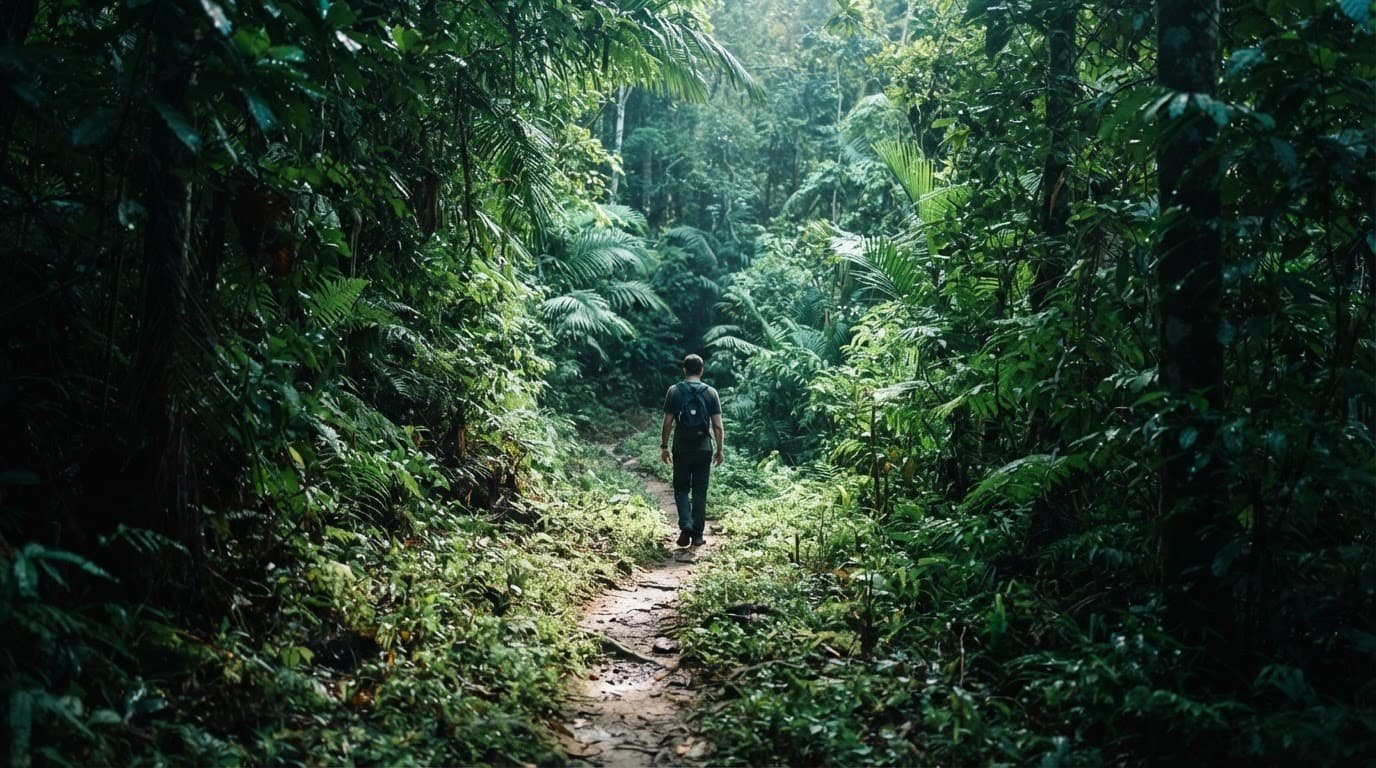
The trails are especially helpful because they’re self-paced. You can stop at an animal habitat, move past a busy viewing area, sit in the shade, or leave without feeling locked into an attraction cycle.
Observing animals at the park isn’t animal-assisted therapy. A child may find animal viewing calming, motivating, or meaningful, but don’t promise therapeutic benefits or treat the visit as treatment.
For some children, talking about a favorite animal can be a social lubricant, meaning a low-pressure way to begin conversation.
Use this quick guide as a starting point:
| Area or experience | Motion and darkness | Sound and unpredictability | Exit or pacing plan |
|---|---|---|---|
| Kilimanjaro Safaris | Bumpy open vehicle and outdoor light | Engine noise, heat, and unpredictable animal behavior | Ride early if your child enjoys animals but tires in the heat. |
| Gorilla Falls Exploration Trail | Walking path, shade, and no ride motion | People may stop suddenly near animal viewing areas | Move at your own pace and skip crowded viewing windows. |
| Maharajah Jungle Trek | Walking trail, varied light, and waterfalls | Birds, tigers, waterfalls, and changing crowd noise | Take breaks near quieter sections instead of rushing through. |
| Rafiki’s Planet Watch | Train ride and animal displays at a slower pace | Enclosed transportation and changing sounds | Preview the train experience if enclosed transportation is hard. |
| Na’vi River Journey | Slow boat, dark rooms, and glowing scenery | Continuous music and a detailed indoor environment | A lower-motion option for guests comfortable with darkness. |
| Festival of the Lion King and Finding Nemo shows | Indoor seating and bright lights | Music, applause, audience noise, and unexpected social interactions | Sit near an exit when possible, use headphones, or skip the show. |
Quiet is relative at Disney. A shaded trail may still have strollers, excited guests, bird calls, and people talking. Still, these areas often give families more control than a ride queue or packed indoor theater.
The paths near the Tree of Life can also be useful for a short walk. You may find a calmer moment by moving away from the central walkways instead of searching for a completely silent space.
Know which rides and shows can surprise you
Pandora is beautiful, but it can be intense. Flight of Passage combines a ride vehicle, motion, wind, sound, and visual effects. The sensory build-up starts before the ride begins. It may be a favorite for some teens, but it may also be too much.
Expedition Everest includes speed, darkness, loud sounds, sudden movement, and a backward section. Kali River Rapids brings splashing water, spinning, crowds, and the possibility of getting soaked. These aren’t good “maybe” rides for a child who’s already having a hard day.

Na’vi River Journey is often a gentler choice because it moves slowly and has no major drops. It’s still dark and has strong colors, music, and a detailed indoor environment. Watch a ride video together before your trip if your child likes to know what’s coming.
Don’t use a long wait, a special ticket, or a family vote as a reason to push through distress. One adult can wait with a child outside while the rest of the group rides. You can also use Rider Switch when it fits your family.
Build a flexible day around one part of the park
Animal Kingdom can involve more walking than families expect. A map may make two locations look close, but heat, bathrooms, strollers, photo stops, and crowds change the pace.
Pick a general area and stay there for a while. If you start in Pandora, enjoy Pandora before moving to Africa. If animal behavior is why your child wants Africa, make that area your first focus instead of crossing the park for a rigid schedule.
A flexible park-day plan can look like this:
- Arrive, get through security, and start with one familiar or low-pressure experience.
- Stay in the same land for a ride, trail, bathroom break, and snack.
- Take a midday reset before your child reaches their limit. This may be lunch in shade, a quiet walk, or a return to the hotel.
- Choose the afternoon based on energy, not the printed itinerary.
You don’t need to finish every attraction in one land before moving on. Geography, heat, transitions, and bathroom or snack needs matter more than completing every attraction.
If the morning goes well, you can add another ride. If it doesn’t, spend longer at an animal trail or leave for the resort pool. A break isn’t lost park time when it helps your family return calmer later.
Make food, heat, and waiting easier
Hunger can turn a manageable Disney moment into a hard one quickly. Environmental factors such as heat, food smells, bright sun, birds, and crowded seating can affect appetite and patience. Sensory stimulation may make a familiar snack or quieter table more useful than a planned restaurant experience.
The My Disney Experience mobile ordering app can reduce time in a food line. It may also reduce the social interactions required during a busy ordering or pickup period. Review menus at your hotel or while sitting in a quiet area, then choose a pickup window that works for your child and adjust if the day changes.
You do not need a picture-perfect Disney meal. Familiar snacks, plain foods, and enough water often matter more. Bring foods your child already accepts, especially if they have food allergies, sensory-based eating needs, or a limited safe-food list.
Outdoor seating can feel easier than a loud indoor dining room, but it may also bring heat and birds. Check nearby animal behavior before settling in, and choose a table where birds are less likely to gather. If the restaurant is too busy, ask one adult to pick up food while the rest of the family waits in a calmer spot nearby.
Keep a realistic snack plan in your bag. Include water, electrolyte options if your family uses them, protein snacks, and something familiar for the end of a long day. Florida heat affects everyone, even teens who insist they are fine.
Pack for communication and give yourselves permission to leave
A small, well-organized bag can prevent a lot of stress. Put headphones, charging cords, a portable battery, and devices in one pouch. Families often remember the tablet and forget the cable.
Bring items that your child already uses at home:
- Headphones or ear defenders can help during loud shows, crowds, and attraction queues.
- A familiar fidget, comfort item, or small sensory tool can give your child something predictable.
- Pack a charged device, cable, and portable battery together.
- Bring preferred snacks, refillable water bottles, and any needed medication.
- A lightweight change of clothes can help after rain, spills, or Kali River Rapids.
- Keep a simple communication card available if your child uses AAC, pictures, gestures, or short written choices. These tools can support communication skills during stressful transitions.
A card with “wait,” “break,” “bathroom,” “all done,” and “help” can make a busy moment easier. When social interactions feel too demanding, offer two clear choices: “Do you want to sit by the trail or go back to the hotel?”
If your child’s stroller provides needed mobility or sensory support, families whose children have special needs should ask Guest Relations about the correct stroller-as-wheelchair tag and current procedures. This tag is separate from DAS and can help when your child needs to remain in the stroller in attraction lines.
For a deeper Disney planning resource you can keep on your phone, the Disney World With Autism Guide on Amazon offers practical ideas for DAS, packing, breaks, and calmer park days.
Leaving early is always allowed. Your family does not need to stay for every nighttime moment to prove the day was worth it. The right time to leave is often before everyone is exhausted.
Frequently Asked Questions
Is Animal Kingdom a good Disney park for autistic children?
It can be a good choice for children who enjoy animals, trails, and flexible pacing. The park also includes heat, crowds, music, waiting, and intense attractions, so the best plan depends on your child’s individual support needs.
Does every autistic child qualify for DAS at Animal Kingdom?
No. Disney considers how a guest’s disability affects their ability to wait in a conventional queue, not an autism diagnosis alone. Review Disney’s current requirements and prepare specific examples before your trip.
What are some lower-pressure experiences at Animal Kingdom?
Kilimanjaro Safaris, Gorilla Falls Exploration Trail, Maharajah Jungle Trek, and Rafiki’s Planet Watch may work well for families who prefer animals and slower pacing. Even these areas can be warm, crowded, or noisy, so keep a break or exit plan available.
Should we bring sensory supports to Animal Kingdom?
Bring items your child already uses successfully, such as headphones, a familiar comfort item, communication tools, preferred snacks, and a charged device. Avoid introducing an unfamiliar support for the first time in the park.
Is it okay to leave Animal Kingdom early?
Yes. Leaving before your child becomes overwhelmed can protect the rest of the day and your family’s well-being. A shorter visit, a hotel break, or repeating one favorite experience can still be a successful Disney day.
A Disney day that fits your family
Disney’s Animal Kingdom has exciting rides, beautiful animal habitats, and moments that can feel big. The goal isn’t to push through every one of them.
A successful first visit gives your neurodivergent child room to rest, communicate, choose, and change their mind. Support needs vary, and interest in animal behavior may be a valid reason to slow down or repeat an experience.
When your plan has fewer must-dos, familiar supports, and real breaks, Animal Kingdom can feel less like a test and more like a family vacation. You can change plans or leave early to protect your family’s mental health and emotional well-being, valuing your child’s experience over the number of rides completed.