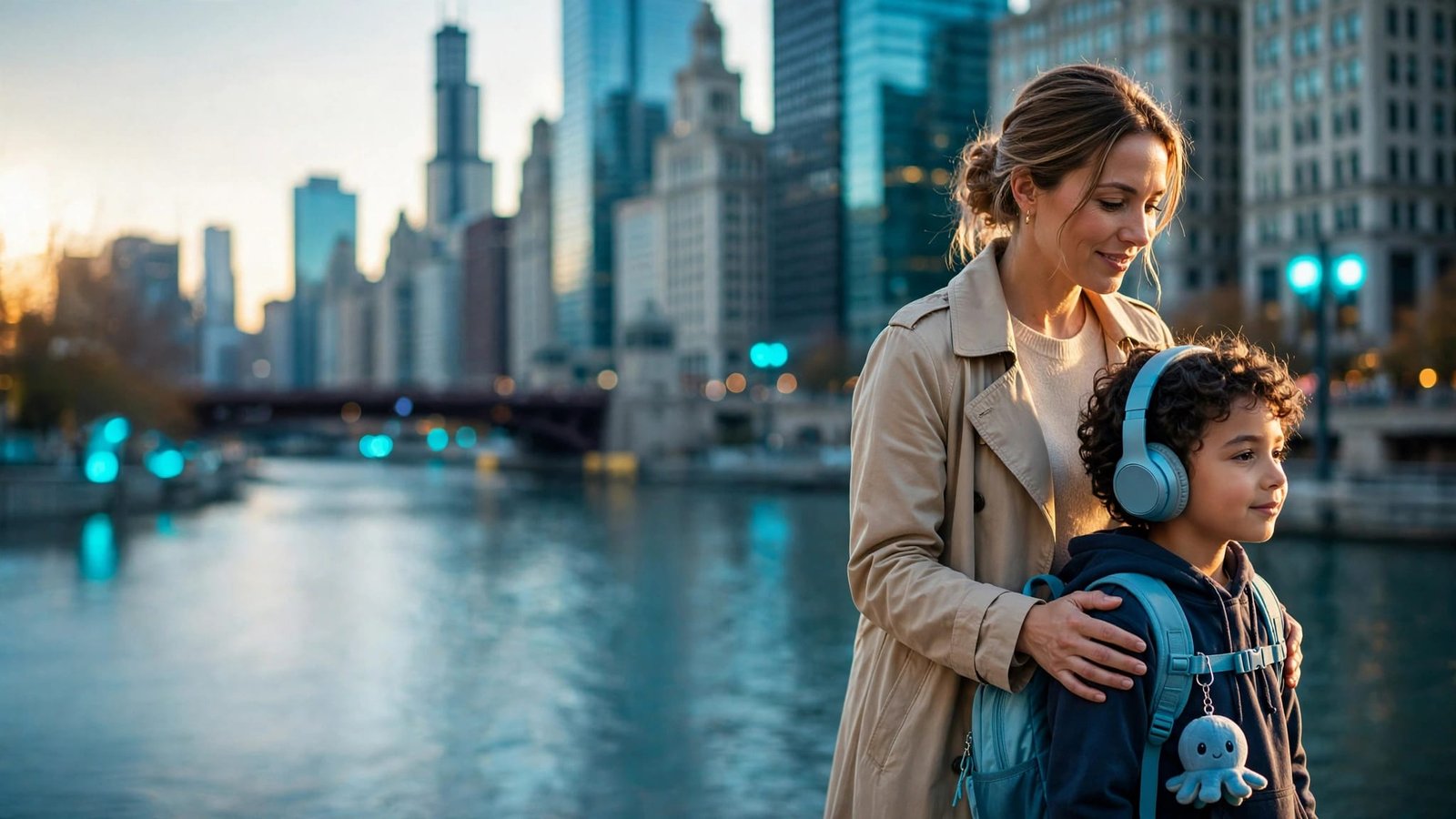
Chicago can be a wonderful family trip. Noise, crowds, long walks, and sudden changes may feel different from child to child because of sensory processing differences. Children with autism spectrum disorder can have different travel preferences and support needs, so an autism-friendly Chicago vacation should include lower-stimulation, sensory-friendly options.
You don’t need to see everything. Pick a few places that fit your family’s interests, build in rest time, and keep one easy backup plan each day.
Key Takeaways
- Plan one main activity each day, add optional nearby stops, and build in hotel, park, meal, or quiet-time breaks.
- Choose a hotel based on location, room features, quietness, and access to familiar food, transportation, and easy exits.
- Review current sensory and accessibility supports before visiting museums, theaters, sports venues, pools, libraries, and adaptive programs.
- Pack familiar snacks, comfort items, communication tools, medications, headphones, chargers, and a low-tech backup plan.
- Keep transportation, meals, and daily expectations flexible so your family can leave early or change plans without treating the day as a failure.
Start With a Flexible Chicago Plan
A packed itinerary may look good before you leave home. It can feel completely different after a flight delay, a changed hotel check-in, or a crowded morning downtown.
Plan one main activity each day, then add one optional activity nearby. If the main plan takes longer than expected, you can skip the extra stop without feeling like the day was wasted.
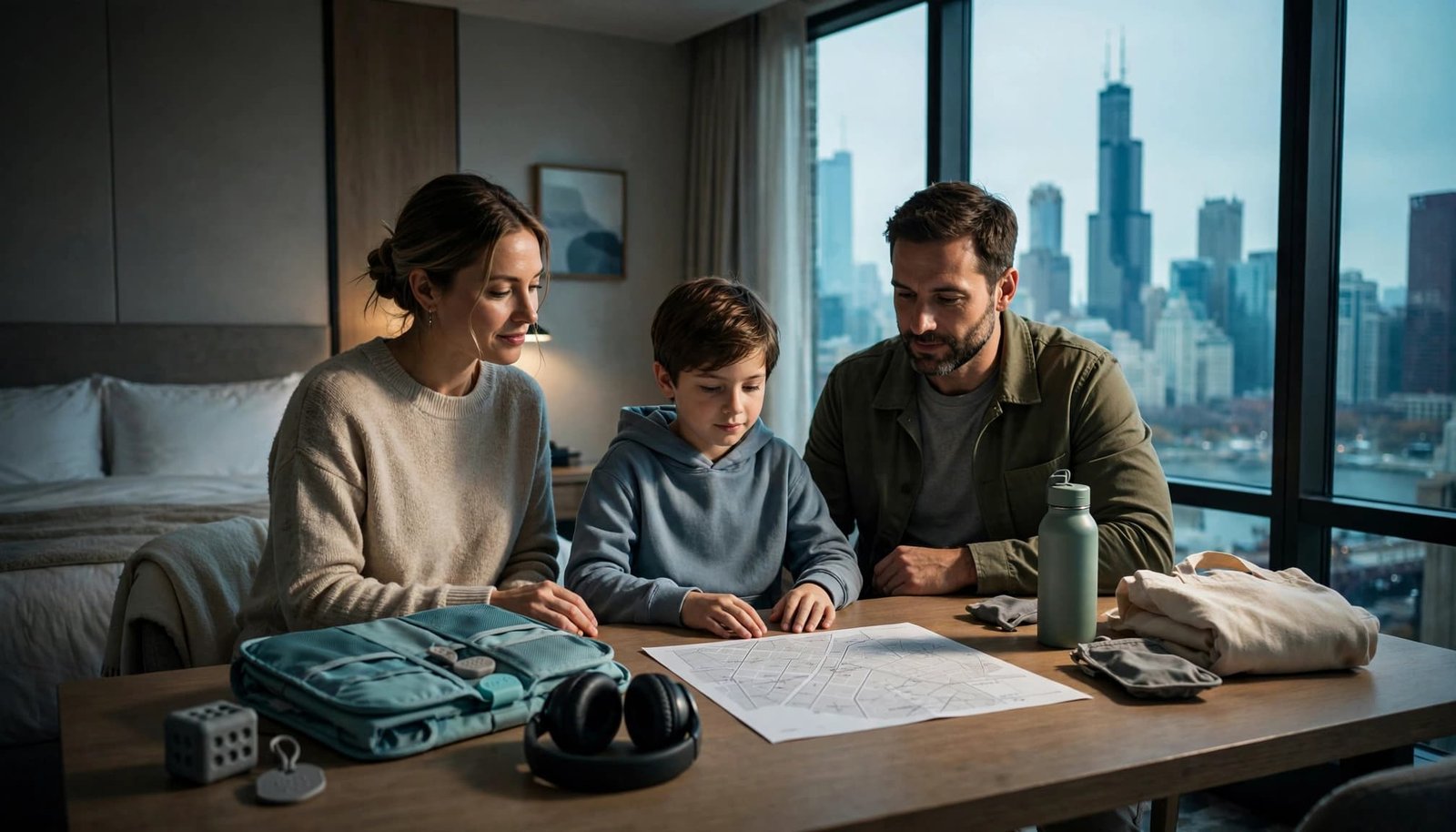
Build breaks into every outing
Museum days, aquarium visits, and sporting events all ask a lot from children. Schedule a hotel break, quiet car ride, park stop, or familiar snack between activities.
Morning is often the easiest time for popular attractions. Crowds are usually lighter, and your child has more energy for new sights and sounds.
A flexible day might start with a morning attraction and familiar lunch. Return to the hotel for a reset, then consider an optional, low-demand evening activity.
Keep your daily plan simple:
- Choose one ticketed attraction or major neighborhood activity.
- Pick a nearby spot for a meal or snack before you leave.
- Save a sensory-friendly, lower-stimulation option, such as a library visit, waterfront walk, or hotel pool, for later.
A break is not lost vacation time. For many families, it is what makes the next activity possible.
Prepare for the trip before arrival
Show your child photos of your hotel, airport, rental car, or train route before traveling. A simple visual schedule can help some children with autism spectrum disorder, but visual supports aren’t universal: “Fly to Chicago. Pick up bags. Ride to hotel. Rest. Go to dinner.”
If your family already uses ABA therapy or another established support, bring familiar routines and communication strategies that work at home.
Flight delays, hotel check-in changes, and attraction closures can disrupt careful plans. Before departure, check current hours, reservations, and accessibility information for each stop.
Keep medications, communication devices, headphones, chargers, snacks, wipes, and a change of clothes in your carry-on. Checked bags can be delayed, and familiar items are harder to replace during a stressful travel day.
A portable charger belongs in your day bag. Your phone may hold maps, reservations, tickets, transit directions, and messages between adults.
Choose a Hotel That Makes Breaks Easy
Your hotel is more than a place to sleep. It is where your family can regroup after a loud attraction, dry wet clothes, eat familiar food, and settle down before bed.
A lower nightly rate is not always the easier choice. A hotel far from your planned activities may add long rides, crowded transfers, and extra walking at the beginning and end of every day.
Ask whether the hotel can help create a sensory-friendly stay with a quiet room location, adjustable lighting, refrigerator access, and an easy route to the exit. These are requested features, not guaranteed hotel accommodations.
Look beyond the room photos
Before booking, ask about the details that affect your child’s comfort:
- Is there a refrigerator for preferred foods, drinks, or medication needs?
- Can the hotel provide adjoining rooms, if your family needs them?
- Are blackout curtains available?
- How far is the room from the elevator, lobby, breakfast area, or parking garage?
- Is the room away from elevators, ice machines, busy street traffic, and loud HVAC systems?
- Does the room have enough floor space for a stroller, mobility device, or comfort items?
- Does the room include an accessible bathroom that meets your family’s needs?
- Is laundry available on-site or nearby?
- Is there a kitchen or microwave for simple meals?
- Can the hotel accept grocery deliveries?
- Are nearby grocery stores, pharmacies, and simple dining options?
- How close is the hotel to CTA stations or a convenient rideshare pickup area?
Families who need predictable mornings may prefer a suite with separate sleep areas. Others may do better in a smaller hotel where the lobby, breakfast area, and exit are close together.
Ask the hotel to confirm your requests in writing. Recheck the hotel’s policies and your requested features before arrival, since availability can change.
Stay near the places you will use most
The Museum Campus area works well if the Field Museum, Shedd Aquarium, and lakefront are priorities. Streeterville and River North offer central locations for Navy Pier, downtown attractions, and many restaurants.
If your family prefers more space and a quieter pace, consider a hotel in the broader chicagoland area. Check the actual travel time to your planned activities first. A map may show a short distance, but Chicago traffic and multiple train transfers can make the commute feel much longer.
Autism-Friendly Chicago Museums With Helpful Supports
Museums can be a great fit when your child loves animals, trains, science, art, or hands-on play. They can also be loud and full of unexpected sensory input. Review current accessibility details before buying tickets, and don’t be afraid to leave early.
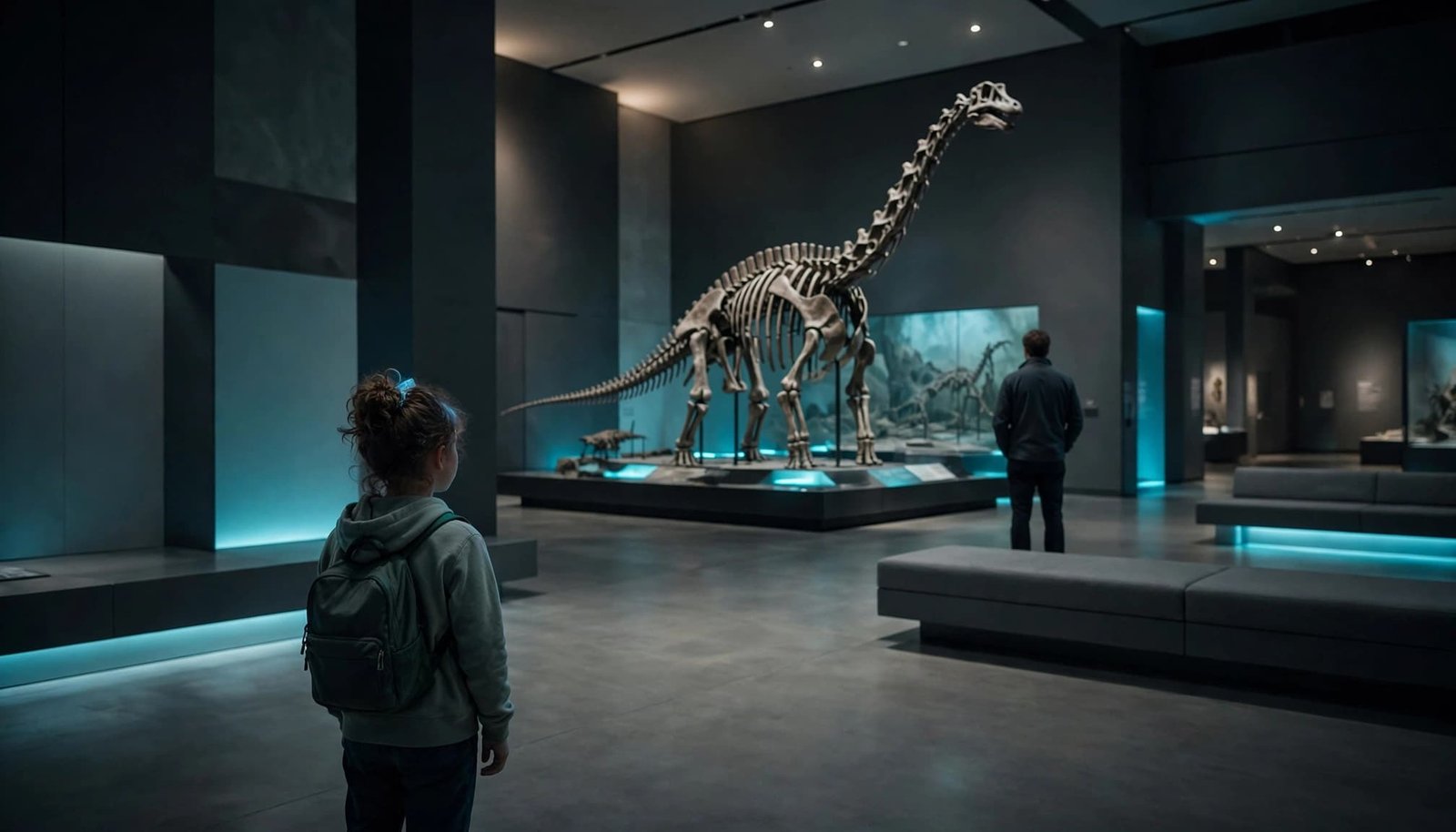
The Field Museum offers practical sensory tools
The Field Museum is a favorite for dinosaur fans, but its size and peak crowds can overwhelm some children. Start with one exhibit your child truly wants to see. Check current timed-entry rules and capacity guidance, and don’t plan to cover every floor.
The museum currently lists sensory bags with items such as headphones, fidgets, sunglasses, and emotion cards. Confirm their availability, pickup location, and operating times before visiting. Families can also ask whether the auditory and tactile guide and calming spaces are available.
The Field Museum’s free Field for All app helps visitors plan with accessibility and sensory information. Chicago’s sensory-friendly experiences guide is a good place to review the app and other local options before your trip.
Sensory Saturdays may suit families who can plan around the monthly schedule. Confirm current dates, registration, capacity limits, and whether sensory-friendly hours apply before building your itinerary.
Shedd Aquarium can be easier with a plan
Shedd Aquarium has dim spaces, animal sounds, crowds, strong smells, and popular exhibits that can become congested. Timing can make the visit easier.
Download Shedd Aquarium’s Sensory Friendly App before your visit. It offers visual schedules, communication tools, sensory maps, planning tips, and social guides. Venue information currently lists a quiet room during select peak periods, so confirm its availability, location, and operating times before visiting.
Arrive early, choose a few favorite animals, and leave before everyone is exhausted. A full aquarium day isn’t required for a meaningful visit.
Hands-on museums give children more choice
Chicago Children’s Museum at Navy Pier offers active exhibits that encourage movement, choice, and inclusive play. Review Chicago Children’s Museum’s accessibility and inclusion resources before visiting, including current accommodation details.
The museum’s guidance says paid personal care attendants may accompany qualifying guests at no added admission cost. Some institutional pages may still use the term special needs, so check current wording and access details.
Kohl Children’s Museum in Glenview is another strong option for younger children who enjoy imaginative play. Kohl Children’s Museum’s free Everyone at Play events are designed for children with disabilities and their families. Dates, registration details, and capacity limits can change, so check the calendar before building your trip around one.
The Museum of Science and Industry is another option for children interested in science. Check its current accessibility and sensory information before visiting, rather than assuming its environment will suit every child.
Peggy Notebaert Nature Museum offers a smaller-scale nature alternative. Verify current accessibility and sensory information, hours, and capacity rules before you go.
Get Around Chicago Without Rushing
Chicago gives families four practical transportation choices: a rental car, CTA, rideshare, or an accessible taxi. The best option depends on your child’s needs, your hotel location, your luggage, and how much transition time your family can handle.
Driving and parking may offer more control
A rental car offers the most control over familiar snacks, extra clothes, sensory tools, and mobility equipment. It also gives your child a quiet place to reset between attractions.
Before leaving the rental lot, set the temperature, connect a familiar playlist, and explain the next step in simple terms: “We are going to the hotel now.”
Parking near downtown attractions can be expensive. Look at garage locations and rates before you leave the hotel. If you are visiting Museum Campus, confirm the parking plan in advance instead of deciding during a busy arrival.
Public transit needs extra time
The CTA train and bus system can be useful, but stations may include crowds, noise, stairs, turnstiles, and changing service patterns. For a child with particular sensory processing needs, the least complicated route may be better, even when it isn’t the fastest.
Check the CTA app or website for elevator and escalator status before leaving. Use the station map to identify a step-free entrance, then download offline directions in case service or phone access changes.
Wheelchair users, adaptive-stroller users, and families carrying equipment should verify the entire route, not just whether a station is labeled accessible. Carry a transit backup plan, such as a second route, extra travel time, or a taxi number.
Ride-share services can be a good middle option. You avoid parking, but you still have a direct trip. An accessible taxi may work better when your family needs specific vehicle access or more help with equipment. Ask your hotel about accessible pickup areas before requesting a ride. For many families visiting Chicago, direct transportation is worth more than saving a few minutes on paper.
Movies, Theater, and Sports Without the Pressure
You can enjoy an evening out without forcing your child through a traditional dark, loud theater experience. Chicago-area options make it easier to choose a setting that works for your family.
Sensory-friendly movie screenings
AMC Sensory Friendly Films turn the lights up and the sound down. Guests can move, vocalize, dance, or take a break without feeling out of place. Family-friendly screenings are generally offered on the second and fourth Saturday of each month, while mature-audience screenings are often scheduled on Wednesday evenings.
Check the current participating location and showtime through AMC’s Sensory Friendly Films schedule. Confirm the ticket policy, bag rules, and entry screening before you go.
These sensory-friendly screenings begin at the listed time without a long set of trailers, so arrive early.
Marcus Theatres also offers accessibility technology, including assistive listening devices, closed captioning, and descriptive narration at many locations. Review Marcus sensory-specific film information and confirm the local schedule, ticket policy, and entry details before making the drive.
United Center sensory supports
A Chicago Bulls game, Blackhawks game, or concert can be exciting. It can also be loud, crowded, bright, and full of unexpected changes.
The venue is sensory-inclusive and has a quiet room near Gate 2 1/2. Families can ask for sensory bags with noise-canceling headphones, fidget tools, verbal cue cards, and weighted lap pads. Availability and pickup procedures can vary by event.
Review the United Center’s accessibility and sensory-inclusive guide before purchasing tickets. Confirm event-specific sensory supports, bag rules, entry screening, and pickup instructions. Choose aisle seats or locations near an easy exit.
A full game is optional. It’s okay to arrive late, take a break, or leave after one period. That can be a successful plan, not a failure.
Parks, Libraries, and Low-Cost Reset Time
Not every meaningful Chicago day needs a ticket. Parks, beaches, library programs, and neighborhood walks can offer movement and choice without a strict schedule. Popular spaces may still be noisy or busy.
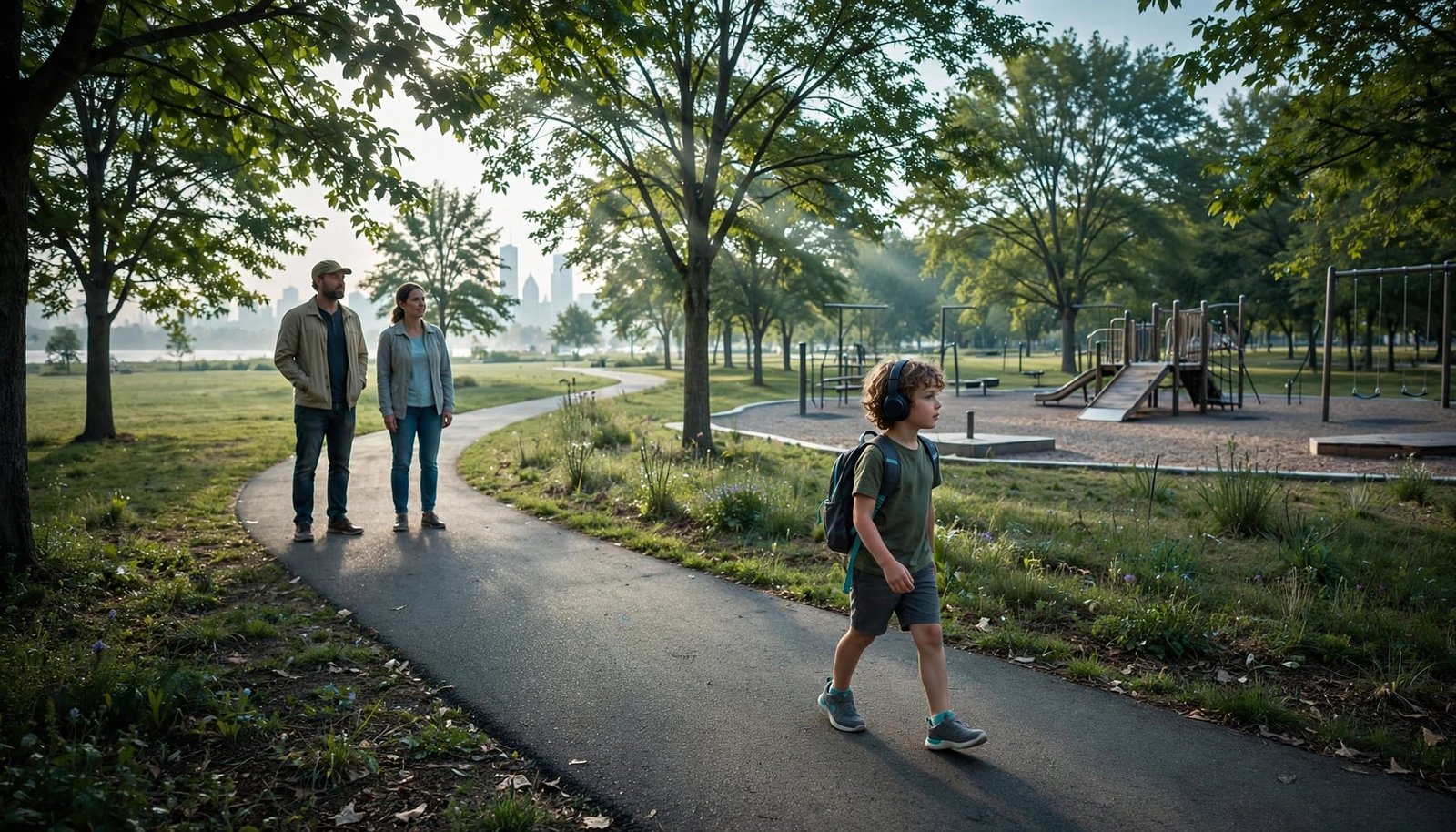
Use parks as part of the itinerary
Use the Chicago Park District website to find park, beach, playground, and accessibility information before you go. Inclusive play can mean choosing a playground, open space, or library activity that allows movement and choice.
Millennium Park is popular, but it can be crowded. Go early if your child wants to see Cloud Gate, then move on before the busiest part of the day.
The lakefront can provide a helpful reset between indoor stops. Walk part of the Lakefront Trail, watch boats near Navy Pier, or find a green space near your hotel. Check the Chicago Park District for current conditions, restrooms, hours, and seasonal closures. Bring water, sunscreen, and an extra layer because weather near Lake Michigan can change quickly.
A playground stop can support a sensory-friendly plan between timed activities, but don’t assume every space will be calm. Let your child move before asking them to sit through a meal or ride in a car.
For a rainy-day indoor option, consider the Peggy Notebaert Nature Museum. Verify current exhibits, capacity limits, and accessibility details before visiting.
Chicago Public Library offers sensory story times
Chicago Public Library has sensory story times for children up to age 12 and their families. These programs use books, songs, play, and interactive activities in a more welcoming setting for children with sensory differences and developmental disabilities.
Branch schedules vary, so search the library calendar close to your travel dates. If a specific program lists sensory-friendly hours, confirm the current schedule before relying on it. A library can be a helpful rainy-day plan when your child needs a place with fewer expectations.
Swimming, Adaptive Sports, and Summer Programs
Some children regulate best through movement. Swimming, climbing, and structured recreation can make a Chicago visit feel more like a vacation than a long list of attractions.
Ask about adaptive aquatics before you travel
The Chicago Park District offers Special Recreation programming that may include sports, camps, aquatics, arts, and social activities. These options may include adaptive sports and swimming lessons, but the Chicago Park District’s programs vary by location and season, so contact staff before your trip.
The Park District’s Special Recreation Programs page is a starting point for adaptive options. You can also use the Chicago Park District’s locations and contact list to find the right staff member for the neighborhood you will visit.
Ask direct questions before booking. Is the class drop-in or registration-only, and can a parent stay on deck? Does the pool have zero-depth entry or a chair lift? Ask about pool-entry equipment, quieter lesson times, staffing, sensory supports, forms, age ranges, swim levels, and seasonal dates.
Before committing, verify the schedule and supports with Chicago Park District staff, since details can change seasonally.
Families may encounter terms such as therapeutic recreation, social skills groups, occupational therapy, speech therapy, and parent training in provider directories or existing support plans related to developmental disabilities. These terms don’t mean a service is necessary or available at every location, and they aren’t substitutes for a child’s established providers.
Some registration materials may still use the legacy phrase special needs, while this guide uses more specific, respectful descriptions.
Find active options that match your child
Children who enjoy swimming lessons may also enjoy adaptive climbing, especially when they like movement and problem-solving. Adaptive sports can be a good fit for children and teens who enjoy body awareness.
Shirley Ryan AbilityLab offers adaptive rock climbing programs in Chicago, but age ranges and session dates can change.
A local special recreation association in the chicagoland area may offer neighborhood-specific camps, bowling, sports, art classes, and social programs. Contact the relevant special recreation association about registration, residency, age requirements, forms, and other paperwork.
A summer camp may be relevant only for an extended stay. Confirm summer camp availability and eligibility in advance, because openings and paperwork can change.
For a short family visit, a park, pool, or simple outdoor activity may be the better choice. Your child doesn’t need to join a formal program for the day to feel included.
Make Meals and Downtime Easier
A meal can become the hardest part of a busy day. New foods, crowded tables, music, waiting, and hunger can pile up fast. Before you go, check current restaurant hours, menu availability, expected wait times, and whether reservations are needed.
Choose restaurants with flexible seating, simple menus, and easy exits. Ask about counter service, allergy procedures, outdoor seating, and noise levels before you arrive. Go early for lunch or dinner when possible.
Carry a familiar food even if you plan to eat out. A preferred snack can buy time while you wait for food or leave a restaurant that is simply too loud.
You don’t need to choose a restaurant because it advertises itself as sensory-friendly. Choose based on your child’s actual needs and how the setting feels that day. A casual counter-service meal, grocery-store picnic, hotel-room meal, or takeout order is a valid plan.
For travel supplies that can make meals, delays, and messy moments easier, visit the Trip Rescue Shop. You can find practical family travel items, including stroller needs, cleaning supplies, and items for unexpected sickness during vacation.
Pack a Chicago Day Bag You Can Actually Use
Keep your bag light enough to carry while helping your child. Put the most important items in the same place every day.
A practical day bag may include:
- Noise-reducing headphones, sunglasses, fidgets, and one familiar comfort item.
- Snacks, water, wipes, hand sanitizer, and a change of clothes.
- Medication and medical supplies in an easy-to-reach pouch.
- Written medication instructions, allergy information, and emergency contacts.
- A portable charger, charging cable, and any communication device your child relies on.
- Backup communication cards, printed hotel information, and the hotel address.
- A small visual schedule or photos of the next stop.
- A simple plan for finding a quiet place or restroom when your child needs a break.
Keep a low-tech backup plan in case your phone battery dies. Include directions to the hotel and any important phone numbers.
Don’t bring items only because someone else says they are essential. Bring the supports your child already uses and trusts.
If your family is also planning a Disney vacation, the Disney World With Autism Guide on Etsy includes practical ideas for park days, breaks, accessibility needs, and flexible planning. You can also find the guide on Amazon.
Frequently Asked Questions
What makes Chicago more autism-friendly for traveling families?
Chicago offers sensory supports, accessible attractions, quiet spaces, inclusive programs, and flexible options such as parks, libraries, and neighborhood walks. The best plan still depends on your child’s individual sensory, communication, mobility, and routine needs.
Which Chicago attractions offer sensory supports?
The Field Museum, Shedd Aquarium, Chicago Children’s Museum, AMC theaters, and the United Center currently list sensory or accessibility resources. Availability, schedules, registration, and pickup procedures can change, so confirm details directly before your visit.
Where should families stay in Chicago?
Choose a hotel close to the attractions you plan to use most, with a room location and features that support breaks and sleep. Ask about quiet rooms, refrigerators, blackout curtains, accessible bathrooms, laundry, kitchen facilities, and convenient transportation, then request important details in writing.
Is public transportation manageable for autistic children?
CTA trains and buses can work well for some families, but stations may involve crowds, noise, stairs, turnstiles, and service changes. Check elevator status and the full route in advance, allow extra time, and keep a rideshare or taxi plan as a backup.
What should families do if an outing becomes overwhelming?
Leave early, find a quieter place, return to the hotel, or switch to a familiar low-demand activity such as a snack, library visit, park stop, or hotel-room meal. A flexible change of plans is part of a successful autism-friendly trip, not a failure.
Final Thoughts
The best autism-friendly Chicago trip isn’t the one with the longest attraction list. It’s the one shaped around your child’s needs, your family’s preferences, and enough room to reset.
Choose a comfortable hotel, plan fewer major activities, and keep expectations flexible. Before leaving home, verify current attraction, hotel, transportation, and program policies. An autism-friendly Chicago plan can change as needed, and a calm day may look different for every family.