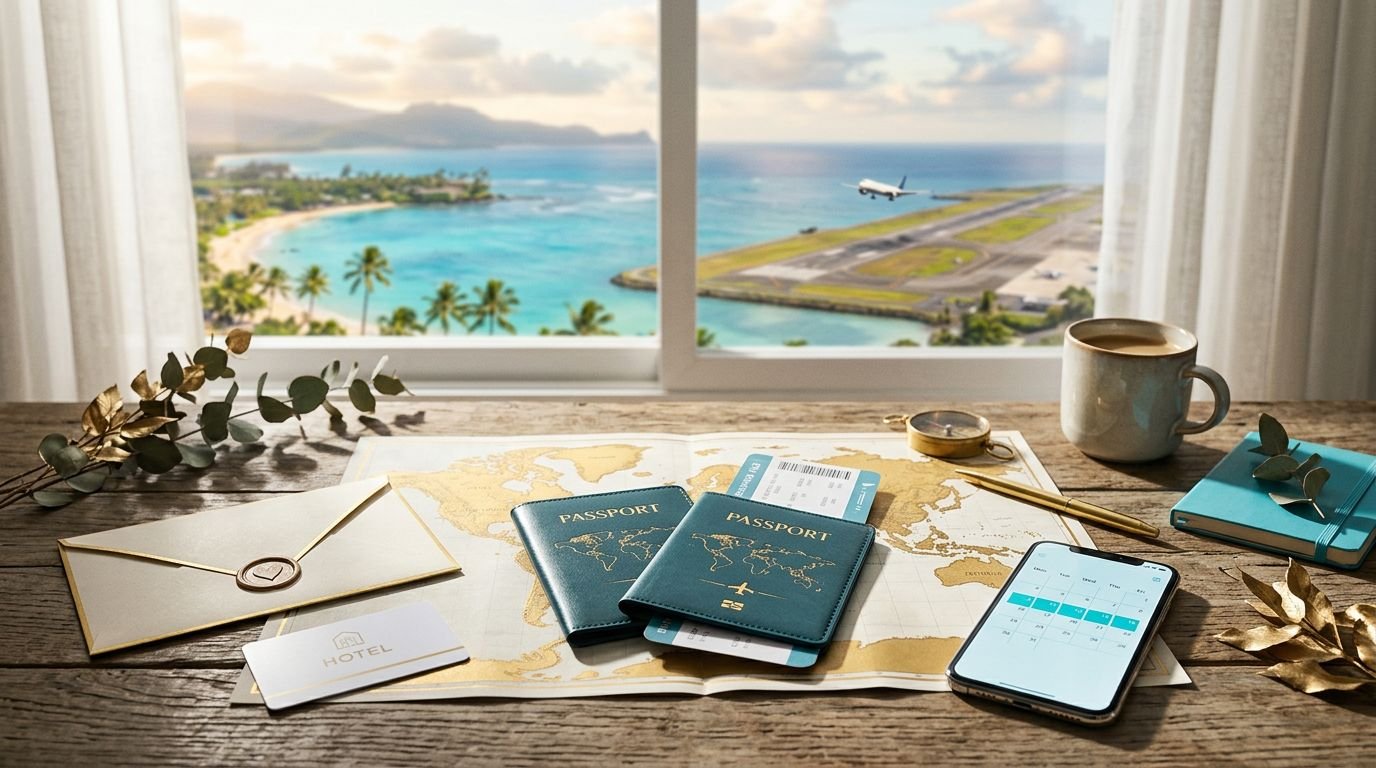
A destination wedding should feel like a celebration, not a complicated group trip with unanswered questions. Your guest list needs time to budget, renew passports, arrange childcare, and request time off.
A clear destination wedding timeline gives everyone the information they need before flights rise in price or hotel rooms disappear. Start early, set firm deadlines, and keep every message simple.
Key Takeaways
- Start your destination wedding timeline 12 to 18 months out to secure better venue dates, group rates, and key vendors.
- Give guests practical travel information early, including the destination, nearest airport, room block details, booking deadlines, passport reminders, and expected costs.
- Set hard deadlines for flights, passports, marriage documents, room reservations, and wedding attire so guests have time to prepare.
- Share a simple itinerary, assign one travel contact, and ask privately about accessibility, dietary, mobility, and transportation needs.
- Keep a weather backup, a current arrival list, and printed copies of important contacts and confirmations so small travel problems do not disrupt the celebration.
Start Your Destination Wedding Timeline 12 to 18 Months Out
The best resort dates can book far ahead, especially for holiday weekends and popular beach seasons. A destination wedding gives you more venue choices when you begin early. Begin 12 to 18 months before the celebration for better dates and group rates.
Choose a destination that works for your guests
A destination wedding location should work for the people traveling to it, not just match your vision. A beautiful resort may not be the right fit if it requires several flight connections, a long airport transfer, or extensive walking.
Before signing, check the wedding venue’s nearest airport, flight connections, airport transfers, accessibility, weather patterns, and hotel capacity. Think about older relatives, families with young children, and guests who may need accessible rooms or direct transportation.
Book the venue and a local wedding planner early, then reserve each key wedding vendor. Your wedding photographer, wedding cake provider, florist, and transportation company may have limited availability during busy seasons. Review the floral arrangements included in each florist’s proposal before signing.
A first-person destination wedding planning story can also help you spot practical questions to ask before you commit to a location.
Build the wedding budget around real travel costs
Plan for more than the ceremony and reception. Use your likely guest list to estimate airport transfers, welcome events, vendor gratuities, luggage fees, currency exchange, local taxes, and weather backups.
Choose a travel-friendly wedding registry so guests don’t have to carry bulky gifts through airports.
Set aside 10 to 15 percent for later costs, and consider wedding insurance for weather cancellations, vendor deposits, or other financial exposure. A last-minute shuttle, extra umbrellas, or a higher vendor payment fee should not throw off your plans.
Use a shared destination wedding checklist to track each deposit, due date, exchange rate, and the 10 to 15 percent contingency reserve. If vendors charge in another currency, keep the payment amount and exchange rate with each agreement in one shared folder. This prevents confusion when several payments are due at once.
Nine to 11 Months Out: Give Guests Time to Plan
By this point in your destination wedding timeline, guests need the basics, even if every detail is not final. International travel for a destination wedding requires advance notice.
Send save the dates before formal invitations
Send save the dates about 10 to 12 months before the wedding. Include the destination, wedding date, closest airport, resort name, and wedding website. Send formal wedding invitations once the key travel details are confirmed.
Your website does not need to be fancy. It needs to be useful. Add booking deadlines, passport reminders, expected weather, dress guidance, transfer details, a wedding registry link, and a simple list of planned events.
Let guests know which events are optional. A welcome party may be a wonderful addition, but guests should not feel pressured to attend every meal or excursion.
Use one main email address or contact person for travel questions. Group chats can be helpful, but too many replies often create more confusion. Use a destination wedding checklist to keep the save-the-date mailing date, website updates, booking cutoff, and guest questions in one place.
Secure room blocks without taking on too much risk
Ask the resort about room categories, booking cutoffs, deposit rules, cancellation terms, and accessibility options. Get the details in writing before you share a booking link.
Pay close attention to attrition. This is the percentage of rooms your guest list must fill before you could owe money for unused space.
A room block is not a promise that every invited guest will book. It is a contract with a deadline.
Find out if guests can cancel individually, transfer a reservation to another traveler, or change room types. Don’t personally guarantee more rooms than you can reasonably fill.
A travel agent can help compare resort contracts and keep booking deadlines in front of your guests.
Six to Four Months Out: Lock In Travel and Legal Details
This milestone is a key part of your destination wedding timeline, moving guests from interest to confirmed travel. For an international destination wedding, send formal invitations, verify documents, and align your legal plans with local rules.
Put passport and marriage requirements on a hard deadline
Ask guests to review passport requirements and check their expiration dates right away. Many countries want travelers to have at least six months of passport validity remaining after their trip. Add passports, marriage documents, flight bookings, and dress transport to a destination wedding checklist.
As of August 2026, the U.S. State Department lists routine passport processing at four to six weeks and expedited processing at two to three weeks, not including mailing time. Review the current official passport processing times before setting your final document deadline, and note the date you checked it.
Your destination’s legal requirements need even more attention. Local civil authorities may require residency, translated records, witnesses, blood tests, apostilles, or a waiting period to issue a marriage license. The State Department’s marriage abroad guidance is a helpful starting point, but confirm every requirement with the local civil authority.
If destination paperwork feels burdensome, consider a symbolic ceremony instead. It isn’t the same as a legally recognized marriage, so confirm what your destination requires before choosing this route.
Many couples complete a legal civil ceremony at home, then hold a symbolic ceremony at their destination. It can reduce paperwork and take pressure off the wedding week.
Confirm flights, wedding attire, and the wedding dress plan
This is a good time for guests to book flights, with help from a travel agent if needed. They can choose travel insurance that fits their needs and use the resort’s group booking link before the cutoff date.
For the wedding dress, call the airline before travel day and ask about cabin storage for a garment bag. Carry the dress on whenever possible, and ask someone in the bridal party to help monitor the garment bag. Checked luggage can be delayed, misplaced, or exposed to damage.
Ask your resort or planner where the gown can be steamed after arrival. Pack a small emergency kit with fashion tape, a stain remover pen, extra buttons, and a compact steamer if airline rules allow it.

Photo by Manuel Aldana
Three Months to Wedding Week: Keep Communication Helpful
At this point, guests do not need more ideas. They need clear reminders, final timing, and someone who can answer questions without making them feel like a burden.
Share an itinerary guests can actually use
Send a final guest itinerary six to eight weeks before departure, then send a shorter reminder one week before travel. Post it on your wedding website and email it to guests, with local times, locations, wedding attire, and transport details. This guest-facing itinerary complements the detailed wedding day timeline used by the couple and vendors.
A simple schedule may include:
- Airport arrival guidance and a resort transfer contact
- A welcome party with a clear start and end time
- The ceremony, reception, and any rehearsal dinner details
- Optional group activities and free time
- A farewell brunch, if you are hosting one
Welcome bags are a thoughtful touch. Include a local snack, bottled water, sunscreen, a printed itinerary, and transportation information. If your destination has rainy weather or strong sun, add a poncho or hand fan.
Make room for different travel needs
Ask guests privately if they need accessible rooms, dietary support, mobility assistance, or a quieter transportation option. You do not need their full medical history. You only need the information that helps them travel comfortably.
Keep transfers simple whenever possible. A hotel that looks close on a map may still involve steep paths, busy crossings, or several shuttle stops.
If your destination wedding includes Disney World, families may appreciate the Disney World With Autism Guide on Etsy or the Amazon edition of the guide. A slower park plan, familiar comfort items, and planned breaks can make a big difference around wedding events.
Wedding Week: Keep Guests Informed, Not Managed
During your destination wedding week, guests need support without feeling managed. Give them useful tools, then let them enjoy the trip in their own way.
Track arrivals with one point of contact
Create a simple arrival list with flight numbers for guests who want transfer support. Give the driver or resort contact one updated list instead of asking everyone to message you during delays.
Confirm that welcome bags are delivered to the right rooms before guests arrive.
Choose one trusted person to handle transportation questions. It can be a travel advisor, family member, or member of the bridal party.
Have a weather backup for outdoor events. Confirm where guests should go if rain starts, how shuttles will operate, and who will make the final call. Guests feel calmer when they know there is a plan.
Leave space for the unexpected
Flights get delayed. A suitcase may arrive late. Someone may need a quiet afternoon instead of a group excursion. Those moments don’t mean your wedding is going wrong.
Keep copies of wedding vendor contacts, insurance information, room lists, and transportation details in print and on your phone. Add a printed destination wedding checklist and the wedding day timeline to those records. Bring a portable charger, since your phone will likely hold messages, maps, schedules, and important confirmations.
A flexible destination wedding timeline gives you room to handle small problems without losing the joy of the week.
Frequently Asked Questions
When should you start planning a destination wedding?
Begin planning 12 to 18 months before the wedding whenever possible. Starting early gives you more venue choices, better dates, access to group rates, and time to reserve key vendors.
When should you send destination wedding save the dates?
Send save the dates about 10 to 12 months before the wedding. Include the destination, wedding date, closest airport, resort name, and wedding website so guests can begin budgeting and booking travel.
How far in advance should guests book flights and rooms?
Guests should aim to book flights and rooms six to four months before the wedding, using the room block before its cutoff date. Share deposit rules, cancellation terms, accessibility options, and any attrition requirements before they book.
What travel documents do guests need for an international destination wedding?
Guests should check passport expiration dates and the destination’s entry requirements as soon as possible. Many countries require at least six months of passport validity after the trip, but travelers should confirm current rules with official sources.
How can you make a destination wedding easier for guests?
Provide one reliable source for travel information, a useful wedding website, a final itinerary, and one point of contact for transportation questions. Ask privately about accessibility, dietary needs, mobility assistance, and other support that can help guests travel comfortably.
A Well-Planned Trip Makes a Better Celebration
The strongest destination wedding plans give guests time, clear information, and realistic deadlines. Start early, protect your wedding budget, check legal details, and make travel communication easy to find.
Your plan does not need to control every minute. It should give everyone enough support to arrive prepared, comfortable, and ready to celebrate with you.