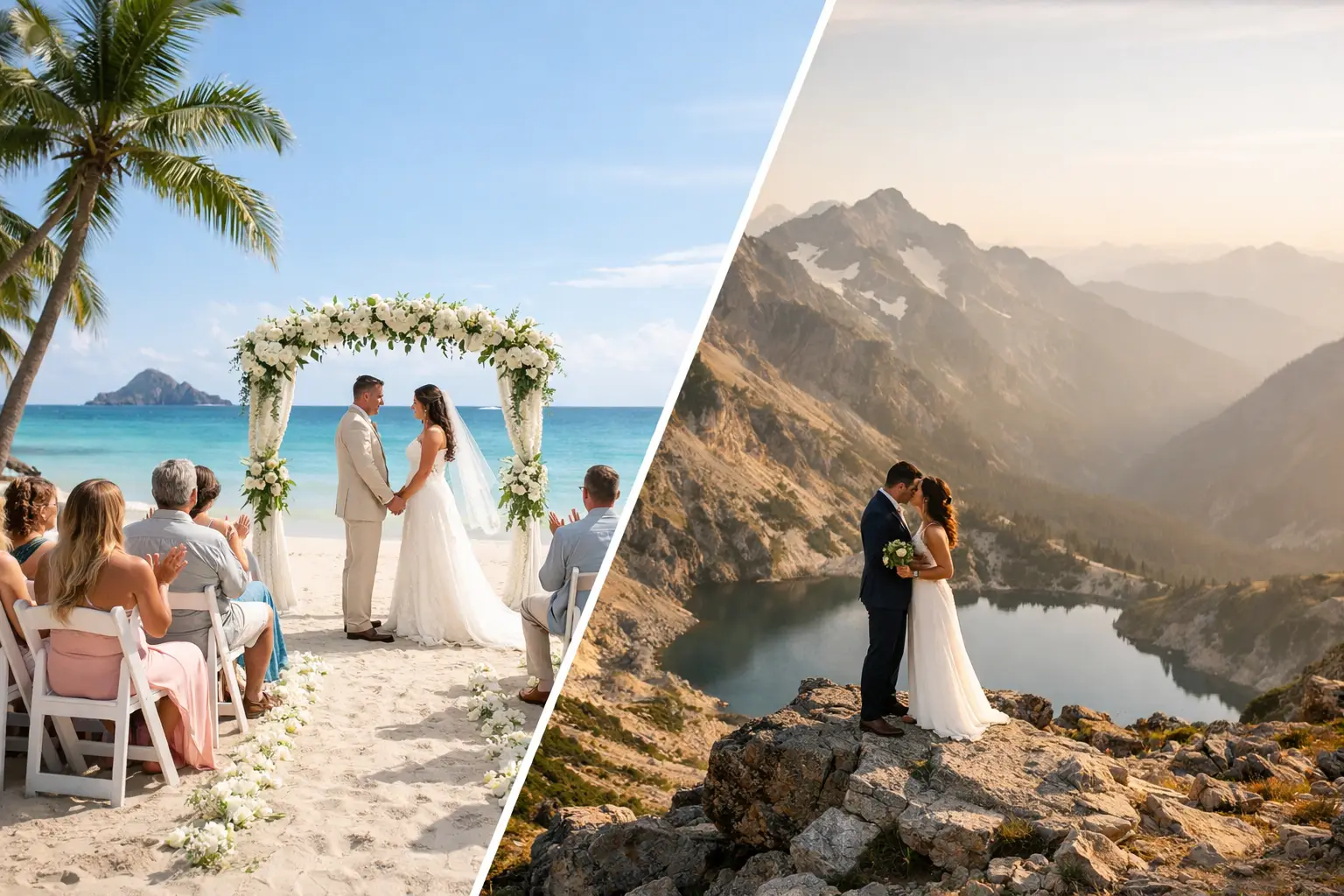
You can picture it already: ocean air, a sunset ceremony, and the moment you finally stop planning and start celebrating. But when couples start comparing destination wedding vs elopement, they usually realize they are not choosing between big and small. They are choosing between two very different travel experiences, two different planning paths, and two different ways to spend their money, time, and energy.
That is why this decision deserves more than a quick glance at guest count. The right choice depends on how you want the trip to feel, how much coordination you are comfortable managing, and what kind of memories matter most to you and your partner.
Destination wedding vs elopement: what is the real difference?
A destination wedding usually includes a guest list, even if it is a small one. It often means travel for multiple households, room blocks, ceremony logistics, receptions, vendor coordination, and a schedule that feels closer to an event weekend than a simple ceremony. Even with a relaxed vibe, it is still a hosted experience.
An elopement is typically far more private. Sometimes it is just the couple. Sometimes a few guests join, like parents, siblings, or a best friend. The focus is less on hosting a group and more on creating an intimate moment in a place that feels meaningful. It can still be beautifully planned, but it is usually lighter, more flexible, and less dependent on everyone else’s travel schedule.
Neither option is better by default. The better option is the one that matches your priorities.
Start with the experience you want
If you have always imagined celebrating with your people, a destination wedding may feel more complete. There is something special about turning the wedding into a shared trip, especially when guests can enjoy a few days together instead of rushing through a single local event. For many couples, that mix of ceremony, vacation, and quality time is the whole point.
If your dream is something quieter and more personal, an elopement often delivers that much better. You can keep the day centered on your relationship instead of managing guest expectations, timelines, and seating charts. Many couples are surprised by how freeing that feels.
This is where honesty matters. If you know you would be heartbroken without your family there, eloping may sound simple but feel emotionally off once the day arrives. On the other hand, if the thought of coordinating flights, meal counts, and group communication already makes you tired, a destination wedding may be more stress than celebration.
Budget is not just about size
A lot of couples assume eloping is always cheap and destination weddings are always expensive. That is not quite true.
An elopement is often lower cost because you are paying for fewer people and fewer event elements. But if you choose a luxury resort, high-end photography, premium dining, and an extended honeymoon right after, your total can still climb quickly. Small does not always mean inexpensive.
A destination wedding can sometimes offer better value than a traditional hometown wedding, especially if the venue bundles ceremony space, lodging, dining, and basic event services. But the more guests you invite and the more events you host, the more your budget starts stretching across travel coordination, welcome gatherings, group dinners, transportation, décor, and entertainment.
The smartest way to compare destination wedding vs elopement is to look at your total spend, not just your guest count. Ask yourself whether you want to invest more in the experience for two or the experience for a group. That answer usually reveals a lot.
Guest logistics change everything
Travel planning gets more complex the moment your wedding includes other people. With a destination wedding, you are not just booking your own trip. You are choosing a location that guests can realistically reach, considering passport requirements, flight availability, transfer times, room options, and overall accessibility.
This does not mean destination weddings are too hard. It just means they benefit from strong planning. A great destination can become frustrating if it requires multiple connections, has limited lodging, or stretches different budgets too far. Couples often underestimate how many guest questions they will field once save-the-dates go out.
With an elopement, most of that complexity disappears. You can choose a place based on what you want, not what works for 30 or 50 other travelers. That freedom opens up more possibilities, especially for couples who want a remote beach, a mountain setting, or a once-in-a-lifetime international location.
If convenience for loved ones is one of your top priorities, a destination wedding may need a more carefully selected location. If flexibility for yourselves matters more, eloping gives you more room to choose boldly.
Planning stress looks different in each option
A destination wedding often requires a higher level of coordination because you are blending travel planning with event planning. That includes choosing the right resort or venue, understanding marriage requirements, creating a workable schedule, communicating clearly with guests, and making sure the trip flows smoothly from arrival to departure.
That can feel like a lot, especially for busy couples already balancing work, family, and everyday life. The good news is that much of that stress can be reduced with expert help. Couples who work with a planning-first travel advisor usually save themselves from piecing together flights, rooms, transfers, and wedding details on their own.
An elopement is usually simpler, but not automatically stress-free. You still need to think through location rules, ceremony timing, weather, photography, travel documents, and what happens if something shifts at the last minute. Simpler does not mean careless. It means fewer moving parts.
For couples who want the easiest possible path, the question is not which option has zero planning. It is which type of planning feels more manageable.
The emotional side matters more than people expect
This is where many couples get stuck. On paper, one option may look easier. Emotionally, it may not feel right.
A destination wedding can create powerful shared memories. Your families meet for breakfast by the beach. Friends stay up too late laughing after the reception. The celebration feels bigger than the ceremony itself. If connection is a huge part of your vision, that matters.
An elopement creates a different kind of emotional value. The day can feel deeply personal, calm, and unfiltered. There is less performance and more presence. For some couples, that intimacy is exactly what makes the experience unforgettable.
There can also be trade-offs. Couples who choose a destination wedding may feel pulled in many directions during the trip. Couples who elope may later wish they had included a few loved ones. Neither regret is guaranteed, but both are worth discussing before you book anything.
When a destination wedding makes more sense
A destination wedding usually fits best if you want your celebration to double as a group getaway, you care about having family and friends there, and you are comfortable with more structure. It also makes sense when you want a few traditional wedding elements, like a reception, music, shared meals, or multiple events over a weekend.
This path can be especially appealing for couples who want the energy of a wedding without the scale of a large hometown event. You still get the excitement of bringing people together, but in a setting that feels more memorable and vacation-like.
If you also want support coordinating both the travel and the event experience, this is where a full-service partner can make the process much easier.
When an elopement may be the better fit
An elopement often makes more sense if privacy matters most, you want a flexible timeline, or you would rather invest your budget in a more personal trip than a hosted event. It is also a strong fit for couples who feel overwhelmed by wedding traditions or do not want outside opinions shaping their decisions.
Elopements work beautifully for adventurous couples, second marriages, short engagement timelines, and partners who want the ceremony to feel intentional rather than highly produced. They can be romantic, elevated, and unforgettable without being elaborate.
And if you still want a celebration later, you can always separate the ceremony from the party. That hybrid approach gives many couples the best of both worlds.
How to choose without second-guessing yourself
If you are torn between destination wedding vs elopement, stop asking which option sounds better online and ask which one matches your real life. Think about your budget, your favorite way to travel, your family dynamics, your stress tolerance, and what you want to remember most.
Some couples want the joy of bringing everyone together. Others want the freedom to disappear somewhere beautiful and keep the moment just for themselves. Both are valid. Both can be amazing. The key is building the trip around your priorities instead of forcing yourselves into someone else’s version of the perfect wedding.
At K&S The Travel Crusaders, that is exactly how we think about travel planning. The best celebration is the one that feels manageable to plan, meaningful to experience, and worth every mile it takes to get there.
Choose the version that lets you be fully present when the day arrives. That is usually the one you will never regret.