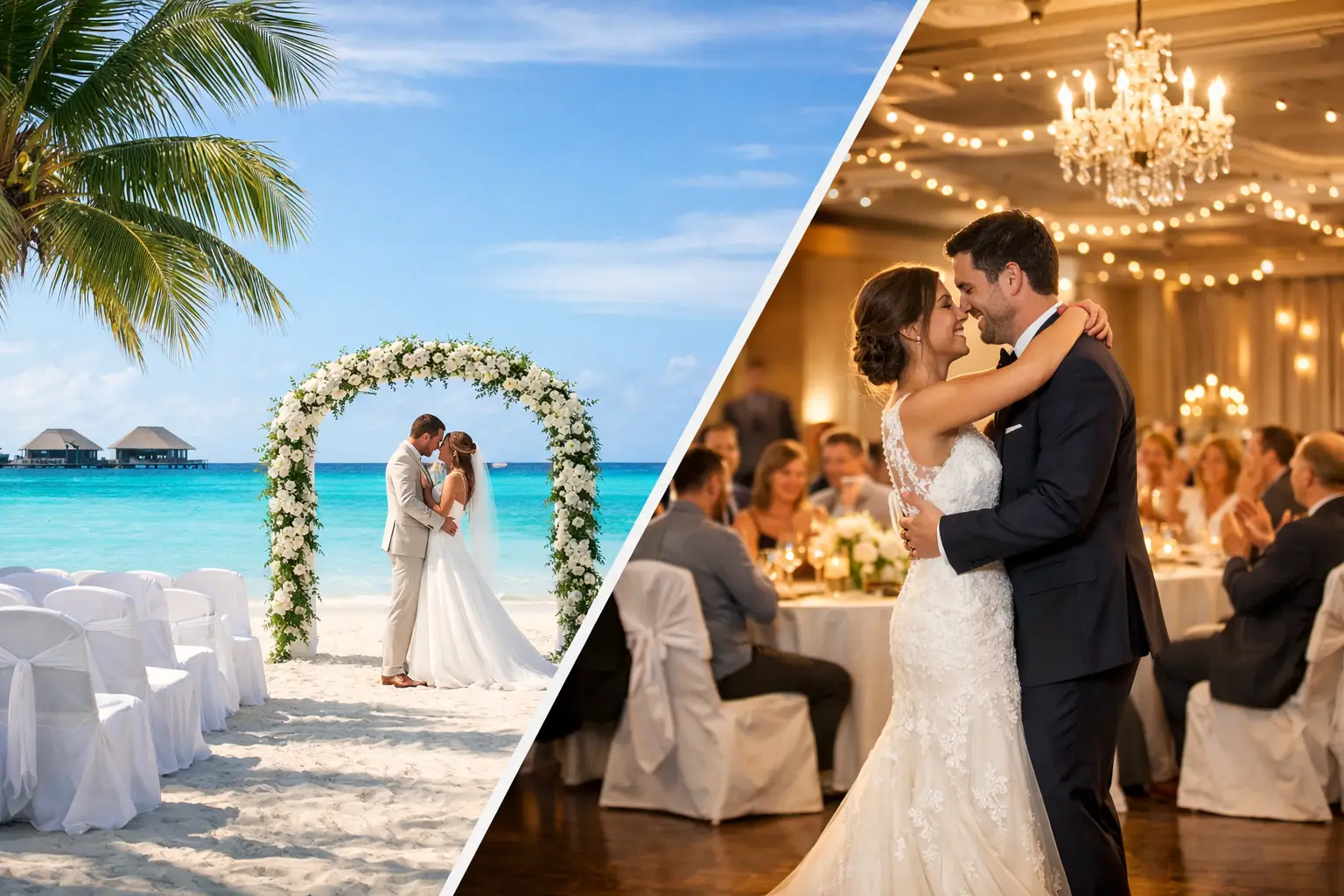
A couple tells us they want ocean views, a smaller guest list, and a wedding that feels like a vacation. Ten minutes later, they are worried about flight costs, elderly relatives, and whether everyone will actually come. That is the real destination wedding vs hometown reception conversation – not just style, but priorities.
If you are weighing these two options, the right answer is rarely about which one looks better on social media. It comes down to budget, guest experience, planning bandwidth, and what kind of memories you want to build. Some couples want one big night close to home. Others want a full travel experience that turns the wedding into a shared getaway. Both can be incredible when the plan matches the people.
Destination wedding vs hometown reception: what changes most?
The biggest difference is not the venue. It is the guest commitment.
A hometown reception usually asks people for a free evening, maybe a hotel stay, and a gift. A destination wedding asks for airfare, time off work, travel documents in some cases, and a bigger financial commitment overall. That naturally changes your guest count, your timeline, and the kinds of conversations you will need to have early.
For some couples, that is actually a benefit. If you want a more intimate celebration with your closest people, a destination wedding can filter the list without you having to explain every guest decision. If your dream is to celebrate with your full extended family, college friends, coworkers, and community all in one room, a hometown reception often makes that easier.
This is where honesty matters. If having a large turnout is emotionally important, do not assume everyone can travel just because they love you. People may be balancing childcare, health issues, PTO limits, or tight budgets. Love is real. Logistics are real too.
The budget question is more nuanced than people expect
Many couples assume destination means more expensive and hometown means cheaper. Sometimes that is true. Sometimes it is not.
A destination wedding can lower certain costs. Resorts and wedding packages may bundle the ceremony setup, food, drinks, and accommodations perks into one price. A smaller guest list also reduces spending fast. Feeding 30 people in a beautiful destination may cost less than hosting 150 people at home with separate vendors for every detail.
A hometown reception, though, can give you more flexibility and more control over your spending. You may have access to local vendor relationships, more venue choices at different price points, and fewer travel-related surprises. Guests can often attend without booking flights, which can also reduce pressure and guilt around asking people to celebrate with you.
Where destination weddings can get tricky
Travel costs do not always show up neatly in the wedding budget spreadsheet. Site visits, baggage fees, vendor travel, group transportation, passport rush fees, and weather-related disruptions can all add stress if they are not built into the plan. You also need to think beyond your own costs. Even if your wedding package is affordable, your guests may still feel the trip is expensive.
Where hometown receptions can creep upward
The larger the guest list, the faster costs multiply. Catering, bar service, rentals, florals, photography, entertainment, transportation, and venue add-ons can turn a local celebration into a major investment. Couples are sometimes surprised to learn that keeping the wedding close to home does not automatically keep it modest.
A practical rule: if your top budget goal is controlling total spend, compare full event costs side by side, not just venue pricing. If your top emotional goal is intimacy, the destination option may naturally support that.
Guest experience matters more than trends
A beautiful wedding is one thing. A well-supported guest experience is another.
With a destination wedding, guests are not just attending your event. They are navigating airports, hotel check-ins, transportation, schedules, and costs. That does not mean you should avoid a destination celebration. It means you should treat hospitality as part of the wedding planning, not an afterthought.
When destination weddings are done well, they feel immersive and memorable. Guests get quality time with the couple over several days instead of a few rushed hours. There is room for welcome dinners, excursions, beach time, and real connection. For couples who value experience over formality, this can be the biggest advantage.
A hometown reception usually wins on convenience. More guests can say yes. Older relatives may feel more comfortable. Parents with small children have fewer hurdles. If your community is a major part of your life and you want that energy in the room, local celebrations often deliver it better.
Ask yourself one simple question
Do you want your wedding to feel like a trip, or do you want it to feel like a gathering?
Neither answer is more romantic. They are just different experiences.
Planning stress: different type, different pressure
Couples often focus on where they want to celebrate and forget to think about how they want to plan.
A destination wedding usually requires stronger travel coordination. Room blocks, airport transfers, group communication, legal marriage requirements, backup weather plans, and vendor alignment all matter. That can feel like a lot, especially if you are managing guests from different cities or trying to compare resort package details that are not always easy to decode.
This is where expert support can make the process feel manageable instead of overwhelming. A planning-first approach helps couples avoid common problems like underestimating travel timelines, choosing a property that is not guest-friendly, or missing important payment deadlines. At K&S The Travel Crusaders, this is exactly where travel planning and event support work well together – one team helping couples think through both the trip and the celebration.
A hometown reception brings a different kind of pressure. There may be more vendors to coordinate, more DIY temptation, more opinions from local family, and more social expectations around who gets invited. It can be easier logistically, but harder emotionally if you are trying to balance family dynamics and a large event.
Destination wedding vs hometown reception for different couple priorities
The best choice depends on what matters most to you.
If you want more time with fewer people
Destination weddings usually win. You get longer, richer time with your guests, and the guest list tends to stay focused on your inner circle. This can feel more personal and less performative.
If you want maximum attendance
A hometown reception is usually the better path. It reduces barriers and gives more people the chance to celebrate with you. If seeing a packed dance floor full of familiar faces is the dream, local may fit best.
If you want a built-in honeymoon feel
Destination weddings have a clear advantage. You are already in a setting designed for relaxation, celebration, and travel memories. In some cases, couples move right from wedding mode into honeymoon mode with almost no transition stress.
If you want more customization
A hometown reception often gives you more freedom with venue style, catering, entertainment, and timeline. Destination packages can be convenient, but they may limit how much you can personalize every detail.
The hybrid option is worth considering
Some couples do not need to choose one or the other completely.
A smaller destination wedding followed by a hometown reception can be an excellent middle ground. You get the travel experience and intimate ceremony you want, while still celebrating later with a larger group at home. This works especially well when you know important people may not be able to travel but you still want them included.
The key is setting expectations clearly. Guests should understand whether they are invited to the destination event, the hometown reception, or both. Clear communication keeps feelings from getting tangled with assumptions.
A smart way to decide without second-guessing yourself
Try narrowing your decision through four filters: guest count, budget comfort, planning capacity, and emotional priority.
If your ideal guest count is under 40, your heart is set on an experience, and you are comfortable managing travel details with support, a destination wedding may be the right fit. If your ideal guest count is over 100, your budget depends on guests staying local, and family attendance is central to your vision, a hometown reception may serve you better.
If you are split, ask which regret would feel bigger: not having the trip, or not having the crowd.
That question tends to bring clarity fast.
What couples often regret most
It is usually not the location itself. It is choosing a format that did not match their real priorities.
Couples regret destination weddings when they expected high attendance without considering guest realities, or when they chose a property that looked great online but made logistics difficult. Couples regret hometown receptions when they built a large event they did not actually want, just because it felt like the expected thing to do.
Your wedding should reflect your life, your relationships, and your capacity. Not somebody else’s checklist.
The good news is that there is no wrong style here. There is only the version that fits you better. Choose the celebration that lets you stay present, care for your guests well, and start this next chapter feeling excited instead of stretched thin. That is the kind of wedding people remember for the right reasons.