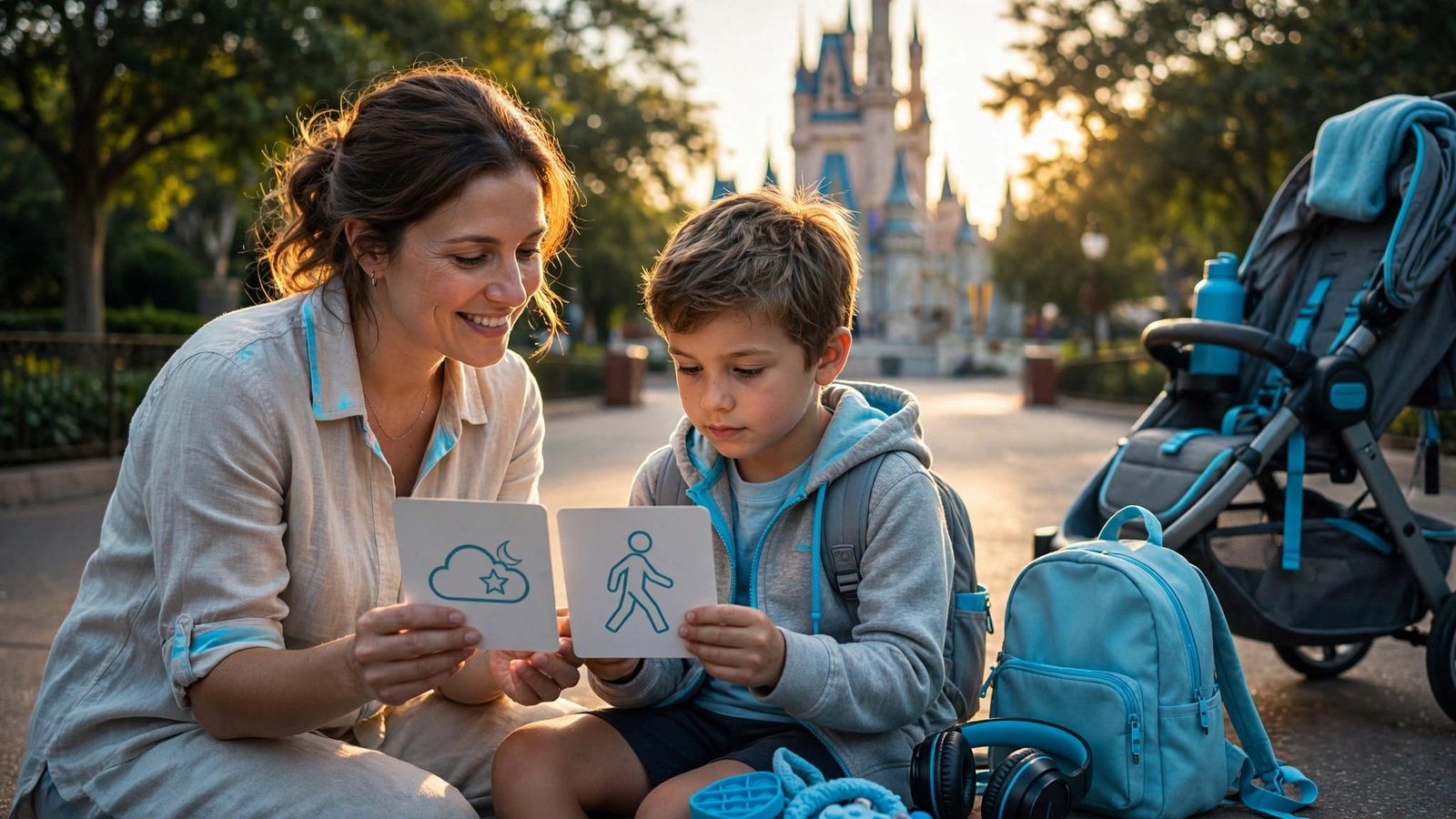
A day at Walt Disney World Resort can be full of joy. Theme parks can get loud, bright, hot, crowded, and unpredictable fast. For many families, the best Disney autism guide is not a packed ride list. It is a plan that gives your child comfort, choices, and time to reset.
Your child does not need to stay until fireworks or ride every popular attraction for the day to count. A child with a developmental disability may need a different pace or support plan. Children with neurodivergent disabilities can have different sensory, communication, and regulation preferences. A successful park day is one where your family feels supported and knows what to do when plans change.
Key Takeaways for a Calmer Disney Day
- Start with your child’s real needs, including food preferences, communication, mobility, sensory triggers, sleep, and comfort items.
- Choose one or two priorities, then leave room for snacks, breaks, and a change of plan.
- Use a simple visual schedule so your child can see what is happening now and what comes next.
- Check Disney’s current accessibility options before your trip, including Disability Access Service, Rider Switch, and queue access.
- Plan breaks before your child looks overwhelmed. A short pause can make the next part of the day possible.
- Treat a hotel pool break, an early exit, or a quiet meal as part of the vacation, not missed park time.
Start With Your Child’s Real Needs
There is no single Disney plan that works for every autistic child. One child may love loud music, rides, and character meet-and-greets. Another may enjoy one attraction, then need a familiar snack and quiet time. Even children with the same diagnosis or developmental disability can have very different needs.
Think about what works at home, school, or on local outings. When planning a day at Walt Disney World Resort, use your child’s real routines instead of copying another family’s itinerary.
Look for Early Signs of Overload
Write down the early signs that your child needs space. It may be covering ears, moving faster, becoming quiet, asking repetitive questions, refusing food, or wanting to leave.
Don’t wait for a full meltdown before changing course. A snack, bathroom stop, shaded bench, or return to the resort can help your child regroup sooner.
Choose Fewer Must-Do Experiences
Pick one morning priority and one later option. Consider dining reservations only if a scheduled meal fits your child’s energy, food preferences, and need for flexibility. Your child may want to repeat a favorite ride three times. That is okay. They may also decide the pool is more fun than another busy afternoon in the park.
A flexible day gives your family room to follow your child’s energy level. For more help with planning a Disney vacation for an autistic child, build rest days into the trip before you ever arrive.
Build a Visual Schedule With Choice Points
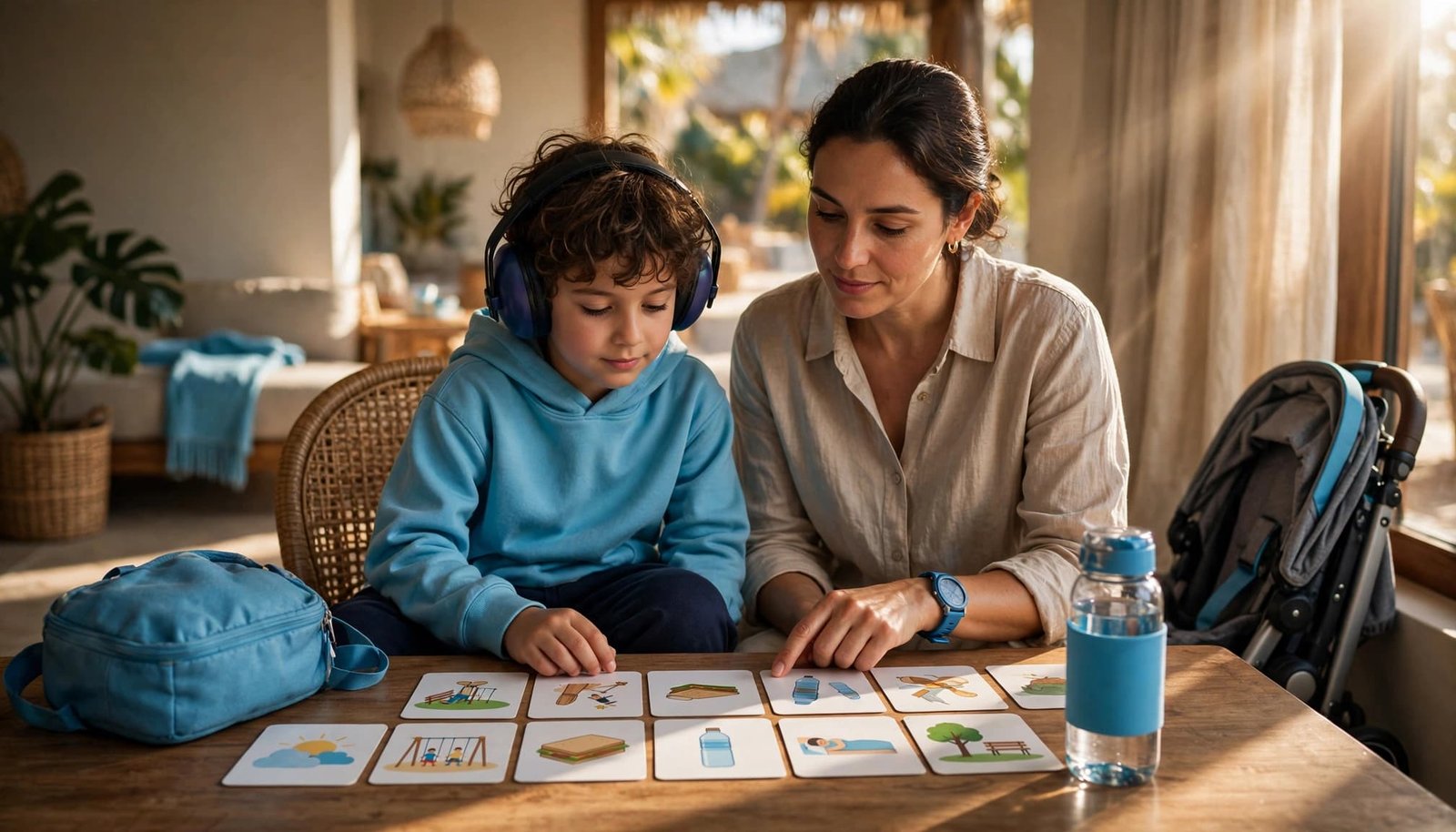
A visual schedule can make a big day feel more predictable. It doesn’t need to include every ride, every meal, or every minute. Keep it simple.
Show the main rhythm: breakfast, transportation, park entrance, first ride, snack, break, lunch, hotel, and dinner. Pictures, icons, a phone note, or a small laminated card can all work.
You might also include a current attraction return window, a Lightning Lane selection, or dining reservations, but only when your family uses those options. Treat them as planning markers, not fixed promises.
Use Clear, Simple Language
Instead of saying, “We’ll see what happens,” give your child a clear next step. Try: “First, we ride the train. Then, we have a snack. After that, you choose one more ride or a break.”
If an attraction closes or the weather changes, show what is replacing it. A backup choice makes disappointment easier to handle.
Let Your Child Make Small Choices
Child-led doesn’t mean your child has to manage the whole itinerary. It means they have a voice in the day.
Offer two choices that both work for your family. Your child can choose between two nearby rides, a snack now or after the next ride, or a quiet table inside or outside. Siblings can choose a snack stop or help find a meeting spot. Nobody should have to become the built-in helper all day.
A child-led Disney day has structure, but it also has permission to stop, change plans, and try again later.
Use Disability Access Service as One Tool
Disney’s Disability Access Service, also called DAS, may help eligible Guests, including autistic guests, who cannot wait in a traditional attraction queue because of a developmental disability, including autism or a similar condition. Eligibility is based on a Guest’s functional needs, not a diagnosis alone.
DAS is not front-of-line access or the same as Lightning Lane, a paid or app-based attraction option. It gives an attraction return time that is comparable to the current standby wait.
Register Before Your Trip When Possible
Disney offers DAS registration through a live video chat with a Cast Member beginning up to 60 days before your first park day. The registered Guest must be present for the conversation.
Review Disney’s current Disability Access Service information and Accessibility Planning Guide before you travel. Procedures can change, including whether an attraction uses a virtual queue, so verify current policies before park morning. You can also check current attraction-access information in the My Disney Experience app.
Understand How Return Times Work
After entering the park, eligible families can request a return time in the My Disney Experience app. A party can hold one DAS return time at a time.
The DAS Guest must ride when the return time is used. If using a phone is difficult, ask Guest Relations or a Guest Experience Team location for help. Families can also ask Guest Relations to clarify app-based planning. A return time handles attraction waiting. It does not replace a needed sensory break, water, food, or a calmer space. Verify current Lightning Lane rules separately, since it isn’t a substitute for sensory support.
Make Attractions Work for Your Family
The ride itself may not be the hard part. The queue, darkness, loud sounds, tight spaces, sudden drops, water effects, or character scenes may feel difficult.
Review sensory experience details for a specific attraction or Magic Kingdom Park area before your trip. When comparing attraction options, remember that Lightning Lane may change the wait, not the ride’s sensory demands.
Watch ride-through videos when they help your child. Talk through what they may see and hear. Then give them an easy way to say “no,” “break,” or “not today.” Consent still matters, even when a shorter wait is available.
Ask About Rider Switch
Rider Switch can help when one child cannot or doesn’t want to ride. One adult waits with the child while another adult rides. The travel party can divide responsibilities, then the waiting adult may ride afterward without entering the regular line again.
Ask a Cast Member whether Rider Switch is available for that attraction and your situation. Lightning Lane, when available, doesn’t remove the need to consider sensory triggers, consent, or a child’s wish to skip a ride.
The whole group needs to speak with a Cast Member at the attraction first. Disney says up to two people from the waiting party may ride next. You can review current accessibility services for Guests with disabilities before your visit.
Check Stroller Needs Directly With Disney
Some Guests use a stroller as a mobility device. Disney may offer a “Stroller as a Wheelchair” tag for eligible Guests, but procedures can change.
Confirm current options before your trip and ask a Cast Member when you arrive. Check whether an attraction uses a virtual queue or other current procedures, and ask the Guest Experience Team if you need help. Disney’s information on accessing attraction queues is a helpful place to start.
Plan Sensory Breaks Before You Need Them
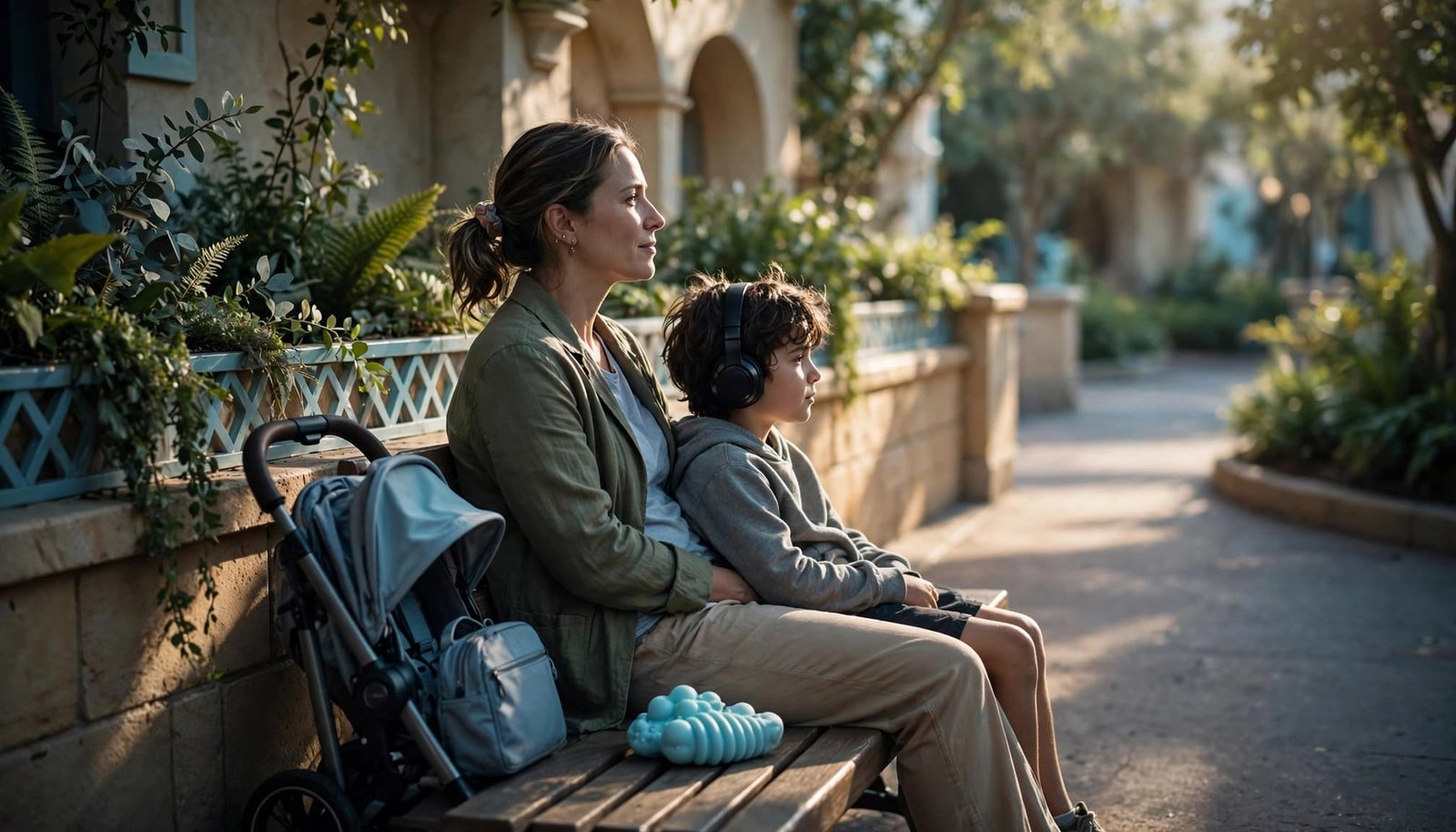
Quiet locations at Walt Disney World aren’t always marked on a map. A good break space may be a shaded path, an indoor attraction, a quieter table, a hotel lobby, or a bench away from a parade route.
It doesn’t need to be silent. Fewer people, a place to sit, shade, and an easy exit can be enough.
Find Two Possible Reset Spots Early
When you enter a park, identify two possible break areas for later. Look for seating away from storefront entrances, calmer walkways, indoor seating, gardens, or slow-moving indoor attractions.
Crowds change all day. A place that feels calm at 10:00 a.m. may be busy after a parade. Ask Guest Relations or a Cast Member for the nearest lower-traffic option if your child needs a break.
Baby Care Centers, First Aid, and companion restrooms may be useful depending on your family’s needs. Always ask before using an area for a longer break.
Pack Familiar Supports Where You Can Reach Them
Keep sunglasses, comfort items, water, snacks, medication, a portable charger, and communication tools easy to reach. If your child already uses noise-cancelling headphones, pack them too. Don’t bury these supports under ponchos and souvenirs.
Bring your child’s AAC device, picture board, or other familiar communication system if they use one. Pack a charged battery, protective case, and a low-tech backup. A simple card with choices for food, bathroom, help, waiting, and break can make a hard moment easier.
Keep Meals Predictable and Flexible
Hunger, heat, and unfamiliar food can make a busy Disney day harder. Carry familiar snacks when they fit your child’s needs. Plan meals before everyone is already tired and hungry.
Dining reservations can help schedule meals around energy, food preferences, and likely crowd levels, but they aren’t required. At EPCOT, Quick Service choices include Connections Eatery, Connections Cafe, Katsura Grill, Regal Eagle Smokehouse, and Les Halles Boulangerie & Patisserie. These are food options, not guaranteed sensory-friendly spaces. Check the current noise level, seating, and menu before committing.
Mobile ordering can reduce time spent standing in a crowded line. Use the My Disney Experience app for mobile ordering and current dining details, remembering that features and procedures can change. Before building meals around attractions, verify current virtual queue and Lightning Lane options. They don’t replace sensory breaks or flexible food planning. A familiar meal at your resort may also be the better choice on a hard day. Use these Disney dining reservation strategies to match meals with the park area and timing already on your plan.
Keep Your Autism Travel Resources Handy
A guide is helpful when you’re preparing at home and deciding what comes next in the park. Our family-created Accessibility Planning Guide can be used alongside Disney’s current official accessibility-planning information. It was created by autism parents with real-world travel planning experience. Kellie also brings a B.A. in Child Development to the family-centered approach.
You can find the guide as a Disney autism planning PDF on Etsy or get the Disney World autism guide on Amazon.
For practical travel items, visit the Trip Rescue Shop. You can find travel needs for family trips, including strollers and cleaning supplies for unexpected sick-on-vacation moments.
Frequently Asked Questions
How far ahead can families register for DAS?
Eligible Guests can use Disney’s live video chat registration process up to 60 days before their first park visit. The Guest requesting DAS needs to be present for registration. Disney’s procedures can change, so check the latest guidance before your trip.
Are there official quiet rooms in every Disney park?
Disney does not promise a dedicated sensory room in every park. Look for lower-traffic areas, shaded seating, indoor shows, and restaurant seating. Ask a Cast Member or Guest Relations for a current option when you arrive.
Is leaving early a failed Disney day?
No. Leaving early can protect your child’s comfort and make tomorrow easier. Even with a scheduled attraction option or paid Lightning Lane selection, you’re allowed to end the day when your child needs a break. A short park day with a happy child is often a better family memory than pushing through until everyone is exhausted.
Let Comfort Lead the Day
The best Disney autism guide starts with one simple idea: your child’s comfort matters more than completing a checklist. Rides can wait. A break cannot always wait.
Build in choices, keep familiar supports close, and treat rest as part of the plan. A successful Disney day is the one your family can enjoy together.