
A Disney World trip doesn’t need to begin with the hope that your child will suddenly eat new foods, enjoy every ride, or stay in the park all day.
When food is limited and sensory sensitivities are high, disney autism planning works best when it is built around your child’s real routine. For families supporting a child with autism spectrum disorder or cognitive disabilities, a good day at theme parks may include one favorite attraction, familiar snacks, and an early return.
The goal is not to copy someone else’s Disney schedule. The goal is to create a family vacation your family can enjoy without pushing past its limits.
Choose a home base that makes breaks possible
Your hotel choice can shape the whole trip. A hotel room close to the parks may make midday breaks easier. An off-site hotel or vacation rental with a kitchen may make familiar meals easier. Both can work.
Think about what happens when your child needs quiet, food, a bathroom, clean clothes, or an early bedtime. That answer matters more than a pool slide or themed lobby.
Think in half-days, not marathon park days
A four-day Disney ticket doesn’t mean four park days in a row. Build in a rest day after two or three park days if your family needs it.
One park per day is often easier than Park Hopper tickets. Park hopping means more transportation, security lines, walking, heat, and decisions. Magic Kingdom can fill a full day without rushing. EPCOT is bigger than it looks, and crossing it several times can wear everyone out.
Pick one or two true priorities for each day. Everything else is optional.
Book room features that support your routine
Ask about refrigerator space, a kitchenette, bed layout, laundry access, elevator access, and stroller storage. A family suite can help when one child needs an early bedtime and another needs more room.
A smaller resort layout may feel better for a child who finds long walks difficult. A vacation rental may be a better fit when your child depends on a full kitchen and familiar meals. There’s no one right choice. There’s only the choice that gives your family room to reset.
Disney autism planning starts before the flight
Preparation helps when the trip feels unfamiliar. You don’t need to create a minute-by-minute schedule. You do need to make the next step easy to understand.
Start early enough that your child can see photos, watch attractions, ask questions, and change their mind. A ride that looked exciting on a screen may not feel right in person. That is useful information.
Make the day familiar on paper
Create a simple visual schedule with a few steps: hotel, security, one attraction, snack, break, and dinner. Add an “all done” card and a “change” card for moments when plans shift. Use the visual schedule as a flexible guide, not a promise that plans can’t change. A social story can also show arriving, waiting, taking a break, and leaving.
Watch ride videos together. Pay attention to darkness, loud music, sudden drops, water, motion, and character interactions. Previewing these details can help a child with cognitive disabilities feel prepared without forcing participation. If you’re already working with an occupational therapist, use their input when choosing sensory supports or previewing difficult transitions.
Security screening is part of every park day. Explain that bags will be checked, people may be asked to walk through scanners, and no one is in trouble. Disability services do not replace the entry screening process.
Pack a park bag you can use quickly
Put noise-reducing headphones, a comfort item, medications, wipes, extra clothes, snacks, and a low-tech communication backup in the same places each day. Keep devices, cords, and a portable charger together in one pouch.
Your phone may hold tickets, maps, mobile food orders, dining reservations, and attraction return times. A portable charger is not an extra item at Disney World. It belongs in the park bag.
If you are renting a car, take photos of the vehicle before leaving the garage. Ask how toll charges work, set a familiar playlist, and keep the first step simple: “We are going to the hotel now.”
Use DAS and queue tools for the problem they solve
Disability Access Service, often called DAS, may help some guests with autism or cognitive disabilities who may be unable to wait in a conventional standby line. Eligibility focuses on how waiting affects the guest, not a diagnosis alone. It is a queue accommodation, not a front-of-the-line pass or one of Disney’s paid line-skipping products.
Read Disney’s current Disability Access Service details before your trip. Policies and procedures can change, so don’t rely only on an older social media post or a previous visit.
Prepare for the DAS registration conversation
DAS registration happens by live video chat. A parent or caregiver requesting DAS must be at least 18 years old, and the guest needing the service must be present for the conversation.
Disney generally allows registration up to 60 days before arrival, including the park-visit date if needed. Share what happens during a long line and why waiting elsewhere would help. The conversation is about the effect of the queue, not a family having to share every medical detail.
Once DAS is active, the registered guest or a linked adult can request an attraction return time in the My Disney Experience app. Your family waits elsewhere, then returns at the assigned time. The DAS guest must be present and ride with the group.
DAS gives your child a different place to wait. It does not promise a no-wait, no-crowd, or no-change Disney day.
Keep a stroller as a wheelchair option separate from Rider Switch
A qualifying stroller tag is different from DAS. If your child uses a stroller as a wheelchair, ask Guest Relations about this option. Disney’s attraction queue access guidance explains how qualifying guests can keep the stroller with them in attraction queues.
Rider Switch is another separate tool. It can help when a child cannot ride or cannot wait outside an attraction alone. Bring the full group to the attraction entrance and ask a Cast Member for this option. One party rides first, then the other party can ride later without everyone waiting twice.
These disability services aren’t something you have to use all at once. Choose the support, including Rider Switch, that makes that moment easier.
Selective eating at Disney World: Protect the safe foods
Selective eating is not bad behavior, and vacation is not the time to force a food challenge. Your child needs enough familiar food and fluids to feel okay. That is the priority.
A disney autism planning checklist should include meals before rides, snacks before hunger gets big, and backup food in the park bag.
Pack foods your child already accepts
Bring familiar snacks that travel well, plus enough for delayed transportation, a longer-than-expected wait, or a restaurant meal that does not work out. Think about texture, brand, temperature, packaging, and smell. Sensory sensitivities can make those details matter as much as the food itself.
A water bottle, safe snack, and a quiet table can stop a hard moment before it grows. Keep food easy to reach. Do not bury it under ponchos and souvenirs.

Keep restaurant meals low-pressure
Review online menus while your child is calm, and identify available dietary accommodations before ordering. Mobile Order can help because you can choose food without standing in a busy counter line. Quick-service meals also give you more control over timing and how long you stay.
Order familiar sides when they are available. A plain item, fries, fruit, packaged snack, or favorite drink may be enough. You do not need a big themed meal for it to count as a successful Disney day.
Food allergies and medically restrictive diets need another level of care. Tell the Cast Member taking your order about dietary needs, review allergen information, and confirm the order when it arrives. For complex dietary accommodations, contact Disney before the trip.
Make the park day smaller than you think
Disney World is loud, hot, crowded, and full of transitions. A slower schedule gives your child more room to enjoy the parts they came for.
Check Disney’s neurodivergent guest services before you leave home. Then check the My Disney Experience app again on your park morning.
Choose attractions for your child, not a universal list
No ride is sensory-friendly for every child. Still, many families find slower attractions easier to try first. Magic Kingdom options may include the PeopleMover, “it’s a small world,” or the carousel. At EPCOT, Living with the Land and The Seas with Nemo & Friends may feel more manageable for some children.
Ride videos can help you evaluate darkness, sudden motion, loud sounds, and confined spaces. A ride labeled mild for one child may still be too intense for a child with cognitive disabilities.
Before choosing an attraction, consider whether your child can manage the standby line without DAS or another queue strategy.
Fireworks, parades, character greetings, dark rides, and launch coasters can be wonderful for one child and too much for another. Let your child be the guide.
Plan breaks before sensory overload starts
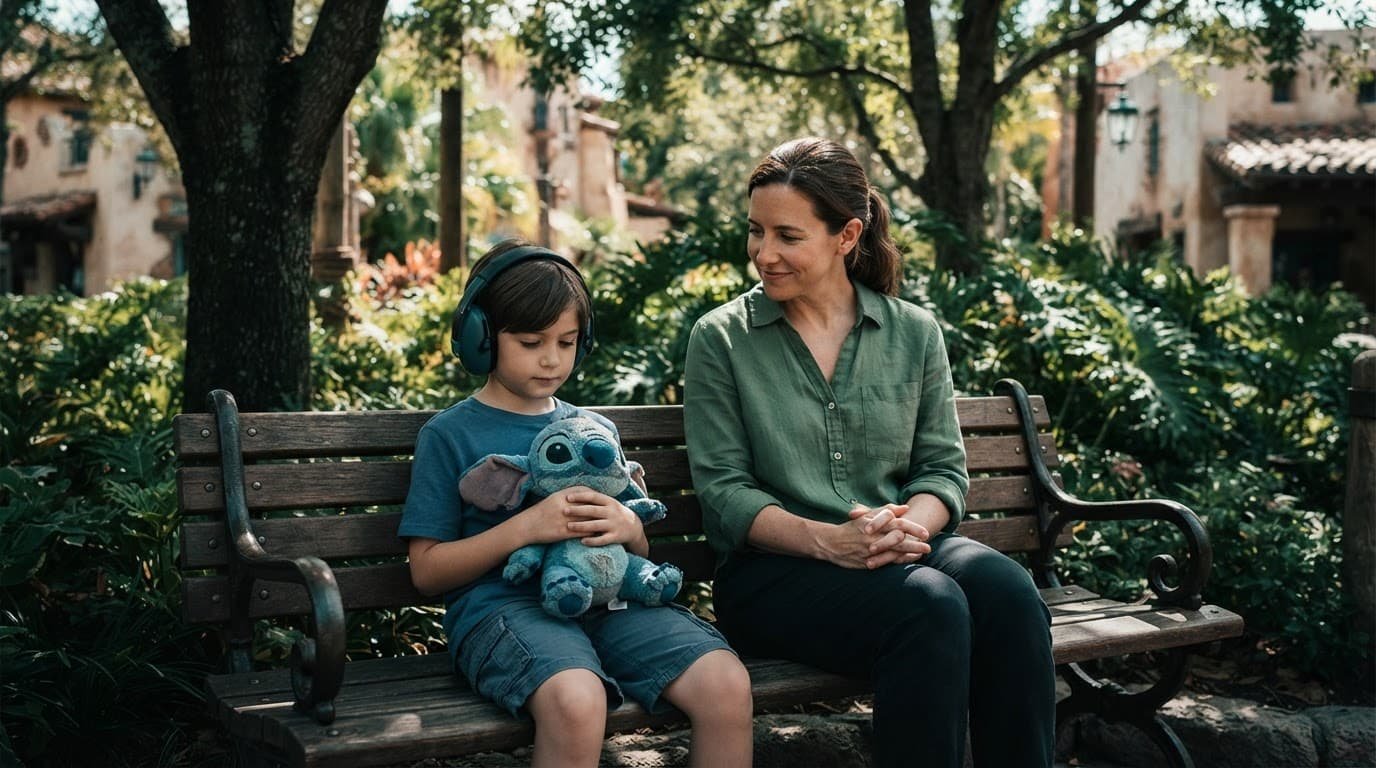
Take a snack, bathroom, shade, and water break before anyone looks overwhelmed. Plan midday breaks as part of the day, not as a missed opportunity. If useful, ask about companion restrooms, remembering that availability and noise levels vary.
Disney does not advertise a guaranteed quiet room in every park. First Aid is for medical needs, and Guest Relations or a Cast Member can help you find a lower-traffic place nearby. Quiet areas are still inside busy theme parks, so noise-reducing headphones and a comfort item can help.
An occupational therapist who knows your child may also help identify useful break locations or sensory supports.
Spend on what makes your family feel safer
Disney trips cost real money. That makes it hard to leave early, skip a ride, or take a hotel afternoon. But pushing through a hard day can cost more energy than a ticket is worth.
Use paid options when they reduce pressure. Skip them when they add another clock to watch.
Choose support items with care
Renting a special needs stroller can be a good investment for an older child who needs containment, posture support, a place to rest, or help with long distances. A standard stroller may be fine for occasional sitting, but it may not meet your child’s daily needs.
Lightning Lane Multi Pass is separate from DAS and costs extra. It can help when your family has a few must-do rides. It can also create stress if timed return windows are hard for your child. Buy Lightning Lane for a park day only when its timed return windows make the day easier.
Disney’s accessibility services overview is a helpful place to review current options before making purchases.
Keep your plan and supplies in one place
For more detailed help, the Disney World with Autism Guide on Etsy includes ideas for park days, accessibility needs, food planning, and breaks. You can also find the Amazon edition of the guide.
The Trip Rescue Shop can help you gather practical travel items, including stroller needs, comfort supplies, and cleaning products for illness during vacation. Packing a few helpful items ahead of time can make a tough moment easier to manage.
Leave room for a changed day
A plan can look great on paper and still fall apart before lunch. A ride may close, or it may rain. Your child may decide they are done after one attraction. That does not mean the trip failed.
Protect your budget and your energy
Before booking, read cancellation terms for tickets, hotels, flights, rental cars, and travel insurance. A cheaper booking with no flexibility may not feel like a bargain if your family needs to change plans.
Avoid filling every day because it feels like you need to get your money’s worth. Build in extra food, extra rest, and extra time. Those are not wasted vacation hours.
Give your child a simple exit plan
Before the trip, use a short social story to practice words such as “break,” “all done,” and “hotel.” When plans change, offer two manageable choices: sit in the shade or go to the gift shop, eat a snack or take the bus back.
Leaving early is always a valid option. A calm child and a calm caregiver matter more than finishing a park checklist.
Frequently Asked Questions
Can my child with autism qualify for DAS at Disney World?
DAS eligibility is based on how a guest’s disability affects their ability to wait in a conventional standby line, not on a diagnosis alone. Read Disney’s current DAS information and prepare to explain what happens during long waits.
What foods should I bring for a selective eater?
Pack familiar snacks and drinks your child already accepts, including enough for delays or a restaurant meal that does not work out. Consider brand, texture, temperature, packaging, and smell, since sensory sensitivities can affect whether a food feels safe.
How can we prevent sensory overload in the parks?
Plan breaks for shade, water, snacks, bathrooms, and quiet time before your child becomes overwhelmed. Noise-reducing headphones, a comfort item, and a flexible schedule can make it easier to leave an attraction or return to the hotel when needed.
Should we plan a full park day for every Disney ticket day?
No. Half-days, rest days, and early hotel returns may fit your family better than a packed schedule. Choose one or two priorities and treat everything else as optional.
A Disney Vacation That Fits Your Family
The best Disney World plan starts with one honest question: what does your child need to feel safe and comfortable today?
Protect the safe foods. Use DAS and other accessibility tools when they fit your child’s needs. Plan fewer priorities, pack familiar supports, and let breaks count as part of the vacation.
A successful Disney trip isn’t measured by how many rides you complete. It’s measured by the memories your family can enjoy together.