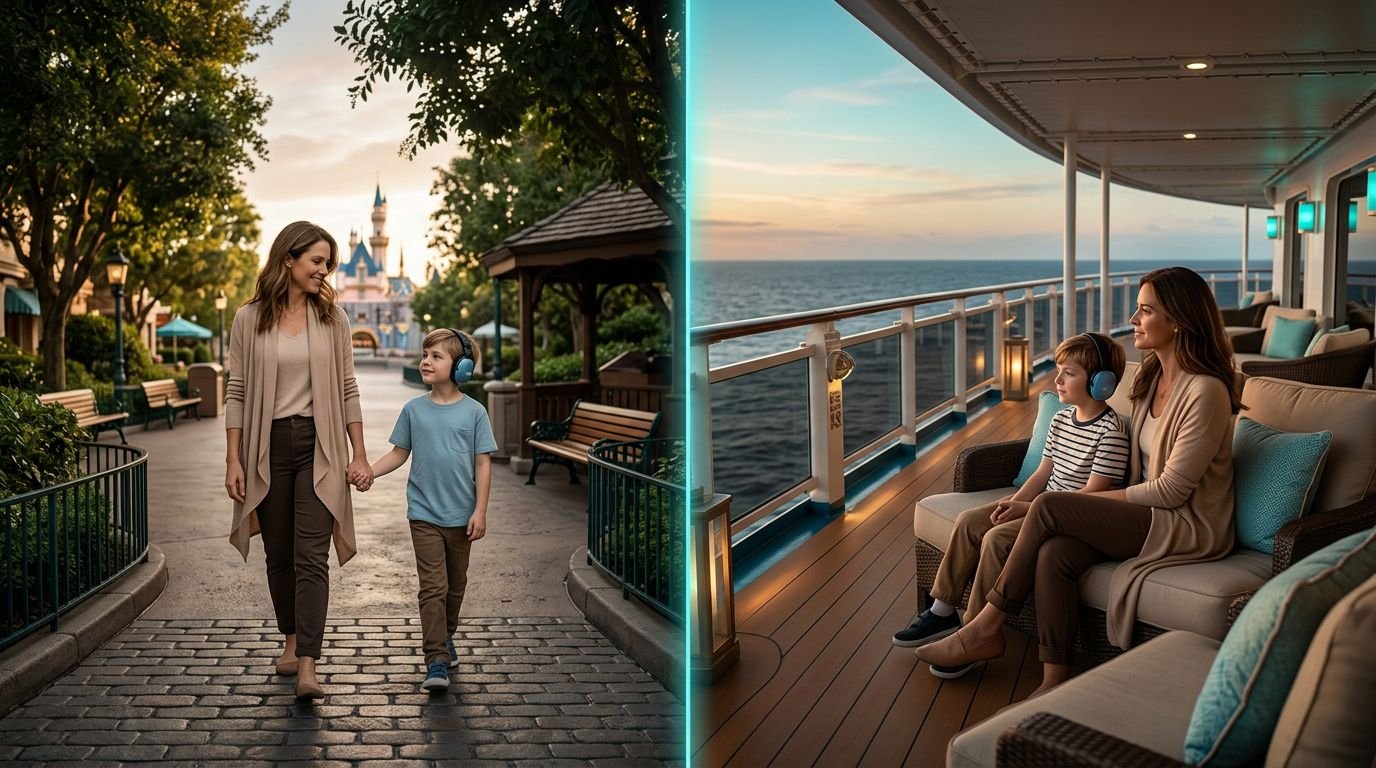
A Disney vacation can feel like a lot before you even leave home. The best Disney autism vacation is not the one with the most rides, dining reservations, or packed park days. It is the one that gives your child, teen, or adult traveler enough comfort to enjoy the moments that matter.
Disney World and Disney Cruise Line can both work well for autism families. The better choice depends on sensory needs, routines, mobility, energy levels, food preferences, and how much change your family can comfortably handle.
Start with the trip style that feels more manageable, then build the details around your real family routine.
Disney Autism Vacation: Start With Your Family’s Real Needs
Before comparing resorts, ships, or ticket packages, think about a regular good day at home. Does your traveler do better with movement and choices? Or do they need a quiet home base and fewer transitions?
There is no single right Disney choice for autistic travelers. Some families feel energized by the parks. Others find the rhythm of a cruise much easier.
Think about the hardest part of a typical travel day
Crowds, waiting, heat, noise, unfamiliar food, and transportation are common stress points. A child who loves rides may still struggle with a loud bus queue or a long walk back to the hotel.
Ask a few practical questions before you book:
- Does your traveler need a quiet room for breaks or early bedtime?
- Are long lines, security checks, and changing plans difficult?
- Would a familiar cabin and one dining room feel more comfortable?
- Does your family enjoy full days out, or need slow mornings and downtime?
A great vacation plan does not ask your child to push through discomfort all day. It gives everyone room to reset.
Consider routines, not only attractions
Disney World offers more choice. You can pick your park, rides, meals, resort, and daily pace. That freedom is helpful for families who like variety and want specific Disney experiences.
A cruise has fewer daily decisions. You wake up in the same cabin, return to the same cabin, and do not need buses or parking to get back for a break. For many families, that predictable routine is a big comfort.
When Walt Disney World Is the Better Fit
Walt Disney World is a good choice when your family has favorite attractions, enjoys character experiences, or wants the flexibility to leave and return to the hotel. It can be a wonderful Disney autism vacation when the park plan stays light.
Keep park days small and close together
You do not need to see every attraction. Pick one or two meaningful experiences for the morning, then decide what comes next based on energy levels.
At Magic Kingdom, staying in one area can save a lot of walking. A Fantasyland morning may include a favorite ride, a snack, and a quiet indoor attraction without racing across the park.
EPCOT needs the same kind of planning. Remy’s Ratatouille Adventure, Frozen Ever After, and Soarin’ Around the World are popular, but they are spread out. Build in time for bathrooms, food, shade, and sitting down.
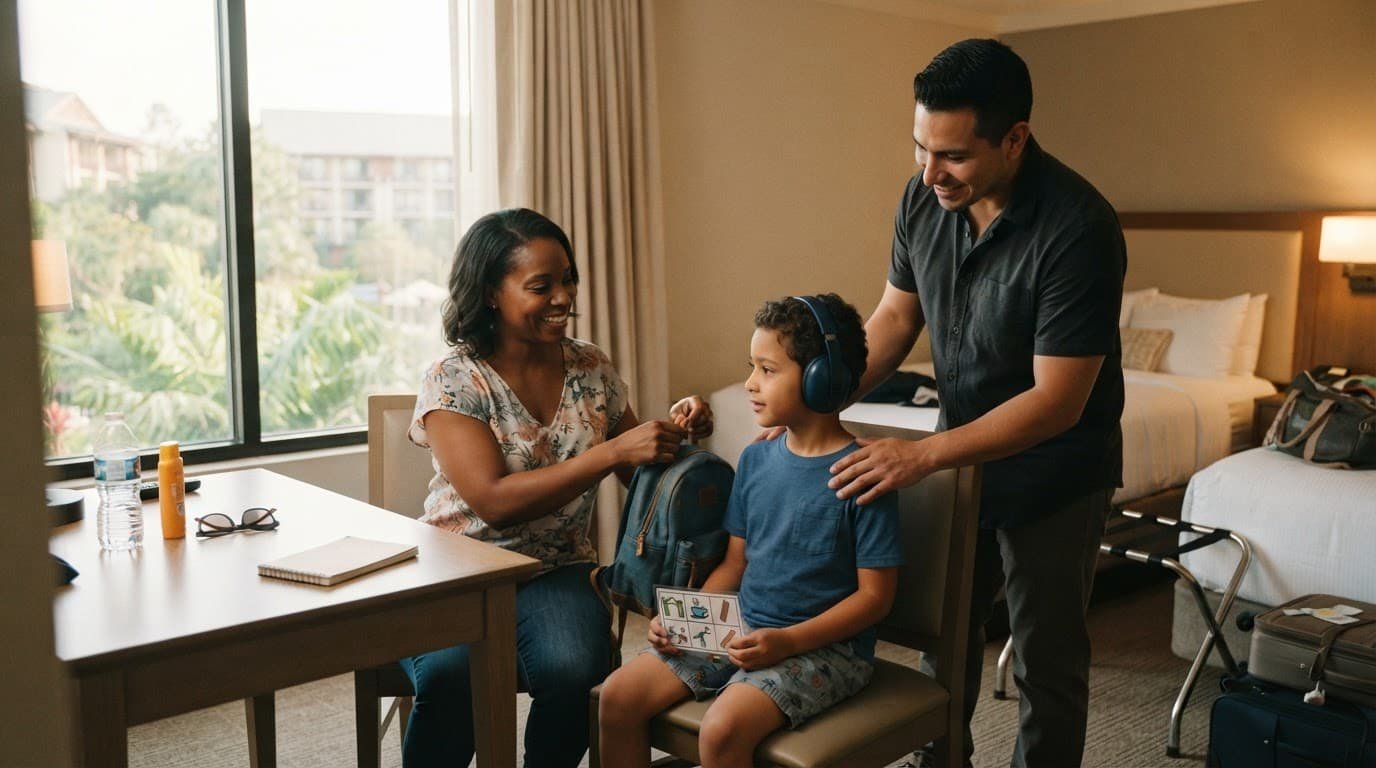
A midday hotel break can make the evening much easier. A resort day is not wasted money either. After a few busy park days, pool time, laundry, and a slow breakfast may be exactly what your family needs.
Understand DAS, breaks, and paid add-ons
Disney’s Disability Access Service information explains that DAS may help guests with developmental disabilities, including autism, who cannot wait in a conventional queue for long periods.
DAS is not automatic based on a diagnosis. Disney reviews each request through a conversation about how waiting in a standard line affects the guest. Pre-registration can begin up to 60 days before your first park day, so check the current requirements before your trip.
Once active, DAS lets the registered guest request an attraction return time through the My Disney Experience app. Your family waits elsewhere instead of in the physical line. It does not create a no-wait vacation, and it is separate from paid Lightning Lane options.
Keep a portable charger in your park bag. Your phone may hold tickets, maps, mobile food orders, messages, and DAS return times. Disney also publishes accessibility guides for each park, including sensory details. Ask a Cast Member for the nearest quieter break area. Disney names First Aid at every theme park and water park as one possible place to reset.
Why a Disney Cruise Can Feel Easier
A Disney cruise can be a better match when your family needs a slower rhythm. You still have activity, music, crowds, and unfamiliar moments, but the ship gives you a consistent place to return to throughout the day.
Your cabin becomes the reset space
At Disney World, a break can mean walking to transportation, waiting for a bus, and traveling back to the resort. On a ship, your cabin is usually much closer.
That makes it easier to take a quiet break after breakfast, change clothes after the pool, eat a familiar snack, or skip an activity without feeling like the day is over. You can choose a calm deck area, return to the cabin, or spend time in a less-busy lounge.
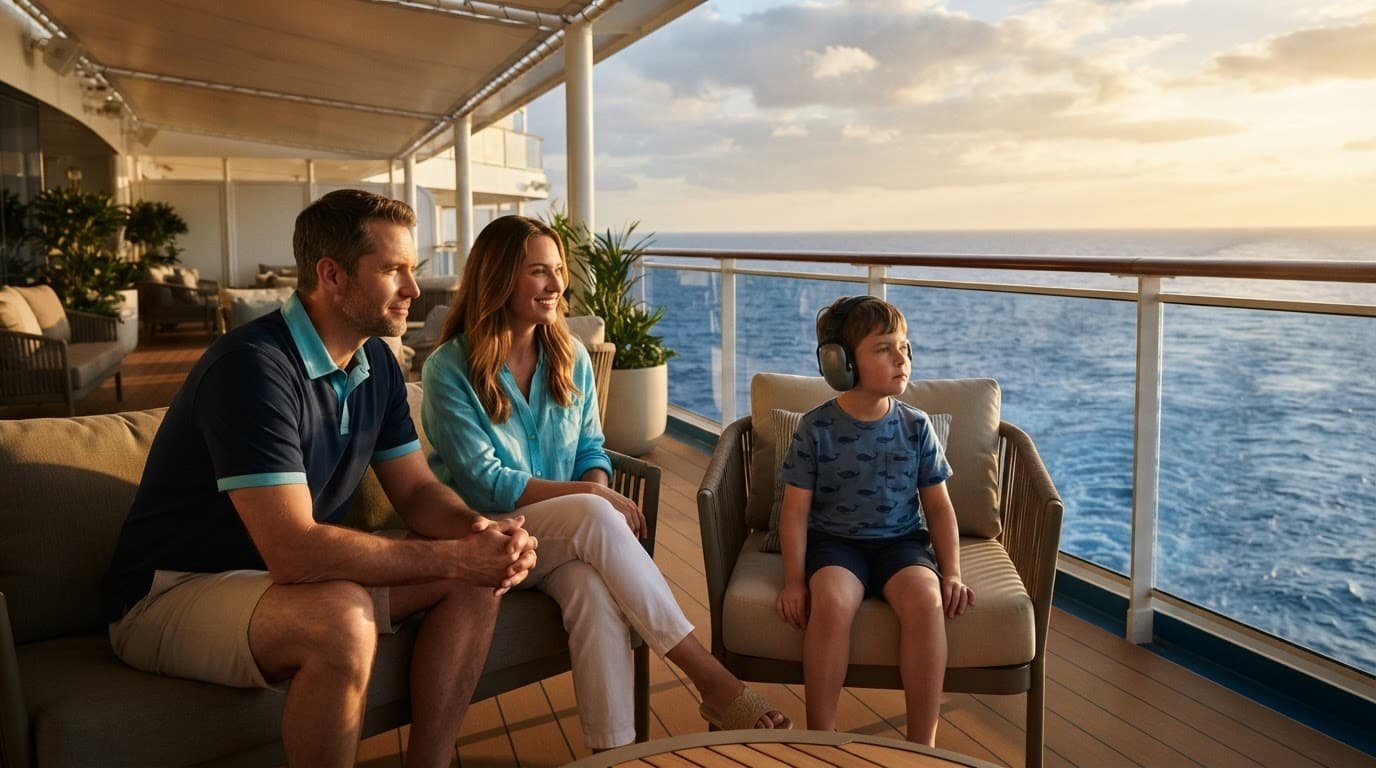
A Disney Cruise Line sailing still has sensory triggers. Muster drills, sail-away events, deck parties, theaters, elevators, and pool areas can get loud. Headphones, a familiar comfort item, and permission to step away can make a big difference.
Youth clubs and dining can help, but they are optional
Disney Cruise Line youth spaces are grouped by age. Oceaneer Club and Oceaneer Lab are for ages 3 through 12, Edge is for ages 11 through 14, and Vibe is for ages 14 through 17.
The younger clubs require children to be fully toilet trained and able to participate within the program’s counselor-to-child ratios. Not every autistic child will want a club, and that is okay. Visit the space together when possible, explain the plan in simple steps, and never treat it as required vacation fun.
Families with second dinner seating can ask about Dine and Play. Children eat earlier, then youth counselors can escort participating children to the club. This can work well for some families. Others may prefer to stay together at dinner every night.
Compare Cost, Energy, and Downtime
The lower advertised price is not always the better value. Look at what your family will truly use, not what looks best on a vacation brochure.
| Planning factor | Walt Disney World | Disney Cruise Line |
|---|---|---|
| Daily rhythm | Park times, transportation, and more choices | A set ship schedule with fewer daily transitions |
| Breaks | Often mean leaving the park or finding a quiet area | A cabin is available throughout the day |
| Main costs | Tickets, hotel, food, transportation, and add-ons | Cruise fare, transportation, gratuities, excursions, and extras |
| Flexibility | Easy to choose parks, resort days, and dining styles | Less choice in destination activities, more structure onboard |
A Disney World trip can cost less if you choose fewer park days, a value resort, and quick-service meals. A cruise can make budgeting feel easier because many meals and onboard activities are part of the fare.
Price the vacation your family can enjoy
Do not buy Park Hopper tickets because they sound like the complete Disney experience. One park per day often means fewer security lines, fewer transportation changes, and less pressure to keep moving.
The same idea applies to Lightning Lane Multi Pass. It is separate from DAS and costs extra. It can help when your family has a few true must-do rides. It can also create another clock to watch.
A calmer trip with fewer planned activities can be a better value than extra tickets your family does not have the energy to use.
For cruises, look beyond the fare. Include travel to the port, hotel nights before sailing, gratuities, shore excursions, internet, specialty dining, and souvenirs in your budget.
Plan for Flexibility, Not Perfection
The best Disney autism vacation has a plan, but it also has permission to change that plan. Weather, hunger, ride closures, tired feet, and unexpected joy all happen.
Give every day one clear win
Choose one meaningful goal before you leave the hotel or cabin. It may be a favorite attraction, a family photo, a character meeting, a pool afternoon, or watching the ocean from a quiet deck.
Once that moment happens, the rest of the day feels like a bonus. If your child needs to leave early, your vacation has not failed.
A simple visual schedule can help with changes. Keep it short: breakfast, one ride, snack, break, lunch. If something changes, offer two clear choices instead of a long explanation.
Pack familiar supports where you can reach them
Keep important items together in one small pouch. A tablet is not much help without its charging cable, and headphones are hard to find at the bottom of a busy bag.
Bring familiar supports such as:
- Headphones or ear defenders your traveler already uses.
- A favorite fidget, soft hoodie, stuffed animal, or blanket.
- Preferred snacks and a refillable water bottle.
- Medication, communication supports, and a portable charger.
For more Disney World planning help, the Disney World With Autism Guide on Etsy includes practical ideas for park days, accessibility needs, and breaks. You can also find the Disney autism travel guide on Amazon for extra support while you plan.
Choose the Vacation That Feels Comfortable
Disney World gives your family more attractions and more choices. A Disney cruise gives you a more contained setting and an easier path back to your room. Both can create wonderful memories.
The best choice is the one that respects your family’s routines, sensory needs, budget, and energy. A comfortable trip is a successful trip, even when the schedule changes.