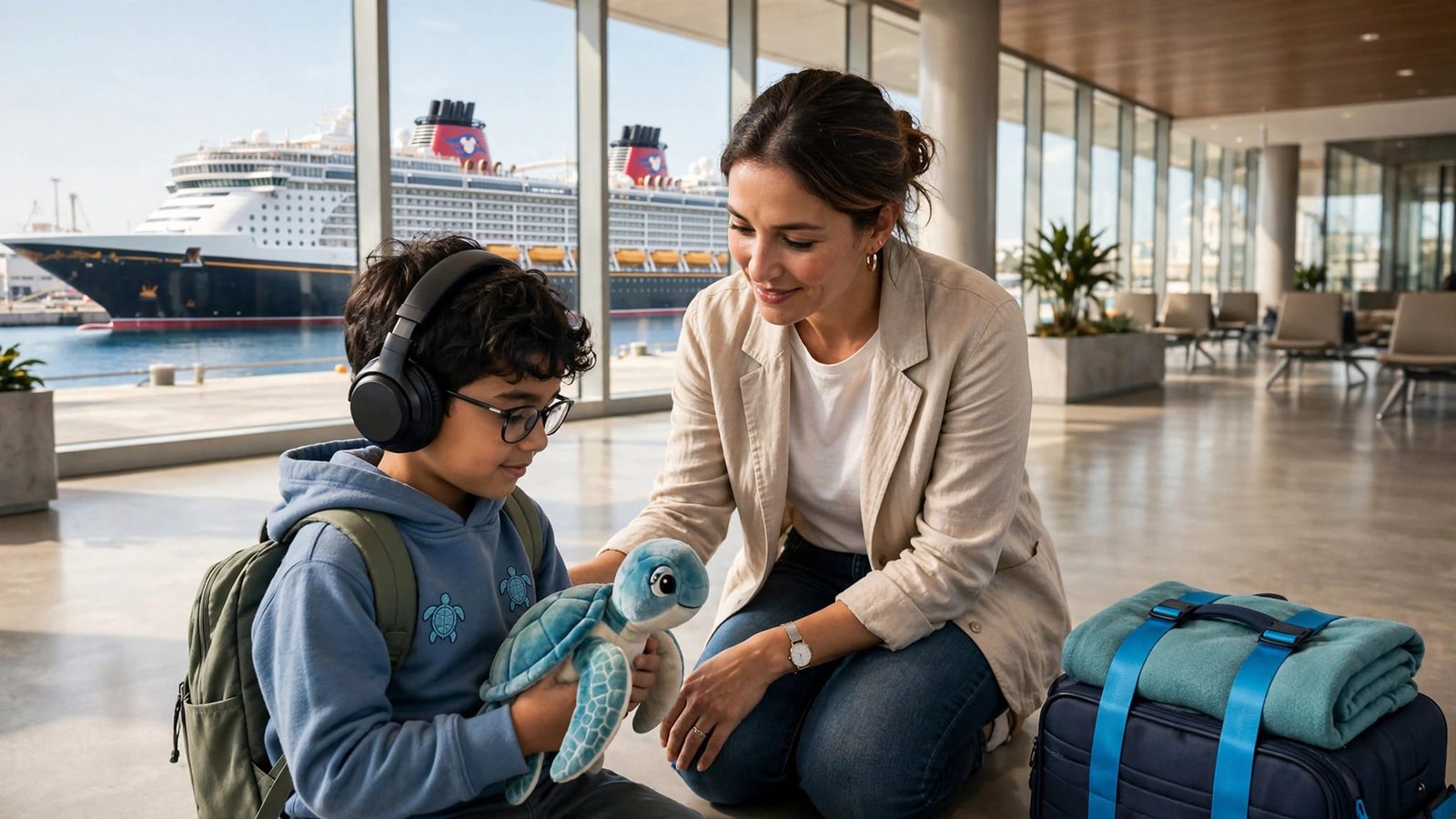
The hardest part of a Disney cruise autism plan may happen before you see your stateroom. For a traveler on the spectrum, security, terminal waiting, boarding, and the first ship announcements can all arrive close together. A flexible plan gives your family a way through those transitions without trying to control every minute.
Start with the support your traveler already uses. Then make room for a slower first afternoon.
Key Takeaways
- Contact Disney Cruise Line Special Services well before sailing and explain the situations that are hard for your traveler.
- Follow your assigned Port Arrival Time. It isn’t a promise that you’ll board immediately.
- Keep headphones, medication, familiar snacks, communication tools, and a comfort item in your carry-on.
- Plan for the Mandatory Guest Assembly Drill and a stateroom break before adding activities.
- Treat dining, youth clubs, and character greetings as choices, not boarding-day obligations.
Disney cruise autism planning starts before sailing
Tell Disney what support you need
If your child is on the spectrum, do they struggle most with lines, sudden noise, unfamiliar food, or moving between places? Write down their practical support needs, including any special needs. “My child may need to leave a crowded area quickly” gives Disney more to work with than an autism spectrum disorder diagnosis alone.
Review Disney Cruise Line’s autism support information and contact Special Services before your trip. Disney’s guidance advises families with specific concerns to reach out at least 60 days before sailing. Ask about terminal waiting, boarding, and the Mandatory Guest Assembly Drill. You can also ask about kids club options that may suit your traveler. If you need an arrangement, request it early and confirm what will apply to your sailing.
The cruise line doesn’t offer the theme parks’ Disability Access Service (DAS) on ships. Don’t plan around automatic line-skipping or priority boarding. Ask Special Services about your traveler’s needs instead.
Make the first day familiar
Show your traveler a few photos of a cruise terminal, the ship, and a stateroom. Practice a short plan: “Drive to port. Check in. Wait. Board. Eat. Find our room.” Leave times off if a delay would make them harder to adjust to.
Pack the tools your family already knows: noise canceling headphones, a favorite comfort item, medication, chargers, wipes, spare clothes, and communication supports. Put them where you can reach them in the terminal. Checked luggage may arrive after you’ve boarded.
Need supplies before you go? Trip Rescue Shop’s travel supplies include strollers and cleaning products for the less glamorous parts of family travel.
At the Port: Keep the Next Step Clear
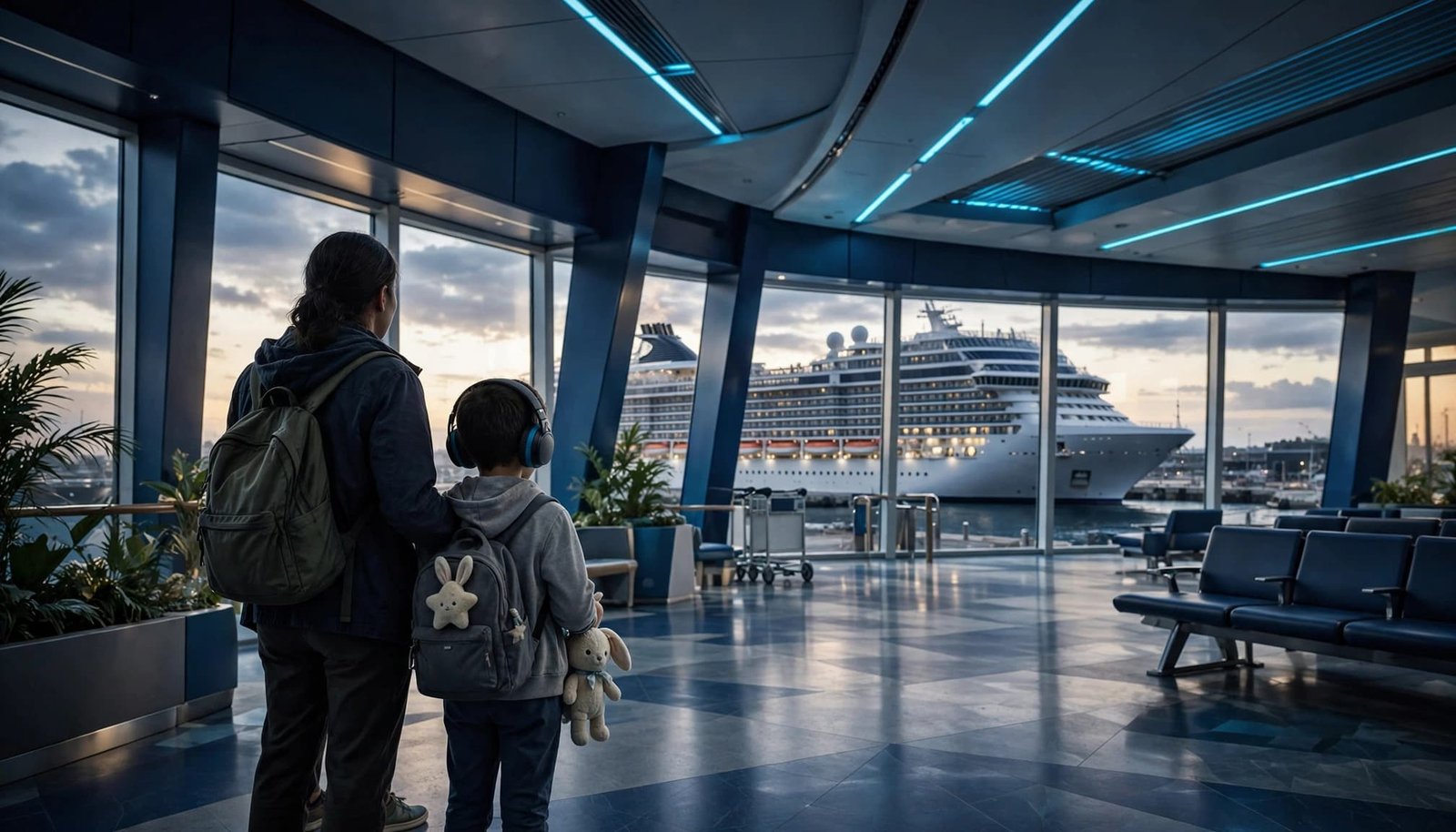
Use your Port Arrival Time
Complete Disney Cruise Line’s online check-in ahead of sailing and note your assigned Port Arrival Time. Plan your terminal arrival around it. Port arrival and boarding are different steps, so expect a possible wait, even if check-in goes smoothly.
An early slot may sound appealing, but it can also put your family in a busy terminal. A later slot may fit better if your traveler does well with an unhurried morning. Neither guarantees a short line. Choose the time that works for your family’s routine, then keep the rest of the morning light.
Give everyone a job during the wait
Before entering the terminal, decide who will manage documents and who will stay with the traveler on the spectrum. Keep the carry-on, comfort items, and any communication device with the person who needs them.
If waiting becomes difficult, tell the cast member or other Disney staff member assisting you and ask what options may be available. You could say, “My child is becoming overstimulated by the noise and crowd. Are there any quiet areas where we could wait?” A quieter place or different boarding process isn’t guaranteed, but a clear request is easier to answer than trying to push through distress.
Build in time for bathrooms and water before boarding. Once your group is called, focus on getting onto the ship. The first photo or celebration can wait.
Board the Ship Without Filling the Afternoon
Choose an easy first meal
After boarding, find a meal option that suits your traveler’s energy and food needs. If a busy buffet or pool deck feels like too much, ask a crew member where else you can eat. Keep a familiar snack handy in case the first meal takes longer than expected.
You don’t need to explore every deck while waiting for your room. Families with a child on the spectrum can take this first onboard transition at their own pace. Choose one manageable activity, such as a short walk or a place to sit. Check the Disney Cruise Line Navigator app and follow the ship’s schedule, including the timing for the mandatory drill.
Wait for the stateroom to be ready
Room access is generally later in the afternoon, and the exact timing can vary. Keep medication, headphones, diapers or toileting supplies, and a change of clothes in your carry-on until you can enter.
Once inside, show your traveler where their things go and choose a spot for the headphones and comfort item. Point out the route back from the nearest stairway or elevator. A familiar place to return to can make the rest of the ship feel less demanding.
Prepare for the muster drill and loud spaces
Ask about the drill before travel day
The mandatory guest assembly drill is part of the sailing. Crowds, announcements, and changes in plans may be hard for an autistic guest on the spectrum. Don’t assume you can skip it or choose another location on your own.
Disney’s guidance for guests with disabilities explains how to request support. For a traveler with special needs, tell Special Services what may help. Check Disney Cruise Line’s official guidance for current procedures, and follow the crew’s instructions onboard. Keep headphones available while making sure your group can hear safety directions.
Talk through the drill beforehand in plain language: “We go to our assigned place, listen to the crew, then leave when they tell us.” Ask a crew member about anything you’re unsure of before it begins.
Make a realistic reset plan
Sail-away parties, theater shows, the pool deck, and fireworks can be exciting and loud. Watch from farther away, arrive after a crowd settles, or leave early. Check the Navigator app for current times instead of promising a particular event.
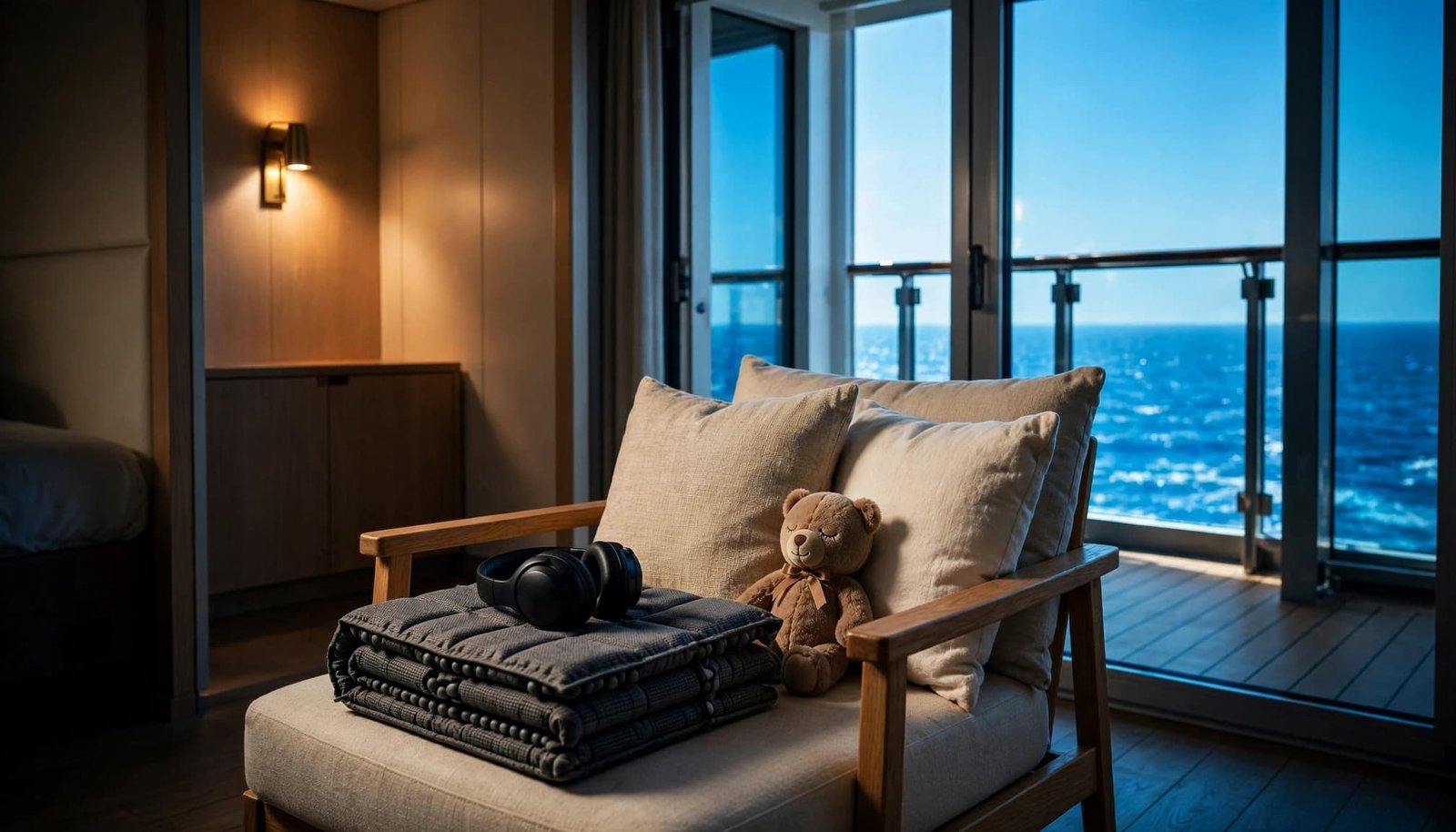
Your stateroom is the most dependable retreat because you control when to return. A balcony may offer another place to sit, though outside events can still be loud. Disney doesn’t promise shipwide quiet spaces. Check your ship’s deck plan, then notice less busy spots as you explore.
On the Disney Wish, Quiet Cove is an adults-only area. It may suit an adult taking a break, but it isn’t a retreat for a child.
Keep Dining Comfortable on the First Night
Ask about seating and food early
Rotational dining means your family visits different dining rooms across the cruise while your serving team rotates with you. With rotational dining, seeing the same team can make the routine feel more familiar, even when the setting changes.
If noise or movement near a walkway is hard for your traveler, including if they’re on the spectrum, request a quieter table location before sailing and discuss it with the dining team onboard. A request isn’t a guarantee. Tell your server about food allergies and foods your traveler can reliably eat. Ask which simple choices are available in that dining room rather than counting on an off-menu order.
Give dinner an exit plan
Check your dining assignment and timing after boarding. If your traveler needs processing time, explain that to your servers at the first meal. You can also ask what room service options and hours are available on your ship. Don’t assume every item is included.
A long first dinner may be too much after the terminal and muster drill. One adult can step out with the traveler if needed. Agree on that plan before you sit down, so nobody has to make decisions in the middle of sensory overload.
A dining request helps the crew prepare, but your family’s break plan still matters if the room feels too busy.
Try the kids club and characters at your child’s pace
Preview the space during open houses
Ask whether open houses are scheduled on your sailing. If one is available, use it to explore the kids club together before deciding whether independent participation is a good fit. Show cast members how your child communicates, what helps when they’re overwhelmed, and whether they might leave an activity without warning.
Disney says its Oceaneer Club and Lab rules apply to children ages 3 to 10 who are fully toilet-trained. Youth programs don’t provide one-on-one counselor care. If your child is on the spectrum and needs that level of support, plan on family activities and open houses rather than assuming the club can provide it.
An open house visit can be enough for day one. Your child can try independent kids club time later if the space and routine feel comfortable.
Let character greetings be optional
Check the Navigator app for character meet and greets once you’re onboard. If a line looks long, watch from a distance first or look for another scheduled appearance. Less busy times can vary by ship and sailing, so avoid promising a particular greeting.
Tell your traveler what will happen before joining a queue. They can wave, take a photo, or decide not to meet the character. If waiting is hard, ask a crew member what options are available. You don’t have to add a character greeting to an already full first day.
Frequently Asked Questions
Can we get a DAS pass for a Disney cruise?
No. Disney World’s DAS is for eligible guests using theme-park attraction queues, not Disney cruise boarding or onboard lines. Disney Cruise Line’s autism service options are handled through its own process. Contact Special Services to discuss the barriers your traveler faces.
Should we choose the earliest Port Arrival Time?
Only if an early start suits your family. The earliest available slot doesn’t guarantee immediate boarding or a quiet terminal. Follow your assigned time and bring what your traveler on the spectrum needs for a possible wait.
Is there a guaranteed quiet room onboard?
Don’t count on a designated sensory room or a silent cabin. Your cabin is a practical home base, but location matters. Before booking, review nearby elevators, venues, and high-traffic areas on the deck plan.
What if we’re visiting Disney World too?
Cruise and park accessibility services are different. Our Disney cruise and park comparison can help you choose a trip style. For park days, use our Disney World autism planning guide and check Disney’s current DAS rules.
For family-focused Disney World park preparation, the Disney World With Autism Guide is available as an Etsy PDF and an Amazon ebook. These are park-planning resources, not Disney Cruise Line accommodation policies.
A Good First Day Leaves Room to Rest
Your first afternoon doesn’t need a packed schedule. Get through the port, find food, learn your route back to the stateroom, and make a plan for the drill. For families with a child on the spectrum, comfort comes first when the day brings too many new things at once.
At K&S The Travel Crusaders, our planning draws on firsthand family travel experience with special needs and Kellie Neff’s B.A. in Child Development. A calmer cruise plan starts with your traveler’s real needs and leaves room to change course.
Leave a Reply