Disney Springs can turn a simple dinner into a lot of noise, lights, decisions, and walking. That does not mean your family has to skip it.
This Disney World with autism guide helps parents, caregivers, and autistic adults plan an evening for a child or adult on the autism spectrum. The district does not require theme park admission. It can offer a lower-pressure alternative to theme parks when you keep the plan small.
A calm visit starts before you reach the parking garage. Pick one main goal, protect your exit plan, and let “we are done” be a successful ending.
Key Takeaways
- Build your Disney Springs evening around one main goal, such as dinner, one store, a movie, or dessert, and set a clear ending before you arrive.
- Prepare for transitions with a short visual schedule, familiar sensory tools, a charged phone, and a backup communication option.
- Identify possible break spaces early, but remember that quiet areas are not guaranteed and can become crowded or loud as the evening changes.
- Plan dinner around familiar foods, ARFID preferences, allergies, and lower-demand ordering choices rather than assuming a reservation will make the meal calm.
- DAS applies to eligible guests using theme park attractions, not to shopping, dining, transportation, or general crowds at Disney Springs.
Build Your Evening Around One Main Goal
The shopping and entertainment district is spread across several areas, and the energy can change fast after dinner. Shops fill up, live music starts, and people gather around outdoor entertainment. Trying to see everything can leave everyone tired before you reach the restaurant.
A one-goal structure is especially helpful when building a Disney World with autism itinerary. Choose one anchor for the evening. It may be dinner at a familiar restaurant, a favorite store, a movie, or a dessert stop. Everything else is optional.
A simple visual schedule can lower anxiety before you leave the hotel. Use photos on a phone, a written card, or an AAC device. Keep the order short: car, security, dinner, one store, treat, hotel. If plans change, show a “change” card and offer two simple choices.
Set a clear ending point before you arrive. You might say, “After dinner, we can choose one store. Then we go back to the hotel.” That is easier to understand than an open-ended promise to shop “for a while.”
The best evening is not the longest one. It is the one that ends before your family is past its limit.
You don’t need to see every shop, hear every performer, or stay until closing. A relaxed 90-minute visit can feel much better than a three-hour plan that falls apart.
Make Arrival Easier Before Leaving Your Hotel
Travel preparation for a Disney World with autism trip begins before leaving the hotel. Arriving 30 to 45 minutes before your reservation gives your family time for parking, security, bathrooms, and a short pause before dinner. Rushing through a busy garage or security checkpoint can start the evening on the wrong foot.
If you are driving, choose one parking garage and take a photo of the level, row, and elevator area. The Lime, Orange, and Grapefruit garages can all feel similar after a busy evening. A quick photo saves the stressful search later. If the garage, elevator area, or security transition becomes confusing, your family can ask Cast Members for help.
Bring a small tech pouch and keep it easy to reach. It should hold:
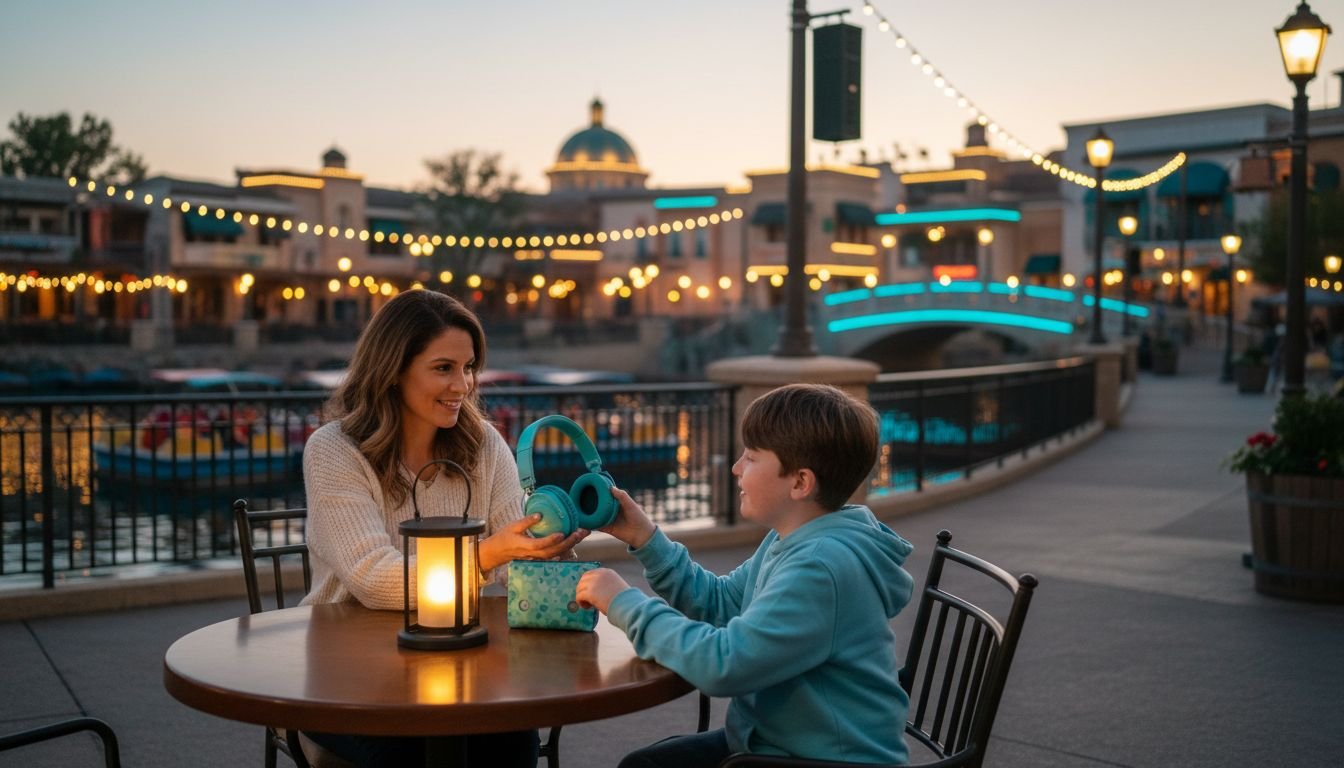
- Noise-canceling headphones or ear defenders the traveler already knows and likes.
- A portable charger, charging cord, and any needed communication device.
- A familiar fidget, comfort item, or hoodie for unexpected waits.
- A low-tech backup, such as a printed visual schedule or communication card.
Your phone may hold restaurant details, maps, family messages, and mobile orders. A dead phone can turn a manageable plan into a hard moment. Families often remember the tablet and forget the cable, so pack them together.
A Hidden Disabilities Sunflower Lanyard can also help during airport travel when the airport or airline recognizes the program. It may signal that a traveler has a hidden disability and may need patience or extra communication. It is not a skip-the-line credential or a Disney accommodation, and recognition does not apply automatically at the destination.
Find Break Spaces Before You Need Them

Disney World with autism often goes more smoothly when you identify possible breaks early.
The district has no publicly designated sensory room or guaranteed quiet zones. Do not wait for sensory overload to build while searching for one. Pick a few possible break spots when you first arrive.
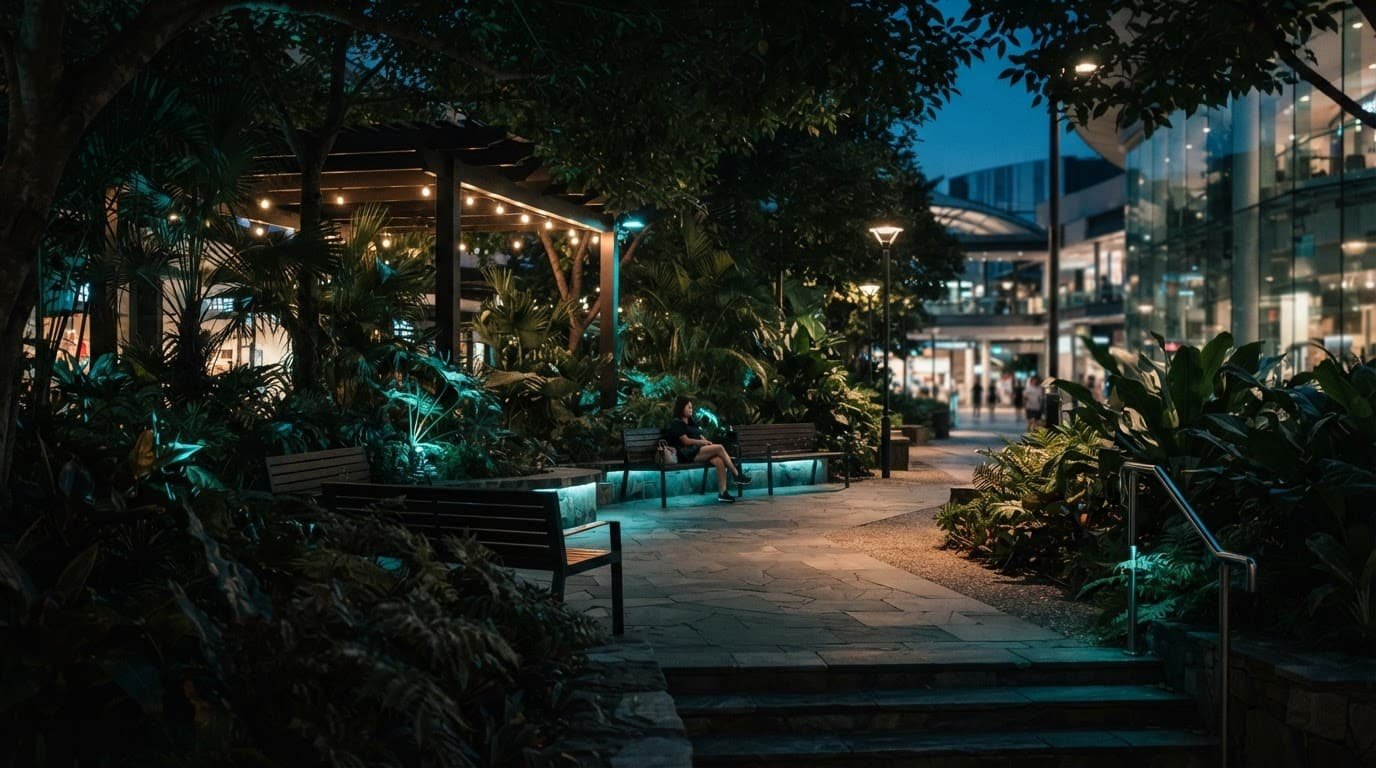
Look for seating away from busy storefront entrances, outdoor tables during non-peak times, or a quieter corner inside a restaurant. An outdoor table may be a potentially sensory-friendly break spot, but sound and crowd levels can change quickly. If your family needs help, ask Cast Members for the nearest lower-traffic location. Disney also recommends using restaurant seating areas for breaks when they are less busy in its neurodivergent guest services guidance.
Quiet space is never guaranteed at the property. A bench that feels peaceful at 5 p.m. may be loud an hour later. Keep moving if the noise rises, rather than trying to make an uncomfortable spot work.
Some locations are more intense by design. World of Disney, the LEGO Store, M&M’S, and outdoor entertainment areas can bring bright displays, crowds, music, and excited children. Visit one of these places only if it is a true priority. Skip it without guilt if your traveler is already working hard.
Amplified music can also start without much warning. Keep headphones ready and let your child step away before reaching a breaking point. You don’t have to finish a purchase, stay for a song, or push through one more stop.
Make Dinner Work for ARFID and Sensory Needs
A restaurant isn’t automatically calm because it takes reservations, and food planning matters on a Disney World with autism trip. Sound levels, scents, lighting, and wait times change throughout the night. The first dinner seating or an earlier quick-service meal is often easier than peak dinner hours.
For families managing ARFID, start with familiar foods rather than a restaurant’s theme. A neurodivergent child may need plain foods, separated items, or extra time to choose. D-Luxe Burger, Earl of Sandwich, and Blaze Pizza can offer more recognizable choices for some travelers. Check menus before leaving the hotel, then save screenshots in case Wi-Fi or battery life becomes a problem.
Mobile ordering can reduce time in a food line when it makes the evening easier. Use the My Disney Experience app only if it doesn’t create another demand. Skip mobile ordering when the pickup area feels crowded. Review options quietly, choose a pickup time when your child is ready, and step outside if pickup becomes crowded.
Medical allergies and ARFID are different needs. Tell the restaurant about allergies or special dietary needs, and ask to speak with a manager or chef when needed. For ARFID, explain simple preferences clearly, such as plain pasta, food without sauce, or items kept separate. A restaurant may not be able to change every dish, so familiar snacks in your bag give you another option.
The Disney autism planning ideas from Autism Speaks use Disneyland examples, so focus here on their transferable preparation ideas. Preview menus, talk through the plan, and give your traveler a way to communicate “break,” “wait,” or “all done.”
Keep DAS and Lightning Lane in the Right Place
Disability Access Service, also called DAS, is for eligible guests who cannot tolerate a standard theme park queue because of a developmental disability. It is not a general pass for shopping, dining, transportation, or crowds in the district.
If you are visiting Magic Kingdom, Epcot, Hollywood Studios, or Animal Kingdom on another day, eligible guests can usually register through Disney’s pre-arrival live video chat between two and 60 days before the park visit. The guest who needs DAS must be present for the conversation. You can also speak with Cast Members at Guest Relations after arriving on property.
Once DAS is active, the registered guest or a connected adult can request an attraction return time in the My Disney Experience app. Your family waits outside the standby line, then returns at the assigned time. After using it, you can request another one. The registered guest must be present and ride with the group.
Read Disney’s current DAS and neurodivergent services details before travel, then recheck eligibility, registration timing, and procedures because policies can change. Before a separate Hollywood Studios day, review the same official guidance for current steps.
Lightning Lane Multi Pass is a separate paid service. It may be useful when planning a day at the theme parks with a few true must-do rides, but it can add another schedule to monitor. A virtual queue is another attraction-entry system, but availability and procedures vary by attraction and date, so it is not a guaranteed alternative to DAS. A Sunflower Lanyard does not replace Disney’s access services or change DAS eligibility. Do not buy every add-on because it sounds like the full Disney experience. A slower schedule and real breaks often matter more.
For more support across the full vacation, the Disney World with autism guide PDF includes planning ideas for park days, DAS, sensory needs, and resort breaks. It is also available in an Amazon edition.
Give the Rest of Your Vacation Room to Breathe
A Disney World with autism vacation works better when it is not squeezed between a full park day and late-night fireworks plans. Build in a hotel afternoon, a pool break, or rest days between demanding plans. Rest is part of a family vacation, not lost vacation time.
For access to the shopping district, Disney’s Saratoga Springs Resort & Spa has a walking path from the Congress Park area. Old Key West offers boat transportation, but both resorts have large footprints, with substantial walking and waits adding another transition. During vacation planning, a Disney vacation planner may help compare room locations, transportation, and break options before booking.
Art of Animation has family suites with more in-room space, while Disney’s Contemporary Resort can make Magic Kingdom breaks easier. Neither is automatically the right choice for every autistic child or adult. Compare Disney resort hotels by sleep, food, transportation, budget, room location, and quiet.
The Izzy’s Guide to Disney World for Autistics also highlights the value of quiet hotel time after busy Disney days. Your room is where everyone can recharge, reset routines, and prepare for tomorrow.
Frequently Asked Questions
Is Disney Springs a good choice for an autistic child or adult?
It can be a lower-pressure alternative to a theme park when you keep the plan short and flexible. Choose one main activity, prepare for noise and crowds, and leave before your traveler reaches their limit.
Does Disney Springs have a designated sensory room?
Disney Springs does not have a publicly designated sensory room or guaranteed quiet zones. Look for lower-traffic seating when you arrive, and be ready to move or return to the hotel if the noise increases.
Can I use DAS at Disney Springs?
DAS is intended for eligible guests who cannot tolerate a standard theme park attraction queue because of a developmental disability. It is not a general accommodation for shopping, dining, transportation, or crowds at Disney Springs.
What should I bring for an autism-friendly evening at Disney Springs?
Pack familiar headphones or ear defenders, a comfort item or fidget, a charged phone and portable charger, communication supports, and familiar snacks. A short visual schedule can also make the order of the evening easier to understand.
How can I make dinner easier for someone with ARFID?
Review menus before leaving the hotel and start with familiar foods, such as plain items or foods kept separate. Explain preferences clearly, keep allergy information separate from ARFID preferences, and bring backup snacks in case the restaurant cannot meet every need.
A Calmer Evening Is a Successful Evening
A good Disney Springs autism guide does not ask your family to push through discomfort for a packed itinerary. It gives parents, caregivers, and autistic adults permission to choose one restaurant, one store, and one clear way out.
Plan for noise, hunger, changing energy, and a shorter evening than expected. When your family feels safe and supported, the evening can still be a comfortable way to make memories.