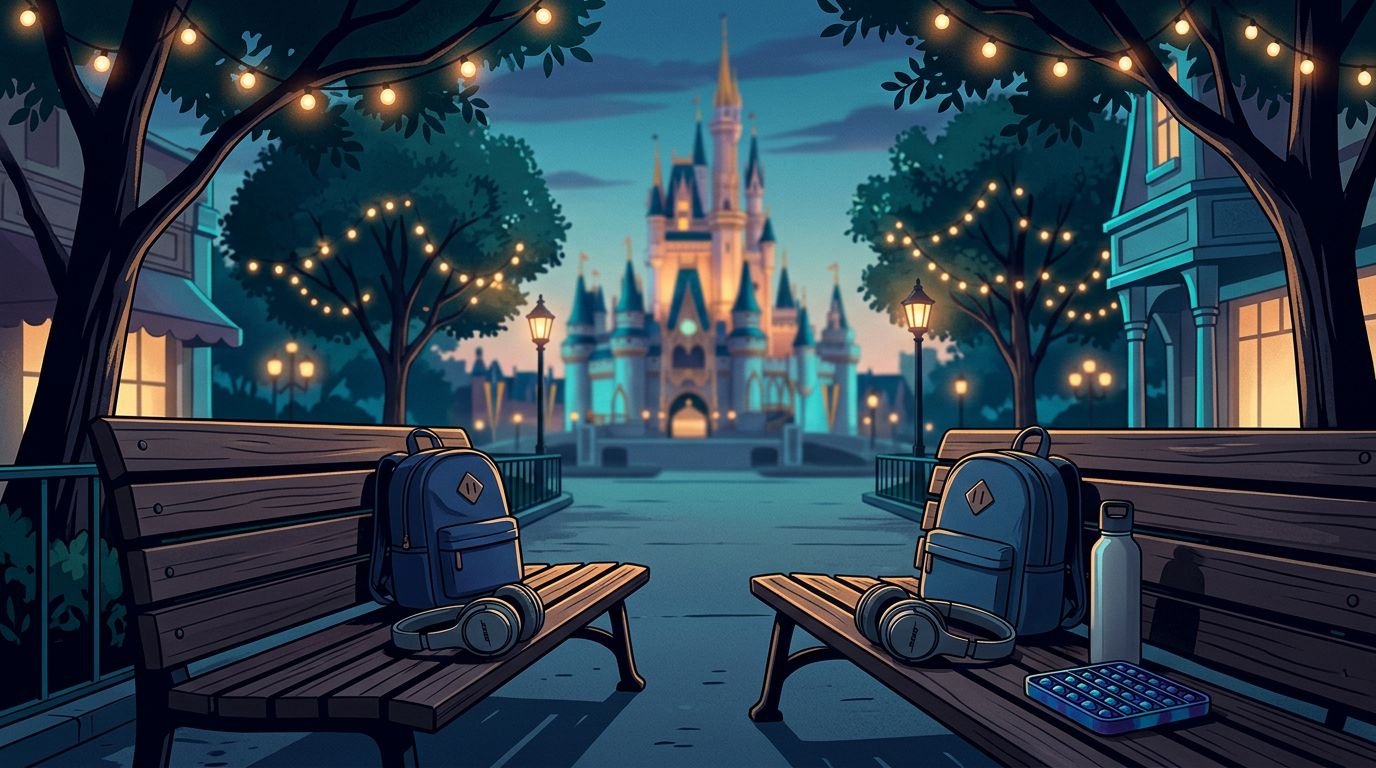
Christmas at Walt Disney World can feel magical, then suddenly feel like too much. Holiday lights, music, crowds, transportation, changing weather, and altered routines can stack up fast.
If you’re searching for Disney World autism tips at Christmas, start with one goal: give your traveler choices, a calm place to reset, and permission to leave early. You don’t need every ride, every parade, or every paid add-on for a meaningful trip.
A lighter, choice-based plan can support autistic adults and travelers with sensory processing disorder. Each person may need something different, and that’s okay. It can still make room for the best memories.
Key Takeaways
- Build in breaks, flexible timing, and an easy way to leave.
- Pack familiar tools that help your traveler feel prepared.
- Choose fewer transitions when crowds and holiday changes feel overwhelming.
- Let comfort and connection matter more than completing the schedule.
Key Takeaways
- Build in breaks, flexible timing, and an easy way to leave.
- Pack familiar tools that help your traveler feel prepared.
- Choose fewer transitions when crowds and holiday changes feel overwhelming.
- Let comfort and connection matter more than completing the schedule.
Start With a Christmas Plan That Has Breathing Room
Holiday weeks reward families whose trip planning for the theme parks includes fewer commitments, not more. Pick one park per day, choose one or two must-do experiences, and leave open time for snacks, bathroom stops, shopping, and breaks.
A Park Hopper ticket can add pressure during a sensory-sensitive trip. Hopping means another transportation step, more walking, another security line, and a new set of decisions. One park per day keeps the rhythm easier to understand.
For longer visits, schedule rest days instead of filling every day with park time. A resort-only trip can also be a good choice when a park day would create too many transitions.
Before you leave home, make a simple visual plan for each day:
- Show the order in plain language: hotel, transportation, security, one attraction, snack, break, then the next choice.
- Watch short ride videos at home, but talk honestly about darkness, loud sounds, motion, and surprises.
- Practice waiting in small ways, such as a short line at home or a timer while sitting with a comfort item.
- Decide what “all done” means before travel. It can mean a quiet bench, returning to the resort, or ending the park day.
Disney also recommends visual schedules, location maps, and practicing waits for families traveling with neurodivergent children through its neurodivergent guest planning resources. These small steps make the first big transition feel less unknown.
Christmas parties, a Character buffet, nighttime shows, and fireworks should remain optional because they may involve fixed times, crowds, noise, or late hours. If your traveler loves them, great. If they are tired by dinner, leaving is still a successful Disney day.
DAS and Queue Planning for Autism at Disney World
Disney World autism planning often starts with Disability Access Service, also called DAS. Disney says DAS is intended for guests with developmental disabilities, including autism. It supports guests who cannot wait in a conventional queue for an extended period.
Registration is handled through a video interview. Disney’s current Disability Access Service page says registration may begin as early as 60 days before a visit. Set up the My Disney Experience app and link valid tickets. Add your Family & Friends list. Test the camera and microphone before joining the chat. Check the page before your visit, since eligibility rules and registration procedures can change.
Have the guest who needs DAS present for the conversation. For an autistic child, a parent or guardian should be ready to explain the real challenge in everyday language. Focus on what happens during a long, enclosed, unpredictable wait. Don’t treat the conversation like a test. Diagnostic paperwork or a diagnosis alone can’t promise approval or replace a plain-language explanation.
A DAS return time changes where your family waits. It does not remove crowds, noise, walking, ride closures, or the need for breaks.
Once DAS is active, the registered guest or a connected adult can request a return time. Use the My Disney Experience app for the request. Your group can wait somewhere more comfortable, then return when the attraction is ready. The registered guest must be present and ride with the group.
DAS is one of Disney’s accessibility services and is separate from Lightning Lane Multi Pass. Lightning Lane can help some families, but several timed reservations can become another source of stress. Buy it only for a park with a few true priorities. Disney also offers other attraction queue access options, including Rider Switch, Single Rider, and Attraction Queue Re-Entry.
Pack Familiar Tools for Christmas Sensory Needs
A park bag should hold items your traveler already knows and uses for sensory challenges. Familiar tools are more reliable than surprise toys during a crowded exit after fireworks.
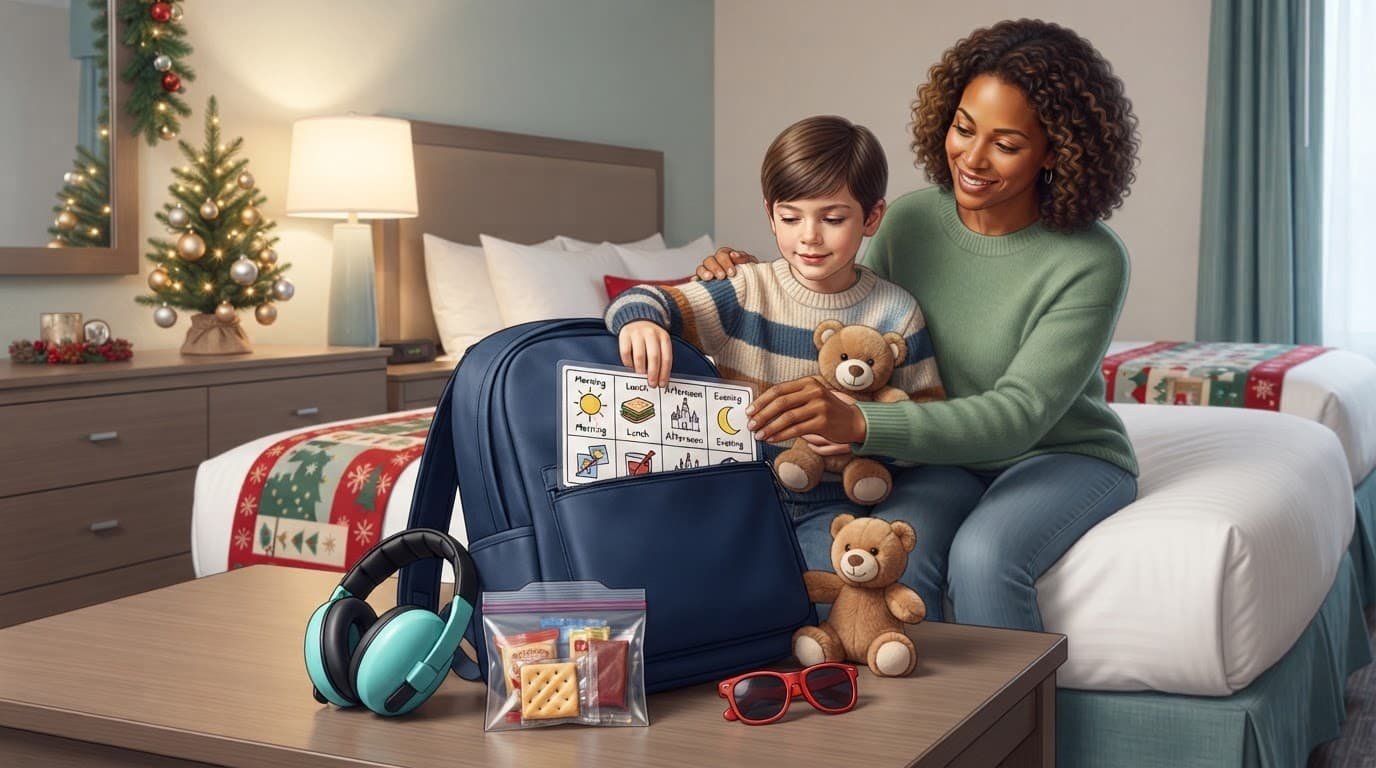
Keep your essentials in the same place every day. A small tech pouch is helpful for headphones, charging cords, a portable charger, and any communication device. Families often remember the tablet and forget the cable.
Your sensory checklist can include:
- Noise-reducing headphones or ear defenders that have already been tested at home.
- Familiar snacks, a refillable water bottle, medication, and preferred gum or mints if they help with regulation.
- A favorite fidget, hoodie, soft blanket, stuffed animal, or other trusted comfort item.
- A printed visual schedule or communication card as a backup when a phone battery is low.
A Hidden Disabilities Sunflower Lanyard can discreetly signal that a traveler may need extra patience or support. It does not guarantee faster airport security, park entry, or attraction access, and it does not replace DAS.
Plan Park Days Around Fewer Transitions
At Disney’s theme parks, the hardest moments often happen away from attractions. Security, transportation stops, restaurant entrances, show exits, and post-fireworks movement can all be challenging.
Use Disney’s Accessibility Planning Guide to review attraction details before you travel. Then build a reset into each park day.
These are not official sensory rooms or guaranteed quiet spaces. Crowd levels can change. They are practical ways to step away before a hard moment becomes bigger.
| Park | A lower-pressure reset |
|---|---|
| Magic Kingdom | Leave the central hub before it fills for nighttime entertainment. |
| EPCOT | Use garden paths, quieter tables, or a slower walk through one area instead of crossing the park repeatedly. |
| Hollywood Studios | Plan a seated indoor attraction or a quiet outdoor table after major show exits. |
| Animal Kingdom | Take a slower route on a trail or pause away from the busiest central pathways. |

Start early if mornings are easier for your family. A midday resort break can be more valuable than staying until everyone is overwhelmed. For Christmas trips, make nighttime entertainment a same-day choice, not a promise made months ahead.
Choose a Resort and Meals That Feel Familiar
Your hotel is not only a place to sleep. It is where naps happen, wet clothes pile up, everyone decompresses after a park day, and parents get a few quiet minutes after bedtime.
Disney’s Port Orleans Resort, French Quarter can work well for families who prefer a smaller moderate resort layout. All-Star Music Resort offers a value-resort comparison, but room location, bus transportation, resort size, and walking distance can affect sensory demands. Art of Animation family suites can help when you need extra sleep space, two bathrooms, and a kitchenette. An off-site hotel or vacation rental may be better if your traveler needs a quieter room, full kitchen, or private vehicle.
Travel logistics include asking about the toll transponder before leaving the airport garage. Orlando toll roads often use electronic billing, and rental-car toll fees can arrive after the trip. Take photos of the vehicle condition, fuel level, windshield, tires, and existing marks before driving away.
Food does not need to be another surprise. Public dining spaces can become unpredictable. Counter service restaurants and Mobile Order may give you more control over timing, menus, and meal length. Sunshine Seasons at EPCOT and Docking Bay 7 at Hollywood Studios let you browse choices first, but seating noise can change quickly. A Character buffet may be more demanding because of fixed reservations, character interactions, waiting, and restaurant noise.
Bring familiar items for the hotel room and ask for the quietest available table when dining indoors. A resort-only trip can provide a lower-demand day when entering a park feels like too much. It is okay to take food back to the resort when the restaurant feels too loud.
A Disney vacation planner can provide structured assistance. The Disney World with Autism Guide on Etsy and its Amazon edition offer supplementary ideas for park days, breaks, and accessibility needs. Use them with official Disney information, while remembering that Autism on the Seas resort support is separate from Disney’s own services.
Have a Plan for a Hard Moment
Even the best Christmas checklist cannot remove every surprise. A ride may close. A storm may change transportation. A favorite food may be unavailable. The goal is not to prevent every hard moment. It is to reduce pressure when sensory overload begins.
Use one short phrase, such as “We are taking a break.” Then offer two clear choices: headphones or a quiet walk, water or a snack, sit here or return to the hotel. Too many questions can make a tough moment harder.
Avoid turning overload into a negotiation about missed plans. One adult can stay with the traveler while another handles food, tickets, or the rest of the group. Cast Members, Guest Experience Team locations, and Guest Relations can help with app problems or attraction questions. They cannot guarantee a specific accommodation or remove every wait.
Leaving early is not giving up. It is using the plan you made to protect tomorrow.
FAQ: What if we need to leave the park early?
If the day stops feeling manageable, gather your essentials and leave without debating the decision. Return to the resort or another familiar place, then protect the next day’s energy. A shorter park day can still support a better trip.
Frequently Asked Questions
Is DAS available for autistic guests at Disney World?
Disney says Disability Access Service is intended for guests with developmental disabilities, including autism, who cannot wait in a conventional queue for an extended period. Registration requires a video interview, and a diagnosis alone does not guarantee approval.
What should we pack for Disney World at Christmas?
Pack sensory tools your traveler already knows, such as tested headphones, familiar snacks, a water bottle, medication, and a trusted comfort item. Keep chargers, communication devices, and visual schedules together so they are easy to find during a busy day.
How can we make Christmas park days less overwhelming?
Choose fewer commitments, limit transitions, and plan one or two priorities instead of trying to complete everything. Add reset breaks, consider a midday resort visit, and treat fireworks, parades, and nighttime shows as optional.
What if we need to leave the park early?
If the day stops feeling manageable, gather your essentials and leave without debating the decision. Return to the resort or another familiar place, then protect the next day’s energy; a shorter park day can still support a better trip.
A Calmer Christmas Trip Is Still a Disney Trip
A successful family vacation is not measured by ride count or how late you stay. It is measured by whether your traveler felt supported, safe, and included.
Build your Disney World autism plan around familiar routines, realistic priorities, and real breaks. The Christmas lights will still be there. Your family does not have to push past its limits to enjoy them.