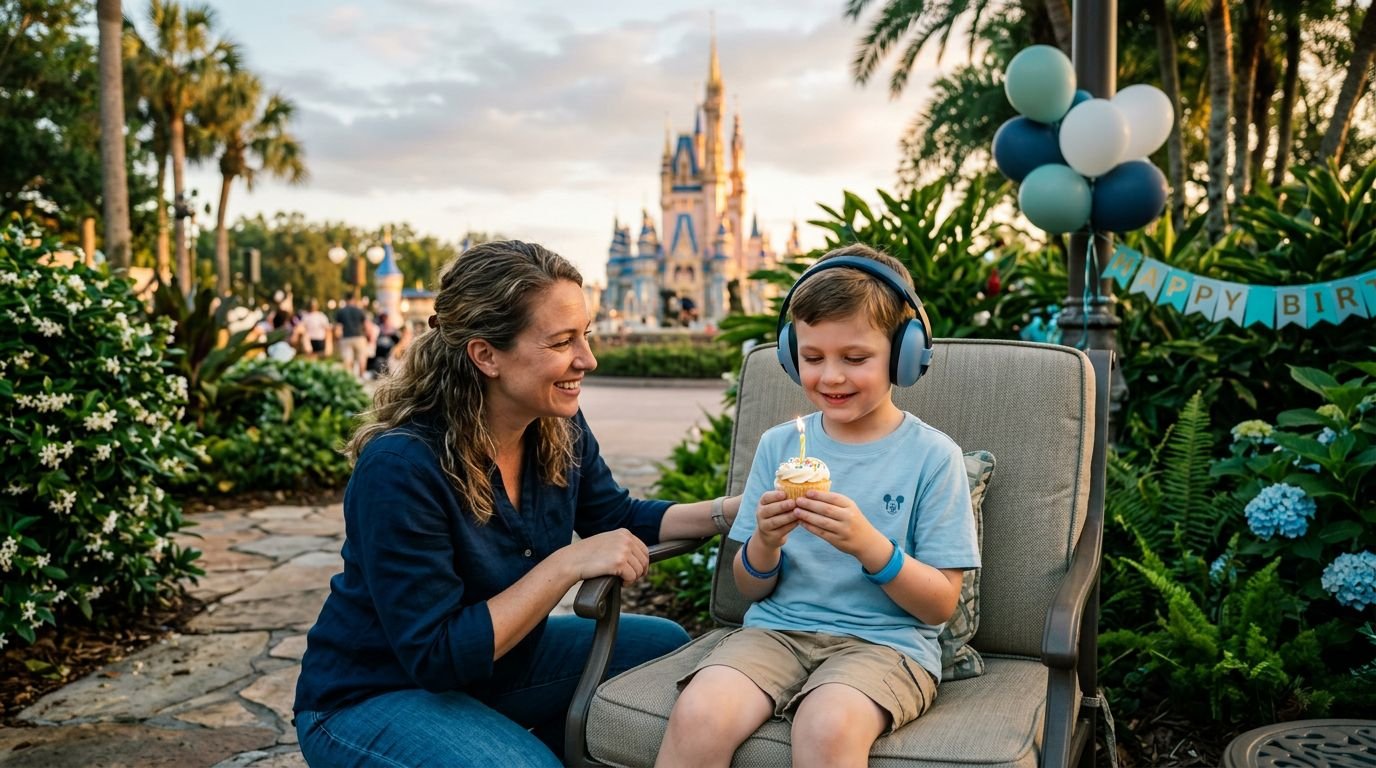
A birthday trip to Disney theme parks doesn’t have to turn your family vacation into an exhausting checklist of fireworks and long lines. The best celebration feels safe, fun, and familiar, without asking your child to push through.
Disney World autism planning works best when the plan follows your autistic child’s energy, preferences, and comfort. That might mean one favorite ride, a pool afternoon, preferred snacks, and an early bedtime. It still counts. It may be the birthday your child remembers most happily.
Start by letting go of the idea that every Disney birthday should look the same.
Key Takeaways
- Let your autistic child define a successful birthday, whether that means one favorite ride, a familiar meal, pool time, or leaving the park early.
- Prepare at home with a simple trip preview, comfort items, familiar snacks, and a flexible plan that follows your child’s energy.
- Choose a resort and daily schedule that make breaks easy, and treat arrival days and rest days as valuable parts of the vacation.
- Disney’s Disability Access Service may help eligible guests who cannot manage an extended conventional queue, but it does not replace breaks, food, shade, or flexibility.
- Meltdowns, skipped attractions, early exits, and changed plans do not ruin the birthday. A calm, comfortable celebration is still a magical Disney memory.
Let Your Child Define a Great Birthday
Disney has many ways to celebrate, but a successful birthday can look different for neurodivergent children. The trip should not become a performance for adults or a race to fit in every attraction.
Choose one or two true birthday priorities
Ask your child what would make the trip feel special. The answer may be meeting Mickey, riding the PeopleMover, staying in a themed hotel room, eating chicken nuggets, or wearing a favorite shirt.
Pick one main birthday moment and one backup. If the main plan works, anything else is extra.
A simple birthday plan may look like this:
- Start with a familiar breakfast in the room.
- Visit one park for a favorite attraction or character.
- Take a midday break before anyone is overwhelmed.
- Celebrate with a cupcake, small gift, or preferred dinner.
A child who leaves the park smiling at 2 p.m. had a successful Disney day. There is no prize for staying until closing.
Give every adult a clear role
Big family trips can become confusing fast. Grandparents may want photos. Siblings may want more rides. One parent may be handling mobile orders while another is watching the map.
Talk through expectations before the trip. Decide who will carry the park bag, who will watch return times, and who can take a sibling on another ride if needed.
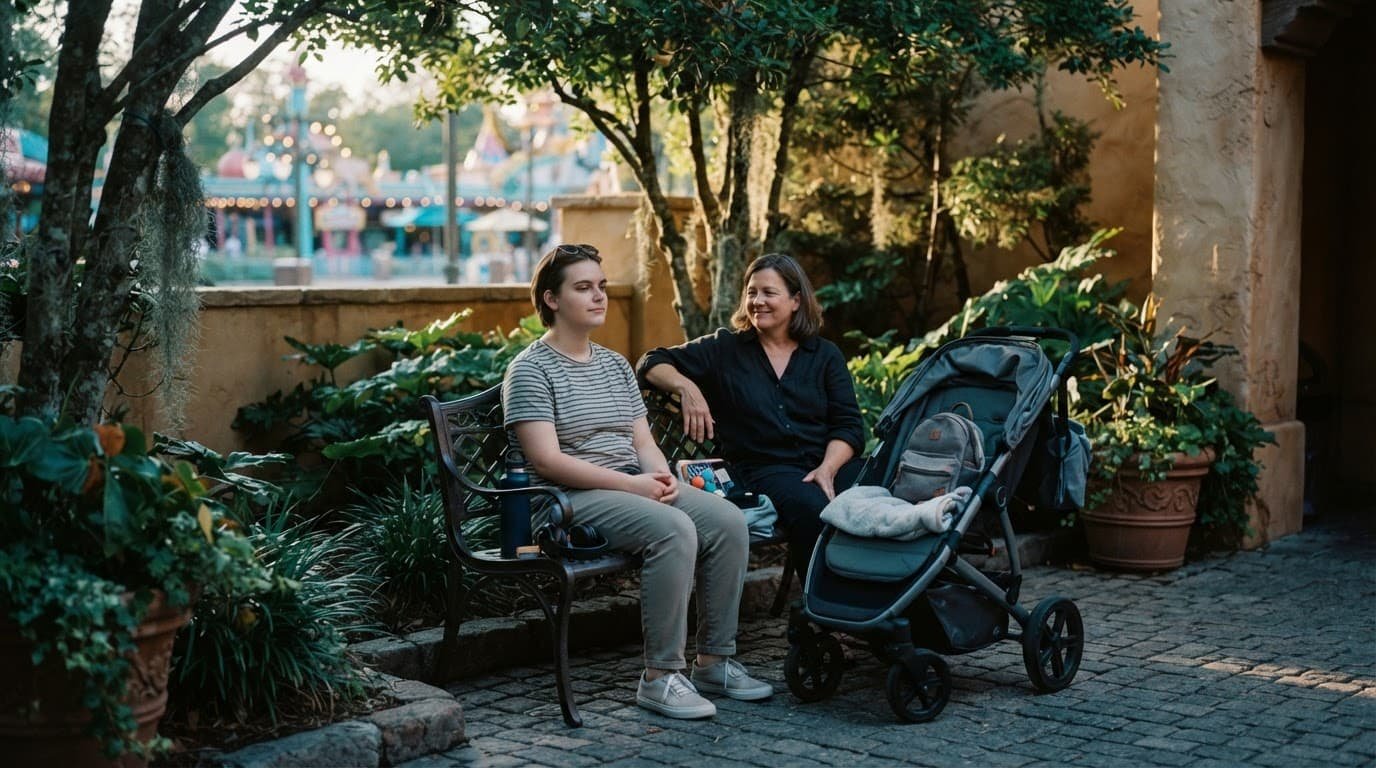
It also helps to agree on one rule: any caregiver can call for a break. No debate is needed when someone says the child is done, hungry, hot, or overloaded.
Autism Trip Planning Starts at Home
The park day feels easier when your child already knows the basic rhythm. You do not need a minute-by-minute itinerary. A few familiar steps are enough.
Create a simple preview of the trip
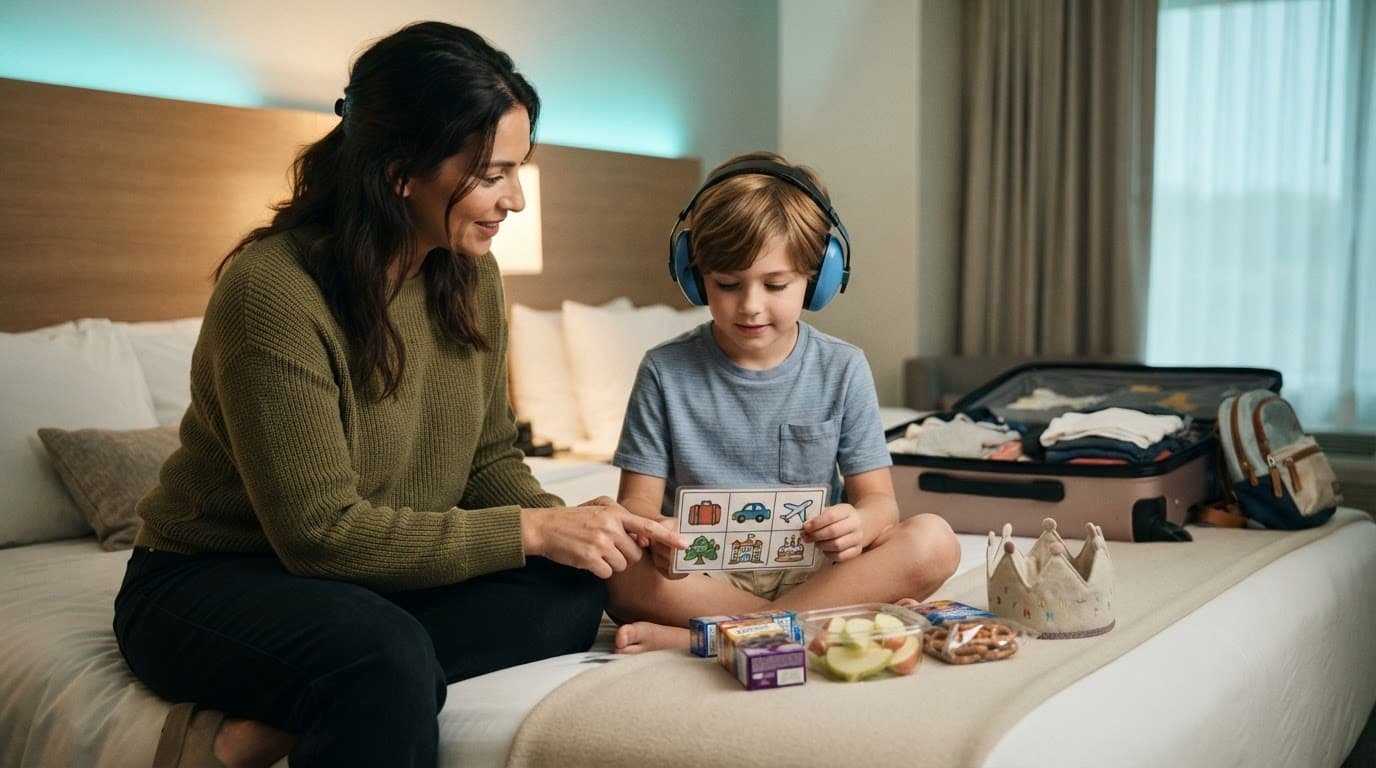
If your child has sensory processing disorder, use photos, short ride videos, a printed calendar, or a visual schedule to preview the trip. Keep the explanation short.
“We will fly to Florida. We will sleep at the hotel. Tomorrow we will ride the bus to Magic Kingdom.”
Talk about the parts that may feel different. Sensory challenges can make security lines, buses, hotel elevators, characters, rainstorms, and loud ride exits harder when they are a surprise.
For more planning support, the Disney World with Autism guide on Etsy works as a practical Disney vacation planner, with ideas for park days, breaks, and accessibility needs.
Pack comfort items your child already uses
Disney is full of new sights, sounds, and smells. Your park bag should bring a little bit of home along with you.
Pack noise-reducing headphones, a favorite fidget, sunglasses, a soft hoodie, familiar snacks, medication, and a refillable water bottle. These familiar items can ease sensory challenges during busy parts of the day.
If your child uses a tablet, AAC device, or downloaded music, bring it.
Put the tablet, headphones, charging cable, and portable battery in one pouch. Families often remember the device and forget the cable. A dead phone can also create stress because the My Disney Experience app may hold tickets, mobile food orders, park maps, and attraction return times.
The Amazon edition of the Disney autism travel guide is another helpful option for families who want a planning resource close at hand during the trip.
Make the Travel Day Less Demanding
A birthday vacation starts before you walk through a Disney park gate. Airport security, flights, rental cars, and hotel check-in are travel logistics that can use up a child’s energy before the fun begins.
Build in comfort for the airport or drive
If you are flying, keep must-have items in your carry-on. Checked luggage can be delayed, but your child’s headphones, medication, snacks, and comfort item need to stay with you.
Tell your child what airport security may involve. They may need to wait, take off a backpack, or walk through a screening area. A familiar show, headphones, and a clear next step can make the wait feel more manageable.
A Hidden Disabilities Sunflower Lanyard can discreetly show that a traveler has a hidden disability and may need added support. Check the participating airports and airlines before your trip. The lanyard does not guarantee faster security screening, and it does not provide special entry at Disney parks.
Autism on the Seas is a separate autism-focused cruise option, not a Disney program. Cruise preparation differs from planning airport travel, park routines, and a Walt Disney World stay.
Treat arrival day as a transition day
Avoid scheduling a park day immediately after a long flight unless your family truly prefers it. A resort-only trip may be better than entering a park immediately after a long journey.
Hotel check-in, new rooms, unfamiliar food, and Florida heat can be enough for one day. A low-pressure arrival day might include checking out the pool, eating at the resort food court, unpacking comfort items, and taking a short walk. Let your child choose between two simple options.
“You can swim for a little while, or we can watch a movie in the room.”
That first quiet evening helps the whole family settle before the first park day.
Pick a Resort That Makes Breaks Easier
Your hotel is not only a place to sleep. It is your recovery space after crowds, heat, transportation, and big emotions.
Choose room space over extra themeing
Disney’s Art of Animation Resort and Disney’s All-Star Music Resort offer family suites that sleep up to six guests. Extra sleep space, a kitchenette, and more than one bathroom can help when family members need different bedtimes or separate quiet time.
Disney’s Port Orleans Resort, French Quarter may be a good fit for families who prefer a smaller resort layout. It can feel easier when the food court, bus stop, pool, and room are not spread across a huge property.
An off-site hotel or vacation rental may be better if your child needs a full kitchen, private vehicle, or a quieter room away from busy common areas. The best choice is the one that supports your routine.
Ask questions that matter to your family
When booking, ask about the actual room setup. Check bed arrangements, elevator access, refrigerator needs, room for a stroller, distance to transportation, and available accessible rooms.
You can also request a room location that may reduce walking or noise, though requests are not guaranteed. Disney’s accessibility services overview is a helpful starting point before making those requests.
Plan real rest days after two or three park days. A resort-only trip is a valid option. It can include pool time, laundry, room time, or a slow Disney Springs visit.
There is no reason to pack light if laundry would take away the break your family needs. Familiar clothes, preferred pajamas, and extra socks are often worth the suitcase space.
Use DAS for the Right Kind of Support
Disney’s Disability Access Service, often called DAS, can change where an eligible guest waits for an attraction. It doesn’t remove every wait, crowd, or change of plan.
Know what Disability Access Service does
DAS is for guests with a developmental disability, such as autism, who can’t manage an extended conventional queue. A diagnosis alone doesn’t automatically qualify someone.
A Disney World autism plan should focus on how the guest is affected by a standard queue. Explain communication needs, sensory distress, safety concerns, or why a long, confined wait isn’t workable.
Disney’s current Disability Access Service details explain that eligible guests can request an attraction return time after entering the park. Your family waits elsewhere instead of remaining in the standby line.
DAS is separate from Lightning Lane Multi Pass, Rider Switch, and mobility accommodations. Each service helps with a different need.
Prepare for the video interview
Disney uses a live video chat to review DAS eligibility. Registration can be completed up to 60 days before your visit, including the day of your park visit.
The adult requesting DAS must be at least 18 years old. The guest who needs DAS also needs to be present for the conversation. Before the call, link valid park admission for everyone in your travel party through the My Disney Experience app.
Don’t rehearse a perfect answer or make diagnostic paperwork the focus. Share honest, clear details about what happens in a regular line. Explain what support helps your child or autistic adults in your family.
DAS changes the place where an eligible guest waits. A calm park plan still needs breaks, food, shade, and room for plans to change.
Check current Disney rules before your trip. If the app feels confusing during your vacation, step away from the crowd before trying to solve it. Cast Members, Guest Experience Team members, and Guest Relations can help with questions.
Build a Slower Day in Each Park
A full day at one of Disney’s theme parks can look impressive on paper and still become too much by lunchtime. Keep the plan simple enough to change.
Start with one clear win
Choose one or two must-do experiences for the morning. Group attractions by location instead of racing from one side of the park to the other.
At Magic Kingdom, you may spend the morning around Fantasyland instead of jumping between Fantasyland, Tomorrowland, and Frontierland. At EPCOT, remember that Remy’s Ratatouille Adventure, Frozen Ever After, and Soarin’ are spread far apart.
One park per day often feels easier than Park Hopper tickets. Fewer security lines, transportation changes, and decisions can make a big difference.
Use the first hours of the day for priority rides. After that, let your child’s energy guide the next step. A snack break, a favorite shop, or sitting in air conditioning may be the right choice.
Know where to reset before you need it
Identify quiet spaces before you need them. Disney lists locations for neurodivergent guests in its official guest guidance. Crowds and operating hours change, so use these as starting points and ask a Cast Member when you arrive.
| Park | Places to check for a quieter reset |
|---|---|
| Magic Kingdom | Look for seating away from the Hub and main parade routes, including quieter corners of Fantasyland. |
| EPCOT | Use gardens, less-busy pavilion paths, or indoor seating between major attractions. |
| Hollywood Studios | Walt Disney Presents offers indoor seating, while Grand Avenue can feel less intense than Toy Story Land. |
| Animal Kingdom | Walk the Oasis trails near the entrance or move slowly through Maharajah Jungle Trek for a lower-pressure break. |
A quieter spot is not always silent. It is simply a place to pause, lower demands, drink water, and decide what comes next.
Keep Meals and Birthday Treats Predictable
Food can become difficult when a child is tired, hot, hungry, or surrounded by unfamiliar smells. A birthday meal does not have to be a Character buffet or a long restaurant reservation.
Choose familiar food over a big dining event
Bring safe snacks your child already eats. Use mobile order early when possible, then pick up food before hunger becomes a problem.
Counter service restaurants can feel more flexible than a table-service meal. Your family can leave more easily when needed. End Zone Food Court at Disney’s All-Star Sports Resort has burgers, pizza, pasta, and indoor seating. ABC Commissary is a practical American quick-service choice at Hollywood Studios.
Docking Bay 7 can be fun for Star Wars fans, but new food, sounds, and heavy theming may not work for every child. Review the current Hollywood Studios dining options before your visit and choose what feels familiar.
Character meals may be exciting, but they can also be loud, busy, and unpredictable. Book one only if your child enjoys that kind of interaction.
Let the celebration stay small
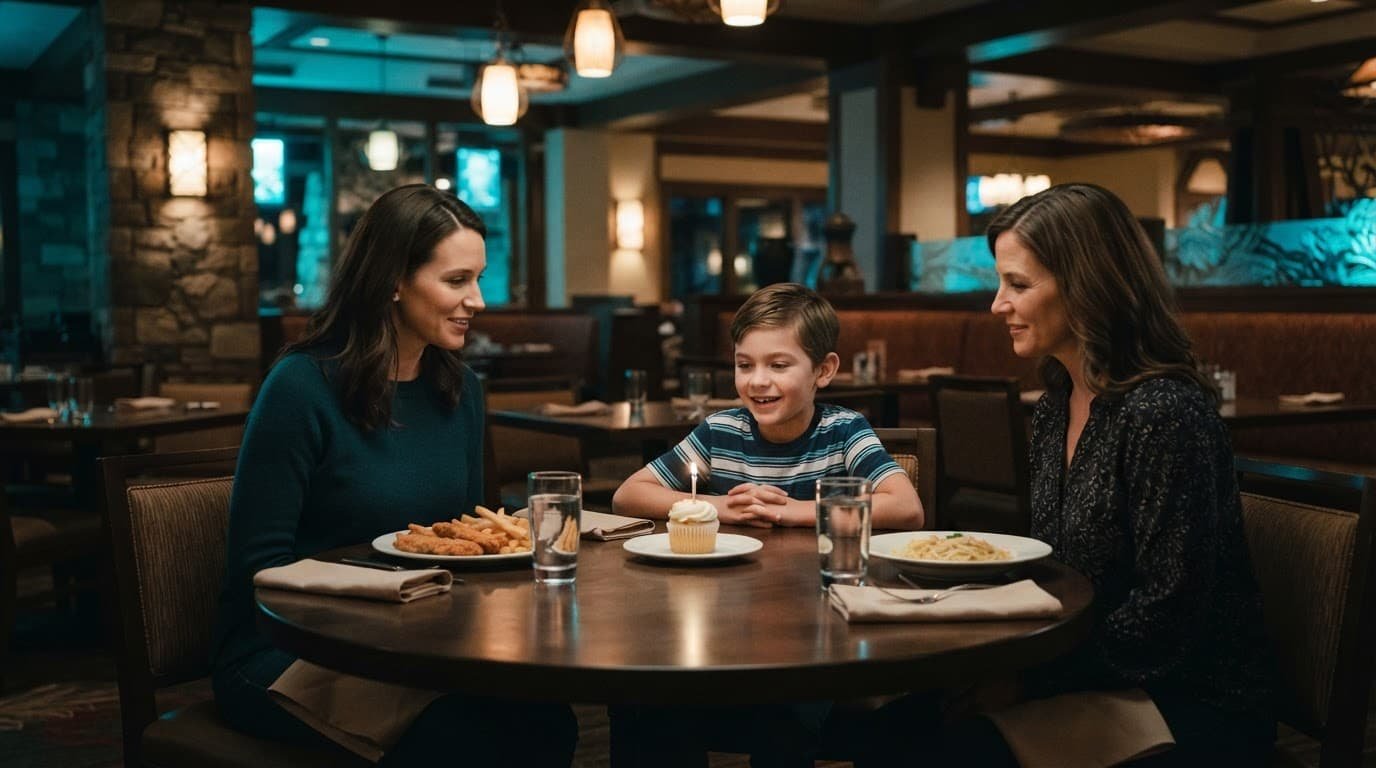
A birthday can be a favorite breakfast, one wrapped gift in the hotel room, or a simple cupcake after dinner. Ask before adding surprises.
Some children love birthday attention. Others may feel upset by singing, extra attention, photos, characters coming close to the table, or attention from other guests during public dining.
Tell your server only if your child wants the recognition. You can also ask Guest Relations about birthday buttons, but do not make wearing one a requirement. The goal is comfort, not proving that the birthday happened.
Use Lightning Lane Only When It Helps
More reservations don’t always create an easier Disney day. Timed plans can help some families, but they may add pressure for others.
Keep DAS and Lightning Lane separate
Lightning Lane Multi Pass is a paid service separate from DAS. It offers scheduled return windows for participating attractions.
It may help when your family has a few rides that truly matter. At EPCOT, Remy’s Ratatouille Adventure, Frozen Ever After, or Soarin’ might be birthday priorities.
Check the My Disney Experience app before you buy. Attraction choices, prices, and availability can change.
Avoid filling the day with clocks
Don’t buy every add-on because it sounds like the complete Disney experience. Paid return times are optional, and they’re only worth it if they lower stress.
If your child struggles with changing plans, becomes upset when a ride closes, or needs frequent breaks, a full Lightning Lane schedule may create more pressure. A slower day may offer better value.
Use one service at a time. Keep your phone charged. Choose the next step after your child finishes the current one.
A Hard Moment Does Not Ruin the Birthday
Meltdowns, shutdowns, and sudden changes can happen despite thoughtful planning. Heat, crowds, noise, and surprises at Disney can contribute to sensory overload. Not every difficult moment has the same cause. Your family has not failed if you leave an attraction, skip dinner, or return to the hotel.
Respond with fewer words and fewer choices
When a child is overwhelmed, long explanations can make the moment harder. Use simple phrases your child already knows.
“We are taking a break.”
“You are safe.”
“Headphones or quiet walk?”
Move away from the line or busy walkway if you can. Offer water, a familiar snack, a comfort item, or a calm video. Give your child time without adding pressure to “fix” the moment quickly.
Let the plan change without guilt
One caregiver can take a sibling on a ride while another returns to the room. A birthday dinner can become room-service food or snacks by the pool. Fireworks can be watched from farther away or skipped completely.
If a stroller is needed as a mobility device, ask Guest Relations about a stroller-as-wheelchair tag. If adults need help switching places for attractions, ask about Rider Switch.
The most important part of planning is knowing that leaving early is always allowed.
Frequently Asked Questions
Does autism automatically qualify a guest for DAS?
No. A diagnosis alone does not guarantee eligibility for Disney’s Disability Access Service. During the video interview, explain honestly how the guest is affected by a standard attraction queue and what support would help.
How can we make a Disney birthday less overwhelming?
Choose one or two true priorities, bring familiar comfort items, and plan a midday break before your child becomes overloaded. A favorite snack, quiet resort time, or early bedtime can be just as meaningful as a full park day.
Should we visit a park on the day we arrive?
Not necessarily. After a long flight or drive, a resort-only arrival day can give your child time to adjust to the hotel, heat, food, and new surroundings before adding a busy theme park.
What should we do if our child becomes overwhelmed at Disney World?
Use fewer words, move away from the crowd, and offer water, headphones, a familiar snack, or another comfort item. You can skip an attraction, change the meal, return to the room, or leave the park early without treating the change as a failure.
The Birthday Memory That Matters
A comfortable Disney birthday trip is built around your child, not a crowded checklist. A Character buffet is optional. A favorite ride, familiar meal, pool break, or early bedtime may become the meaningful birthday memory.
Quiet breaks, familiar meals, and a good resort room can all help. Still, the strongest plan is the one that gives your family permission to slow down.
A calm birthday is still a magical birthday.