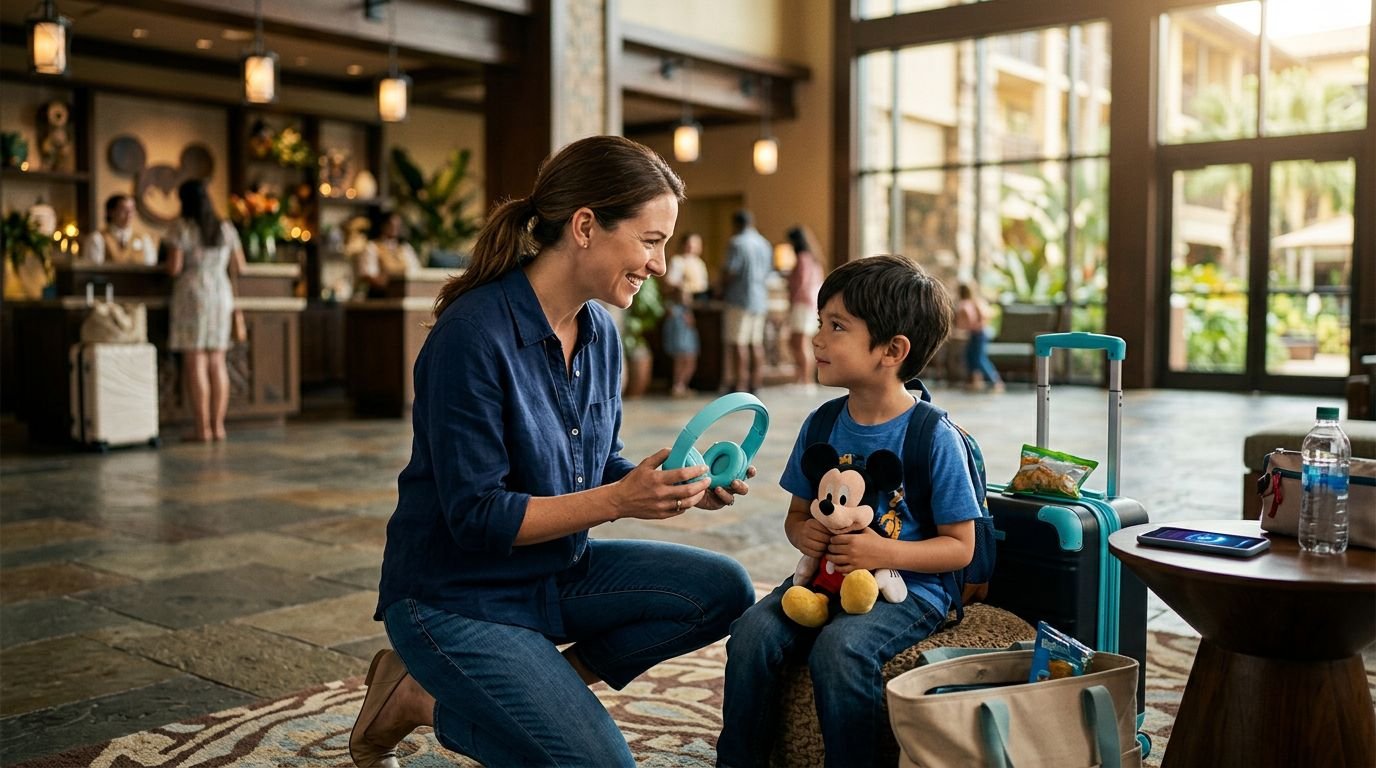
A Disney arrival day can feel exciting, but it can also feel like too much all at once. New sights, long travel, bright lobbies, luggage, hungry kids, and a room that may not be ready yet can quickly change the mood.
For families planning a Disney World autism vacation, a calm resort check-in is not a small detail. It sets the pace for the whole trip. Supporting autistic children through this transition gives your entire family time to settle in before the parks, characters, buses, and fireworks begin.
Through thoughtful vacation planning, you can give your kids the time they need to adjust. The goal is not a perfect arrival day. The goal is a comfortable start that fits your family.
Key Takeaways
- Build extra time into arrival day, especially after a flight or long drive.
- Complete as much as possible in the My Disney Experience app before leaving home, including requests for autism accommodations.
- Pack comfort items, medication, chargers, snacks, and a change of clothes in your carry-on.
- Ask Cast Members for help early if your room location, transportation plan, or accessibility services feel overwhelming.
- Treat the first resort day as one of your planned rest days, rather than a race to start the vacation.
Disney World Autism Resort Check-In: Start Calm
Disney resorts can be busy places. Guests arrive at different times, buses come and go, music plays in public areas, and the lobby may be louder than expected, which can easily trigger sensory overload for autistic guests. Even a beautiful resort can feel like a lot after travel.
Set expectations before you get there. Show your neurodivergent child photos or videos of the resort if that helps. Talk through the simple steps: “We will arrive at the hotel, get our room number, bring our bags upstairs, and rest.”
Keep the explanation short and familiar. Too many details can create more worry.

If your child uses a visual schedule, make one for arrival day. It can be as simple as:
- Ride to the resort.
- Check in.
- Find the room.
- Have a snack.
- Rest or swim.
- Choose dinner.
A schedule gives your child a clear finish line. It also gives you a way to explain changes without trying to talk through everything in a busy lobby.
A room-ready message is helpful, but it does not mean your family has to go straight to the parks. A quiet meal, pool time, or an early bedtime may be the better choice.
Many families use online check-in through the My Disney Experience app. This can reduce the time spent at the front desk. You may receive your room number and other details on your phone when the room is ready.
Still, it is okay to visit the front desk. Cast Members can answer questions about your building, transportation, luggage help, resort layout, and accommodations for kids with sensory issues. You do not have to figure it all out alone.
Pack for the Hours Before Your Room Is Ready
Check-in time and room-ready time are not always the same. Your family may arrive well before the room is available. This is common, especially on busy travel days.
Pack an arrival-day bag that stays with you. Do not put the items your child needs most in checked luggage or leave them buried in a suitcase.
Bring familiar items your child already enjoys. A new toy may be fun, but familiar items often work better after a long day of travel.
Keep these items easy to reach:
- Noise-canceling headphones or ear defenders your child has used before
- A favorite hoodie, fidget, stuffed animal, blanket, or small comfort item to support children with sensory processing disorder
- Familiar snacks and a refillable water bottle
- Prescription medication and care items
- Downloaded shows, music, games, headphones, and charging cords
- A portable charger for your phone and other devices
- One change of clothes if heat, spills, or rain create a problem
Put chargers and headphones into one pouch. Families often remember the tablet but forget the cable. A dead device can make a hard transition feel much bigger.
Florida heat can also hit fast. Have water, sunscreen, hats, and lightweight layers available before your luggage arrives. If your child is sensitive to damp clothing, pack dry socks and a spare shirt in a zip bag.
A calm first meal can help too. Resort counter service restaurants may be busy at peak times, so consider exploring food options during an off-hour. You can also use mobile ordering when available, then choose a quieter place to sit.
Choose a Room Location That Fits Your Family
Not every Disney resort room feels the same, even within the same hotel. The building location can affect walking distance, noise, transportation, and how easy it is to take a break.
Before arrival, think about what matters most for your family. Some families want to be near transportation. Others need a room close to the lobby, food court, pool, elevator, or parking area. A quieter location may matter more than being close to the main activity.
You can add a room request to your reservation before travel. Requests are not guaranteed, but Disney can see them. Keep the request clear and simple.
For example, you might request a ground-floor room, a room near a bus stop, or a location away from the pool area. For special needs travelers, these thoughtful choices regarding room location can serve as vital autism accommodations to reduce daily stress.
Disney’s Art of Animation Resort is often a helpful option for larger families because its family suites include extra sleeping space, two bathrooms, and a kitchenette. That extra room can make a big difference when one child needs an early bedtime or familiar breakfast foods.
Disney’s Port Orleans Resort, French Quarter is another resort many families consider because of its smaller layout. The walk to transportation and dining can feel more manageable than at some larger properties, which works well if you are planning a resort-only trip to ease into the vacation.
Your Disney World autism plan should match your child’s real needs, not the room category that looks best in photos. A slightly less exciting view may be worth it if it gives your family easier access to food, transportation, and a quiet reset.
Give Your Child a Reset Before the First Park Day
The temptation to start the vacation right away is real. You have spent money, planned for months, and the theme parks are right there. But arrival day does not need to be a park day, especially if you want your child to ease into the experience.
A slower first evening can protect the rest of the trip. Let your child explore the room, test the shower, choose a place for their comfort items, and get familiar with the path to the food court or bus stop.
If your family wants Disney fun without a full park commitment, consider the resort pool, a short visit to Disney Springs, or a simple character movie in the room. There is no prize for exhausting everyone on day one of your park days.
Talk through the next morning before bedtime. Show your child the clothes they will wear, what time you will leave, and how you will get to the Disney parks. A simple plan is easier to accept than a full itinerary filled with unknowns, whether you are heading to see Magic Kingdom or checking out Epcot attractions later in the week.
Keep your phone charged. The My Disney Experience app can hold park maps, dining reservations, mobile food orders, transportation details, and attraction plans. A portable battery is one of the most useful items in your park bag.
Families using Disability Access Service should review Disney’s current DAS information before the trip. Sometimes referred to as a Disability Access Pass, DAS is intended for guests with developmental disabilities, including autism, who cannot tolerate extended waits in a conventional queue.
Registration and eligibility are based on how the disability affects waiting in a regular line, and guest services handles these accommodations through an online process. Autism is not an automatic approval. The guest requesting DAS must be present for the video conversation, and current rules can change.
Once DAS is active, return times are managed in the app. You can generally hold one DAS return time at a time, then request another after redeeming it. The registered guest must be present and ride with the group.
A paid Lightning Lane option is separate from DAS. You do not need to purchase every upgrade during your park days. A calmer schedule, realistic priorities, and regular breaks often matter more than adding another reservation window.
For more detailed support before you travel, the Disney World with Autism guide serves as a helpful travel planning guide that includes planning ideas for DAS, sensory needs, transportation, dining, and flexible park days. A convenient Disney autism travel guide on Amazon is also available for families who prefer to plan with a guide in hand.
What to Do When Check-In Feels Like Too Much
Even with a good plan, travel days can go sideways. A delayed flight, a crowded lobby, a room delay, or sensory overload can change everything in an instant.
If your child starts to become overwhelmed, step away from the desk area if possible. Find a quieter spot outside, sit near a less busy corner, or let one adult handle the check-in details while another stays with your child.
You can ask guest services or any nearby Cast Member for direct guidance. Wearing a sunflower lanyard can also help staff recognize your needs quickly without requiring long explanations. Explain what you need in plain language, such as a quieter place to wait, help locating your building, or the fastest route to your room. You do not need to explain every part of your family’s situation.
If the room is not ready, ask where you can store luggage. Then choose one low-pressure activity instead of a high-stress environment like a character buffet. A quiet snack, a short walk, pool time, or a ride-share to a familiar restaurant can be enough.
Sometimes a paid Minnie Van, rideshare, or taxi is worth the cost when Disney transportation feels too crowded or unpredictable. A quieter trip back to the resort can help your child recover before the next part of the day.
The best Disney World autism check-in tips are the ones that give your family choices. Plans help, but choices reduce pressure.
Frequently Asked Questions
Do I need to visit the front desk if I use online check-in?
No, you can bypass the front desk entirely if you receive your room number and text notifications through the My Disney Experience app. However, the front desk is still a great resource if you have specific questions about your room location, resort layout, or autism accommodations.
What should I pack in my arrival-day carry-on bag?
Keep all essential comfort and medical items with you instead of checked luggage. Pack noise-canceling headphones, favorite fidgets, a change of clothes, prescription medications, chargers, and familiar snacks to handle delays or sensory overload before your room is ready.
Can we go straight to the parks on our check-in day?
While you can head to the parks right away, many families with autistic children prefer a slower pace on arrival day. Taking time to unpack, explore the resort pool, or have a quiet meal helps prevent sensory overload and sets a calm tone for the rest of the vacation.
How does the Disability Access Service (DAS) work at Disney World?
DAS is designed for guests who cannot tolerate extended waits in a conventional queue due to a developmental disability like autism. Registration involves a video conversation with guest services, and once approved, return times are managed directly through the My Disney Experience app.
A Comfortable Arrival Is a Strong Start
A Disney vacation does not need to begin with rushing through a lobby or pushing through a tired child’s limits. Families navigating Disney World autism travel planning can give themselves space to arrive, unpack, eat, rest, and get comfortable without feeling the pressure to rush. By embracing neurodiversity and designing itineraries that honor your family’s unique pacing, you set a positive tone for the trip.
The most successful Disney trips are not packed minute by minute. They are built around what your family can handle well. A calm resort check-in, paired with intentional rest days, gives everyone a better chance to enjoy the magic when they are ready.