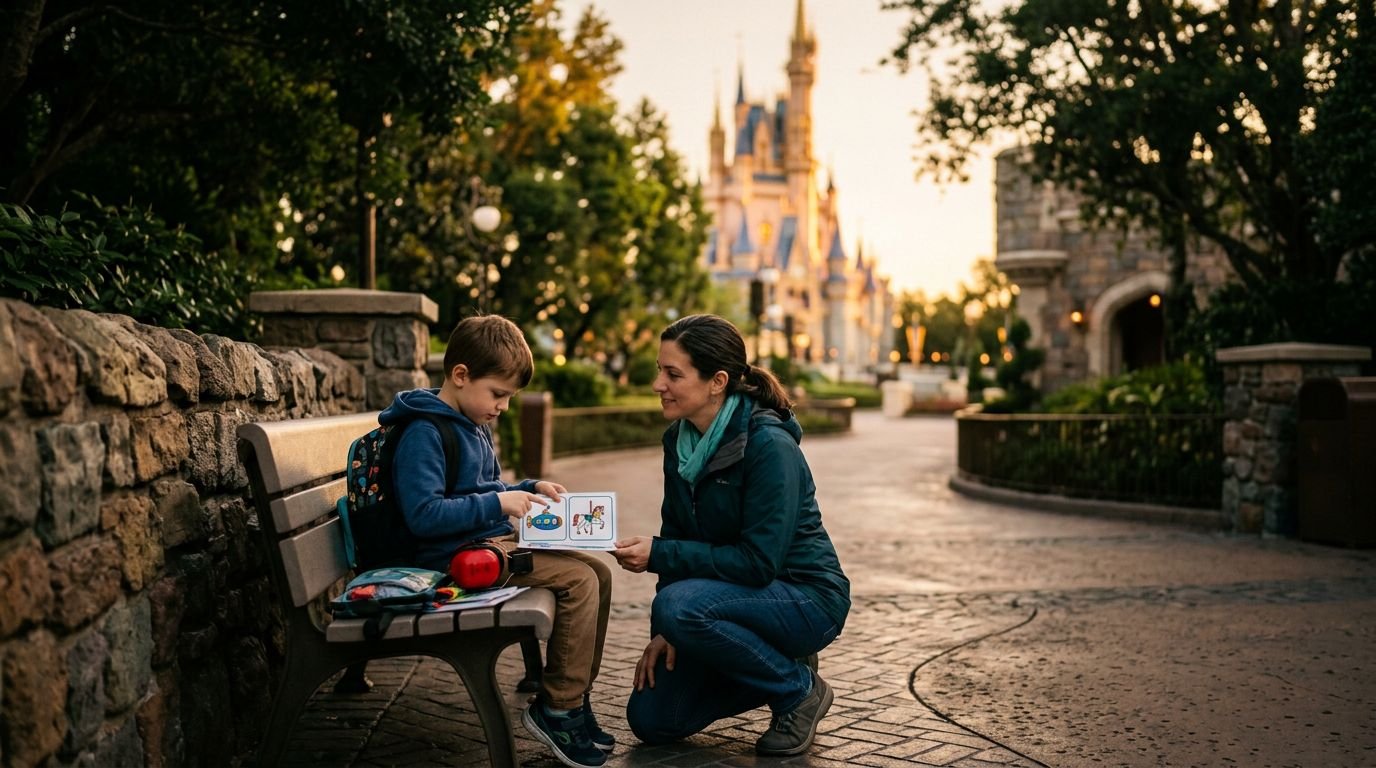
Disney World can be exciting, loud, crowded, and full of surprises. For an autistic child, a packed family vacation may feel like too much before the first ride. An adult with PDA traits may experience that pressure differently, especially when demand avoidance is part of the picture.
The heart of Disney World autism planning is not fitting every attraction into one trip. It is creating an individualized vacation plan with more comfort, more choice, and more room to reset.
A slower plan can still be successful, measured in comfort, autonomy, and meaningful memories rather than attraction count. It often holds more of them.
Key Takeaways
- Start with your child’s sensory profile, communication style, stamina, and need for autonomy instead of trying to complete a Disney checklist.
- Keep the plan flexible: choose one or two priorities per park day, offer reasonable choices, and treat breaks or early exits as part of the vacation.
- Review current Disability Access Service requirements before travel and explain the specific barriers your traveler experiences in conventional queues.
- Build a practical support plan for sensory regulation, familiar food, devices, transportation, elopement safety, and easy access to a quiet hotel room.
- Budget for comfort rather than every add-on. Fewer park days, rest time, and occasional convenience purchases may create a more successful trip.
Disney Planning Starts With Your Child
Disney is built around schedules, wait times, reservations, and big moments. For neurodivergent children, those outside expectations can feel intense, even when the activity is something they truly want.
Start with your child’s needs, not the Disney checklist.
PDA changes how you present the plan
PDA is a term many families use when a person’s anxiety and stress rise around everyday demands. A child may want to ride an attraction, meet a character, or visit the park. For an autistic child, being told it’s time to do it can make the situation harder.
Keep language low-pressure and flexible. Instead of saying, “We have to leave now,” try, “We can head toward Fantasyland now, or we can sit for five more minutes. What feels better?”
You are not giving up all structure. You are making room for autonomy inside the structure.
Give information early, but do not turn the trip into a long list of expectations. A visual plan with a few possible choices works better than a minute-by-minute schedule.
Pick a few priorities and protect them
Choose one or two must-do experiences per park day. Everything else is optional.
A child who wants to ride Slinky Dog Dash may not care about a parade. Another traveler may be happy spending an hour in a resort pool and never entering a queue. Both are valid Disney vacations.
Talk as a family about what helps when plans change. That might include headphones, a favorite snack, a familiar show, an AAC device, a hoodie, or a quiet hotel break.
A Disney ticket does not need to be used from rope drop through fireworks to be worth the money. A calmer family is the goal.
A Practical Vacation Planning Timeline
A Disney trip feels less overwhelming when you handle one layer at a time. Start early enough to learn your options. Treat the plan as an invitation to explore, not a minute-by-minute contract.
Six months to two months before travel
Choose travel dates with your family’s routine in mind. Consider school breaks, crowd levels, Florida heat, travel time, and medication needs. For a traveler with special needs, choose a park-day number based on stamina, transitions, and recovery needs.
Book a resort or hotel that makes returning to the room easy. Decide whether one park per day feels better than a Park Hopper ticket. For many PDA families, one park per day means fewer transportation steps, fewer security lines, and less pressure to keep moving.
Watch short ride videos only if your child wants to see them. Review park maps together. Let them choose a comfort item, a snack, or one attraction to research.
Disney also offers planning resources for neurodivergent guests that can help you review attraction considerations before leaving home.
Two weeks before the trip
Make a simple “first day” plan. Keep it small: airport or car ride, hotel check-in, room time, dinner, and sleep. Avoid adding Disney Springs or a park visit unless your family asks for it.
Create a park bag that stays organized. Put headphones, charging cords, a portable battery, devices, and a low-tech communication backup in one pouch. Families often remember the tablet and forget the cable.
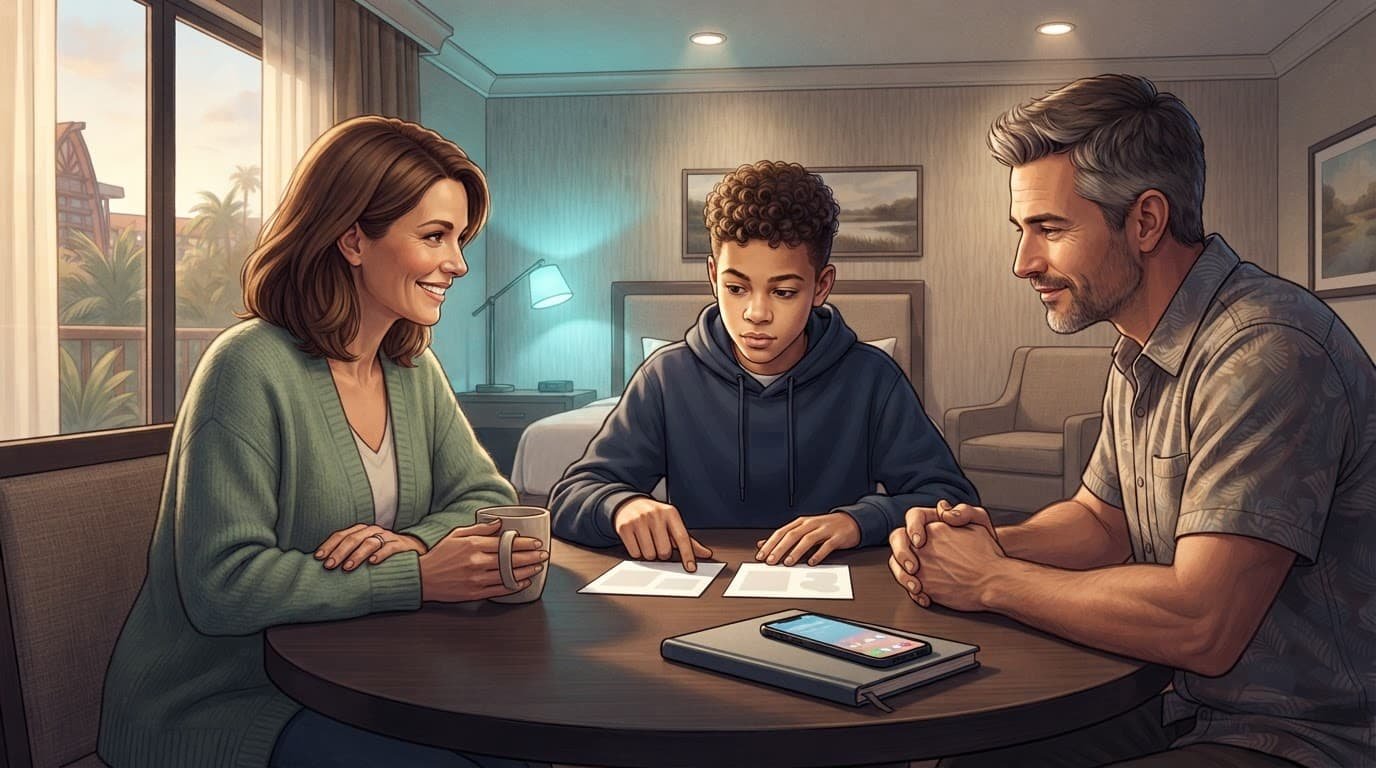
Use short phrases to prepare for changes: “wait,” “break,” “all done,” and “choose.” A simple card or phone note can help when words are hard to find.
You don’t need to rehearse every possible problem. Your child needs to know there’s always a way to pause.
Disability Access Service: Plan Ahead, Stay Flexible
Disability Access Service, often called DAS, is Disney’s official accessibility accommodation for eligible guests. It provides a different place to wait when a conventional standby queue isn’t manageable because of a developmental disability such as autism.
Some families call it a DAS pass, but it isn’t a guaranteed pass or an automatic benefit based only on a diagnosis.
It doesn’t make a park day demand-free. It can make the waiting part more manageable.
Set up DAS before you arrive
Disney currently uses a live video chat process before arrival to discuss DAS eligibility. The registered guest needs to join the conversation. Disney says guests can speak with cast members as early as 60 days before their park visit.
Review the current Disability Access Service requirements close to your travel date. Procedures can change.
Approval isn’t automatic because someone has autism spectrum disorder. Explain the real barrier to waiting in a conventional queue. This may include panic, elopement risk, sensory distress, inability to remain in a crowded queue, or a demand-related escalation.
Keep the explanation honest and brief. Your child doesn’t need to prove distress or perform for anyone.
DAS generally covers the registered guest and up to three additional people. If your immediate family is larger, ask Disney directly about your situation.
Use return times without filling the day
Once inside the park, you can request one available DAS return time through the My Disney Experience app. Your party waits elsewhere, then returns through the Lightning Lane entrance when the time arrives.
The registered guest must be present and ride with the group. Any member of the DAS party can request the return time, but your group can generally hold only one DAS return time at once.
Use that waiting time for something restorative. Get a snack. Find shade. Visit a nearby shop. Ride a low-intensity attraction with a short wait. Sit somewhere quiet.
If DAS isn’t the right fit for your traveler, ask guest services about other queue accommodations. Disney’s accessibility services for guests with disabilities also includes planning guides and park-specific information.
Build a Sensory Plan, Not a Perfect Park Day
Noise, crowds, heat, scent, darkness, flashing effects, sudden movement, and unfamiliar food can stack up fast in theme parks. Sensory overload is often not one big event. It is many small stressors collecting throughout the day.
Look at attraction details before choosing rides
Disney’s sensory planning tools describe experiences involving loud sounds, lighting effects, motion, dark spaces, scents, and crowds. Review those sensory experiences before presenting rides as a plan.
A ride that looks gentle in a photo may have darkness, sudden sounds, or a long indoor queue. A popular attraction may be a great fit one day and a complete no another day.
Outside resources can also help families plan headphones, sunglasses, familiar items, and quiet time for regulation. These theme park sensory overload strategies are useful for building a practical park bag.
Do not use ride information to convince your child to try something. Use it to give them a real choice.
Give transitions a softer landing
Transitions can be hard even when the next activity is fun. Leave extra time after a ride, meal, bathroom break, or transportation change.
Try offering two reasonable choices:
- “We can walk toward the next ride or take the longer shaded route.”
- “Would you rather sit inside for ten minutes or find an outdoor table?”
- “The ride is closed right now. We can wait nearby, choose another ride, or go back to the hotel.”
A ride closure can feel like a broken promise. Avoid rushing to replace it with another demand. Let your child be disappointed, frustrated, or done for the day.
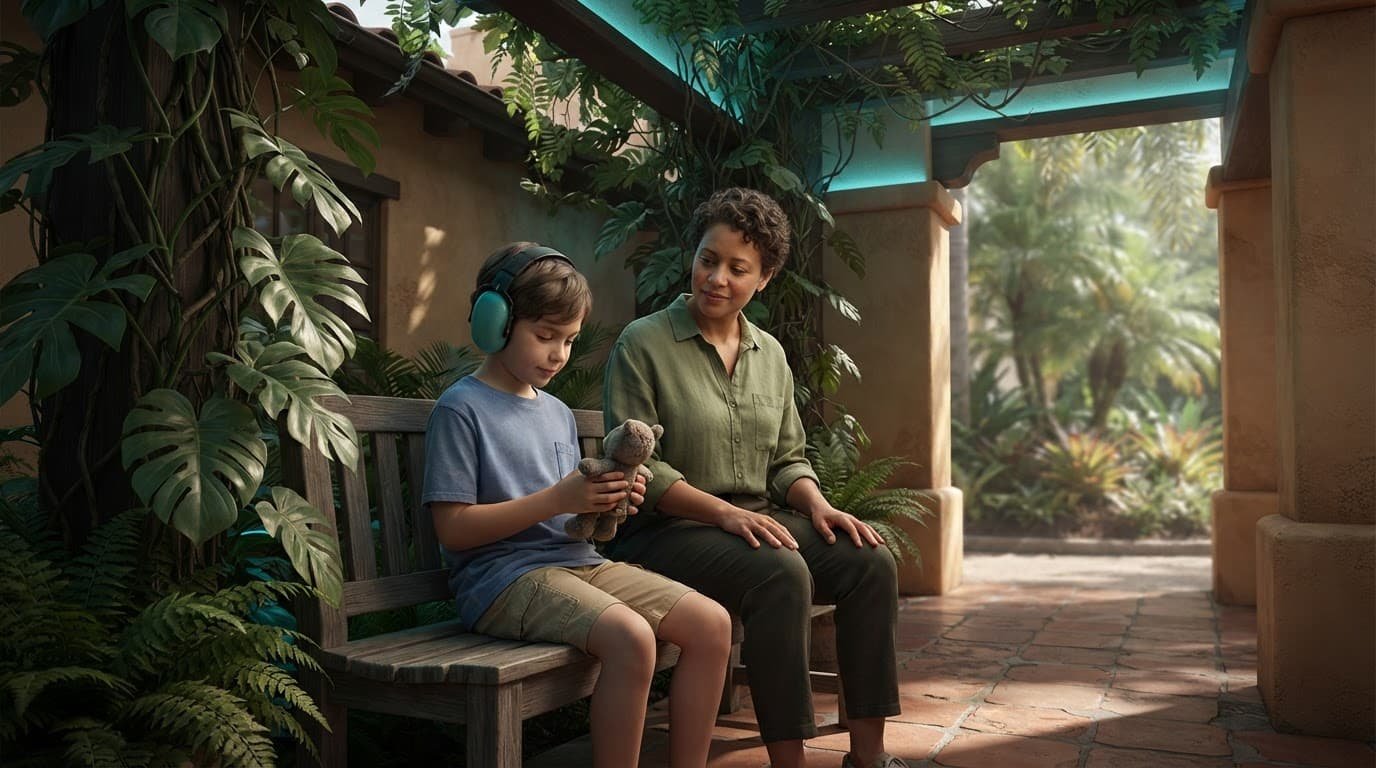
A break before a meltdown is not lost park time. It is part of the plan.
Choose a Resort That Makes Breaks Possible
Your hotel room is more than a place to sleep. It is where your child can take off the mask, eat familiar food, decompress after fireworks, and recover from a hard morning.
On-site resorts can reduce daily decisions
Staying at Disney resort hotels can make midday breaks easier. Resort guests also have access to early theme park entry, which can help families experience one priority attraction before the parks feel busiest.
Early entry isn’t required. Some PDA travelers may benefit from early morning hours, while others do better arriving later. There isn’t one right plan.
Ask for details that affect your family’s comfort: room location, elevator access, distance to transportation, refrigerator space, bed setup, stroller storage, and laundry access. Consider whether the room, path to transportation, and park transitions can accommodate a special needs stroller. A smaller resort layout may feel easier than a large property with long walks.
Art of Animation family suites can help families who need separate sleep spaces, two bathrooms, and a kitchenette. Port Orleans Resort, French Quarter may feel more manageable for families who prefer a smaller footprint.
Plan rest days and transportation exits
A resort day is not wasted money. After two or three park days, a pool morning, laundry break, quiet room day, or Disney Springs visit can help everyone recover.
If you use Disney transportation, build in waiting time. Buses, Skyliner stations, monorails, security, and crowds all add transitions. Check Disney’s resort transportation information before your trip, then decide when a ride-share may be worth the added cost.
A special needs stroller may help a child who walks but has limited endurance, mobility needs, or difficulty with crowded transitions. Ask Guest Relations about a stroller-as-wheelchair tag if the stroller is needed in attraction queues.
Don’t pack light at the expense of rest. Resort laundry rooms can be noisy and far from your building. A fuller suitcase may be the better choice for your family.
Food, Devices, and Safety Need Their Own Plan
Hunger, a dead phone, and a rushed safety conversation can turn a manageable day into a difficult one. These details matter more than matching outfits or souvenir plans.
Keep food familiar and low-pressure
Disney has many food options, but familiarity often wins when a child is tired or overwhelmed. Pack approved snacks and drinks. Keep a few easy meals in the hotel room for early mornings or late nights.
Counter service, Disney’s quick-service format, gives you more control over timing than a long table-service meal. Mobile order lets you review the menu during a calm moment and select a pickup time when your family is ready.
A character buffet can be enjoyable, but preview the noise, timing, menu flexibility, and exit options first. Treat it as an optional experience, not a required reservation.
For food allergies, medically restrictive diets, or other dietary needs, review Disney’s special dietary request guidance before making reservations. At restaurants, speak with the chef or manager if needed.
Selective eating is not a Disney problem to solve on vacation. Safe food is safe food.
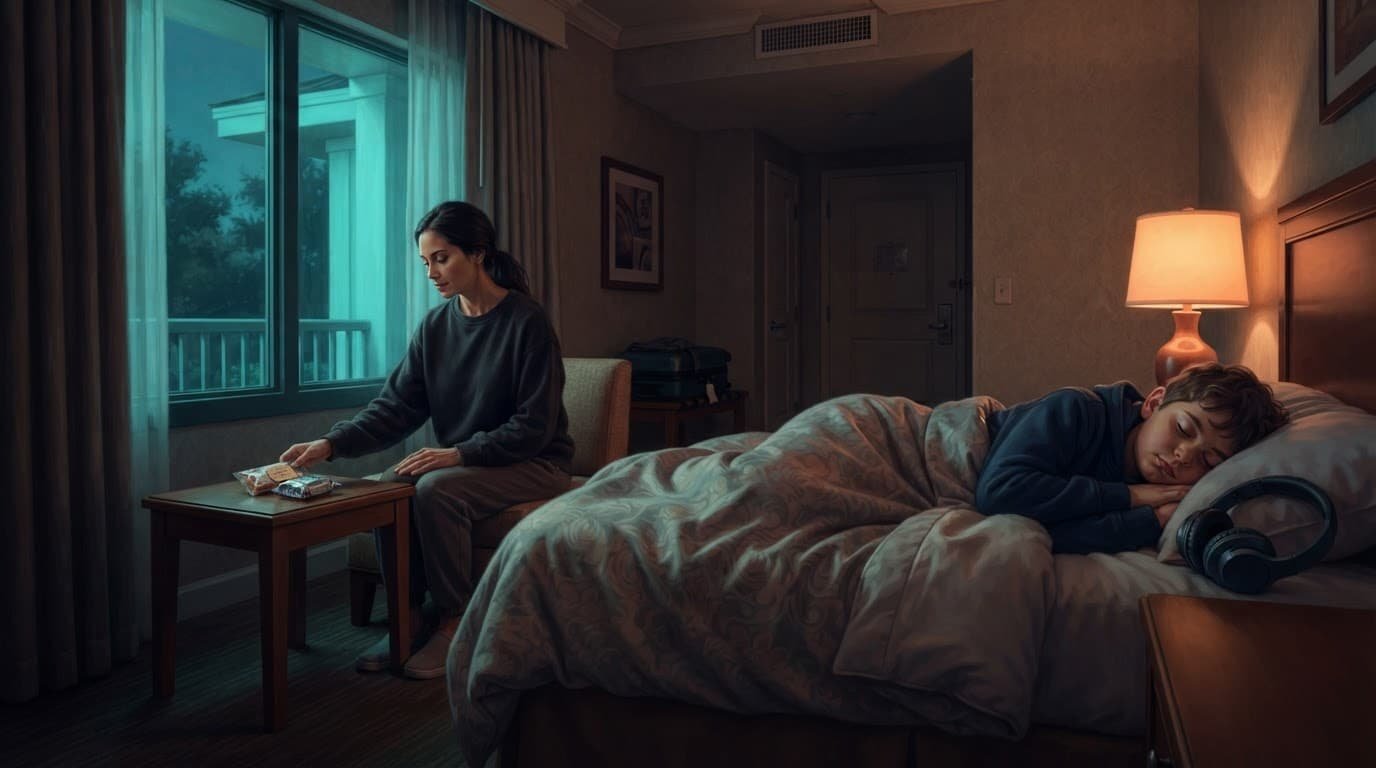
Make an elopement plan before entering the park
Elopement safety needs a calm, practical approach. Begin with a recent photo of your child on each adult’s phone. Use an identification method your child can tolerate, such as a card in a pocket, an ID bracelet, or a tag attached to a bag.
If magic bands or another electronic system is part of your plan, test it before the trip and keep a low-tech backup. A wearable or location device should support your plan, not replace it.
Choose one adult to stay directly responsible during crowded transitions. Do not assume another adult is watching. Say it clearly.
Teach a simple plan at your child’s comfort level. If separated, they can approach a Cast Member at a shop, attraction entrance, or restaurant. Show them what Cast Member name tags look like before the trip.
A location device may offer extra reassurance, but it does not replace close supervision. The Autism Society’s elopement safety guidance can help families build a safety plan that fits their child.
Budget for Comfort, Not Every Disney Add-On
Disney trips can become expensive when families feel they need every upgrade. Start with your true non-negotiables: tickets, lodging, transportation, food, and the supports that help your traveler regulate.
Then leave a small backup fund for a ride-share, extra snacks, replacement rain gear, or an early dinner back at the resort.
| Expense | Question to ask | A lower-pressure choice |
|---|---|---|
| Park tickets | How many days can we handle? | Choose fewer park days and add a rest day. |
| Hotel | Can we return easily for breaks? | Pay for location, space, or a kitchenette when it helps. |
| Food | What will our child reliably eat? | Bring familiar snacks and consider a character buffet only if it suits your child and won’t create pressure. |
| Transportation | Can we manage Disney buses today? | Budget for an occasional ride-share exit. |
| Add-ons | Will this reduce stress? | Skip anything that creates more timed commitments. |
A smaller ticket package that your family enjoys is better than a longer trip that leaves everyone depleted.
Lightning Lane is separate from DAS
Lightning Lane Multi Pass is a paid service. It is separate from DAS and provides scheduled return windows, or ride reservations, for participating attractions.
It can help when you have a few high-priority rides and your family can handle appointment-style times. EPCOT may be a good day to consider it if Remy’s Ratatouille Adventure, Frozen Ever After, or Soarin’ are true must-dos.
It can also become another clock to watch. A full Lightning Lane schedule may add pressure for a child who needs long breaks, struggles with changed plans, or becomes upset if a ride closes.
Check current prices, participating attractions, and return-window rules in the My Disney Experience app before buying. These details can change. Buy it only when it makes the day easier.
For extra support, the Disney World with Autism Guide on Etsy and the companion autism travel guide on Amazon are third-party resources, not official Disney materials. They offer more planning ideas for park days, accessibility, and family breaks.
Match Attractions to Your Traveler’s Sensory Profile
No ride is universally autism-friendly. One autistic child may love an attraction another traveler avoids because it feels too loud, dark, fast, or unpredictable.
Let your child’s actual preferences lead the way.
Start with familiar, lower-intensity options
Some families enjoy attraction choices that are slower, more predictable, and easy to leave behind if interest changes. Compare the sensory experiences before choosing, including sound, darkness, speed, scents, water, visual effects, and unpredictability.
At Magic Kingdom, that may include the Walt Disney World Railroad, Liberty Square Riverboat, or Tomorrowland Transit Authority PeopleMover. Comfort can still vary by person and day.
At EPCOT, Living with the Land and The Seas with Nemo & Friends may work for travelers who enjoy gentle movement. Each attraction has its own sounds, darkness, scents, and visual effects.
Check current official attraction information for height requirements, restraints, motion, darkness, and special effects.
Indoor shows, shops, character meet-and-greets, and resort activities can also become the main event. You do not need a thrill ride for a Disney memory to count.
Review intense rides without judgment
Guardians of the Galaxy: Cosmic Rewind has loud music, darkness, rapid motion, and rotating ride vehicles. TRON Lightcycle / Run is fast and has a motorcycle-style riding position. Rise of the Resistance has loud sounds, dark scenes, motion, and surprise effects.
Tiana’s Bayou Adventure includes water, darkness, and a significant drop. Fireworks and nighttime spectaculars include crowds, loud music, and pyrotechnics.
Your child may love these experiences. They may also decide not to try them after waiting. Respecting that choice protects trust, and trust matters more than any attraction count.
Frequently Asked Questions
Is Disney World a good destination for an autistic child with PDA traits?
It can be, especially when the trip is built around autonomy, flexible choices, and recovery time. A slower vacation with fewer scheduled commitments may be more successful than trying to experience every attraction.
How does Disability Access Service help autistic guests?
DAS can provide a different place to wait when a conventional standby queue is not manageable because of a developmental disability. It does not remove all waiting or guarantee immediate attraction access, so review Disney’s current requirements and explain the specific barriers your traveler experiences.
Should we stay at a Disney resort hotel?
An on-site resort can make midday breaks, transportation, and early returns to the room easier. Choose based on your family’s needs, including room layout, walking distance, transportation access, and whether a smaller resort footprint would feel more manageable.
What should we pack for a Disney park day?
Pack the supports your traveler already uses, such as headphones, familiar snacks, devices and charging cords, a comfort item, communication backups, and any needed medication. Keep the bag organized and consider identification and safety supports if elopement is a concern.
How many Disney park days should we plan?
Choose the number of park days based on stamina, transitions, and recovery needs rather than ticket value alone. A rest day, resort morning, or early exit can help your family enjoy the trip without becoming depleted.
A Disney Trip That Leaves Room to Breathe
The best Disney World autism planning starts with your child, not a perfect park itinerary. Give them choices. Keep your schedule light. Make breaks easy to take without guilt.
DAS, a special needs stroller, mobile food ordering, and a well-packed park bag can help. So can a quiet hotel room, a familiar snack, and permission to leave early.
A successful family vacation is one where your family comes home with meaningful memories, not exhaustion.