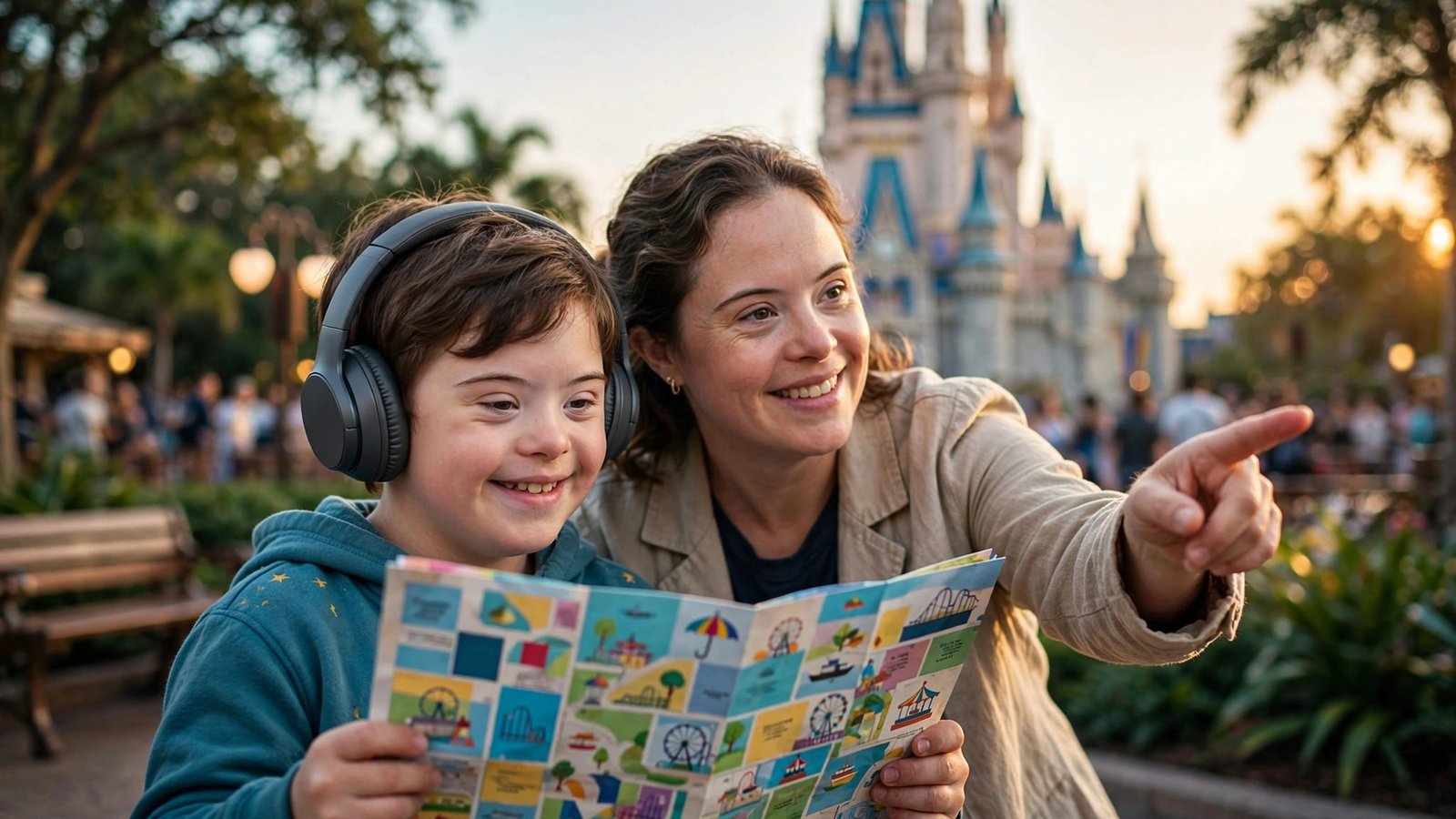
A Walt Disney World trip can be joyful, but it can also be loud, hot, crowded, and full of quick changes. When you are planning a Disney World Down syndrome vacation, the best plan fits your child or adult family member, not a picture-perfect park schedule.
There is no single Disney experience that works for every guest with Down syndrome. Some guests need more breaks, help with transitions, familiar foods, mobility support, or a quiet place to reset. Others may be ready for a full park day with a few simple adjustments.
Start with comfort, flexibility, and realistic expectations. That is where the best family memories begin.
Key Takeaways for a More Comfortable Disney Trip
- Build each park day around one or two priorities. A favorite ride, character visit, or calm lunch can be enough.
- Review Disney’s current accessibility policies before travel, especially Disability Access Service, also called DAS.
- Consider sensory needs, communication, mobility, food preferences, fatigue, and safety before choosing rides or resorts.
- Pack familiar comfort items, snacks, medication, chargers, and a change of clothes in an easy-to-reach park bag.
- Treat breaks, pool time, and early exits as part of the vacation plan, not a missed opportunity.
A successful Disney day is not measured by ride count. It is measured by whether your family had room to feel comfortable, included, and cared for.
Disney World Down Syndrome Planning Starts With Real Needs
A Down syndrome diagnosis does not tell you everything that will make Disney easier. Your child or adult family member may love characters and music but struggle with long waits. They may enjoy rides but need a stroller for fatigue, safety, or sensory regulation.
Think about what is difficult at home, school, busy stores, restaurants, or during long outings. Those answers are more helpful than trying to copy another family’s Disney itinerary.
Consider the full day, not only the rides
Park days include transportation, security, bag checks, crowds, heat, restrooms, meals, and walking. A child who handles a favorite attraction well may still feel overwhelmed after a busy bus ride or loud restaurant.
Make a simple list of your family’s likely pressure points. Include communication needs, wandering concerns, mobility equipment, food restrictions, toileting needs, sensory issues, medication schedules, and how your traveler shows they need a break.
Pick a few priorities and leave space
Choose one or two experiences that would make the day feel special. Everything else is a bonus. A slow morning, one favorite ride, a familiar lunch, and pool time can be a wonderful Disney day.
Families who need more personalized support can explore special needs Disney travel planning. A plan built around your real routine is easier to follow when the parks feel busy.
Understanding Disability Access Service at Walt Disney World
Families researching Disability Access Services should review Disney’s current Disability Access Service (DAS) rules. DAS may help eligible guests who cannot tolerate a conventional attraction queue because of a developmental disability. It isn’t a front-of-the-line pass. Instead, it provides a return time so your family can wait somewhere more comfortable than the regular queue.
Eligibility is based on functional needs among individuals with disabilities. Down syndrome alone doesn’t automatically qualify someone for DAS.
How to register before your trip
Disney offers DAS registration through live video chat, not in person. The guest requesting DAS must be present, and the person completing registration must be 18 or older.
Registration can begin up to 60 days before a park visit. Tickets must be linked in My Disney Experience first. Disney’s Disability Access Service details explain the current registration hours, requirements, and return-time process. Verify these details before your trip because policies can change.
Be ready to explain why waiting in a standard queue is difficult. Focus on what your family member experiences, such as anxiety, safety concerns, sensory overload, or difficulty remaining in a crowded line.
Other queue options can help, too
DAS is only one support available at Walt Disney World. Rider Switch can help when someone in the party cannot ride or needs to stay with another family member. Some attractions also offer Single Rider, a virtual queue, or Attraction Queue Re-Entry options. These services aren’t available for every attraction and don’t replace explaining a guest’s functional needs.
If your child uses a stroller as a mobility device, ask Guest Services for help from Disney’s official Guest Relations team about a “Stroller as a Wheelchair” tag. Disney’s attraction queue-access guidance explains when a stroller may be used in queues and why attraction-specific transfer rules still matter.
Mobility, Sensory Needs, and Your Park-Day Pace
For travelers with mobility concerns, long walks can be difficult, even for children or adults who walk independently at home. Heat, excitement, crowds, and an unfamiliar routine can bring on fatigue sooner than expected. A stroller, wheelchair, or ECV can protect energy for the parts of Disney your family enjoys most.
Disney offers both a stroller rental and wheelchair rental, though some families prefer bringing familiar equipment from home. Disney’s single stroller is recommended for children up to 100 pounds, so confirm current rental specifications and equipment needs well before your trip.
Ask about a stroller-as-wheelchair tag
A tagged stroller may allow a guest to remain in the stroller while moving through attraction queues where a wheelchair would be used. Depending on the traveler, this can support mobility, fatigue, medical equipment, safety, or sensory regulation for individuals with disabilities.
Visit Guest Relations early in your first park day. Explain how the stroller supports your child’s functional needs. The tag doesn’t guarantee stroller use on the attraction itself. At each ride, cast members will explain boarding and transfer requirements.
For families balancing communication, sensory, and mobility needs, Disney planning for multiple disabilities offers practical planning ideas that can work alongside your Disney plans.
Build breaks into the schedule
Do not wait for a full meltdown or shutdown before taking a break. Schedule a quiet snack, shaded seating, a calm attraction, or a return to the hotel before your family is worn out.
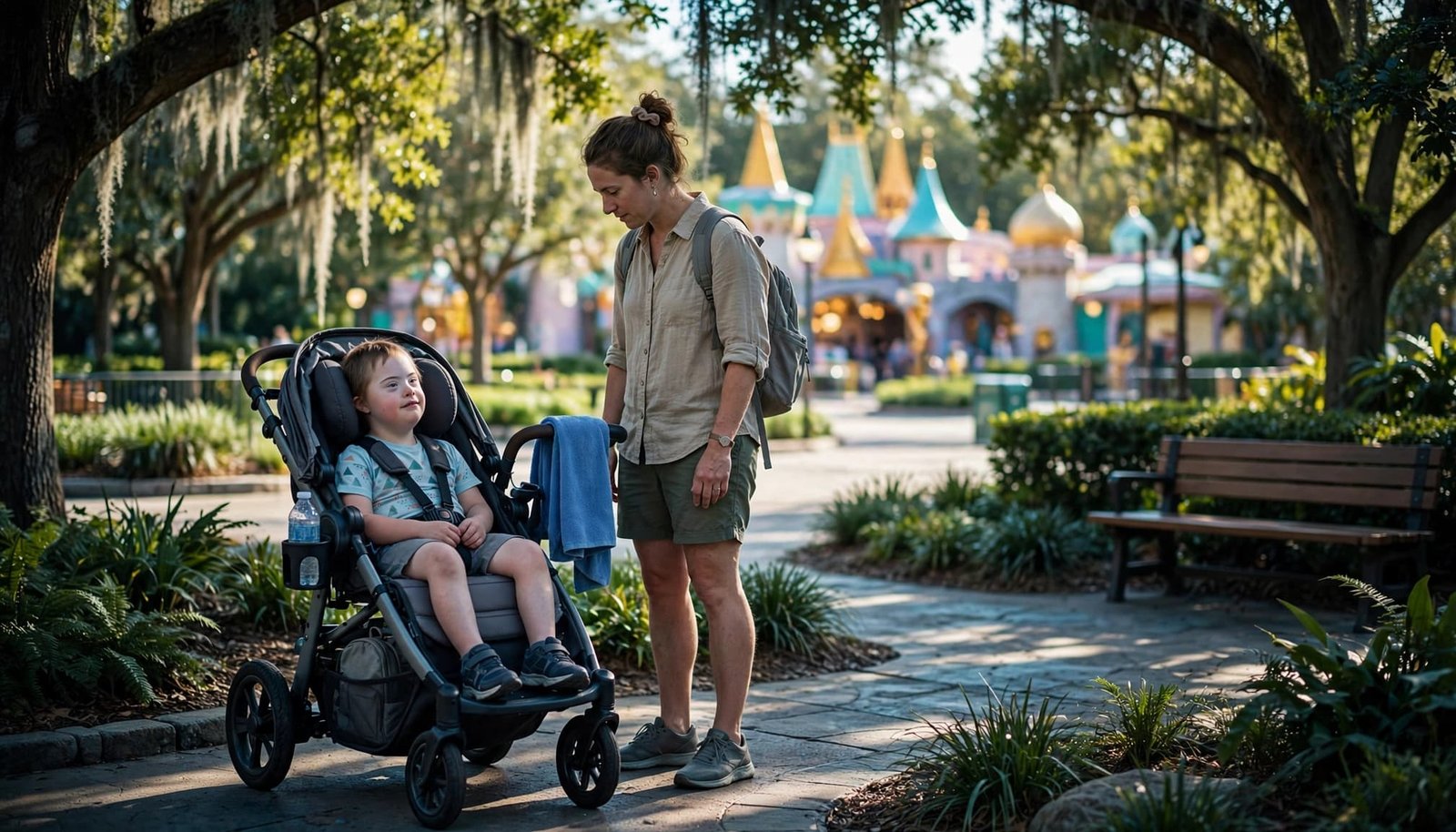
Noise-reducing headphones, sunglasses, a fidget, cooling towel, refillable water bottle, and familiar snacks can make a big difference. Keep those items easy to reach. Your child should not have to wait through a crowded bag search for the supports they need.
Dining With Food Allergies and Selective Eating
Food is often one of the biggest parts of Disney planning. Some guests have food allergies or medically restrictive diets. Others eat a limited group of familiar foods and may not be ready to try new meals on vacation.
Review menus before you leave home and before making dining reservations. Choose meal options that fit your traveler’s dietary needs. Pick a few meals that feel safe and keep backup snacks with you when allowed for your family’s dietary needs.
Table-service meals need a simple plan
Most table-service restaurants and select quick service restaurants list allergy-friendly choices for common allergens online. At a table-service restaurant, ask to speak with a Special Diets-Trained Cast Member before ordering.
Families seeking food allergy assistance should review Disney’s current special-diet information before ordering. Disney lists assistance for common allergens including milk, eggs, peanuts, tree nuts, wheat, soy, sesame, fish, shellfish, and gluten. Read Disney’s special dietary request information before making dining reservations.
Disney cannot promise an item is completely free from cross-contact. Ask questions, share the allergy clearly, and make the decision that feels right for your family.
Keep familiar foods available
A character meal or themed restaurant may be fun, but a busy setting can make eating harder. Schedule one special meal if it fits your child, then balance it with familiar breakfast foods, quieter meals, or food in your resort room.
For four or more allergy requests, pureed meals, or highly restrictive diets, Disney asks families to contact Special.Diets@DisneyWorld.com no sooner than 14 days before arrival.
Choose a Resort That Makes Breaks Easier
Your hotel is more than a place to sleep. It is your reset space after a busy morning, a hard ride, a rainstorm, or a long transportation wait.
Disney Resort hotels provide accessible paths from arrival areas to the lobby, accessible rooms, dining, shops, pools, and other facilities. When booking, you can select accessible room options. Review Disney Resort hotel accessibility before choosing your room type. If you book a vacation package, review its cancellation, dining, transportation, and accessibility details. Don’t assume it includes a specific accommodation.
Look at transportation and layout
Think about how often your family will use buses, the Skyliner, monorails, boats, or rideshare. A resort with transportation that feels manageable can make every park day easier. Consider transportation time when planning dining reservations and scheduled meals.
Compare resort properties by room location, walking distances, elevator access, food options, laundry, refrigerator space, and quiet areas to decompress. A small kitchenette or fridge can help with safe foods, breakfast routines, and medication needs.
Prepare the trip at home first
Use photos, short videos, a calendar, or a simple visual schedule to make the trip feel more familiar. Show the order of the day: breakfast, transportation, park entrance, one ride, snack, break, hotel.
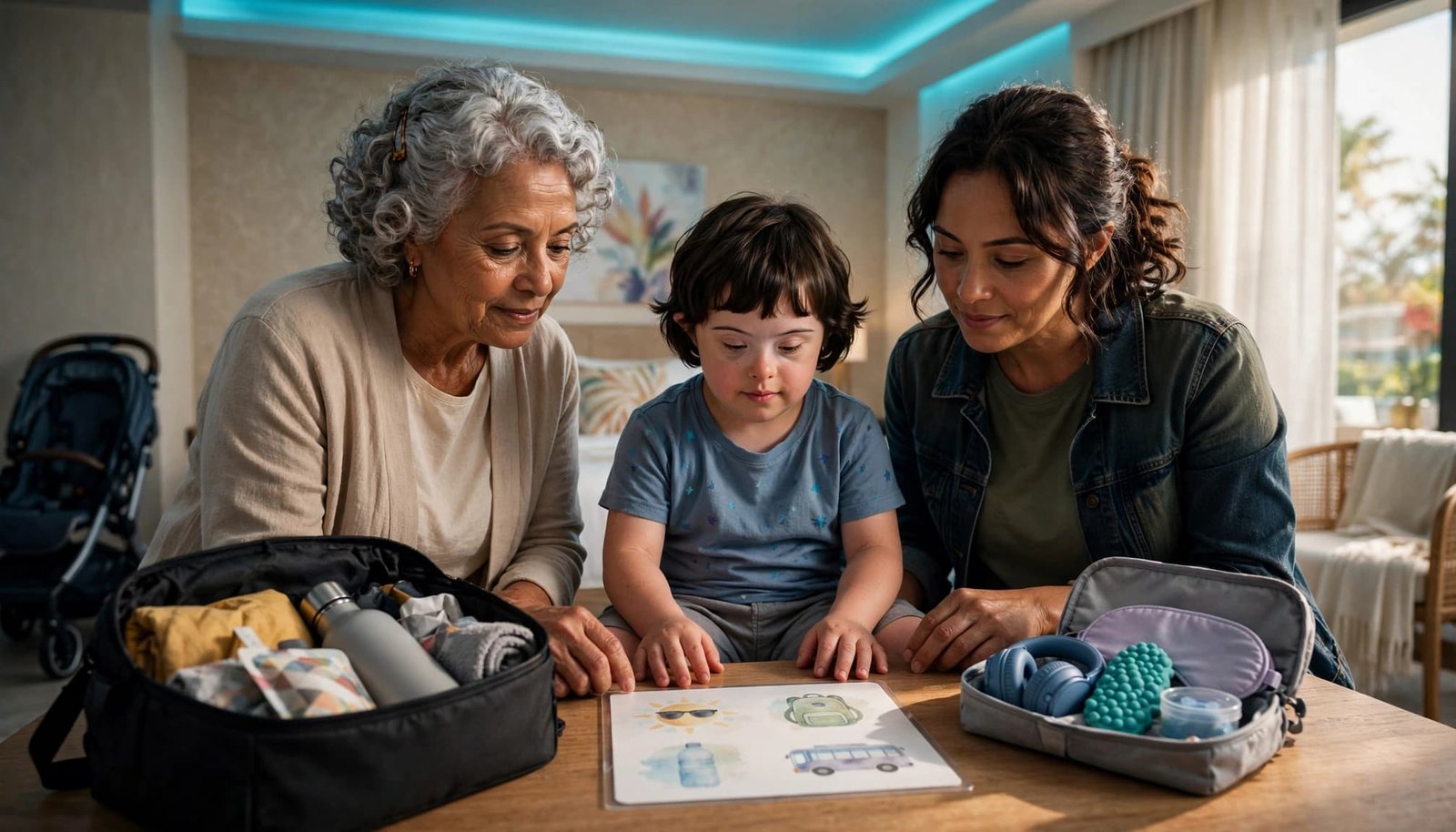
Practice parts of the trip that may be hard, such as airport security, hotel elevators, bus rides, or wearing headphones. Sensory issues and support needs vary by traveler. Down syndrome and autism aren’t interchangeable, so plan around your child’s responses. Watch ride-through videos together if that helps your child understand darkness, loud sounds, water effects, or sudden movement.
Helpful Disney Planning Resources for Families
Disney policies can change, so check official information shortly before your vacation. It also helps to have easy planning tools ready before you’re standing at the park entrance.
The Disney World With Autism Guide on Etsy includes park-day ideas, DAS preparation, sensory supports, and break planning. Families can also find the companion Disney autism travel guide on Amazon. These are optional planning resources, not official Disney policy. Autism and Down syndrome aren’t interchangeable, so use only the strategies that fit your individual’s support needs.
For travel basics that are easy to forget, Trip Rescue Shop has family travel supplies, including stroller items, comfort essentials, and cleaning products for unexpected sick-on-vacation moments.
If your vacation includes other theme parks, check the IBCCES accessibility card website for current participating attractions and application details. Participating parks and procedures can change, so always confirm before travel.
Wish-Trip Planning With Pixie Dust Wishes
Families looking for possible wish-trip support can learn about Pixie Dust Wishes, a non-profit organization that grants Disney wishes to individuals with disabilities and their families. Review current Pixie Dust Wishes application and eligibility information directly before making plans. Families can also contact Pixie Dust Wishes with questions about current requirements.
Frequently Asked Questions
Can a child with Down syndrome automatically receive DAS?
No. Disney reviews each request based on whether a developmental disability makes it difficult for the guest to wait in a conventional queue. Explain the real queue-related needs during the live video chat, and check Disney’s current policy before your trip.
Can we use a stroller as a wheelchair at Disney World?
Disney may approve a “Stroller as a Wheelchair” tag when a stroller is needed for mobility, safety, fatigue, sensory regulation, or medical equipment. Ask Guest Relations early, then follow the ride-specific instructions from Cast Members.
Could Pixie Dust Wishes help with a Disney wish trip?
Pixie Dust Wishes may be relevant for some families pursuing a Disney wish trip. Confirm eligibility, application details, and current program information directly with Pixie Dust Wishes.
Should we stay all day for fireworks?
Only if it works for your family. Fireworks viewing can be loud, crowded, and difficult to leave. Watching from a less crowded area, using headphones, or leaving before the show are all good choices. Skipping it is also okay.
What should we pack for a Disney park day?
Bring the supports your family already uses. Helpful items may include medication, chargers, communication devices, headphones, a comfort item, safe snacks, water, sunscreen, cooling supplies, and a change of clothes.
A Disney Vacation That Fits Your Family
Disney World with Down syndrome can be an exciting family vacation when comfort guides the plan. Use Disney’s current accessibility resources, prepare for the full travel day, and build in more breaks than you think you will need.
For families traveling with individuals with disabilities, the best plan reflects the actual traveler, not a diagnosis or generic itinerary. If you’re considering a wish trip, confirm current information directly with Pixie Dust Wishes.
Your family does not need to ride everything or stay until closing. A calm day with a few happy memories is enough.
Leave a Reply