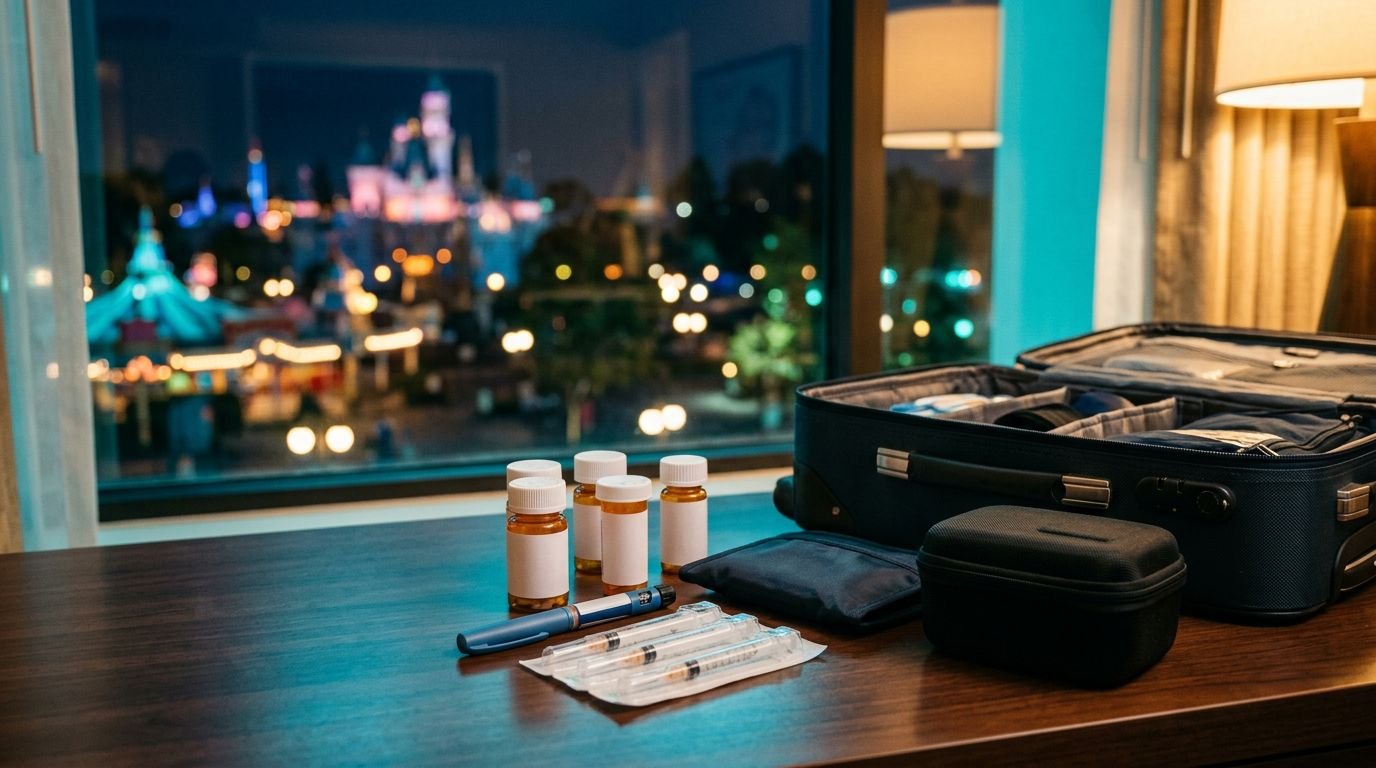
A Disney day is easier when important details are handled before you leave home. Medications, medical equipment, supplies, and cooling needs should not become a last-minute problem at check-in or halfway through a park day.
For families managing insulin, injections, seizure medication, tube-feeding supplies, or daily prescriptions, a dependable medication plan keeps each need organized. Pack for the flight, your resort hotel, long park hours, and the unexpected.
Key Takeaways
- Keep essential medication, medical equipment, and several extra days of supplies in your carry-on, not checked luggage.
- Disney Resort hotel beverage coolers may not provide a stable, medication-safe temperature, so confirm refrigeration needs with Disney before arrival.
- If your room is not ready, ask Bell Services about refrigerated storage and keep a small supply with you for delays or unexpected needs.
- Disney First Aid centers at all four main theme parks can refrigerate medications and medical equipment that require cooling.
- Protect medications from Florida heat, direct sunlight, and freezing, and contact a pharmacist if a medication experiences a temperature problem.
Start Your Medication Plan Before You Travel
Your medication plan starts with your carry-on bag. Never put essential medication, medical equipment, or a full day’s supplies only in checked luggage. Bags can be delayed, exposed to extreme temperatures, or sent somewhere else.
Keep each medication in its original container when possible. Prescription labels help airport staff, Disney Cast Members, and medical professionals identify what you have if a question comes up.
Medical marijuana has separate travel and destination rules, so verify them before departure.
Bring medication and supplies through airport security
TSA rules allow prescription medication and medically necessary liquids through security. These items can be larger than the usual 3.4-ounce liquid limit, but they may need additional screening.
Tell the TSA officer that you are carrying medically necessary medication, gel packs, liquid nutrition, or cooling supplies. Keep everything together in one easy-to-reach pouch instead of spreading it across several bags.
A good carry-on setup includes:
- Your medication, a few extra days of doses, and a written list of prescription medications.
- A doctor’s note if your medication, device, or supplies may raise questions during screening.
- Insulated medication cases, cold packs, or an approved insulin cooling case.
- Backup batteries, charging cords, medical equipment, and any supplies needed for a medical device.
- Familiar comfort items, headphones, snacks, and communication supports for children who need them.
Ask your pharmacy team how temperature sensitive medications should be stored during travel. Some medications cannot freeze. Others should not sit directly against an ice pack. A cold medication that freezes can be just as concerning as one that gets too warm.
Pack for a full park day, not a short outing
Florida heat, afternoon storms, and long waits for transportation can change a simple plan. Carry the medication you may need that day, plus a backup dose if your medical team recommends one.
FRIO wallets can help with insulin and other medications that need temperature control because they use evaporative cooling. An insulated case with cold packs may work better for other needs. The right option depends on your medication’s required temperature range.
Never leave medication in a parked car, on a sunny stroller, or in an outside pocket of a park bag. Florida heat can build fast.
Keep a small thermometer in your cooling bag if your medication has a strict storage range. It gives you real information instead of a guess.
Disney World Medication Storage at Disney Resort Hotels
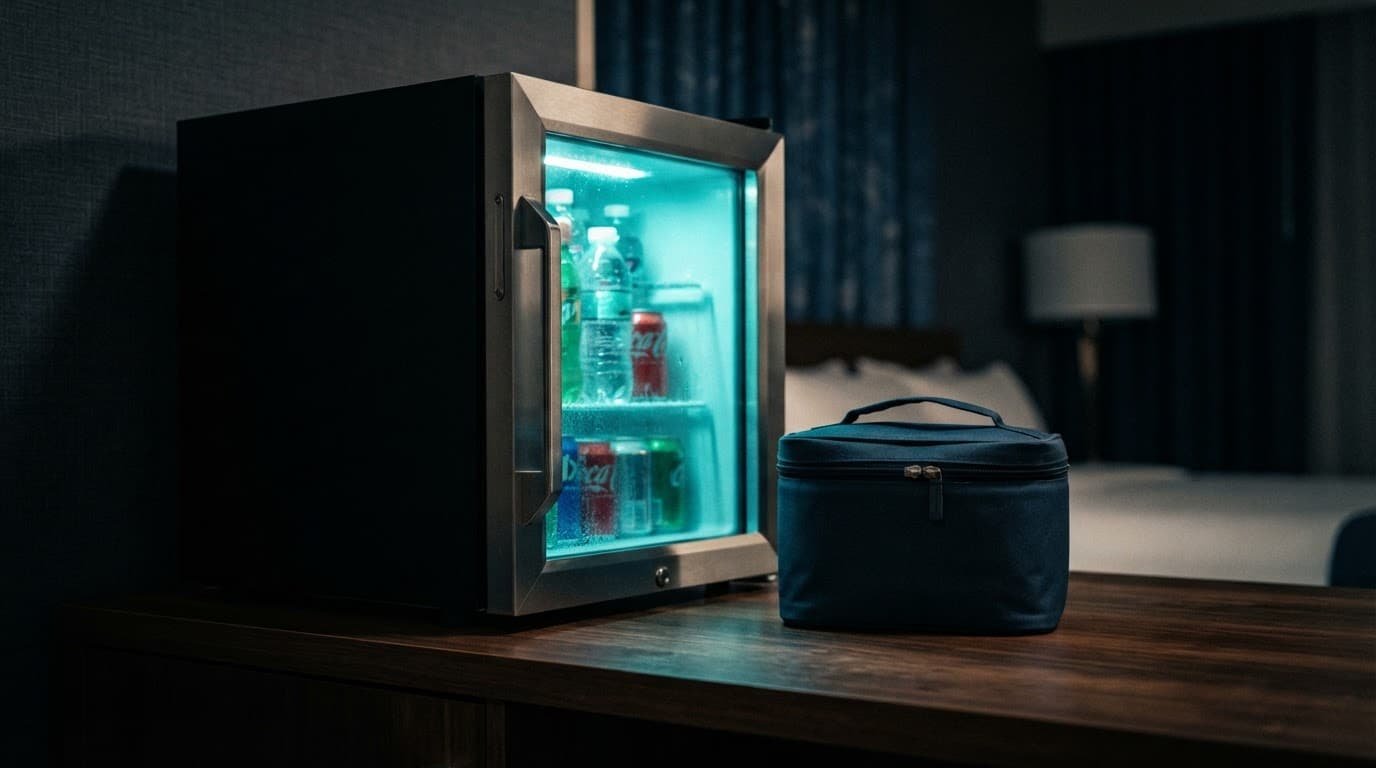
Many Disney Resort hotel rooms have a small beverage cooler. It may help with drinks and snacks, but Disney says these coolers can look like a mini-refrigerator without being suitable for medication storage.
That detail matters. A mini fridge that feels cold isn’t always holding a stable, medication-safe temperature.
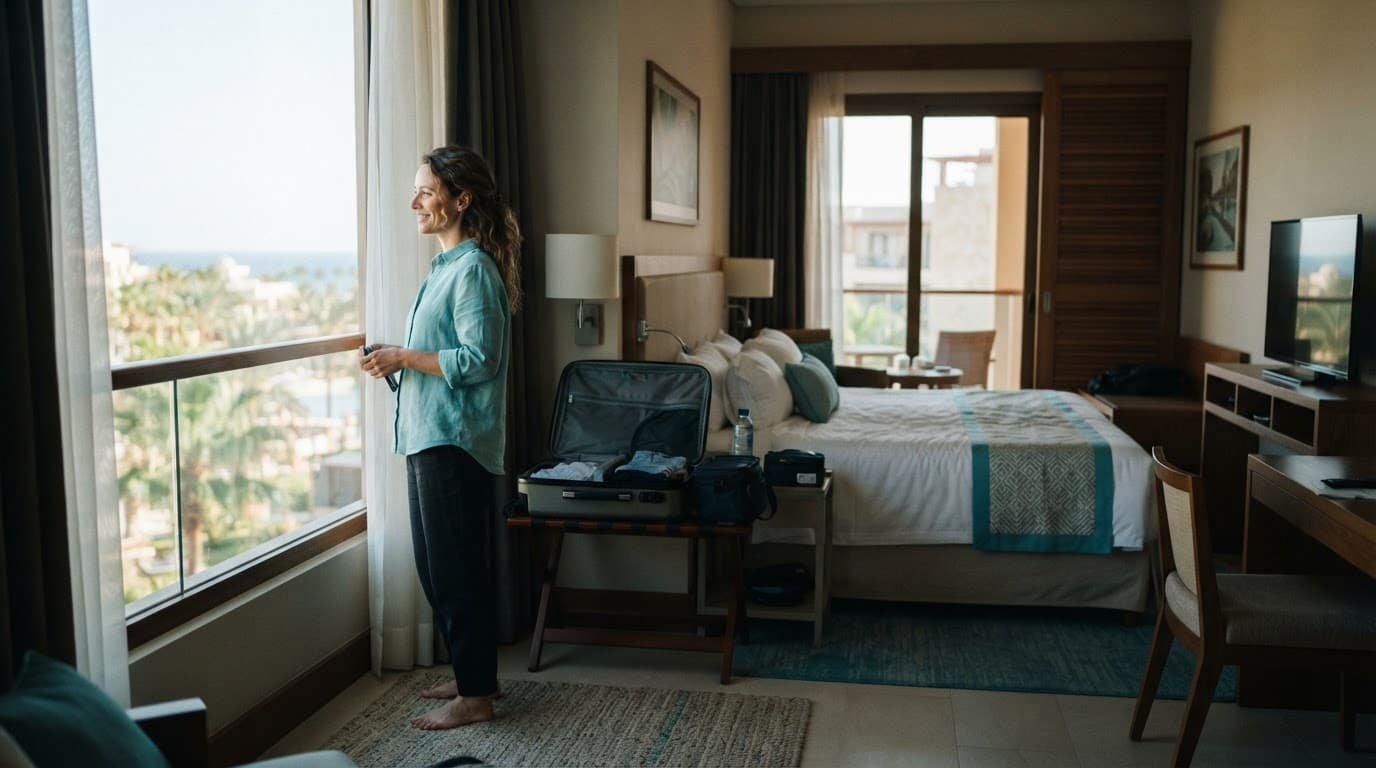
If your medication needs true refrigeration, call Disney before your trip. Explain whether it is medication, medical equipment, or another medically necessary supply, then share its required temperature and space needs. Ask Disney or the resort concierge to confirm the available storage option for your resort, then note the conversation.
That request matters, but don’t assume a standard beverage cooler will meet your needs. Bring your own insulated travel case for the airport and any transition time.
What to do when your room is not ready
Arriving early shouldn’t leave you standing in the lobby with medication that needs to stay cold. Contact your resort before arrival, then ask Bell Services about refrigerated storage if your room isn’t ready. Use luggage services for non-medical baggage, keeping medication separate.
Be clear and direct. Tell the Cast Member that the item is medication, that it needs to stay cold, and when you’ll need it back. Keep the medication labeled in a closed bag or container, then ask how pickup will work.
Bell Services procedures can differ by resort and staffing. Contact guest services if the room or storage arrangement is unclear, rather than arriving without a plan.
Keep a small supply with you, even when the rest is stored. Delays happen. Buses run late. A room may take longer than expected. Your day should not depend on retrieving every dose from one location.
For medications that don’t need cooling, a room safe can be a good option. Keep them away from bathroom humidity, direct sunlight, and places where children may find them.
If cooling fails or plans change
Power outages and equipment problems are uncommon, but a backup plan brings peace of mind. If the resort’s refrigeration fails, move the medication to your insulated case, use cold packs if appropriate, and call the front desk right away.
Do not guess whether medication is still safe after a temperature problem. Check the manufacturer’s instructions or call your pharmacy or pharmacist. Many medications have different rules for room-temperature storage, and the answer may depend on how long it was outside the recommended range.
The most dependable plan has two cooling options: one managed by the resort or First Aid, and one you carry yourself.
Use First Aid for Refrigerated Medication in the Parks
You do not have to carry every cooled medication through the parks all day. Disney’s First Aid centers can refrigerate medications and medical equipment that need it.
Locations are available at Magic Kingdom, EPCOT, Disney’s Hollywood Studios, and Disney’s Animal Kingdom, the four main theme parks. Find the closest location in the My Disney Experience app, or ask a Cast Member at guest services when you enter the park.
Bring medication in its original container or another clearly labeled container. Tell the staff when you need access, especially if you need a dose at a certain time.
The center can also provide a private area for treatment or a medical break. The Disney park medical overview also notes that sharps containers are available for used needles.
Disney lists insulin, antibiotics, tube-feeding supplies, oxygen tanks, and certain device batteries among items the center may refrigerate. Do not plan to store breast milk, special dietary food, or other non-medical items there.
Over the counter medications and park policies
The park medical team may have limited basic supplies, but don’t assume Tylenol, Benadryl, or other common medications will be free or available when you need them. Bring medications your family uses regularly, in amounts that cover your trip.
Resort gift shops and nearby stores may carry common items, but availability can change. A concierge can help locate a nearby pharmacy, but a familiar medication in your park bag is more helpful than searching after a headache, allergy concern, or fever starts.
Medical marijuana is not allowed at Walt Disney World, even with a medical card. Don’t bring medical marijuana or assume a card creates an exception. Ask your prescribing provider about legal, travel-safe options before your trip, and don’t assume CBD oil is acceptable.
Common questions about medication and park policies
Can medication be stored at First Aid during a park day?
Yes. Ask the Cast Member whether the center can hold it, and explain when you need access.
Can a medical card create an exception for cannabis?
No. Current park rules do not create an exception for medical marijuana. Ask your provider about legal, travel-safe options before leaving home.
Support Routines for Children With Autism and Medical Needs
Medication storage is part of the bigger routine. Children who rely on medical equipment, familiar timing, favorite snacks, communication devices, or calming tools may have a harder day when an important item is buried in a backpack.
Keep medication, headphones, charging cords, and comfort items in predictable places. A small pouch for devices and cables helps. Families often remember the tablet and forget the charger.
Build in breaks before your child reaches their limit. A quiet meal, a ride back to the hotel, or a slower afternoon can be the right choice. You don’t need to stay until park closing for the day to be successful.
The Disney World With Autism Guide PDF includes practical planning support for families who need more structure around park days, breaks, and accessibility needs. The Disney World With Autism Guide on Amazon is another helpful option to keep with your trip planning materials.
A medication schedule should be simple enough for every caregiver to follow. Write down medication names, dose times, storage needs, and your child’s usual reactions. Keep a copy in the room and another copy in your carry-on.
Frequently Asked Questions
Can Disney Resort hotel room coolers store medication?
Not always. Many room beverage coolers are not designed to maintain the stable temperature some medications require, so confirm your storage options with Disney before traveling.
What should I do if my room is not ready and my medication needs refrigeration?
Ask Bell Services whether refrigerated storage is available for your labeled medication. Keep a small supply with you and confirm how and when you can retrieve the stored medication.
Can Disney First Aid refrigerate medication during a park day?
Yes, First Aid centers at Magic Kingdom, EPCOT, Disney’s Hollywood Studios, and Disney’s Animal Kingdom may refrigerate medications and medical equipment that need it. Bring the medication in its original or clearly labeled container and tell staff when you need access.
What happens if medication gets too hot or freezes?
Do not guess whether it is still safe to use. Check the manufacturer’s instructions or contact your pharmacy or pharmacist, since safety depends on the medication and how long it was outside its recommended temperature range.
A Calm Plan Makes the Trip Easier
Disney World medication storage works best when you have a plan for every part of the day. Keep essential medication with you, confirm resort refrigeration before arrival, and use First Aid in the parks.
A stable routine gives your family more room to enjoy the moments that matter. When medication needs are handled, you can focus on the rides, meals, character moments, and memories.
Comments
One response to “Disney World Medication Storage at Your Resort Hotel”
[…] yogurt pouches, or plain muffins, consistency is key. Keep in mind that many resort rooms feature a beverage cooler rather than a full refrigerator, so you should limit your refrigerated items to avoid spoilage. Following these simple grocery […]