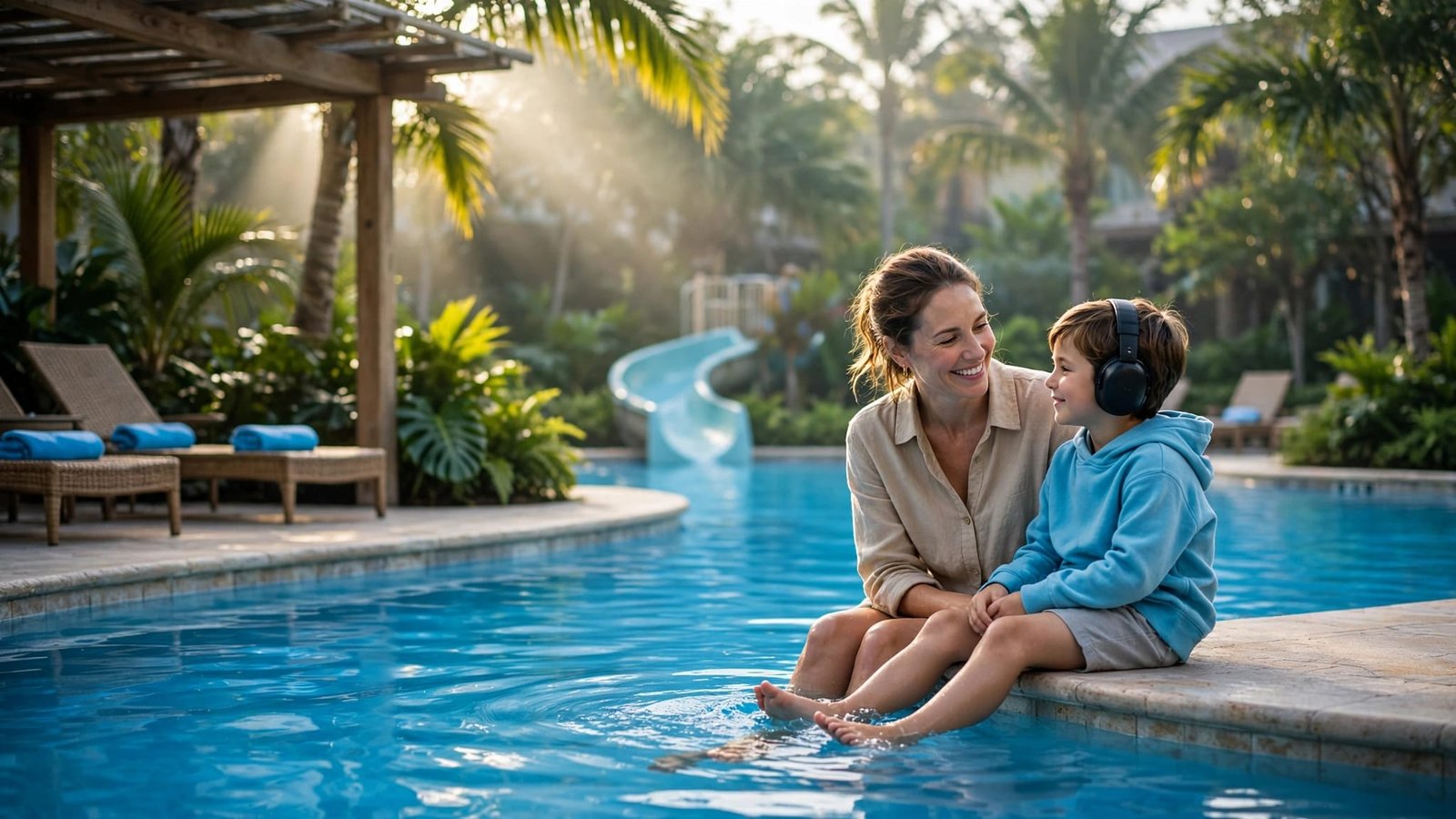
At Walt Disney World, a pool day sounds like a break until the music starts, a whistle blows, and your child can’t find a comfortable place to sit. Disney World pools can be fun for sensory-sensitive kids, but the biggest pool isn’t always the best fit.
You can make the day easier by choosing the right setting, arriving with a simple plan, and leaving room to change it. Start with what your child enjoys about water and what makes swimming hard.
Key Takeaways
- Choose a pool for your child’s comfort with noise, splashing, crowds, and water temperature, not its slide count.
- Preview the pool, plan a short first visit, and decide where you’ll go if your child needs a break.
- Check current pool hours, access rules, and lifeguard availability with Disney before making plans.
Start with your child’s pool comfort
Some children want to swim for hours. Others like sitting at the edge but dislike wet hair or a swimsuit that clings. Your child’s usual reactions at home or at a local pool are more useful than a resort photo.
Notice the triggers that travel with you
Think beyond noise. Sunscreen, hot pavement, cold water, damp shoes, and the feeling of sand underfoot can all affect a pool visit. Slides add waiting, unexpected splashes, and the need to separate briefly from a parent.
Write down your child’s early signs of overload. They might stop talking, cover their ears, cling to you, or ask the same question repeatedly. It’s easier to change plans at that point than after they’re exhausted.
Give your child a small choice
Try two comfortable options: “Would you like to look at the pool first or sit in the shade?” Once they’re ready, ask whether they want to put their feet in or stay dry a little longer.
A child who watches the water and enjoys a snack has still had a pool day. For more ways to prepare around individual needs, see our Disney World autism guide and Disney’s resources for neurodivergent guests.
Choosing Disney World pools by sensory fit
The best pool complex depends on who is swimming and which resort pools fit their sensory needs. A child who loves movement may enjoy a feature pool, while a child who needs space may do better near the room.
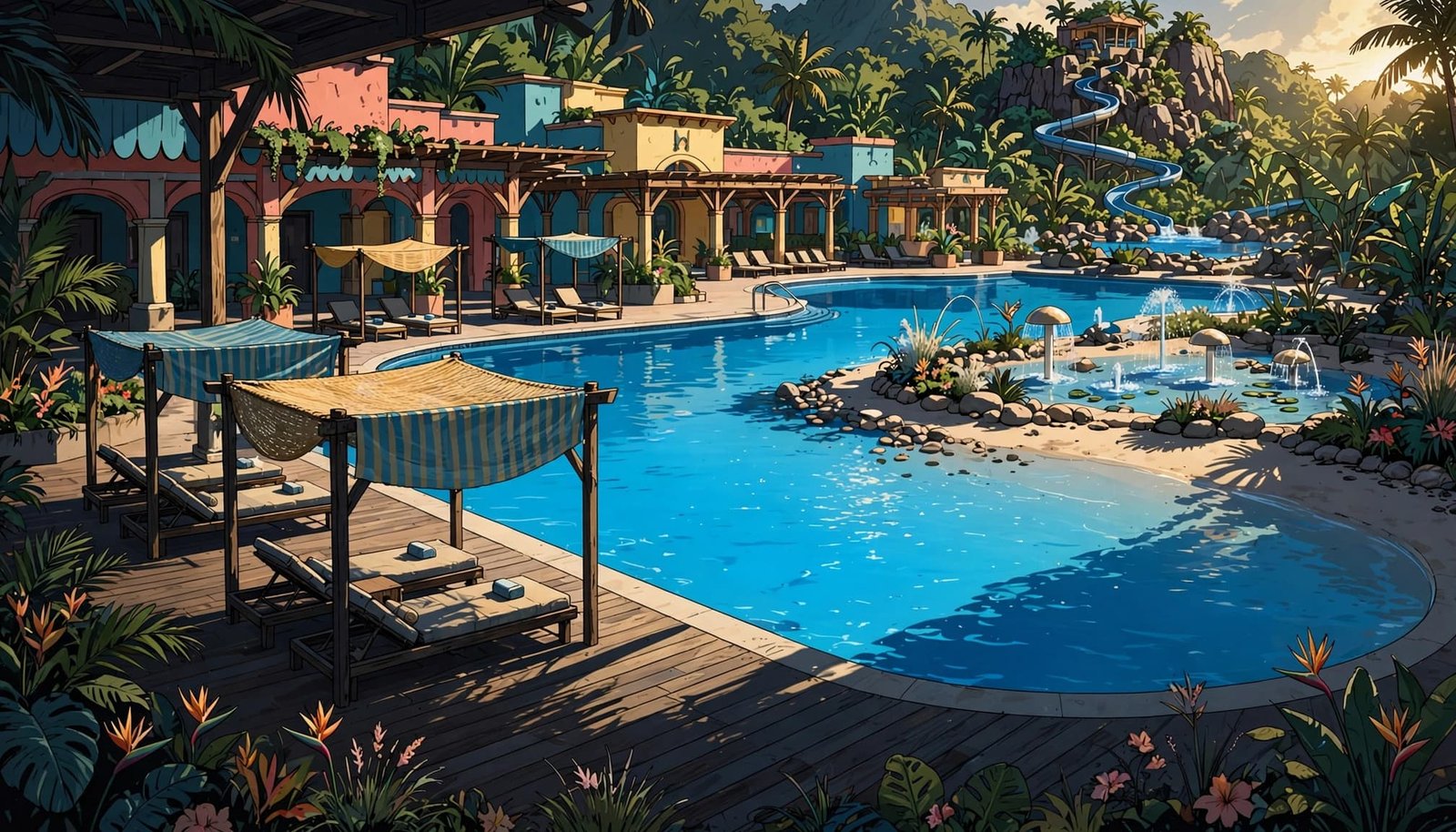
When your child wants lots to explore
At Yacht and Beach Club, Stormalong Bay is a large, three-acre feature pool with a sand bottom and lazy river. Its variety gives children more to explore, but also more activity to take in. Check Stormalong Bay and nearby leisure pools on Disney’s current listings before booking, and compare with Luna Park Pool.
At Disney’s Polynesian Village Resort, check the current listing for the Lava Pool. Its volcano, waterfall, zero entry, water slide, and splash area may appeal to some children, but feel too stimulating to others.
When a smaller setting feels better
Disney’s Art of Animation Resort has the Big Blue Pool and bold pool theming. A child who enjoys that energy may find it appealing, while another may find it too stimulating. Compare the current resort listing with your child’s needs before choosing. Our guide to Disney resorts for autism families can help you look past the pool photos.
Make the first pool visit short and predictable
You don’t need to spend a full afternoon at the pool to make it worthwhile. A brief visit helps your child learn the layout without committing to swimming.
Preview before changing clothes
If your schedule allows, walk past the pool together first. Find the entrance, restrooms, seating, and path back to your room. Point out where a parent will wait if your child wants to try the water.
Then give a simple plan: “We’ll sit here, try the shallow water if you want, and go back to the room when we’re done.” Pictures or a short visual schedule may help a child who wants to see the order of events.
Pick a flexible time and exit
A morning visit may feel easier than arriving after a tiring park day. Before your visit, ask the resort about current pool conditions. Check for noise, nearby activity, shade, pool seating, and whether a pool bar is close by.
Crowds can change, so look at the pool when you get there. Visiting at a quieter time or choosing quiet pools may reduce stimulation, but can’t guarantee a quiet or uncrowded visit. If it’s busy, return later or use the room for a break instead. Pool hours and lifeguard availability also vary, so check current information rather than relying on an old itinerary.
Tell your child what leaving will look like before swimming begins. “One more swim to the steps, then dry clothes” is clearer than a sudden announcement. If the pool becomes uncomfortable sooner, you can leave sooner. The same flexible thinking helps when planning Disney breaks around disability needs.
Keep water safety simple and consistent
A crowded pool needs your full attention, even when lifeguards are present. Decide which adult is actively watching each child before anyone gets in. Switch that responsibility clearly rather than assuming another adult has taken over.
Plan for wandering near water
Pool gates, slides, restrooms, and food areas can pull a child in different directions. Agree on a meeting spot, but don’t expect a young child to find it alone. Stay close to a child who may move quickly toward the water or leave when overwhelmed.
A waterproof ID bracelet or safety tattoo can help someone contact you if your child becomes separated. It’s an extra precaution, not a substitute for close supervision. Keep the information limited to what’s useful in that situation.
Check support and rules at your resort
Ask a Cast Member about life jackets, accessible entry, and current rules at the pool you’ll use. Disney notes that Saratoga Springs offers life jackets upon request, but confirm what your own resort has available. Don’t count on a particular quiet pool having a lifeguard without checking.
Pool access also needs a current answer. Don’t plan to swim at another resort based on an old pool-hopping tip. Ask Disney what access your reservation includes.
Pack for comfort and easier transitions
Wet clothes can turn a happy swim into a difficult walk back to the room. Keep the pool bag small, but make sure it covers your child’s familiar needs.
Bring what your child already uses
Pack a comfortable swimsuit, dry clothes, a towel, water, and approved familiar snacks. Add swim goggles, water shoes, or a sun hat if your child likes them. Headphones can help during the walk through a busy pool area, but keep them dry and suitable for your child’s activities.
Try sunscreen and swimwear at home before the trip if either has caused trouble before. That gives you time to find a better option. Our travel shop has practical trip supplies, including strollers and cleaning items that can help when vacation plans change.
Keep the wider Disney day gentle
A pool visit after a crowded morning at the parks may sound restful to an adult but feel like another busy activity to a child. Consider a snack, shower, or room break first. Your child can decide whether swimming still sounds good.
If you’d like more family-focused help preparing for Disney with an autistic child, our Disney World With Autism Guide is available as an Etsy PDF and on Amazon. Use it to build a flexible family plan, and confirm current Disney policies directly with Disney.
Make your resort room part of the plan
The shortest route from the pool to a comfortable room can matter more than one extra waterslide. When choosing among Disney resort hotels, check current maps. For Coronado Springs Resort and Animal Kingdom Lodge, verify official pool details, including whether they list a water playground at Samawati Springs Pool. Consider walking distance, elevators, bathrooms, and the route back to a familiar place to reset.
A room near the pool may make quick visits easier, but activity outside the window could affect rest. At Caribbean Beach Resort, compare the distance to the Fuentes del Morro Pool and the return route. If sleep is a concern, request a room away from busy areas. Requests aren’t guaranteed, so keep a backup plan for quieter time in the room.
Off-site hotels may give your family a different room layout or pool setting. Compare the whole stay, including travel back from the parks and access to a familiar rest space. A beautiful off-site pool isn’t automatically a better sensory fit than a convenient Disney Resort hotel.
Frequently Asked Questions
Which Disney World pool is best for a sensory-sensitive child?
Start with your child’s response to sound, crowds, water, and walking distance. Stormalong Bay offers lots to explore, while a smaller pool may feel easier to manage. Visit the pool briefly before making it a major part of the day.
What makes Stormalong Bay different?
It has a sand bottom, lazy river, and a much larger pool area than a standard hotel pool. Those features can be exciting for some children. They also mean more to preview before swimming.
Are value resort pools good for younger children?
They can be good kid friendly pools, especially when your child likes the resort’s theme and the pool is convenient to your room. Don’t assume a value resort has a slide or hot tub. Check that resort’s current pool features and rules before booking.
Can we use another Disney resort’s pool?
Don’t assume your reservation includes pool access at a different resort. Access rules can vary, so confirm the current policy for the pool you want to visit with Disney.
Does DAS apply to a hotel pool day?
Disney’s Disability Access Service addresses qualifying needs related to theme park attraction queues. It’s not a pool accommodation. Ask your resort directly about pool access, safety equipment, and accessibility needs.
A pool day that fits your family
That crowded pool you pictured at the start doesn’t have to decide your day. You can choose a different time, try a smaller pool, or head back to the room.
A successful pool day is one your child can enjoy at their own pace. Keep the plan simple, watch for early signs of discomfort, and let comfort guide what comes next.
Leave a Reply