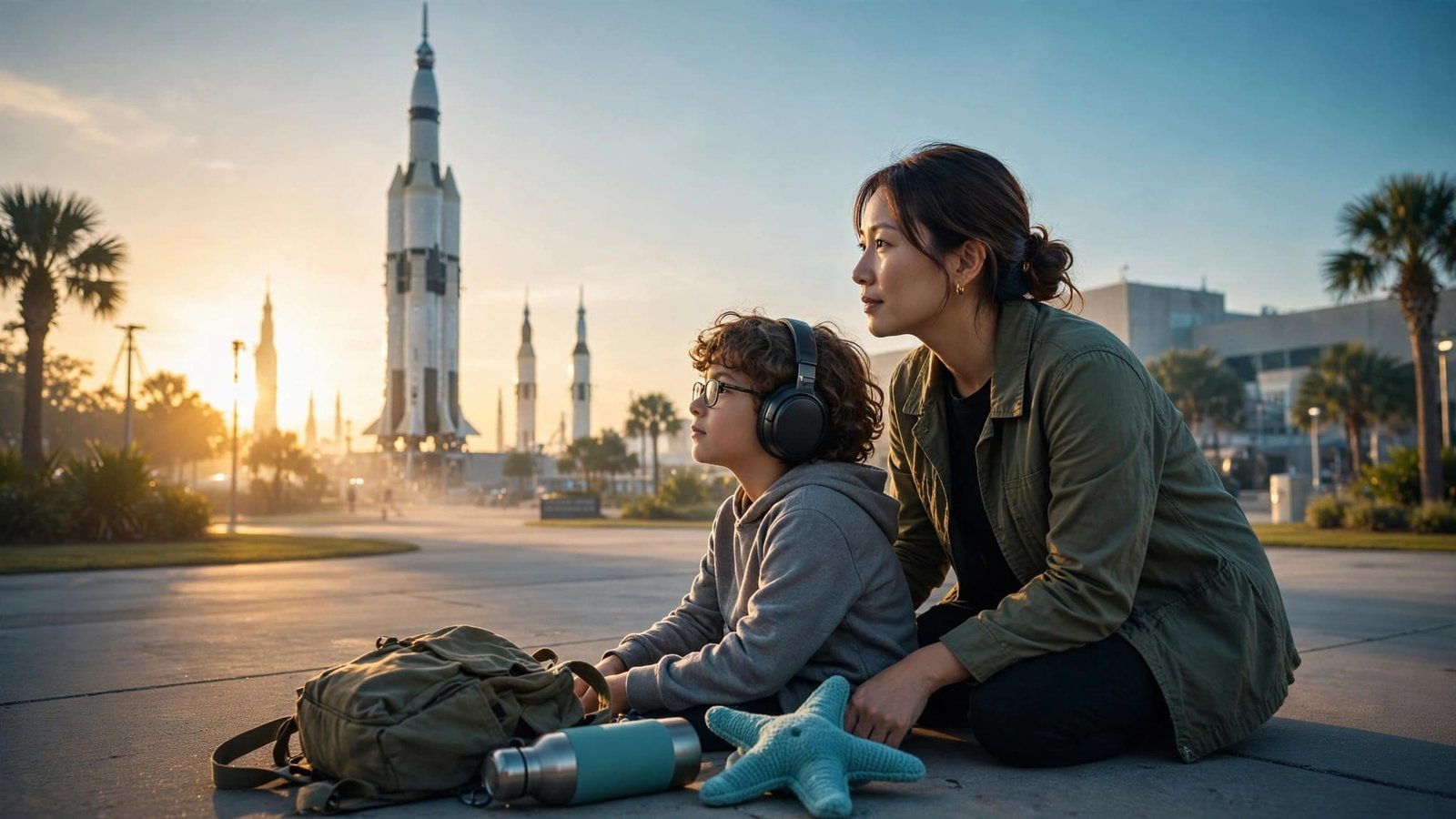
A day at the Kennedy Space Center visitor complex can be exciting, but it may also bring loud sound effects, crowds, heat, long walks, and schedule changes. With the right plan, Kennedy Space Center autism support can help your family adjust the pace and enjoy the day comfortably.
You don’t need to see every attraction to have a successful visit. A few favorite exhibits, a calm lunch, and one big space memory may be more than enough.
Start with the supports that fit your child, then build the day around breaks and flexibility.
Key Takeaways
- Build the day around your child’s needs, choosing two or three priority experiences and leaving plenty of room for breaks, food, and flexibility.
- Kennedy Space Center is a Certified Autism Center, and staff training may help families request directions, sensory support, or a quieter place to pause.
- Review the Sensory Guide before arriving to identify loud sounds, darkness, flashing lights, motion, crowds, and other possible triggers.
- Start at the Information building, ask about current quiet spaces and accessibility supports, and bring familiar headphones, snacks, comfort items, water, and a portable charger.
- A successful visit does not require every attraction; calm pacing and meaningful space memories matter more than completing a checklist.
Start With Your Family’s Definition of a Good Day
A successful Kennedy Space Center visit doesn’t have to mean staying until closing. It doesn’t mean riding every simulator or taking every bus tour.
For autistic individuals, seeing Space Shuttle Atlantis from the outside may be the big moment. Interests and comfort levels vary, so one person may love rockets, hands-on exhibits, or astronaut talks, while another may prefer a quiet walk through an exhibit area.
Think about your child’s usual day before making a schedule. Ask yourself a few simple questions:
- Does your child do better early in the morning or after a slow start?
- Are loud theaters, dark rooms, or motion rides usually difficult?
- Will a familiar snack, headphones, or a favorite device help during waits?
- Is a half-day visit a better fit than a full day?
Keep your plan simple. Pick two or three must-do experiences, then leave room for breaks, food, bathrooms, and changing your mind.
The goal is not to push through every attraction. The goal is to leave with good memories and enough energy for the rest of your vacation.
A flexible plan gives your child a sense of control. It also gives parents space to respond when the day feels bigger than expected.
Kennedy Space Center autism support and certification
The visitor complex is a Certified Autism Center through the International Board of Credentialing and Continuing Education Standards, also known as IBCCES. This certification is part of the Autism Double-Checked program, which uses autism spectrum disorder as a broad term for varied support needs.
Staff completed autism sensitivity and awareness training as part of that certification. Certification doesn’t guarantee a quiet environment, but it can help families request appropriate support.
You can read more about the Kennedy Space Center Certified Autism Center program through IBCCES.
What Staff Training Can Mean for Your Visit
A trained staff member may be able to help when your family needs clearer directions, a quieter place to pause, or support during a difficult moment.
You never need to share every detail about your child. A short explanation is enough. You might say, “My child is getting overwhelmed and needs a quieter place,” or “Can you tell us the calmest way to get to this attraction?”
Start your day at the Information building near the main entrance. At the visitor complex, it is the best first stop for maps, rental equipment, sensory support questions, and current guidance.
Ask About the Guest Accessibility Pass
The Guest Accessibility Pass is also available for guests with sensory sensitivities. This pass helps crewmembers recognize that a guest and their family may need assistance.
It is not a front-of-the-line pass. It does not promise immediate entry to attractions or buses. The Autism Double-Checked designation supports communication and assistance, but families shouldn’t expect guaranteed access.
Read the Sensory Guide Before You Arrive
The Sensory Guide is one of the most helpful tools for sensory planning at Kennedy Space Center. It explains how attractions may affect the five senses: sound, sight, touch, taste, and smell.
The guide uses ratings so you can plan ahead instead of guessing in a busy queue. The official Kennedy Space Center accessibility information includes the guide and current sensory support details.
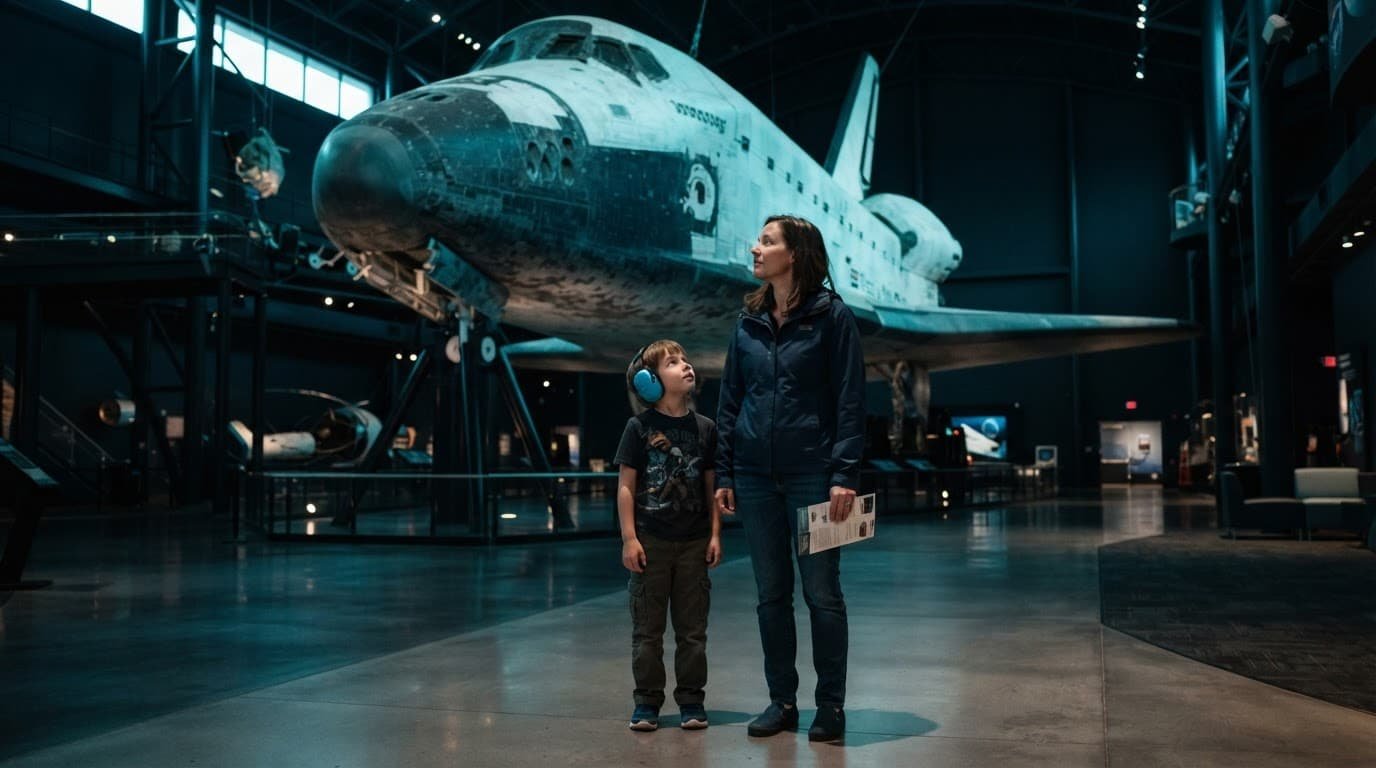
Use the Guide to Make Real Choices
Don’t feel pressured to review every page. Compare the ratings with the attractions your family actually plans to visit.
Look for potential triggers such as:
- Loud launch sounds, alarms, music, or theater audio
- Dark rooms, flashing lights, and large projection screens
- Sudden motion, simulated movement, or enclosed ride vehicles
- Strong food smells and crowded indoor spaces
- Hands-on areas where people may gather closely together
Read the descriptions with your child if that helps. You can also use plain language: “This ride has loud sounds and moves like a rocket launch. We can watch first, or we can skip it.”
The guide is available online and through the KSC SmartGuide. At the visitor complex, look for sensory guidance signage near attractions and support locations.
Pick up a paper copy or ask questions at Guest Services, Information, and Will Call. A paper copy may feel easier than checking a phone.
Plan Your Arrival Before the Crowds Build
Mornings are often the easiest time to get settled at the visitor complex. Arrive with enough time to park, use the restroom, enter, and stop at the Information building for a map and current support details.
Rushing can make a manageable transition feel much harder. A calmer start sets the tone for the day.
Make the First Ten Minutes Predictable
Before leaving the car, offer one clear next step. Try, “We are going inside to get a map and headphones. Then we will choose our first exhibit.”
A printed visual schedule can help, but keep it short. Use simple pictures or words for parking, entrance, first attraction, lunch, break, and leaving.
If you are using a rental car in Florida, ask about tolls before leaving the rental garage. Many Florida roads use electronic tolling. Check whether the vehicle has a transponder, what the daily fee costs, and how toll charges appear on your bill.
Take a photo of your parking location, too. After a full day, many rows and sections can look the same.
Start With a Lower-Pressure Attraction
Don’t begin with the loudest attraction on your list. Let your child get familiar with the space first.
Walk through an exhibit, watch a rocket from outside, browse a gift shop, or sit with a snack. A slower first hour gives everyone time to adjust to the temperature, crowd level, and noise.
Find Low Sensory Areas Before You Need One
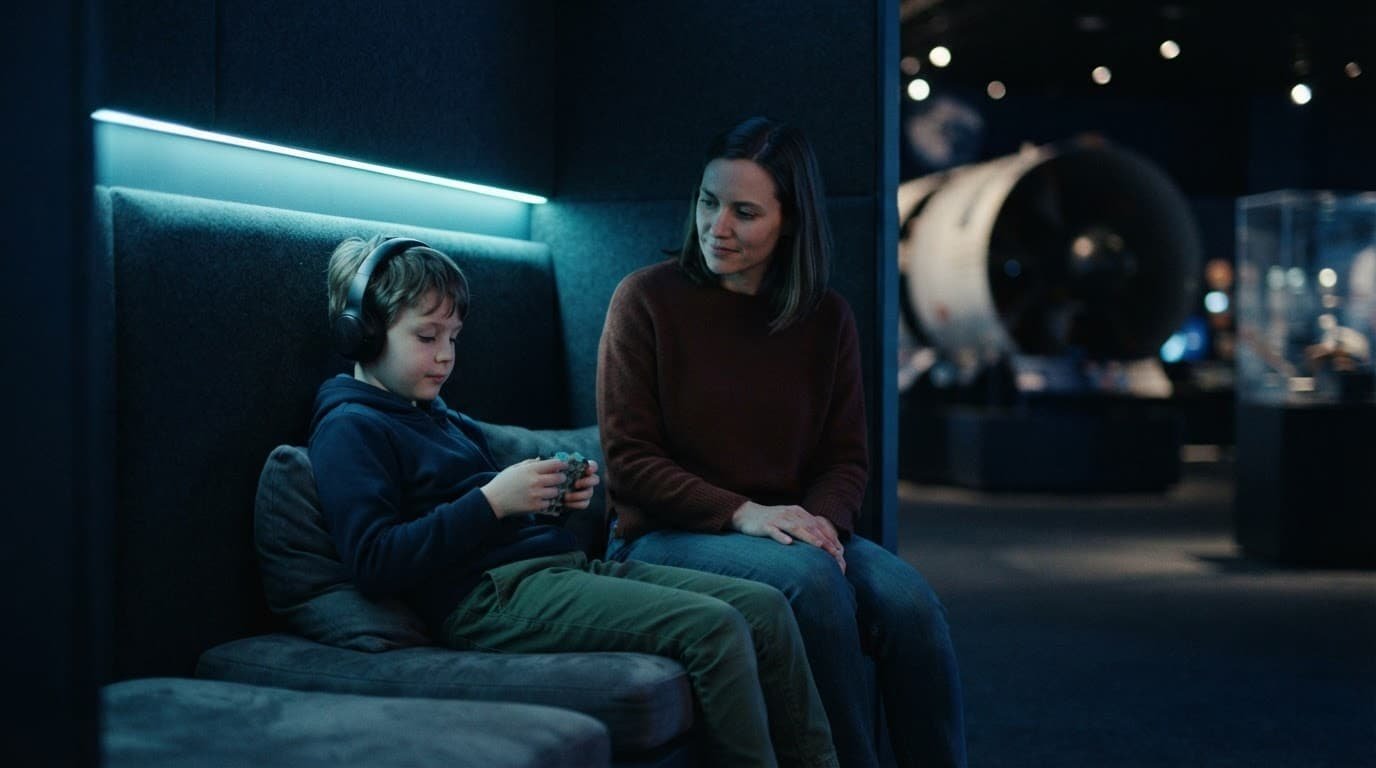
The visitor complex has designated quiet spaces. Current sensory materials identify low sensory areas inside the shuttle exhibit and Gateway, though locations and access can change.
Ask at Information where those spaces are located that day. Knowing the route ahead of time is much easier than trying to find it during a difficult moment.
Take Breaks Before They Feel Urgent
A sensory break does not have to wait until sensory overload begins. Plan one before lunch and another before a major attraction.
Look for a bench away from a busy walkway, a quieter outdoor area, or a designated room. Offer water, a preferred snack, a comfort item, or a few minutes with a familiar show.
Some children need movement to reset. Others need stillness. Follow what works at home.
Borrow Earphones, but Bring Your Own Too
A limited number of noise-reduction earphones are available at Information on a first-come, first-served basis. They are a form of accessible equipment and must be returned before the end of the day.
It is a helpful backup, but don’t depend on it as your only option. Bring headphones or ear defenders your child already knows and likes.
New sensory tools can feel uncomfortable, especially during a busy day. Familiar items usually work best.
Choose Attractions With Sensory Needs in Mind
Kennedy Space Center’s visitor complex offers experiences for many comfort levels. The Apollo Saturn V Center may be calm and self-paced, depending on the current layout. Rocket Garden offers an outdoor, lower-pressure option, while other exhibits use loud effects, darkness, motion, and packed pre-shows.
Your child can enjoy the space center without doing every intense attraction.
Think Carefully About Shuttle Launch Experience
Inside Space Shuttle Atlantis, the simulator recreates a launch. It can feel intense for children who dislike loud sound, motion, enclosed spaces, or surprises.
The attraction is ADA-friendly, and current Shuttle Launch Experience details can help you confirm height and access requirements before your trip.
Older accessibility materials describe an alternative observation area for guests who do not want ride motion. Ask a crewmember about the current option when you arrive. Your child may also enjoy the mission briefing and pre-show without riding the simulator.
Give Your Child an Easy Way to Say No
Watch an attraction entrance or pre-show for a few minutes before joining the line. Listen for volume. Notice the lighting. Let your child see other guests exit.
You can say, “We can try it, watch it, or skip it.” That third choice matters.
A child who says no after waiting has not ruined the plan. They have told you what they need. Respecting that choice builds trust for the next attraction.
Mobility, Buses, and Equipment Rentals
A long day at Kennedy Space Center includes a lot of walking. Even children who usually walk well may need a stroller, wheelchair, or rest break after hours in the Florida heat.
The Information building has limited rental equipment, but accessible equipment may be available online in advance or in person while supplies last. Options can include wheelchairs, ECVs, strollers, and double strollers.
Know the Current Rental Costs
According to the visitor complex’s frequently asked questions, current full-day rental prices are:
- wheelchair rental: $10 plus tax
- Electric Scooter Rental (ECV): $30 plus tax
- stroller: $8 plus tax
- double stroller: $10 plus tax
Prices and availability can change, so check the FAQ before your visit.
ECVs are single-seat units. Young children may not operate them. All equipment must be returned to Information by closing.
If your child uses a stroller for mobility support, ask staff what options are available for attraction access. Explain the practical need rather than trying to explain everything at once.
Confirm Bus Tour Needs Before Boarding
Many families want to take a bus tour, but tour buses have their own sensory and mobility needs. Waiting, close seating, loud narration, and changes in routine can be challenging.
Ask about wheelchair access, current lift availability, and accessible seating before boarding. Confirm where guests using the lift can disembark. Access can vary by vehicle and tour stop, and some stops may not allow lift use for safety reasons.
If captions, assisted listening, ASL support, or descriptive audio matter to your family, confirm availability for each theater or tour before committing to the schedule.
Keep Food, Heat, and Bathroom Needs Simple
Hunger and heat can change a good morning quickly. Don’t wait until everyone is upset to look for lunch.
Bring familiar snacks, refillable water bottles, and any food your child relies on. Review dining options before your visit, so you are not making every choice in a crowded food area.
Pick Earlier Meal Times When You Can
Try an early lunch or a late lunch. Eating outside the busiest window can mean fewer people, shorter lines, and more open tables.
Choose a table near an exit or along the edge of a dining area if leaving quickly would help. One adult can order while another sits with the child in a calmer spot.
Keep expectations low. A full meal is great, but a snack break and water may be what your child can handle at that moment.
Have a Small Backup Plan for Changes
Attractions can close. Florida weather can change fast. Your child may want to repeat one exhibit instead of moving to the next thing.
Keep one easy backup in mind, such as browsing Space Shuttle Atlantis if its current exhibit experience remains appropriate. You could also take a quiet snack break or head back to the hotel early.
Use the KSC SmartGuide to review maps, attraction information, and daily updates before and during your visit. Keep your phone charger, cord, headphones, and your child’s device in one pouch; check the visitor complex app for updates. Families often remember the tablet and forget the cable.
Pack Familiar Comfort Items for the Day
Your bag doesn’t need to hold every possible item. It needs the things that help your child feel safe when the day gets loud, hot, or unpredictable.
A small sensory kit might include headphones, a favorite fidget, sunglasses, a hoodie, a communication device, preferred snacks, medication, and a portable charger.
Keep those items easy to reach. Don’t bury them beneath souvenirs or rain gear.
Bring What Works at Home
A brand-new toy or sensory item may seem exciting, but it might not help when your child feels overwhelmed. Familiar items are usually better.
The same rule applies to travel strollers, comfort blankets, cleaning supplies, and sick-day items. The Trip Rescue Shop offers practical travel items, including strollers and supplies for unexpected vacation stomach bugs.
Pack one low-tech backup, too. A simple paper schedule, a “break” card, or a written note about communication needs can help when your phone battery is low or words are hard to find.
Planning Disney Too?
Many families combine Kennedy Space Center with a Walt Disney World vacation. Disney has different procedures, attraction systems, crowds, and transportation, so plan those days separately.
For more family-friendly planning ideas, the Disney World with Autism Guide on Etsy and the Disney autism travel guide on Amazon offer practical support for park days, breaks, and travel routines.
A Kennedy Space Center visit can be a quieter adventure between larger theme park days. The Visit Florida accessibility overview can also help you build an inclusive Florida itinerary.
Frequently Asked Questions
Is Kennedy Space Center autism-friendly?
Kennedy Space Center is a Certified Autism Center through IBCCES, and staff have completed autism sensitivity and awareness training. Certification can support communication and assistance, but it does not guarantee a quiet environment or immediate access to attractions.
What autism support is available at Kennedy Space Center?
Start at the Information building for maps, sensory guidance, rental equipment questions, and current support details. Families can also ask about the Guest Accessibility Pass, quiet spaces, and limited noise-reduction earphones; the pass is not a front-of-the-line option.
How can we choose attractions for a child with sensory sensitivities?
Use the Sensory Guide to check for loud audio, darkness, flashing lights, motion, enclosed spaces, and crowds. Consider lower-pressure options first, watch an attraction before joining the line, and make it clear that your child can try it, watch it, or skip it.
Can we rent a stroller, wheelchair, or ECV?
Limited rental equipment may be available at the Information building, including wheelchairs, ECVs, strollers, and double strollers. Prices and availability can change, so check the current visitor complex FAQ or ask about options before your visit.
What should we pack for an autistic child’s visit?
Bring familiar items that already work at home, such as headphones, sunglasses, a fidget, comfort clothing, preferred snacks, medication, a communication device, and a portable charger. A short paper schedule or break card can also help if the day becomes unpredictable or your phone battery runs low.
A Calm Kennedy Space Center Day Is a Good Day
The best visit plan starts with your child’s real needs, not a packed attraction list. Use the Sensory Guide, ask for support at Information, bring familiar comfort items, and take breaks before they become urgent.
Your family can enjoy rockets, astronauts, and space history without pushing through every loud room or motion ride. Choose meaningful experiences over completing a checklist. A flexible plan is often the most memorable one.